
In today’s fast-paced business environment, contact centers need to keep up with growing customer expectations. Automation trends in contact centers are revolutionizing the industry, offering enhanced efficiency, better customer experiences, and significant cost savings. Companies like SalesCloser AI are at the forefront of this transformation, leveraging advanced AI to streamline operations and improve outcomes.
What is Contact Center Automation?
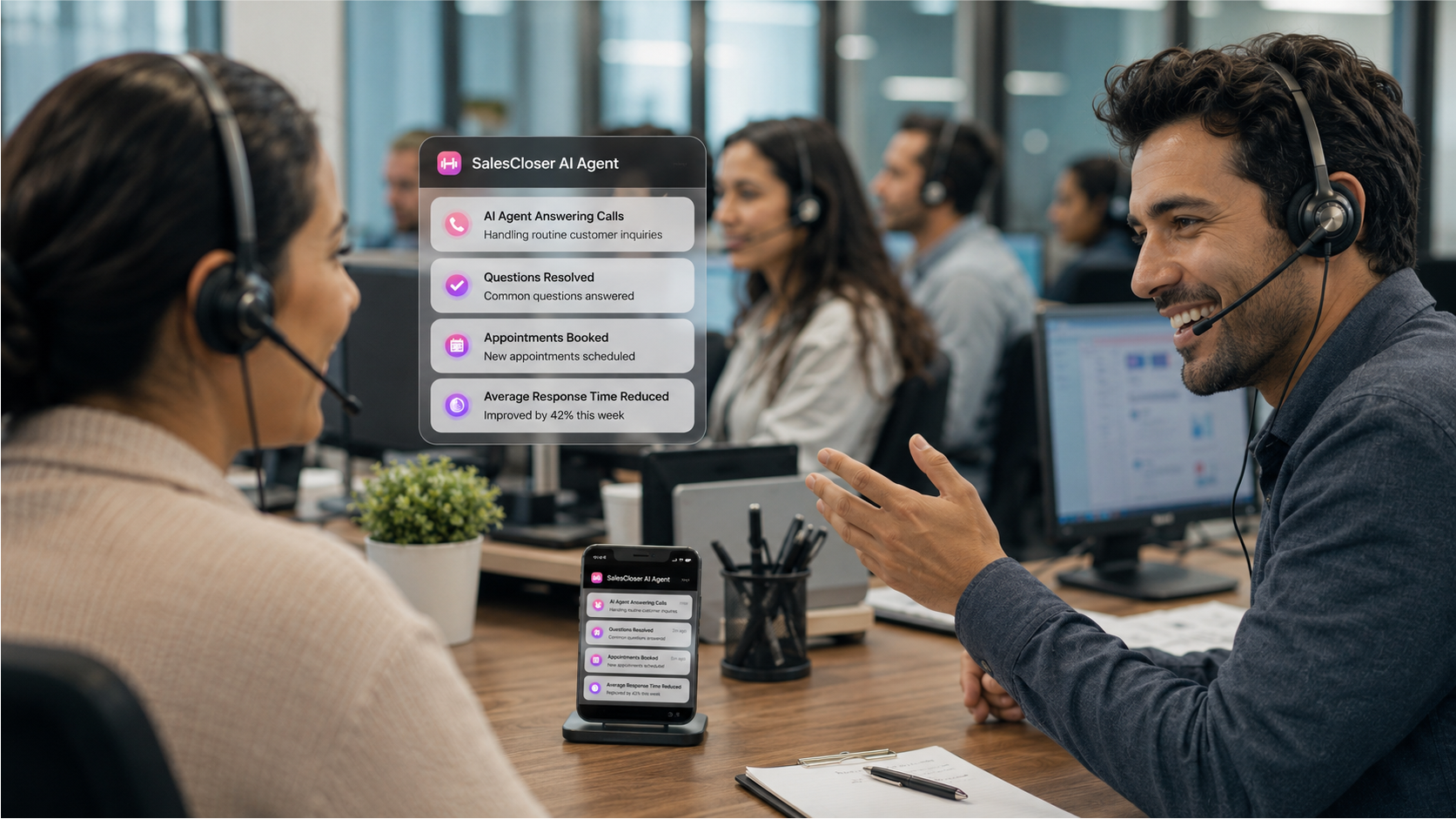
Contact center automation involves using technology to perform tasks traditionally handled by human agents. This can include everything from handling routine inquiries to managing complex interactions. Automation reduces the workload on human agents, allowing them to focus on tasks that require a personal touch.
Key Trends in Contact Center Automation
1. AI-Powered Chatbots and Virtual Assistants
AI-powered chatbots and virtual assistants are becoming commonplace in contact centers. These tools handle a variety of tasks, from answering frequently asked questions to processing transactions. SalesCloser AI offers robust AI-driven solutions that enhance the quality and efficiency of customer interaction.
2. Robotic Process Automation (RPA)
RPA automates repetitive tasks that do not require human judgment. These can include data entry, form processing, and updating customer records. Implementing RPA in contact centers can significantly reduce handling times and error rates.
3. Natural Language Processing (NLP)
NLP enables machines to understand and respond to human language. This technology improves chatbot performance, allowing for more accurate and human-like interactions. SalesCloser AI utilizes advanced NLP to better understand customer needs and provide relevant responses.
4. Sentiment Analysis
Sentiment analysis helps contact centers understand customer emotions. By analyzing the tone and context of interactions, companies can gain insights into customer satisfaction and adjust their strategies accordingly. This technology can flag negative interactions for quick resolution by human agents.
5. Predictive Analytics
Predictive analytics forecast future trends based on historical data. Contact centers use this to anticipate customer needs and allocate resources more effectively. For instance, predicting peak call times allows for better staff scheduling.
6. Omnichannel Support
Customers expect seamless interactions across various channels, phone, email, chat, social media, etc. Automation helps integrate these channels, providing a consistent customer experience. SalesCloser AI offers omnichannel solutions to ensure customers receive the same quality of service regardless of the channel they choose.
7. Self-Service Options
Many customers prefer resolving issues themselves without contacting a live agent. Automation enables self-service portals and interactive voice response (IVR) systems that guide customers through troubleshooting processes. This reduces the load on contact centers and empowers customers.
Benefits of Contact Center Automation
Enhanced Efficiency
Automation speeds up routine tasks, allowing agents to handle more interactions in less time. This increases the overall efficiency of the contact center.
Cost Savings
By reducing the need for human intervention in routine tasks, automation lowers operational costs. Companies can reallocate these savings to other areas, such as improving customer experience or investing in new technologies.
Improved Accuracy
Automation minimizes human error, ensuring consistent and accurate handling of tasks. This is particularly important in areas such as data entry and processing transactions.
Better Customer Experience
Automated systems provide faster responses and can operate 24/7, enhancing customer satisfaction. When customers receive prompt and accurate service, their overall experience improves.
Scalability
Automation allows contact centers to scale operations quickly. As customer demand grows, automated systems can handle increased workloads without a corresponding increase in staff.
The Role of SalesCloser AI in Contact Center Automation
SalesCloser AI stands out in the automation landscape with its comprehensive suite of tools designed to enhance contact center performance. Here’s how SalesCloser AI contributes to the automation revolution:
Advanced AI Integration
SalesCloser AI integrates advanced AI technologies into contact centers, improving both efficiency and customer satisfaction. Their AI tools handle everything from initial customer contact to follow-up interactions, ensuring seamless service delivery.
Customizable Solutions
SalesCloser AI offers customizable solutions tailored to the unique needs of each contact center. This flexibility allows businesses to implement automation in ways that best suit their operations and customer expectations.
Data-Driven Insights
Using AI and analytics, SalesCloser AI provides data-driven insights that help contact centers make informed decisions. This includes understanding customer behavior, predicting trends, and optimizing resource allocation.
Enhanced Customer Engagement
With features like AI chatbots and NLP, SalesCloser AI improves customer engagement by providing quick and accurate responses to inquiries. This not only enhances customer satisfaction but also frees up human agents to handle more complex issues.
Real-World Applications
Illustrative Example: E-commerce Customer Support
An e-commerce company could add SalesCloser AI to its contact center so AI agents answer routine inquiries 24/7 by voice, video and chat, qualify buying questions and book follow-up calls, freeing human agents for complex issues and cutting wait times.
Illustrative Example: Financial Services
A financial services firm could use SalesCloser AI to answer and qualify inbound inquiries around the clock and book meetings with its advisors, while its dedicated systems and staff continue to handle verification and fraud checks.
Future of Contact Center Automation
The future of contact center automation looks promising, with continuous advancements in AI and machine learning. Here are some anticipated developments:
More Sophisticated AI
AI will continue to evolve, offering more sophisticated solutions that can handle increasingly complex tasks. This includes a better understanding of context and emotions in customer interactions.
Integration with IoT
Integration with the Internet of Things (IoT) will allow contact centers to offer more proactive support. For instance, devices can automatically alert customer service when maintenance is needed, prompting the contact center to take preemptive action.
Increased Personalization
Automation will enable higher levels of personalization, tailoring interactions to individual customer preferences and history. This will improve customer satisfaction and loyalty.
Conclusion
Contact center automation is transforming the way businesses interact with customers. With trends like AI-powered chatbots, RPA, NLP, and predictive analytics, contact centers can offer faster, more accurate, and personalized services. SalesCloser AI leads the charge with advanced solutions that enhance efficiency and customer satisfaction. As technology continues to evolve, the future of contact center automation promises even more exciting developments, setting new standards for customer service excellence.