
Automated customer onboarding uses software to guide new customers through setup without manual work for each account. A typical process sends a welcome message and setup steps, delivers product education, runs automated welcome calls and check-ins, then collects feedback. This keeps every customer’s experience consistent and lets your team focus on complex issues.
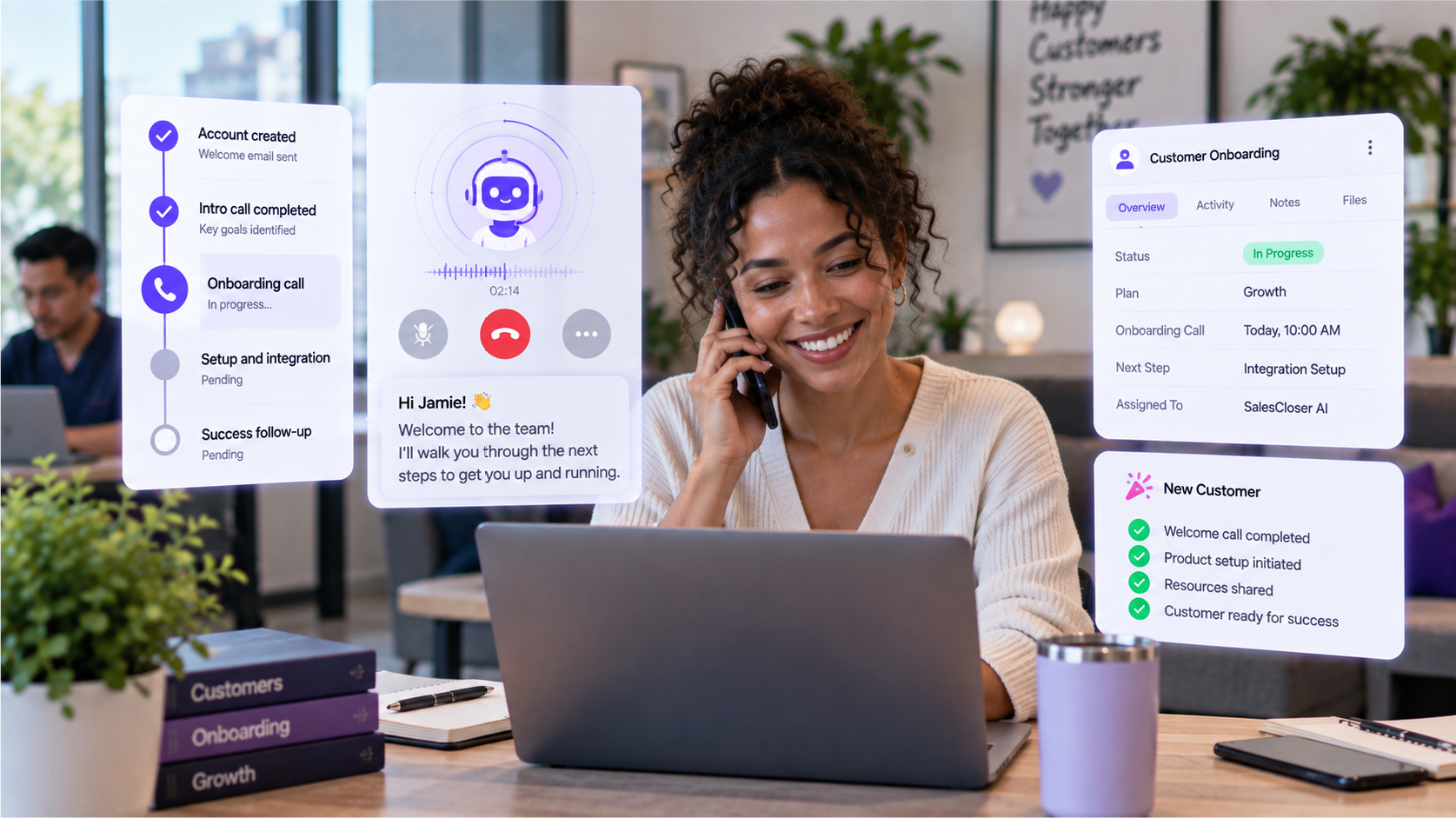
Bringing new customers on board. It’s a critical moment for any business. Think about it. This is where first impressions solidify. This is where trust begins to build. And this is where you set the stage for a long, successful relationship. Yet, for many companies, customer onboarding remains a manual, time-consuming process. It often bogs down teams. It can lead to inconsistencies. And, crucially, it might even frustrate new customers. This is where automation steps in.
Imagine a world. A world where your new customers feel instantly welcomed. They get all the information they need. And they do it without your team being stretched thin. That world is not a dream. It’s achievable through intelligent automation. We’re talking about automating customer onboarding and welcome calls. This guide dives deep into how to make that happen. We’ll explore strategies. We’ll look at the right tools. And we’ll share best practices. All designed to streamline your process. All aimed at boosting the customer experience. Get ready to save time. Get ready to enhance engagement. Let’s make your onboarding seamless.
Automate Customer Onboarding and Welcome Calls: Why Automation Beats Manual
First, let’s understand the “why.” Why bother automating something as personal as welcoming a new customer? The reasons are compelling.
Time Savings and Efficiency: Manual onboarding is a resource drain. Your sales reps, customer success managers, and support staff spend hours on repetitive tasks. They send emails, make calls, and answer the same basic questions. Automating these steps frees up your team. They can then focus on higher-value activities, such as complex problem-solving, strategic relationship building, etc. This shift means more efficient use of your human capital.
Consistency and Standardization: Every customer deserves the same high-quality welcome. Manual processes introduce variability. One rep might miss a crucial step, or another might forget to share a vital resource. Automation eliminates these inconsistencies. It ensures every new customer follows the same well-designed path. This creates a consistent brand experience and builds confidence from day one.
Improved Customer Experience: A smooth onboarding process makes a huge difference. Customers want to get started quickly and understand your product or service without friction. Automated processes provide this. They deliver information proactively and guide customers through initial setup. This reduces frustration and increases satisfaction. Happy customers are more likely to stick around.
Reduced Churn: Poor onboarding is a leading cause of customer churn. If customers struggle to understand your offering, they won’t see its value and might leave. Effective, automated onboarding helps customers realize value faster and guides them to success, significantly lowering the risk of leaving.
Scalability: As your business grows, your customer base expands. Manual onboarding doesn’t scale well, and you’d need to hire more staff. Automation allows you to handle an increasing volume of new customers without a proportional increase in your team size. It’s a key ingredient for sustainable growth.
Data Collection and Insights: Automated systems track every interaction. They record every step a customer takes. This generates valuable data. You can then analyze this data. You can identify bottlenecks. You can understand common pain points. This insight helps you continuously refine and improve your onboarding process.
The benefits are clear. Automating customer onboarding and welcome calls isn’t just a luxury. It’s a strategic necessity. It’s for businesses aiming for efficiency, consistency, and superior customer satisfaction.
The Automated Onboarding Process: A Step-by-Step Breakdown
Now, let’s get practical. How do you actually build an automated onboarding process? It involves several key stages. Each stage benefits from intelligent automation.
1. Pre-Welcome and Initial Setup:
The moment a customer signs up or makes a purchase. This is where automation kicks in immediately.
- Triggered Welcome Email: Send an instant, personalized welcome email. This email confirms their purchase or subscription. It provides initial login details. It also sets expectations for what comes next. Make it warm. Make it inviting.
- Account Activation & Profile Setup Guidance: Guide them through activating their account and showing them how to set up their profile. This might involve a series of short, automated emails or an in-app tutorial.
- Resource Access: Provide immediate access to essential resources. This could be a link to your knowledge base. It might be a quick start guide. Or a video tutorial library.
2. Product Adoption and Education:
Help customers understand and use your product effectively.
- Drip Campaigns for Feature Adoption: Design automated emails highlighting key features and explaining how to use them. Drip campaigns deliver information in manageable chunks, preventing information overload.
- In-App Product Tours: Implement interactive in-app tours. These tours guide users through the product interface and show specific functionalities, which is more engaging than static instructions.
- Webinar Invitations (Automated): Automatically invite new users to live or pre-recorded webinars. These webinars can demonstrate core features. They can answer common questions.
- Personalized Content Delivery: Deliver tailored content based on customer segments or initial survey responses. For example, a small business owner might receive different onboarding materials than an enterprise client.
3. Automated Welcome Calls & Check-ins:
This is where Automating Customer Onboarding and Welcome Calls truly shine. What used to be a purely manual task is now handled by AI-driven solutions.
- Automated Scheduling: An automated system can prompt customers to schedule a welcome call. After initial setup, it can offer available time slots and integrate directly with your team’s calendars.
- AI Sales Agents for Welcome Calls: This is a game-changer. AI sales agents can make the actual welcome calls. They can introduce your service. They can answer common questions. They can confirm next steps. They can even gather initial feedback. This frees up your human agents for more complex interactions. We’ll delve deeper into this later.
- Automated Follow-up Reminders: Send computerized reminders before the scheduled welcome call and follow-up emails after the call. These emails summarize key points and provide links to discussed resources.
4. Feedback and Continuous Improvement:
Onboarding isn’t a one-and-done event. It’s an ongoing process.
- Automated Feedback Surveys: Send short surveys at different stages of onboarding. Ask about their experience. Ask about any challenges they face.
- Triggered Support Outreach: If a customer struggles (e.g., they don’t complete a key onboarding step), an automated system can flag this. It can trigger a personalized email or even an outbound call from a support agent.
- Data Analysis: Review the data from your automated processes regularly. Look at completion rates and customer satisfaction scores. Use these insights to refine your onboarding journey continually.
Each of these steps can be automated. This creates a powerful, efficient, and customer-centric onboarding experience.
Key Tools for Your Automated Onboarding Process
Building an effective automated onboarding process requires the right tools. Think of these as the building blocks. They work together to create a seamless experience.
1. Customer Relationship Management (CRM) Systems: A CRM is the foundation. It’s where all your customer data lives.
- Centralized Data: Stores customer information. Tracks interactions. Records purchase history.
- Automation Triggers: CRMs often integrate with other tools. They can trigger onboarding workflows based on specific customer actions (e.g., “new deal closed”).
- Customer Segmentation: Allows you to segment customers. This means delivering tailored onboarding experiences.
Examples: Salesforce, HubSpot, Zoho CRM
2. Marketing Automation Platforms: These tools are essential for email campaigns and personalized communication.
- Drip Email Campaigns: Create automated sequences of emails. These guides customers through various onboarding stages.
- Personalization: Dynamically insert customer names, product details, and relevant information into emails.
- Behavioral Triggers: Send emails based on customer behavior. For example, if a customer hasn’t logged in after 3 days, send a “We miss you” email.
Examples: HubSpot Marketing Hub, Mailchimp, ActiveCampaign, Pardot
3. Customer Onboarding Software: These platforms are designed explicitly for onboarding. They often offer advanced features.
- Workflow Management: Create visual workflows for each onboarding step. Assign tasks. Track progress.
- Task Automation: Automate tasks like sending welcome kits or setting up initial meetings.
- Resource Hubs: Create dedicated portals for new customers. They can access documentation. They can find tutorials.
- Progress Tracking: Customers can see their progress. Your team can monitor their journey.
Examples: Userflow, Appcues, Vitally, ChurnZero
4. Live Chat and Chatbot Solutions: These tools provide instant support and guidance.
- Instant Answers: Chatbots can answer frequently asked questions immediately. This reduces the load on your support team.
- Guided Onboarding: Chatbots can guide users through initial setup steps. They can provide links to relevant resources.
- Lead Qualification (for future upselling): Chatbots can collect information. They can pass it to human agents if needed.
Examples: Intercom, Drift, Zendesk Chat
5. AI Sales Agents / Conversational AI Platforms: This is a game-changer for welcome calls and interactive support.
- Automated Welcome Calls: AI agents can proactively call new customers, introduce your service, and answer questions.
- Automated Scheduling: They can schedule follow-up calls or demos with human agents.
- Personalized Interactions: Advanced AI can understand context. They can offer tailored information.
- 24/7 Availability: AI agents never sleep. They can assist customers at any time.
Examples: SalesCloser AI (we’ll explore this in detail), other AI call automation tools
6. Knowledge Base / Help Center Software: A well-organized knowledge base is crucial for self-service.
- Centralized Information: Store FAQs, how-to guides, and troubleshooting articles.
- Search Functionality: Make it easy for customers to find answers themselves.
- Integration with Onboarding: Link directly from emails or in-app messages to relevant articles.
Examples: Zendesk Guide, Freshdesk, Confluence
Choosing the right combination of these tools depends on your needs, budget, and product complexity. The goal is to create a cohesive ecosystem that should support your automated onboarding process end-to-end.
Best Practices for Successful Automation
Simply implementing tools isn’t enough. You need to follow best practices, which ensure that your automated onboarding process truly enhances the customer experience.
1. Personalization is Key: Automation doesn’t mean impersonal, quite the opposite. Use data to personalize every interaction.
- Address Customers by Name: A basic but essential step.
- Reference Their Purchase/Service: Acknowledge what they bought. Show you understand their needs.
- Tailor Content: Deliver relevant information to your customers’ cases or industries. Segment your customers and create different onboarding paths for each segment.
2. Map the Customer Journey First: Understand your customer’s journey before automating.
- Identify Touchpoints: Where do customers interact with your brand?
- Pinpoint Pain Points: Where do customers typically get stuck or frustrated?
- Define Success Metrics: What does a “successfully onboarded” customer look like?
- Visualize the Flow: Draw out the entire process. This helps identify areas for automation.
3. Start Small, Then Expand: Don’t try to automate everything simultaneously.
- Identify High-Impact Areas: Start with the most time-consuming or repetitive tasks.
- Test and Iterate: Implement automation for a small segment. Gather feedback. Make improvements.
- Gradual Rollout: Once successful, expand to more complex areas.
4. Combine Automation with Human Touch: Automation enhances human interaction. It doesn’t replace it.
- Automate Repetitive Tasks: Let machines handle the routine.
- Human Intervention for Complex Issues: Empower your team to step in when needed, whether for complex questions, emotional support, or strategic advice.
- Scheduled Human Check-ins: Even with automated welcome calls, consider scheduled human check-ins for key clients.
5. Clear Communication and Expectations: Don’t leave customers guessing.
- Explain What’s Happening: Let them know what to expect next. “You’ll receive a welcome email shortly.”
- Provide Clear Instructions: Make every step easy to follow. Use visuals. Use short sentences.
- Set Realistic Timelines: If an action takes time, communicate it.
6. Continuously Monitor and Optimize: Onboarding is dynamic. Your process should be too.
- Track Metrics: Monitor completion rates, engagement levels, and customer satisfaction.
- Collect Feedback: Use surveys and direct feedback to identify areas for improvement.
- A/B Test: Experiment with different email subject lines. Try different call scripts. See what works best.
- Stay Agile: Be prepared to adapt your process as your product evolves or customer needs change.
7. Train Your Team: Your team needs to understand the automated process.
- Explain the “Why”: Help them see the benefits of automation, how it makes their job easier, and how it improves customer experience.
- Train on New Tools: Ensure they know how to use any new software.
- Define New Roles: Clarify how their roles might shift. For example, they move from basic support to more strategic customer success.
By following these best practices, your investment in the automated onboarding process and welcome calls will pay dividends. You’ll create a system that works for your business and customers.
AI Sales Agents: Revolutionizing Welcome Calls and Onboarding
We’ve touched upon AI sales agents. Now, let’s explore their transformative power in more detail. This is where Automating Customer Onboarding and welcome Calls takes a significant leap forward. AI sales agents are not just chatbots. They are sophisticated conversational AI. They can interact with customers over phone and video, handle complex dialogues, and perform specific tasks.
What Are AI Sales Agents? Think of them as virtual team members. They are trained to understand natural language, respond dynamically, access information, and make decisions within defined parameters. For onboarding, they can manage the initial human-like interactions without needing a human agent for every call.
How They Enhance Welcome Calls:
- Instant Availability, 24/7: New customers sign up at all hours. An AI agent is always ready to make that welcome call. No more waiting for business hours. This immediate contact creates a strong first impression.
- Consistent Messaging: AI agents deliver your brand’s message perfectly every single time. They don’t deviate from the script and ensure every customer gets the same high-quality introduction.
- Scalability Without Limits: As your customer base grows, you don’t need to hire more sales reps for welcome calls. AI agents can handle hundreds, even thousands, of calls simultaneously.
- Information Gathering and Qualification: During the welcome call, the AI can ask key questions, confirm customer details, and understand their initial needs. This data is logged into your CRM, preparing your human team for more informed follow-ups.
- Answering FAQs: Many welcome call questions are repetitive. AI agents can answer these instantly. This frees up human agents for more complex or sensitive inquiries.
- Automated Scheduling for Human Follow-ups: If the AI identifies a need for a deeper conversation, it can schedule a follow-up call. It can also connect the customer directly with a human sales rep or customer success manager. This system integrates with your team’s calendars.
- Personalized Product Demonstrations (Initial Stages): Advanced AI can even provide guided, customized tours or demonstrations of your product’s initial features. They can ask about the customer’s goals and then show relevant functionalities.
Beyond Welcome Calls: AI-Driven Sales Support in Onboarding:
AI’s role extends past the initial welcome. It becomes an integral part of the ongoing onboarding journey.
- Automated Follow-ups: AI can send automated follow-up emails or even make calls. These check on customer progress, offer additional resources, and answer new questions that arise.
- Proactive Engagement: If a customer seems stuck on an onboarding step, AI can proactively reach out, offer assistance, and direct them to relevant guides.
- Customer Support during Onboarding: AI agents can be the first support line. They resolve common issues and guide users to solutions, ensuring customers don’t get stuck and frustrated.
- Gathering Feedback: AI can conduct short surveys after a customer completes a significant onboarding milestone. It gathers valuable feedback on the process.
The integration of AI sales agents fundamentally changes the game. It transforms onboarding from a reactive, resource-intensive process. It makes it a proactive, highly efficient, and personalized experience. It allows your human team to focus on building deeper relationships. They can tackle the strategic challenges. The AI handles the heavy lifting of initial engagement.
Introducing SalesCloser AI: Your Partner in Seamless Onboarding
We’ve talked a lot about the power of AI sales agents. Now, let’s introduce a platform that embodies these capabilities: SalesCloser AI. This is not just another tool. It’s a comprehensive solution designed to make your customer onboarding process seamless, efficient, and compelling.
SalesCloser AI is a leading AI sales agent platform. It’s specifically built to handle a wide range of customer interactions. It excels in the initial stages of the customer journey. This includes the critical onboarding and welcome call phases.
How SalesCloser AI Transforms Your Onboarding:
- AI-Powered Phone and Video Calls:
- Automated Welcome Calls: SalesCloser AI’s AI agents can make professional, engaging welcome calls to all your new customers. They introduce your company, confirm their subscription or purchase, and answer initial questions, ensuring every customer feels instantly valued.
- Interactive Demos: The AI can even conduct personalized, guided video demonstrations for more complex products. It can highlight features most relevant to the customer’s expressed needs. This happens without human intervention.
- Qualifying Conversations: The AI can engage in intelligent conversations. It asks clarifying questions and gathers essential information about the customer’s goals and challenges. This data populates your CRM and prepares your human team for a highly informed next interaction.
- Automated Scheduling:
- Effortless Appointments: After an AI-led welcome call or initial interaction, SalesCloser AI can seamlessly schedule follow-up appointments, book demos with your sales team, and schedule strategy sessions with your customer success managers.
- Calendar Integration: It integrates directly with your team’s calendars, finding the best available slots. This eliminates back-and-forth emails and reduces no-shows.
- Automated Follow-ups:
- Persistent Engagement: The platform ensures no customer falls through the cracks. It sends automated email and SMS reminders for scheduled calls. It sends post-call summaries. It delivers resources discussed during the call.
- Nurturing Sequences: Beyond initial onboarding, SalesCloser AI can initiate nurturing sequences. These check in on customer progress, offer tips, and suggest additional features tailored to their journey.
- Personalized Product Demonstrations (Scalable):
- Tailored Experiences: Imagine every new customer getting a personalized walkthrough of your product. SalesCloser AI can deliver this. It uses the information gathered during initial interactions and focuses on the features that matter most to that specific customer. This accelerates product adoption and increases perceived value.
- Self-Service Demos: Customers can even initiate AI-guided demos on demand. They explore your product at their own pace.
- Customer Support during Onboarding:
- First-Line Assistance: SalesCloser AI is an intelligent first point of contact for onboarding-related queries. It provides instant answers. It guides users through everyday challenges.
- Escalation to Human Agents: If an issue is too complex for the AI, it intelligently escalates to your human support team. It provides them with all the context from the AI interaction, making for a smooth handover.
The SalesCloser AI Advantage:
- 24/7 Availability: Your onboarding and support never sleep.
- Unmatched Scalability: Grow your customer base without limits on initial engagement.
- Consistent Brand Voice: Every interaction aligns with your brand’s messaging.
- Enhanced Customer Experience: Customers feel supported, informed, and valued from day one.
- Increased Team Efficiency: Free human teams to focus on strategic work and complex relationship building.
- Data-Driven Insights: Every AI interaction provides valuable data. This helps you refine your onboarding process continuously.
Integrating SalesCloser AI into your onboarding strategy is a proactive step towards achieving a streamlined onboarding process. It enhances customer engagement, frees up valuable human resources, and invests in your company’s future growth and customer satisfaction. Explore how SalesCloser AI can transform your new customer journey. Make it exceptional.
Final Thoughts: Embracing the Future of Customer Onboarding
The business landscape constantly evolves, and customer expectations are higher than ever. In this environment, your approach to welcoming new customers must also evolve. Relying solely on manual processes for onboarding and welcome calls is no longer sustainable. It’s inefficient, prone to inconsistencies, and can hinder your growth.
Automating your customer onboarding and welcome calls is not just a trend. It’s a strategic imperative. It’s about leveraging technology, creating a superior customer experience, and empowering your team. By implementing an automated onboarding process, you ensure every new customer feels valued, supported, and gets the information they need, all in a consistent, efficient, and scalable manner.
The journey begins with understanding your customer. It continues with mapping out their ideal path. It involves selecting the right customer onboarding software and sales automation tools. And it culminates in the intelligent integration of advanced solutions like AI sales agents. These tools handle the heavy lifting of initial interactions.
Think about the impact. Your human teams can focus on building deeper relationships, solving complex problems, and driving strategic initiatives. Meanwhile, the automated systems ensure no customer ever feels forgotten. They get prompt assistance and personalized guidance. This leads to higher customer satisfaction, reduced churn, and sustained business growth.
Embrace the future. Invest in an AI-driven sales support system. This will transform your customer journey. Make your onboarding not just a process but a competitive advantage. The time to act is now. Start streamlining, enhance engagement, and build stronger, longer-lasting customer relationships today.