
AI lead generation is the use of AI to find potential buyers and turn them into sales conversations. It has two jobs: finding leads (list building, enrichment, buying signals) and converting the leads you already have (replying fast, qualifying and booking meetings). Most teams lose more pipeline in the second job than the first.
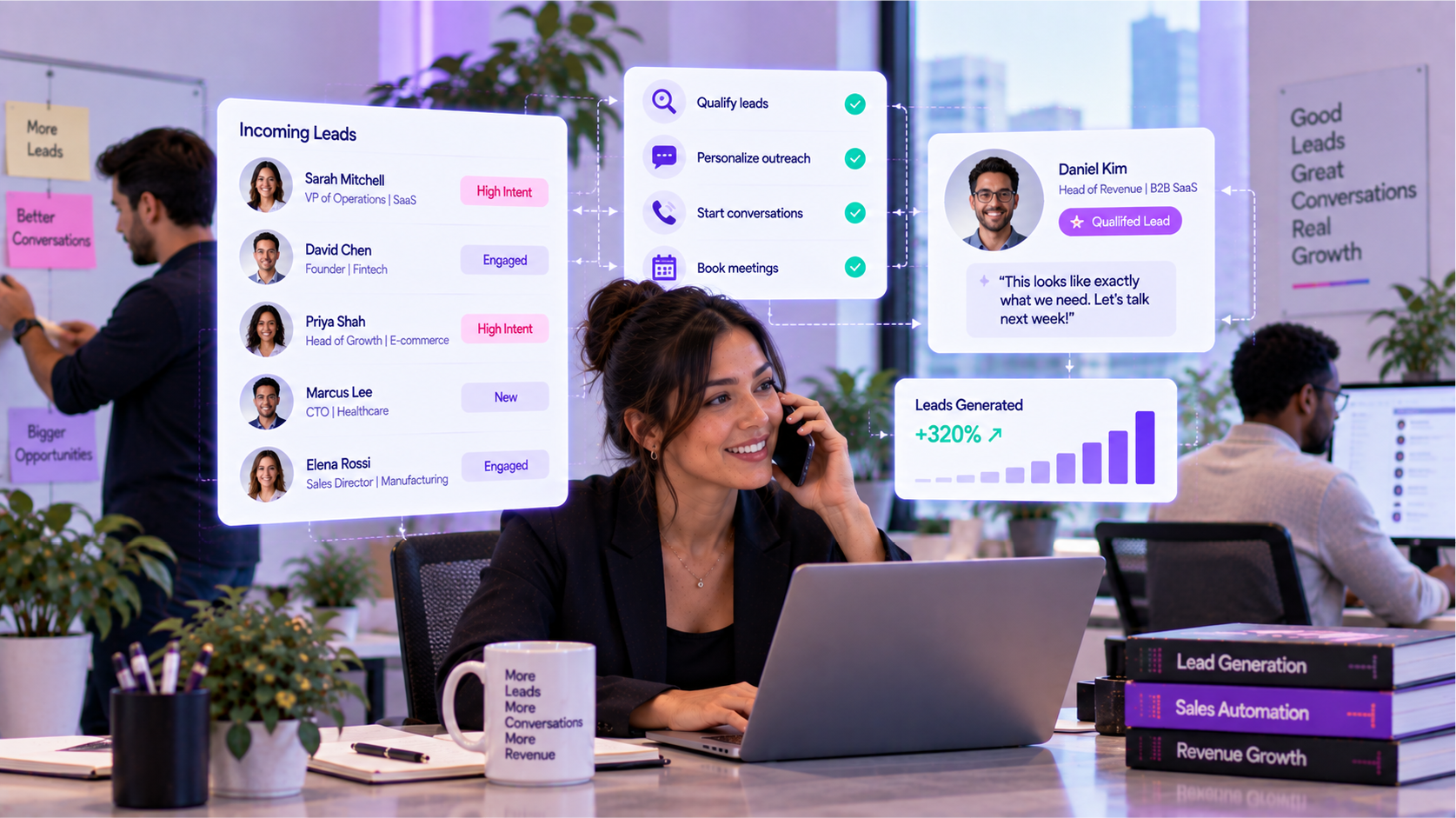
AI lead generation is the use of AI to find potential buyers and turn them into sales conversations. It covers two different jobs. The first is finding leads: building lists, enriching contact data and spotting buying signals. The second is converting the leads you already have: replying to everyone who reaches out, qualifying them and booking a meeting before they go cold.
Most guides only cover the first job. This one covers both, explains which tools do what, and shows where the second job is usually where teams lose the most pipeline.
Job 1: finding leads
This is the part most people mean by lead generation. AI tools in this group help you decide who to contact:
- List building. Search a database of companies and contacts by industry, size, role and location.
- Enrichment. Fill in missing emails, phone numbers, job titles and company details.
- Buying signals. Flag accounts that are hiring, raising money, visiting your site or researching your category.
- Personalized outreach. Draft first-touch emails and messages at scale.
These tools fill the top of the funnel. What they do not do is talk to the people who answer.
Job 2: converting the leads you already have
Every form fill, inbound call, chat message and ad lead is a buyer who raised a hand. Those are the most valuable leads you have, and they are the easiest to lose. A form gets a reply the next morning, a call goes to voicemail, and the lead books with whoever answered first.
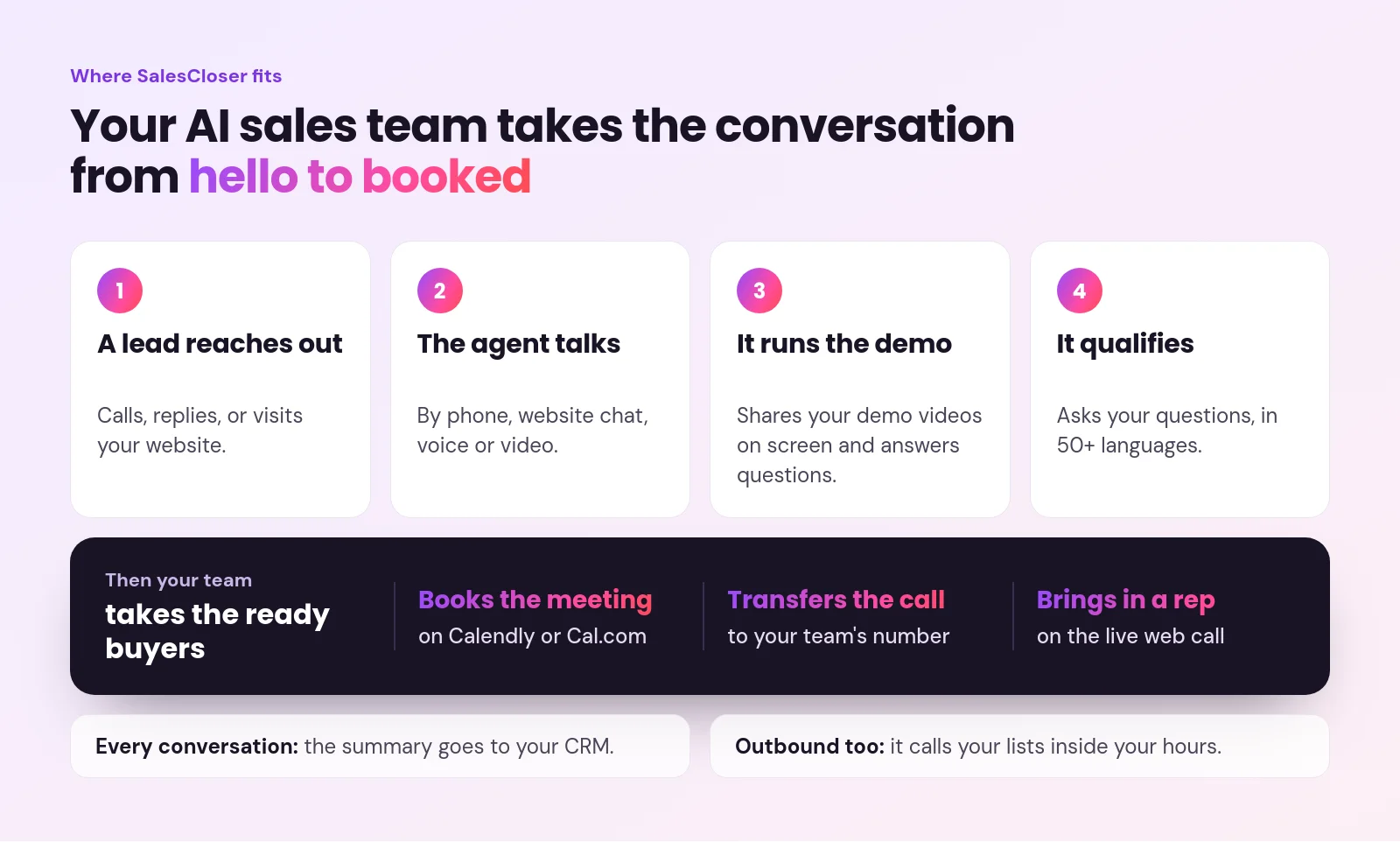
AI sales agents handle this job. Instead of finding new names, they make sure every lead who reaches out gets a real conversation:
- Respond to every lead who reaches out, by phone, website chat, voice or video.
- Answer questions from your own knowledge base, in the lead’s language.
- Qualify with your questions, so your team knows who is ready.
- Book or hand off. Put the meeting on your calendar, or transfer a ready buyer to a person.

Finding leads vs converting them
| Finding leads | Converting leads | |
|---|---|---|
| Main question | Who should we contact? | Who is ready to buy, right now? |
| Typical tools | Lead databases, enrichment, signal tracking | AI sales agents on your phone line and website |
| Output | Lists and first-touch messages | Qualified conversations and booked meetings |
| Where it fails | Bad data, low reply rates | Slow replies, missed calls, unqualified meetings |
You need both, but fix the second first. More leads do not help if the ones you already get wait a day for a reply.
How to use AI for lead generation, step by step
- Count what you already lose. Check how long new leads wait for a first reply, how many calls go to voicemail and how many forms never get a call back.
- Cover every inbound channel. Put an AI agent on your website and phone line so every lead who calls or visits gets an answer, not a voicemail or a form.
- Write your qualifying questions. Three to five questions that tell you whether a lead fits: need, timing, size, budget.
- Connect your calendar and team. Let the agent book meetings and transfer ready buyers, with a summary for the rep.
- Then add volume. Once conversion works, use list and signal tools to bring in more leads, and call new ad leads as soon as they arrive.

How SalesCloser fits
SalesCloser is your AI sales team for the second job. It does not build lead lists. It makes sure the leads you already have turn into conversations and meetings.
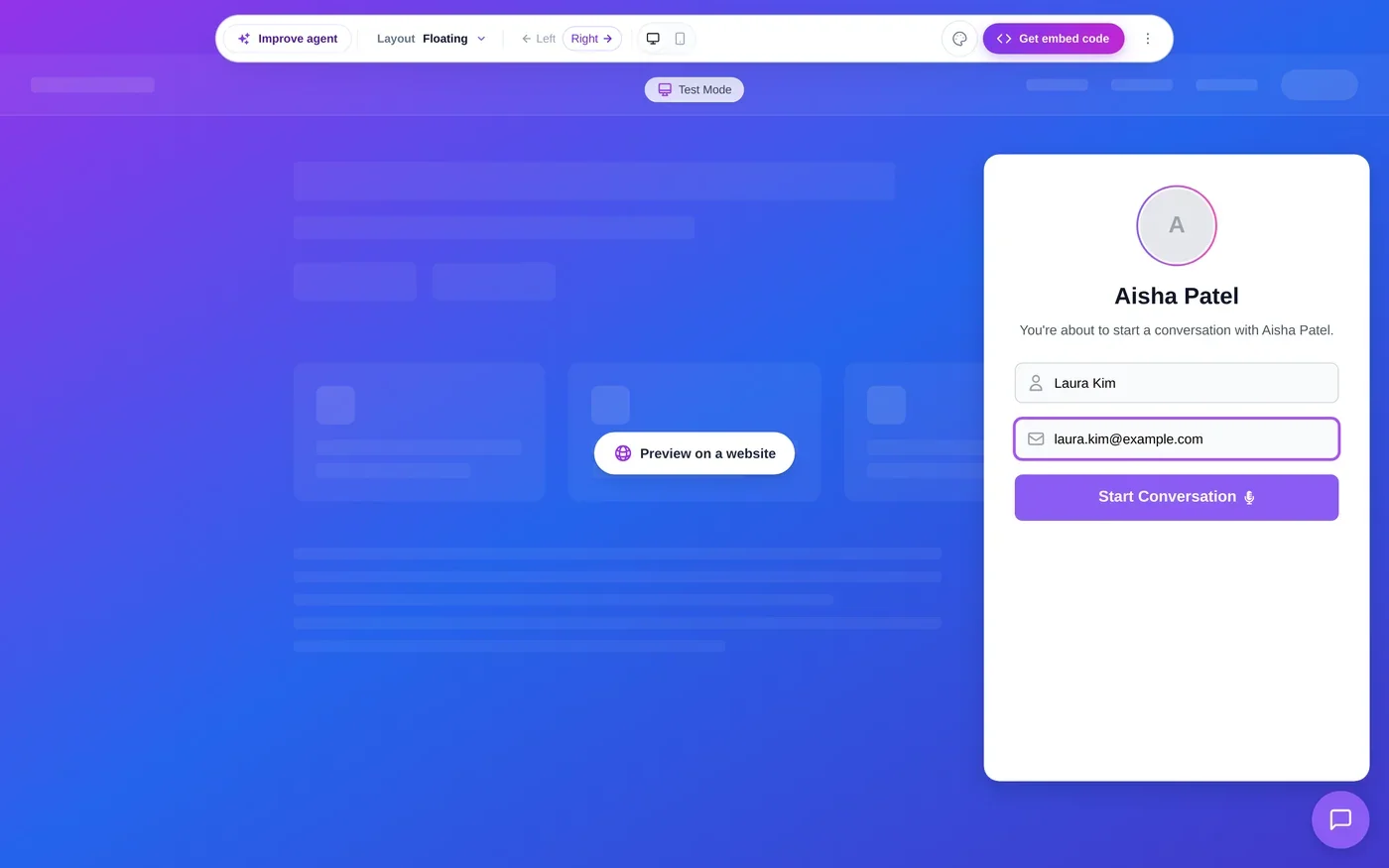
- It talks with website visitors by chat, voice or video, and answers phone calls.
- It calls your lead lists and new ad leads in outbound campaigns, inside your calling hours.
- It answers questions from your knowledge base and asks your qualifying questions.
- It books meetings on Calendly or Cal.com and transfers ready buyers to your team with a summary.
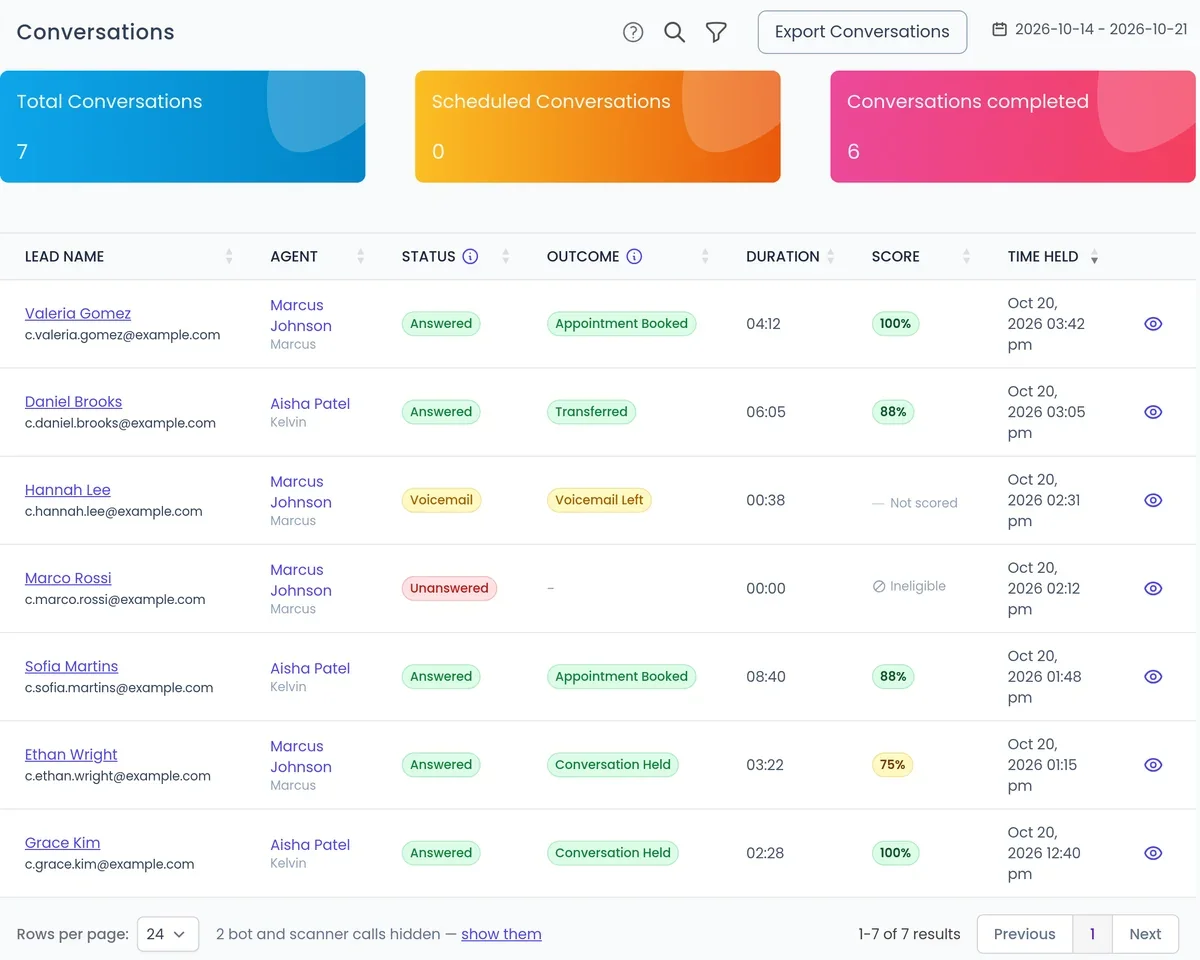
- It talks in 50+ languages, and every conversation is logged with an outcome.

To go deeper, read our guides to AI lead qualification, speed to lead and AI outbound calling, or see inbound lead response. See pricing, or talk to our AI sales agent right now on the demo page.
Frequently asked questions
What is AI lead generation?
AI lead generation is the use of AI to find potential buyers and turn them into sales conversations. It includes finding leads (list building, enrichment, buying signals) and converting them (replying, qualifying and booking meetings).
What are the best AI lead generation tools?
It depends on the job. Lead databases and enrichment tools help you find who to contact. AI sales agents such as SalesCloser help you convert the leads who reach out, by replying, qualifying and booking meetings.
Can AI qualify leads?
Yes. An AI sales agent can ask your qualifying questions during the conversation and pass ready buyers to your team or book them a meeting.
Does SalesCloser find new leads?
No. SalesCloser does not build lead lists. It talks with the leads you already have, on your website, your phone line and in outbound call campaigns.
Will AI replace my sales team?
No. The AI handles the first conversation, qualification and booking. Your team takes the meetings and closes.