
Develop an AI Sales Agent Without a Development Team
To successfully develop an AI Sales Agent, it is crucial to consider various strategies that enhance its capabilities and effectiveness in real-world scenarios.
A Complete Guide
Learn how to Develop an AI Sales Agent Without a Development Team
Unlock the potential of AI sales agents using no-code solutions tailored for non-developers.
This guide provides actionable steps for building effective AI sales agents using no-code platforms, empowering teams without technical expertise to harness AI capabilities.
Understanding Key Concepts
Integration hurdles, ambiguous prompts, and maintaining optimal performance over time challenge development. Solutions include seamless integration planning, prompt structuring for clarity, and systematic testing and monitoring.
Common Challenges and How SalesCloser AI Solves Them
Traditional Challenges:
The AI Sales Agent you develop should always aim to provide a seamless experience for users.
The development and deployment of a robust AI sales agent often encounter these significant challenges:
Integration Hurdles:
The technical challenge of achieving flawless compatibility and data synchronization between new AI models and often complex or legacy business systems.Ambiguous/Flawed Prompts:
The difficulty of writing prompts that are clear enough to prevent the AI from generating vague, inaccurate, or off-script responses, which can harm the sales interaction.Maintaining Optimal Performance Over Time:
The challenge of regularly evaluating performance and making necessary adjustments, as AI models can “drift” or become less effective as customer language and market conditions change.
SalesCloser AI Solutions:
Best Practices for Building a Robust Agent
To build a reliable and highly functional AI sales agent, focus on executing these core best practices:
Seamless Integration Planning:
Dedicate resources to planning and executing the process of seamlessly connecting the AI models with all existing sales, CRM, and communication systems to ensure uninterrupted data flow.Prompt Structuring for Clarity:
Invest time in carefully designing the system prompts and internal logic for clarity and precision, ensuring the agent understands its instructions and role perfectly in every scenario.Systematic Testing and Monitoring:
Establish a continuous cycle of rigorous testing and regular performance monitoring to consistently evaluate functionality and identify opportunities for optimization and improvement.
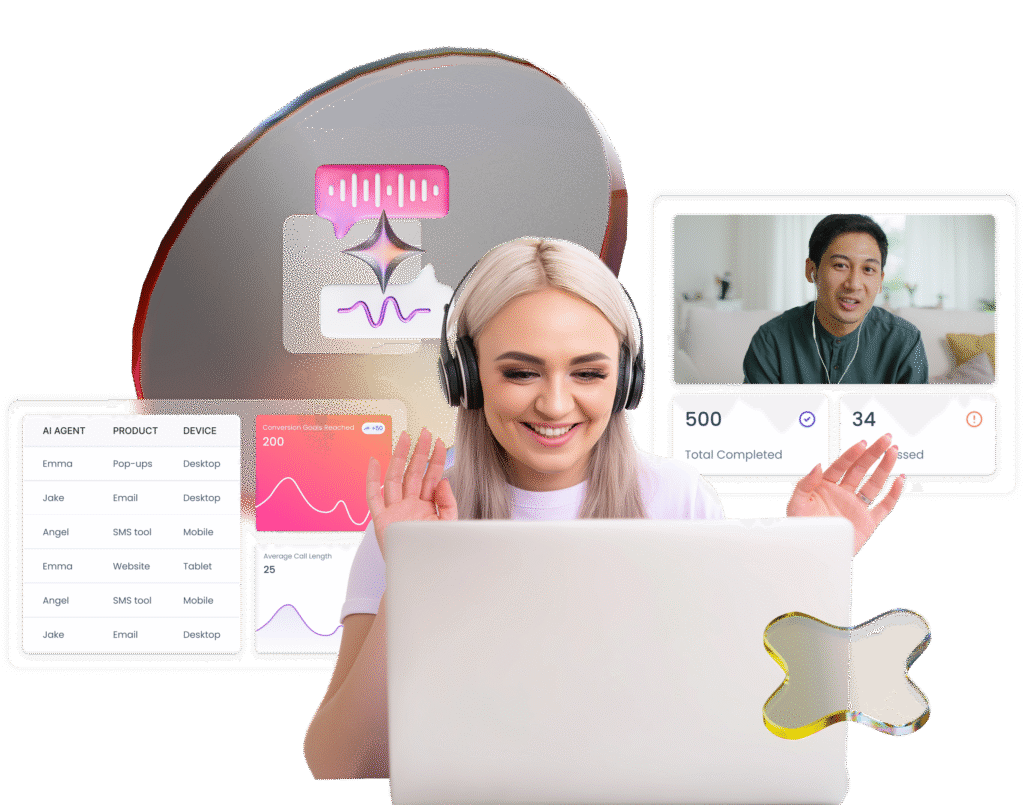
Unlock The Power Of AI Sales Conversations
Say goodbye to missed opportunities — let AI handle your leads while you focus on closing.
Who This Guide Is For
Understanding your audience is key when you develop an AI Sales Agent to tailor its responses and improve user satisfaction.
This guide is beneficial for:
• Sales Teams seeking automation.
• Marketing Departments wishing to enhance lead generation.
• Customer Support Teams aiming to improve response times.
Setting Up the Workflow
The workflow for creating an AI sales agent can be broken down into structured steps that ensure efficiency and effectiveness.
By refining the workflow as you develop an AI Sales Agent, you can ensure efficiency and effectiveness in its operations.
Step 1: Define the Workflow
Begin by outlining the desired workflow, considering:
• Webhook Triggers: Identify how your agent will receive messages.
• Actionable Outcomes: Determine what actions the agent should take (e.g., send emails, update CRMs).
When you develop an AI Sales Agent, you ensure that it is equipped to handle diverse customer interactions and make informed decisions.
Once you decide to develop an AI Sales Agent, make sure to evaluate the impact on your overall sales strategy.
Step 2: Choose the Right Platform
Choosing the right platform is vital to develop an AI Sales Agent that meets your business goals and integrates seamlessly with existing systems.
Select a no-code platform that fits your needs, such as:
• Latenode: Great for visual builders.
• Zapier: Ideal for simple automations.
• Bubble: Suitable for full web app development.
Step 3: Implement Prompting Practices
Use structured prompts that return machine-parseable JSON. Example:
• Prompt: ‘Summarize the inquiry and categorize it as urgent or standard.
• Expected output: {\urgency\”: \””urgent\””
Step 4: Customer needs immediate assistance
Step 4: Monitor and Refine
To effectively monitor your AI sales agent, it is important to track various metrics that indicate the success of the agent you develop.
SalesCloser AI Solution:
Continuously test and monitor the system’s performance. Tip: Set up logging to capture errors and refine responses based on user interactions.
Aspect 1: Escalation Protocols
Incorporate human oversight to validate AI decisions, especially in high-risk scenarios.
Aspect 2: Fact-Checking Mechanisms
Establish clear escalation protocols:
• Define thresholds for human review.
• Train staff to handle escalated issues promptly.
SalesCloser AI Solution: Implement fact-checking routines to verify outputs.
Regularly assess the performance of the AI sales agent to ensure optimal functionality.
Regular assessment is vital to ensure that the AI sales agent you develop remains effective and responsive to market changes.
As customer needs evolve, it is necessary to iterate on the AI sales agent you develop to maintain its relevance.
Key Metric 1: Conversion Rates
Track conversion rates to evaluate the effectiveness of the AI agent in closing sales.
Key Metric 2: Response Time
One of the key metrics to consider when you develop an AI Sales Agent is how effectively it can close sales and retain customers.
Monitor response times to ensure timely engagement with customers.
Key Metric 3: User Satisfaction
As you develop an AI Sales Agent, adaptability is vital to ensure it evolves with changing customer expectations.
Gather feedback to measure user satisfaction and improve interaction quality.
Key Metric 4: Retention Rates
Retention rates are a critical indicator of success when you develop an AI Sales Agent that connects well with customers. To measure success accurately, establish clear benchmarks once you develop an AI Sales Agent.
Evaluate retention rates to gauge long-term effectiveness of interactions.
Adopt a strategy focused on continuous improvement for sustained success.
Strategy 1: Regular Updates
Schedule regular updates to the AI model and workflows to adapt to changing customer needs.
Strategy 2: Training and Feedback
Provide ongoing training for team members on utilizing the AI effectively based on feedback.
Strategy 3: Data-Driven Decisions
Accountability in your processes will enhance the integrity of the AI Sales Agent you develop.
Step Into The Future Of Closing
By focusing on user-centric design principles, you can develop an AI Sales Agent that resonates with your audience.
SalesCloser AI empowers your team with AI-driven insights to convert more prospects into customers.

Utilize analytics and metrics to inform decisions and refine strategies.
Data-driven decisions play a crucial role in refining processes as you develop an AI Sales Agent.
Scenario 1: Real-World Example Workflows
By implementing effective workflows, businesses can significantly enhance the functionality of the AI Sales Agent they develop.
Setting clear objectives is vital as you develop an AI Sales Agent to ensure it meets your business’s specific needs.
Communication is key when you develop an AI Sales Agent; it should resonate with your target audience.
Scenario 2:
An AI sales agent qualifies leads by assessing incoming messages and categorizing them based on predefined criteria.
The ability to analyze data greatly enhances the capabilities of the AI Sales Agent you develop.
Successful lead qualification is achieved through the methods you implement when you develop an AI Sales Agent.
Scenario 3:
The agent automatically provides customers with order status updates based on their queries.
Real Stories of Success and Transformation
Establishing robust metrics will ensure the AI Sales Agent you develop is effective and meets your goals.
What Our Clients Are Saying
Best Practices
Best Practice 1: Start Small
AI agents handle routine customer inquiries, freeing up human agents for more complex issues.
Best Practice 2: Engage Stakeholders
Best Practice 2: Begin with a narrow focus for the AI sales agent to minimize complexity and maximize potential impact.
Best Practice 3: Iterate Based on Feedback
Best Practice 3: Involve relevant stakeholders during the development process to gather insights and align objectives.
Summary of Key Insights:
Continuously refine the AI agent based on user feedback and performance metrics to enhance effectiveness.
Key Takeaways:
Implementing a no-code AI sales agent can revolutionize customer engagement and streamline operations.