
Nobody likes waiting on hold. You dial a number, hoping for a quick answer. Instead, you hear a looped melody that sounds like it was recorded in a tin can. Minutes turn into a half-hour. Eventually, you hang up. This scenario happens thousands of times every day. When it happens to your business, you lose more than just a call. You lose a customer, a lead, and your reputation.
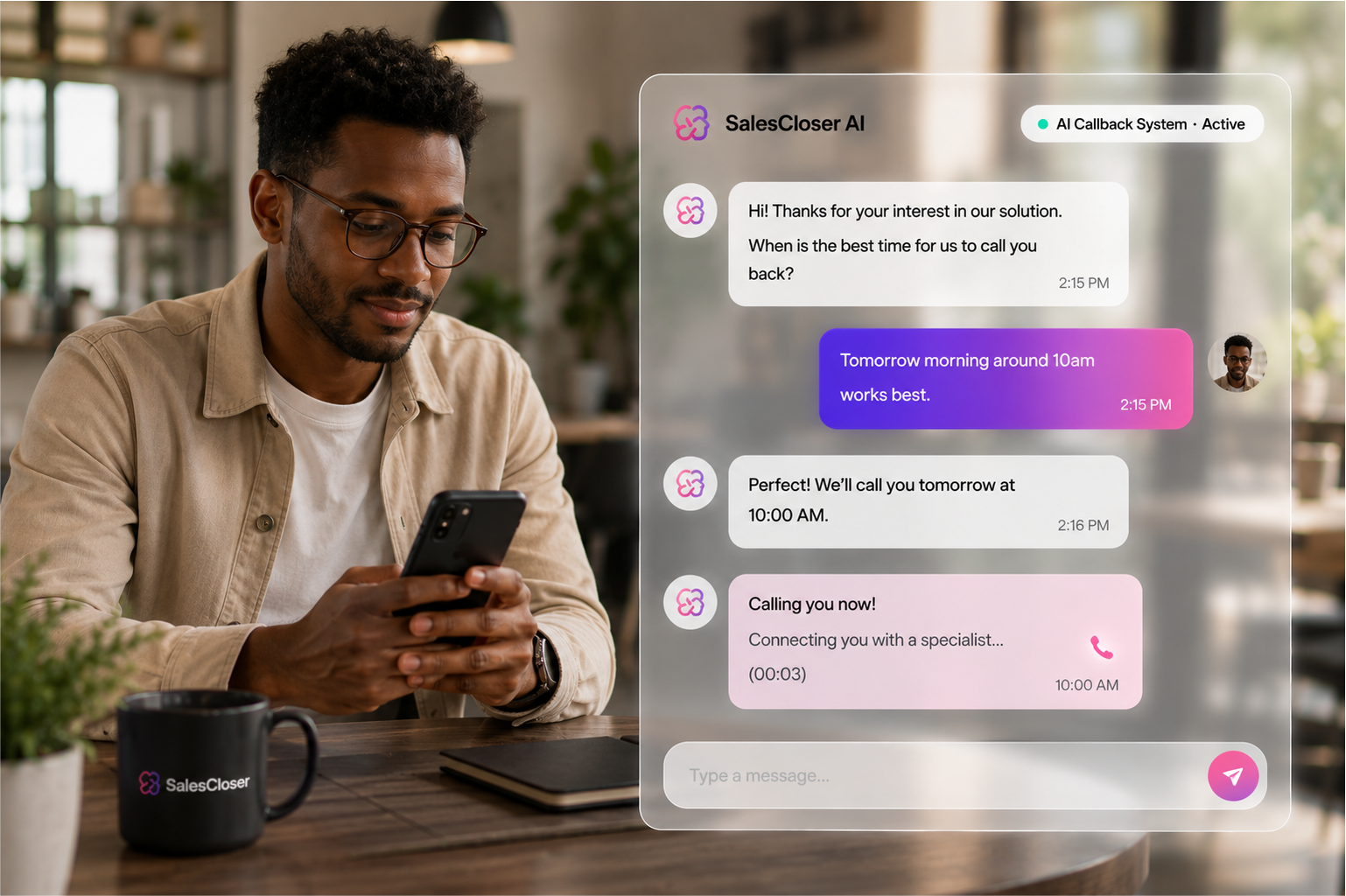
The modern market moves fast. Customers expect immediate responses. If you make them wait, they will find a competitor who doesn’t. This is where an automated customer callback system changes the game. This technology removes the frustration of waiting. It respects the customer’s time. Most importantly, it ensures your sales team never misses a high-value lead again.
In this guide, we will explore how virtual queueing works. We will look at why AI-driven callback software is the future of the call center. Finally, we will show you how SalesCloser.ai uses intelligent AI agents to transform your lead response strategy.
The True Cost of Long Hold Times
Long hold times act like a leak in your revenue bucket. You spend thousands of dollars on marketing to get the phone to ring. However, if your team is too busy to answer, that money goes to waste.
High Call Abandonment Rates
When hold times exceed two minutes, abandonment rates spike. Most customers will hang up after five minutes of waiting. These are not just “missed calls.” They are missed opportunities. Once a customer hangs up in frustration, the chance of them calling back is slim.
Negative Customer Experience (CX)
First impressions matter. If a customer’s first interaction with your brand is a 20-minute wait, they already feel undervalued. This frustration carries over into the conversation once they finally reach an agent. This makes the agent’s job harder and reduces the chance of a successful sale.
Wasted Lead Spend
Marketing teams work hard to generate inbound interest. Every “abandoned” call represents a Cost Per Lead (CPL) that you have already paid for. If your call center cannot handle the volume, your customer acquisition costs (CAC) will skyrocket.
What is an Automated Customer Callback System?
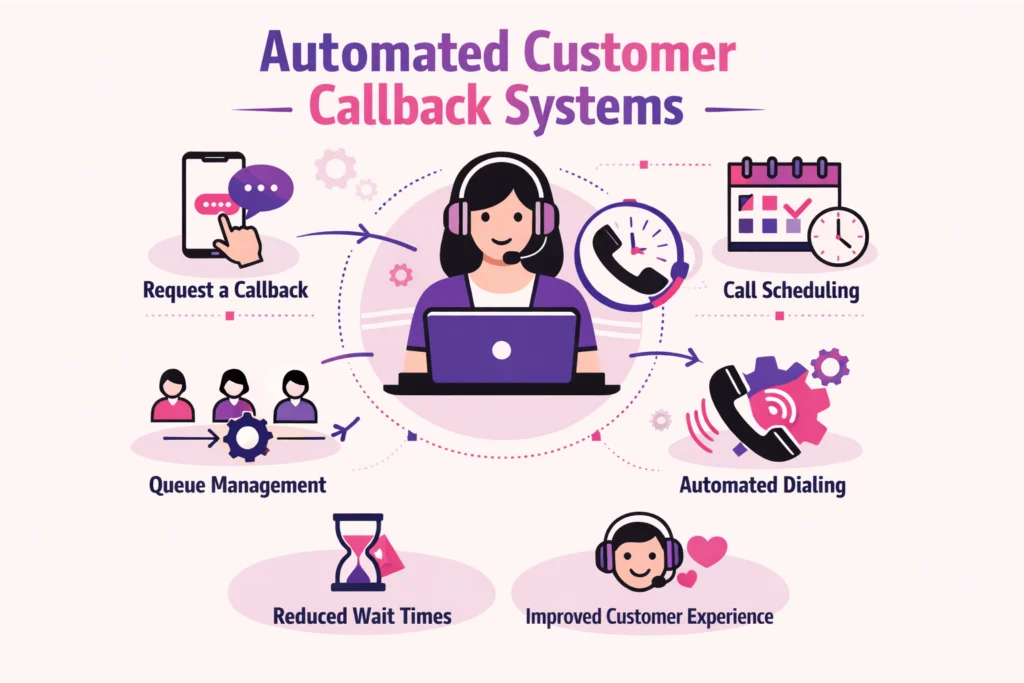
An automated customer callback system is a digital solution that manages inbound call traffic. Instead of forcing callers to stay on the line, the system offers them a choice. They can stay on hold or hang up and receive a call back when an agent is free.
This process is often called a virtual queueing system. The customer keeps their place in line without actually being on the phone.
How Virtual Queueing Works
- The Trigger: A customer calls and encounters a wait time that exceeds a specific threshold.
- The Offer: An automated voice invites the customer to request a callback.
- The Capture: The customer confirms their phone number and hangs up.
- The Queue: The system holds the customer’s position in the digital line.
- The Execution: When a human agent becomes available, the system automatically dials the customer and connects the two parties.
Strategic Benefits of AI Callback Software
Traditional callback systems have been around for a while. However, AI has taken this technology to a new level. Modern AI callback software does more than just hold a place in line. It uses data and intelligence to optimize the entire interaction.
1. Reduce Call Abandonment
By giving customers an alternative to waiting, you keep them in your sales funnel. Even if they hang up, they are still “connected” to your brand. This drastically reduces the number of people who give up and call a competitor.
2. Improve Customer Satisfaction
A callback shows that you respect the customer’s time. It gives them the freedom to go about their day. When they receive the call back exactly when promised, it builds trust. They start the conversation feeling respected rather than annoyed.
3. Smooth Out Peak Call Volumes
Call centers often experience “spikes” at certain times of day. Instead of hiring more staff just for those peaks, an automated system spreads the workload. It moves callers from high-traffic periods to slightly quieter times without losing the lead.
4. Improve Agent Morale
Agents who spend all day talking to angry, frustrated customers who have been waiting on hold often burn out. When customers are called back, they are usually in a better mood. This leads to more productive conversations and less stress for your team.
Why “Speed to Lead” Is Your Most Important Metric
In sales, timing is everything. Studies show that responding to a lead within five minutes increases the chance of conversion by nearly 100 times compared to waiting 30 minutes.
An automated lead response ensures that no inquiry goes cold. If a potential client calls your sales line and you are busy, the AI captures that lead immediately. It guarantees a follow-up. In a world where 78% of customers buy from the company that responds first, this is a massive competitive advantage.
Intelligent Call Routing: Getting the Right Caller to the Right Agent
A basic callback system just puts people back in line. An intelligent call routing system uses AI to understand who is calling and why.
For example, if a high-value “VIP” client calls, the AI can prioritize their callback. If a customer calls about a specific product, the system can route the callback to the agent best trained in that area. This ensures that when the call happens, it is high-quality and relevant.
Transforming the Experience with SalesCloser.ai
While basic callback systems are helpful, SalesCloser.ai provides a much more sophisticated solution. It doesn’t just manage a queue; it uses intelligent AI agents to bridge the gap between a missed call and a closed deal.
Beyond the Virtual Queue
SalesCloser.ai uses advanced AI agents that act as a first point of contact. When a customer opts for a callback, the experience doesn’t end there. The moment an agent is available, the SalesCloser AI agent initiates the outbound call.
Contextual Handshakes
One of the biggest frustrations with traditional callbacks is the “Who is this?” moment. The customer answers the phone, but there is a delay, or the agent doesn’t know why they are calling.
SalesCloser.ai solves this. The AI agent greets the customer by name. It reminds them why they are receiving the call. It can even ask a few qualifying questions to gather data. Then, it performs a “warm transfer” to the human agent.
Seamless Transfers
The human agent receives a dashboard with all the context. They know the customer’s name, their history, and what the AI agent just discussed. This turns a potential source of friction into a polished, professional brand experience.
How AI Agents Improve Sales Performance
Using AI for your automated customer callback system isn’t just about saving time. It’s about making more money. Here is how SalesCloser.ai boosts your bottom line:
| Feature | Impact on Sales |
| Instant Response | Captures leads before they move to competitors. |
| Data Enrichment | AI gathers customer info before the human agent joins. |
| Reduced Idle Time | Agents spend less time dialing and more time talking. |
| 24/7 Availability | The system can schedule callbacks even after business hours. |
| Consistent Branding | Every caller gets a polite, professional greeting every time. |
Reducing Hold Times Through Customer Experience Automation
The goal of customer experience automation is to remove friction. Every time a customer has to repeat their account number or wait for a person, friction increases.
By using an AI-powered callback system, you remove the most significant friction point: the wait.
Predictive Analytics
Advanced systems like SalesCloser.ai can predict when wait times will increase. They can proactively offer callbacks before the customer even gets frustrated. They can also estimate callback times with high accuracy, so customers know exactly when to expect a callback.
Multi-Channel Integration
An automated callback system doesn’t have to start with a phone call. A customer on your website could click a “Call Me Back” button. The AI then enters them into the same intelligent queue. This creates a unified experience across all platforms.
Never Miss a Lead: The “Safety Net” for Your Business
Think of an automated customer callback system as a safety net. No matter how well you staff your call center, there will always be unexpected surges. A celebrity mentions your product, a marketing campaign goes viral, or a technical glitch causes a spike in support calls.
Without a callback system, these surges result in lost revenue and angry tweets. With the system in place, you capture 100% of the demand. You simply process it in a way that the customer finds acceptable.
Implementing an Automated Callback System: Best Practices
If you are ready to implement this technology, follow these steps to ensure success:
1. Set Clear Expectations
When the system offers a callback, give an estimated time. “We will call you back in approximately 15 minutes” is much better than “We will call you back soon.”
2. Respect the Time Slot
If your system promises a call in ten minutes, it must deliver. AI agents help ensure outbound dialing occurs as soon as an agent becomes available.
3. Use Local Presence
When the system calls the customer back, use a local area code if possible. People are more likely to answer a call from a familiar number than a 1-800 number or a “Blocked” ID.
4. Provide an “Opt-Out.”
Always give the customer the choice. Some people truly don’t mind waiting. Others may leave a voicemail instead. Giving the customer control is the key to a positive experience.
5. Train Your Agents
Make sure your human agents know how to handle callback transfers. They should acknowledge the callback: “Hi Sarah, I see you requested a callback regarding your upgrade. Thanks for your patience. How can I help?”
The ROI of Automated Callback Systems
Investing in call center automation is a financial decision. Let’s look at the numbers.
Suppose your average lead is worth $500. If you miss 10 calls a day due to hold-time abandonment, you are losing $5,000 in potential daily revenue. Over a year, that is $1.8 million.
An AI callback system like SalesCloser.ai might cost a fraction of that. If the system saves just two leads a day, it pays for itself almost immediately. Furthermore, you save on staffing costs. You don’t need to hire extra “buffer” staff for peak times because the virtual queue manages the flow.
Common Myths About Automated Callbacks
Despite the benefits, some businesses hesitate to use these systems. Let’s debunk a few common myths.
Myth 1: “Customers prefer to wait for a real person.”
Data suggests otherwise. Most customers prefer a callback over waiting more than three minutes. The “wait” is the pain point, not the callback itself.
Myth 2: “It makes our company seem small or automated.”
A high-quality callback system makes you look more professional. It shows you have sophisticated technology and care about your customers’ schedules. It is much more “premium” than making someone listen to hold music for an hour.
Myth 3: “The tech is too hard to set up.”
Modern AI solutions like SalesCloser.ai are designed for easy integration. They plug into your existing CRM and phone systems without requiring a complete overhaul of your infrastructure.
Industry Use Cases for AI Callback Software
Every industry that handles inbound leads can benefit from this technology.
Real Estate
Potential buyers often call while looking at a property. If they don’t get an answer, they call the next listing. An automated callback captures them while they are still standing in front of the house.
Insurance and Finance
These industries involve complex questions and high-value leads. Customers are often stressed. Offering a callback reduces their anxiety and ensures they speak to an expert who has their file ready.
E-commerce and Retail
During holiday sales or product launches, call volumes can be unmanageable. Virtual queueing keeps the sales coming in without crashing your support team.
SaaS and Tech Support
Technical issues are frustrating. If a user is already annoyed by a software bug, a long hold time will push them toward cancellation. A quick, intelligent callback shows you are on top of the problem.
How SalesCloser.ai Redefines “The Callback”
We have discussed why callbacks are important. Now, let’s talk about why SalesCloser.ai is the right partner for this journey.
Most callback software is “dumb.” It waits for a trigger and dials a number. SalesCloser.ai is “smart.” Our AI agents are trained to understand the nuances of sales conversations.
When a callback happens, SalesCloser.ai can:
- Verify Identity: Confirm that the caller is who they claim to be.
- Gauge Intent: Ask a few quick questions to see if they are ready to buy.
- Provide Information: Offer basic answers while the human agent gets ready.
- Bridge the Gap: Keep the customer engaged so they don’t hang up during the transfer.
This is customer experience automation at its finest. You aren’t just managing a queue; you are optimizing a relationship.
Transitioning to an AI-First Call Center
The transition to using an automated customer callback system is a step toward a more efficient future. As AI continues to evolve, these systems will become even more predictive.
In the future, your system might see a customer browsing your “pricing” page and proactively offer a callback before they even dial. We are moving toward a world of “zero wait time,” where the brand meets the customer exactly when and where they are needed.
Conclusion: Stop Losing Leads to the Hold Button
Every second a lead spends on hold is a second they spend reconsidering their purchase. You cannot afford to let your hard-earned leads slip away.
An automated customer callback system is the most effective way to protect your revenue and respect your customers. By implementing virtual queueing and AI-driven responses, you transform a negative experience into a positive one. You show your customers that their time is valuable.
SalesCloser.ai takes this a step further. We provide the intelligence and the agents necessary to make every callback a success. Don’t let another lead hang up in frustration. It is time to automate your lead response and watch your satisfaction scores—and your sales—climb.