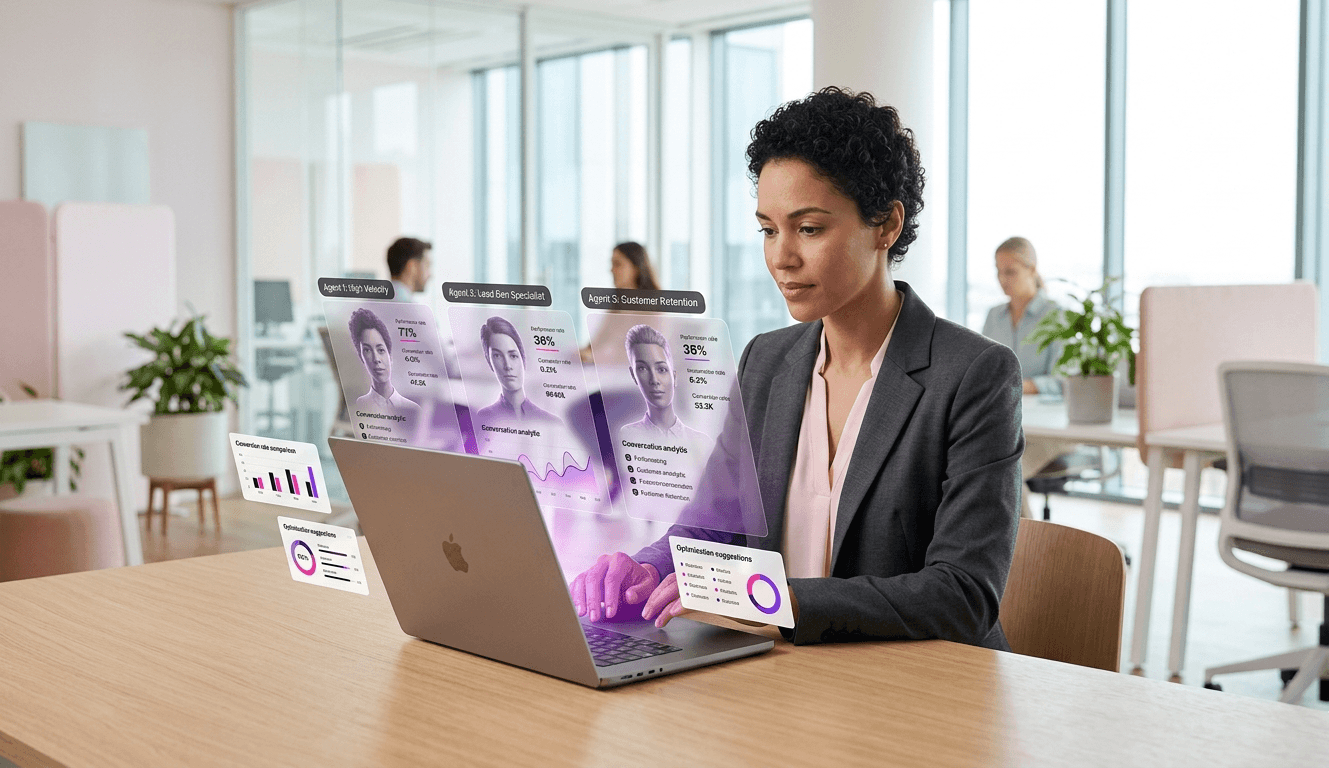
“Drive revenue with AI-Driven Behavioral Sales Personalization, using 2026 tech to decode buyer psychology and tailor every call for maximum resonance.”
Remember the last time you received a “personalized” sales email? It probably looked something like this: “Hi [Your Name], I noticed you work at [Company Name]. I’d love to chat about synergies.”
In 2015, that was cutting-edge. In 2020, it was standard. But here in 2026, that approach isn’t just outdated. It is actively hurting your brand.
We have entered a new era. The days of spraying and praying are over. The days of simple mail merges are dead. We are now living in the age of AI-driven behavioral sales personalization. This isn’t about inserting a first name into a subject line. It is about an artificial intelligence engine understanding who the prospect is, how they think, and what specific language patterns trigger their trust—before the conversation even begins.
Sales have always been a numbers game. But technology has flipped the script. It is now a psychological game. And the winner isn’t the one making the most calls. The winner is the one making the most resonant calls.
This article digs deep into this shift. We will explore how adaptive sales technology analyzes behavioral data to tailor interactions in real-time. We will look at how dynamic scripting changes the flow of a conversation on the fly. And we will see how platforms like SalesCloser.ai are leading this charge, turning cold outreach into warm, deeply human-feeling conversations at a scale we never thought possible.
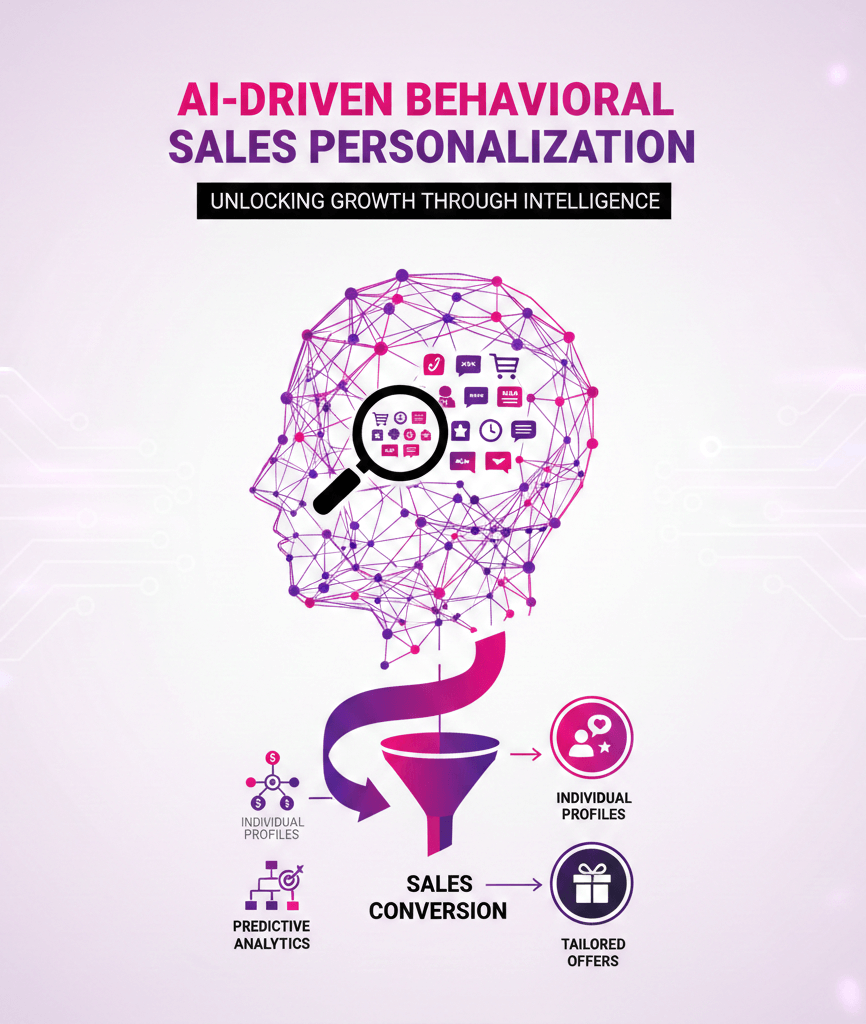
The Death of “Mail Merge” Personalization
Let’s be honest. We all know what generic outreach feels like. It feels lazy. When a prospect sees a template, their brain immediately categorizes it as “spam.” It triggers a defensive reaction.
For years, sales teams tried to fix this with data. They bought lists. They enriched their CRMs. They knew your job title, your company revenue, and maybe even your alma mater. But they didn’t know you.
They didn’t know that you prefer direct, bulleted information over long, flowery stories. They didn’t see that you get annoyed by aggressive closing tactics. They didn’t know that you tend to make decisions based on risk aversion rather than potential gain.
Data gave us context, but it didn’t provide a connection to AI-driven behavioral sales personalization, which addresses this gap. It moves beyond demographic data (who you are on paper) to psychographic data (who you are as a person). It uses behavioral analytics for sales to construct a profile of the buyer’s communication style. Then, it mirrors that style.
Think of it like a chameleon. When a chameleon walks on a green leaf, it turns green. When it walks on brown bark, it turns brown. It adapts to survive. In 2026, your sales outreach must do the same. If it doesn’t adapt, it dies.
How AI “Reads” a Prospect Before Hello
So, how does a machine know a prospect’s personality? It sounds like science fiction, but the technology is already here and maturing rapidly.
The process starts with public data. We all leave digital footprints. We write posts on LinkedIn. We comment on industry articles. We participate in panels. We tweet. We publish blogs.
Advanced AI sales personalization engines scrape this public information. But they don’t just look for keywords. They analyze syntax, tone, and structure.
The Personality Decoding Process
Here is what the AI looks for:
- Sentence Length: Does the prospect write short, punchy sentences? Or do they use long, complex clauses?
- Vocabulary: Do they use emotional words like “excited,” “fear,” or “amazing”? Or do they use logical words like “analyze,” “metric,” and “ROI”?
- Punctuation: Do they use exclamation points? Emojis? Or is it strictly periods and semicolons?
- Engagement Style: When they comment on other posts, are they supportive? Argumentative? Inquisitive?
By processing this data, the AI maps the prospect to established psychological frameworks. The most common is the DISC profile:
- Dominance (D): Direct, strong-willed, results-oriented.
- Influence (I): Outgoing, enthusiastic, optimistic.
- Steadiness (S): Even-tempered, accommodating, patient.
- Conscientiousness (C): Analytical, precise, private.
A “D” type prospect wants the bottom line immediately. A “C” type prospect wants to see the whitepaper and the data methodology. If you pitch a “D” with a “C” script, you lose them in ten seconds. They get bored. If you pitch a “C” with an “I” script (lots of hype and energy), you lose them. They think you are fluff.
The AI sales personalization engine instantly identifies these traits. It tags the prospect not just as “VP of Marketing,” but as “VP of Marketing – High Conscientiousness, Low Influence.”
This tag dictates the entire strategy of the upcoming call.
Dynamic Scripting: The Fluid Conversation
Once the AI understands the prospect’s personality, we move to dynamic sales scripting.
In the past, sales reps had a static script. It was a PDF or a piece of paper taped to the wall. They read the same lines to everyone. “Hi, I’m calling from X., we help companies save Y.”
That doesn’t work for hyper-personalization in sales.
In 2026, the script is alive. It is a fluid, changing entity. Let’s look at how adaptive sales technology changes the script based on the personality profiles we discussed above.
Scenario A: The “Dominant” Prospect
The AI detects a short attention span, a focus on results, and a dislike of small talk. The Dynamic Script:
- Opener: “Hi John. I’m calling about cutting your cloud spend by 20%. Is now a bad time?”
- Tone: Fast-paced, authoritative, low pitch.
- Content: Focus on ROI, speed of implementation, and competitive advantage.
- Closing: “Do you want to see the numbers next Tuesday?”
Scenario B: The “Steady” Prospect
The AI detects: Values relationships, dislikes risk, prefers consensus, and a slower pace. The Dynamic Script:
- Opener: “Hi Sarah, hope you’re having a calm week. I’m reaching out because we’ve been helping teams like yours navigate the new compliance laws…”
- Tone: Warm, slower-paced, reassuring, higher pitch variation (melody).
- Content: Focus on safety, support, team buy-in, and case studies of similar companies.
- Closing: “How does your team usually evaluate new tools? We can take this at your pace.”
See the difference? The product is the same. The goal is the same. But the interaction is entirely different.
This is customer-centric selling at its purest. You are meeting the buyer where they are. You are speaking their language. And because of that, the friction disappears.
Real-Time Analytics: Adjusting Mid-Sentence
The preparation is only half the battle. The real magic happens during the call.
In 2026, AI emotional intelligence monitors the conversation in real-time. It doesn’t just listen to the words. It listens to the sound of the voice.
It analyzes:
- Latency: How long does the prospect pause before answering? A long pause might mean hesitation or confusion.
- Volume: Did they suddenly get louder? They might be agitated or passionate.
- Interruption: Did they cut the speaker off? They are engaged or impatient.
- Sentiment: Are they using positive or negative words?
Let’s say the AI (or the human rep guided by AI) is pitching a price. The prospect says, “Oh… okay.”
A rookie salesperson might keep talking. But the data-driven sales conversation tool flags this instantly. It detects a drop in pitch and a micro-delay. It flashes an alert: Objection Detected – Price Sensitivity.
The system immediately reroutes the script. It prompts a pivot: “I hear some hesitation there. Is the budget a concern, or are you wondering about the value scaling?”
This feedback loop is instantaneous. It turns every sales rep into a master empath. It ensures that no objection goes unnoticed and no buying signal gets missed. It creates personalized sales outreach that feels like a conversation with an old friend who just gets you.
The Technology Behind the Curtain
You might be wondering, “How is this actually possible?”
It relies on a convergence of three major technologies that have matured by 2026.
1. Large Language Models (LLMs) with Low Latency
We aren’t talking about the chatbots of 2023 that took five seconds to think. We are talking about hyper-fast models. They can process input and generate a response in milliseconds. This allows for natural, fluid interruptions and back-and-forth banter.
2. Voice Synthesis and Cloning
The robotic voices are gone. Modern AI voices have “breath.” They have vocal fry. They stumble naturally. They can whisper. They can laugh. This human-like audio delivery is crucial for AI-driven behavioral sales personalization. If the voice sounds fake, the trust breaks. If the voice sounds real, the brain accepts the message.
3. Predictive Behavioral Databases
This is the fuel. Companies now have access to massive, anonymized datasets that correlate linguistic patterns with buying behaviors. The AI doesn’t just guess; it calculates probabilities. It knows that 82% of people who use the word “innovative” in their bio respond well to product demos that feature beta features. It leverages this probability to guide the sale.
Why The “Human Touch” Needs AI
There is a paradox here. We are using machines to be more human.
Critics say this removes the human element. But the opposite is true. Traditional sales training turned humans into robots. We forced reps to memorize scripts. We moved them to handle objections with flowcharts. We stripped away their ability to listen because they were too busy thinking about what to say next.
Adaptive sales technology frees the conversation.
When an AI handles the cognitive load of analyzing personality and retrieving data, the interaction becomes smoother. The buyer feels heard. The solutions offered are actually relevant.
Think about a concierge at a 5-star hotel. They know your name. They know you like extra pillows. They know you are allergic to peanuts. Is that creepy? No. It is excellent service. It makes you feel valued.
That is what we are doing with sales. We are moving from a transactional “buy my stuff” model to a service-oriented “let me solve your specific problem in the way you prefer” model. This is the future of customer engagement.
Enter SalesCloser.ai: The Vehicle for 2026
You now understand the core concept. You see the immense value in psychological mapping. But how do you actually execute this? You cannot simply ask your human sales team to become overnight experts in behavioral psychology while managing hundreds of leads. You need a specialized tool that does the heavy lifting for them.
This is where SalesCloser.ai changes the game.
SalesCloser.ai is not just another CRM wrapper or a basic dialer. It is a sophisticated platform built around AI sales agents designed for this exact era of AI-driven behavioral sales personalization. These agents act as digital extensions of your best performers. They serve as the engine that powers the hyper-customized, high-converting interactions we have discussed.
What Makes SalesCloser.ai Different?
Most tools focus on organizing your leads in a list. SalesCloser.ai focuses on actually converting those leads through the power of AI agents and behavioral science. These agents don’t just follow a script; they understand the person on the other end.
1. The “Pre-Call” Intelligence Scan
Before an AI agent ever initiates a contact, SalesCloser.ai performs a deep scan of the prospect. It pulls data from the open web to build a comprehensive DISC profile. This provides the AI agent with a “Cheat Sheet” on exactly how to speak to that specific human. By identifying whether a prospect is data-driven or relationship-oriented before the call starts, the system ensures your outreach never goes in blind.
2. Autonomous AI Sales Agents
SalesCloser.ai features advanced AI agents capable of holding full, bi-directional voice conversations. These aren’t simple bots playing recordings. They listen, process intent, and respond with human-like nuance. These agents create data-driven sales conversations autonomously. They can handle the initial discovery, qualify the lead using the prospect’s preferred communication style, and even book the meeting directly on your calendar.
3. Real-Time Adaptation Engine
This is the crown jewel of the platform. As a conversation unfolds, the AI sales agent analyzes the audio stream in real-time. If the prospect sounds rushed or impatient, the agent speeds up the delivery. If the prospect sounds confused, the agent slows down and simplifies the vocabulary. This “Real-Time Adaptation” adjusts the “temperature” of the call millisecond by millisecond to maintain perfect rapport.
4. Infinite Scalability for High Performance
Hiring, training, and retaining 1,000 top-tier sales experts is nearly impossible. However, you can deploy 1,000 SalesCloser.ai agents instantly. Each agent performs with the emotional intelligence and precision of your top closer. This allows your business to deploy personalized sales outreach to 10,000 leads in a single day without sacrificing the quality or the “human” feel of the interaction.
The SalesCloser.ai Advantage
Imagine a world where every single lead in your pipeline receives a call from your most talented salesperson. This is a salesperson who never has a “bad day,” never forgets a key detail, and never loses their cool. They instantly build rapport because they mirror the customer’s personality perfectly every time.
That is the true promise of SalesCloser.ai. By leveraging specialized AI agents, the platform brings the theoretical power of adaptive sales technology to life. It democratizes elite sales psychology, ensuring that your company’s sales performance isn’t limited by headcount, but only by your ambition.
The Psychology of Trust in a Digital World
Why does this matter so much? Because trust is at an all-time low.
Buyers are skeptical. They have been burned by vaporware. They are tired of spam calls. They have their guards up.
The only way to lower that guard is through resonance. Resonance occurs when the sender’s frequency matches the receiver’s.
When you use AI-driven behavioral sales personalization, you are essentially tuning your radio to the buyer’s station. You aren’t forcing them to listen to your static. You are playing their music.
This creates a subconscious feeling of safety. When a seller speaks our language, we assume they understand our problems. If they know our problems, we trust their solutions.
This isn’t manipulation. It is empathy at scale. It takes time (via technology) to understand the person on the other end of the line.
Practical Application: How to Prepare Your Organization
Adopting this technology requires a shift in mindset. You cannot just plug it in and walk away. You need to align your strategy with the capabilities of 2026.
1. Audit Your Content Library
Your AI needs fuel. If you only have one case study and one script, the AI can’t adapt. You need modular content. You need a “technical” and a “visionary” version of your pitch. You need “ROI-focused” emails and “relationship-focused” emails. Give the AI the building blocks it needs to build dynamic sales scripting.
2. Clean Your Data
Behavioral personalization relies on accurate identity resolution. If you have the wrong LinkedIn profile linked to a lead, the analysis will be wrong. Data hygiene becomes more critical than ever.
3. Redefine Sales Roles
Your human sales team isn’t going away, but their jobs are changing. They will spend less time dialling and more time on high-level strategy and closing the most complex deals. They will become the “pilots” of the AI system. They need to understand how to interpret the AI’s behavioral data.
Ethical Considerations: The Fine Line
We must address the elephant in the room. Is this invasive?
Accessing public data to understand a personality is legal, but it must be done with respect. The goal of hyper-personalization in sales should always be to improve the buyer’s experience, not to trick them.
Transparency is key. In 2026, regulations will likely require disclosure when an AI is speaking. But beyond compliance, there is an ethical obligation to use these insights to help, not to harass.
If an AI detects that a prospect is stressed or angry, the ethical move is to back off and offer space, not to press harder. The best systems, like SalesCloser.ai, are programmed with these ethical guardrails. They prioritize the long-term relationship over the short-term win.
The Metrics of Success
How do you measure this? In the old days, we measured “Call Volume” and “Email Open Rates.”
In the era of AI-driven behavioral sales personalization, the metrics change. We look at:
- Conversation Depth: How many turns did the conversation take? (More is usually better.)
- Sentiment Shift: Did the prospect start negative and end positive?
- Resonance Score: A computed metric of how well the pitch matched the prospect’s profile.
These metrics give a much more accurate picture of sales health. They measure quality, not just quantity.
Looking Beyond 2026
If this is 2026, what does 2030 look like?
We will likely see the integration of visual cues through video calls. AI will analyze facial micro-expressions to detect deception or delight. We might see VR sales environments where the environment itself adapts to the buyer’s personality.
But the core principle will remain unchanged: Sales is about people.
Technology changes the medium, but it doesn’t change the mission. The mission is to solve problems for people. The more we know about those people—their fears, their drivers, their communication styles—the better we can serve them.
Conclusion
The era of the generic sales pitch is over. It has been replaced by a more intelligent, more empathetic, and highly efficient approach.
AI-driven behavioral sales personalization is not just a buzzword. It is the new standard. It leverages adaptive sales technology to turn cold data into warm connections. It uses behavioral analytics for sales to ensure that every interaction adds value.
We are moving away from interrupting people and moving toward understanding them.
Tools like SalesCloser.ai are the bridge to this future. They allow businesses to scale empathy. They allow you to treat ten thousand prospects with the same individual care you would give your biggest client.
In 2026, you have a choice. You can sound like everyone else—robotic, generic, and annoying. Or you can sound like the person your prospect has been waiting to talk to.
The technology is ready. The data is there. The only question is: Are you prepared to stop selling and start connecting?
FAQs
What is AI-Driven Behavioral Sales Personalization?
It is the use of artificial intelligence to analyze a prospect’s behavior, public data, and communication style to tailor sales interactions. Instead of a generic script, the AI adjusts the tone, pacing, and content of the conversation to match the prospect’s personality profile (e.g., matching a direct style for a CEO or a detailed style for an analyst).
How is this different from standard personalization?
Standard personalization typically involves inserting data fields such as {{FirstName}} or {{CompanyName}} into a template. Behavioral personalization goes much deeper. It changes how the message is delivered, not just the names involved. It adapts the psychological approach to sales.
Is SalesCloser.ai fully automated?
SalesCloser.ai offers advanced automation capabilities, including fully autonomous voice interactions. However, it is designed to work alongside human teams. It can handle initial outreach, qualification, and scheduling, allowing human closers to focus on the final stages of the deal.
Can AI really understand human emotion?
In 2026, yes. Using AI-based emotional intelligence, systems can analyze vocal pitch, speed, latency, and word choice to detect emotions such as hesitation, anger, excitement, or confusion. The AI then uses this data to adjust its response in real-time.
Is using public data for personality profiling legal?
Yes, provided the data is publicly available (e.g., LinkedIn profiles, tweets, or blog posts) and the processing complies with regulations such as GDPR or CCPA. The goal is to analyze professional communication styles to improve business interactions, not to intrude on private life.
Will this replace human sales reps?
No. It will evolve them. Humans will move away from repetitive, low-level tasks like cold calling and qualification. They will focus on high-touch relationship building, strategy, and complex negotiation. AI like SalesCloser.ai acts as a force multiplier for the human team.
How does Dynamic Scripting work?
Dynamic scripting involves a “living” script that changes in response to inputs. If the AI detects the prospect is a “Dominant” personality type, it serves up short, ROI-focused lines. If it detects a “Steady” personality, it serves up relationship-focused, reassuring lines. This happens instantly during the conversation.
What industries benefit most from this technology?
Any B2B industry involving high-volume outreach or complex sales cycles benefits. SaaS, financial services, real estate, and insurance are prime candidates because trust and communication style are critical factors in these purchase decisions.
How quickly can SalesCloser.ai adapt during a call?
The adaptation happens in milliseconds. Modern low-latency models allow the AI to process the prospect’s sentence and generate a contextually appropriate, tonally matched response almost instantly, ensuring no awkward pauses.
Does this work for email or just voice?
While this article focuses on voice interactions, the same behavioral analytics for sales principles apply to text. The AI can generate emails that match the recipient’s writing style—short and crisp for some, detailed and explanatory for others.