“Drive AI for Customer Expansion Revenue by using a proactive AI Agent to analyze usage data, qualify upsell opportunities, and automate meeting scheduling with existing customers.”
Every business owner dreams of new customers. We pour resources into marketing, lead generation, and sales, chasing that elusive “new logo.” But what if I told you that one of your most powerful growth engines is already sitting right in front of you? It’s your existing customer base. This isn’t just about retention. It’s about expansion. It’s about growing your net revenue retention (NRR) by systematically identifying and acting on opportunities within the relationships you’ve already built.
Think about it. These customers already know you. They trust you (hopefully!). They’ve experienced your product or service. The barrier to selling them more is significantly lower than acquiring a brand-new client. Yet, so many companies leave this immense potential on the table. This article is more than just a discussion; it is a comprehensive examination. It’s a strategic playbook. We’ll dive deep into how you can unlock this revenue, focusing on how AI can transform your approach and systematically drive expansion MRR.
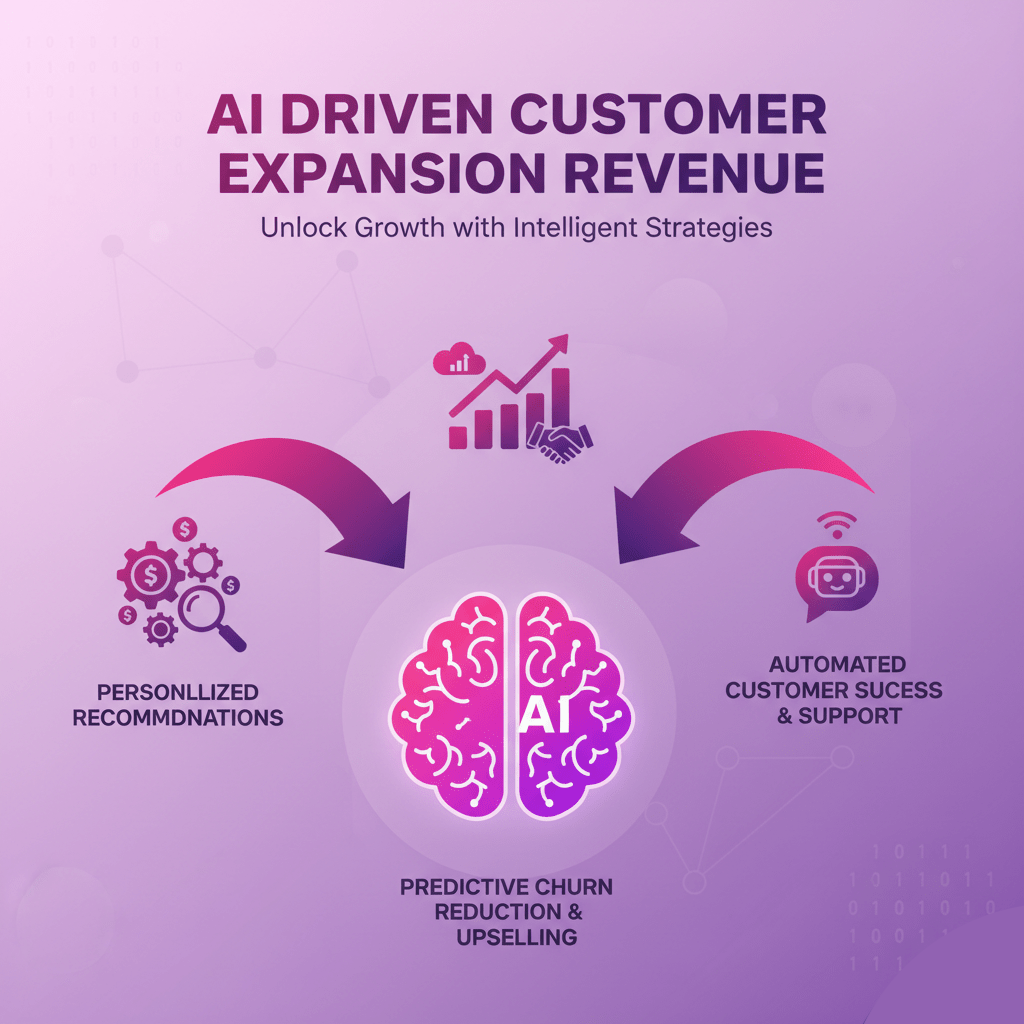
The Unsung Hero of Growth: Customer Expansion Revenue
Let’s get real. In today’s competitive landscape, relying solely on new customer acquisition is a challenging game. Customer acquisition costs (CAC) are constantly climbing. The smart money knows that maximizing the value of every single customer is paramount. This is where customer expansion revenue shines. It’s the revenue generated from existing customers through upsells, cross-sells, and renewals.
Why is this so important?
- Boosts Net Revenue Retention (NRR): NRR is a critical metric. It tells you how much revenue you’re retaining from existing customers, including upgrades, downgrades, and churn. A high NRR indicates that your business is exceptionally healthy and sustainable. Focusing on expansion is a direct path to a stronger NRR.
- Lower Sales Costs: You’ve already invested in acquiring these customers. Selling them more doesn’t require the same upfront marketing spend or lengthy sales cycles. Your sales team can be more efficient.
- Increased Customer Lifetime Value (CLTV): When customers buy more from you, their CLTV naturally goes up. This makes your customer relationships more valuable over time. It shows a stronger partnership.
- Stronger Customer Relationships: By offering solutions that truly meet evolving customer needs, you deepen your relationship with them. You become an indispensable partner.
- Predictable Revenue Growth: Expansion revenue often provides a more stable and predictable growth trajectory compared to the sometimes volatile nature of new customer acquisition.
Despite these clear benefits, many businesses struggle to tap into this goldmine effectively. They lack the systems. They lack the insights. They lack the bandwidth. This is precisely where AI steps in.
Identifying Upsell and Cross-Sell Opportunities: Data is Your Compass
You can’t sell more if you don’t know what to sell or to whom. The first step in driving customer expansion is understanding your customers better than they understand themselves. This means leveraging data. Your customer base is a treasure trove of information. It holds clues about their needs, their challenges, and their growth potential.
Here’s where to look and what to look for:
1. Customer Usage Data
This is the most direct indicator of potential.
- Feature Adoption: Are customers using specific features heavily? This might indicate they’re bumping up against limitations of their current plan. They may be power users who would benefit from advanced features in a higher-tier plan. Conversely, are they not using a feature they should be? That’s a cross-sell opportunity for an add-on or integration.
- Storage/Resource Consumption: If your product involves storage, bandwidth, or usage limits, customers who consistently approach or exceed these limits are prime candidates for an upgrade. They’re telling you they need more.
- User Growth: An increasing number of users within an account often signals a growing team or expanding operations. This is a clear indication of the need for a higher-capacity plan or additional user licenses.
- Engagement Patterns: Consistent, deep engagement with your product suggests a reliance on your solution. These are sticky customers. They are more likely to invest further. Irregular usage may indicate a churn risk, but also an opportunity to re-engage with a new feature that could address a pain point.
2. Firmographic Data
This is about understanding the customer’s business itself.
- Company Size & Growth: A small startup that has recently secured significant funding or announced rapid hiring is likely to have evolving needs. Their initial plan may no longer be suitable for their scale.
- Industry Trends: Are there specific trends in a customer’s industry that your product can help them capitalize on? New regulations? Emerging technologies? These create cross-sell opportunities for specialized solutions.
- Geographic Expansion: If a customer is expanding into new markets, they might need multi-language support, regional compliance features, or additional licenses for new locations.
- Revenue Milestones: Publicly available information about a customer reaching revenue milestones or securing new clients can signal their growth and capacity for further investment in your solution.
3. Behavioral Data & Account History
Beyond direct usage, look at their interactions with your company.
- Support Tickets: Repeated support requests for specific issues highlight a need that a higher-tier plan or an additional module could solve. Or it might indicate frustration that a specific add-on could resolve the issue.
- Website/Content Engagement: What whitepapers have they downloaded? Which blog posts have they read? What webinars have they attended? This shows their interests and potential pain points. If they’re looking at content about advanced analytics, perhaps they need your premium analytics package.
- Sales Conversations: What challenges did they express during the initial sales cycle that weren’t addressed by their current purchase? These can resurface as new opportunities.
- Product Feedback: Customers who actively provide feedback are engaged. Their suggestions can inform your upsell strategy. They may have requested a feature that is now available in a higher plan.
Manually sifting through all this data for every single customer is practically impossible for any sizable customer base. It’s time-consuming. It’s prone to human error. It’s simply not scalable. This is precisely why you need a better approach. You need intelligent automation. You need AI.
Introducing the AI Customer Expansion Agent
Imagine having a dedicated, tireless agent whose sole purpose is to grow revenue from your existing customers. This isn’t a human SDR bogged down by endless tasks. This is an AI. Let’s call it the “AI Customer Expansion Agent.” This agent not only processes data but also analyzes it. It acts on it. It’s about more than just identifying opportunities. It’s about proactively engaging. It’s about intelligent, personalized outreach at scale.
Here’s the core concept: the AI Customer Expansion Agent leverages all the data we just discussed – usage, firmographics, behavior – to identify the perfect upsell or cross-sell opportunity for a specific customer. Then, it takes the initiative. It reaches out. It communicates value. It schedules the next step. It’s marketing automation for your customer base, but with an intelligent, conversational layer.
How it Works: A Systematic Approach to Expansion
Let’s break down the process of how an AI Customer Expansion Agent like SalesCloser.ai operates, systematically driving expansion revenue and making your “land and expand” strategy truly effective.
Step 1: Data Integration and Analysis
The AI agent first needs to know everything about your customers.
- Connect Your Data Sources: This includes your CRM (e.g., Salesforce, HubSpot), product analytics tools (e.g., Mixpanel, Amplitude), support ticketing systems (e.g., Zendesk, Intercom), marketing automation platforms, and even public company data sources.
- Unified Customer Profile: The AI builds a comprehensive, unified profile for each customer. It pulls in their usage metrics, plan details, support history, previous interactions, and firmographic information.
- Opportunity Scoring: Based on predefined rules and machine learning algorithms, the AI assigns a score to each customer, indicating their potential for upsell or cross-sell opportunities. It looks for patterns. It identifies triggers. For example, a customer who uses 90% of their allocated storage for three consecutive months receives a high upsell score for a storage upgrade. A customer in a specific industry who downloads a white paper about a new module gets a high cross-sell score for that module.
Step 2: Intelligent Segmentation and Targeting
Once opportunities are identified, the AI refines its approach.
- Dynamic Segmentation: The AI doesn’t just create static lists. It dynamically segments your customer base based on their real-time behavior and data points. This ensures you’re always reaching out to the most relevant customers at the optimal time.
- Targeted Campaigns: Instead of a generic “buy more” message, the AI creates particular campaigns. One campaign might target customers who are exceeding usage limits. Another might focus on customers whose companies have recently grown, suggesting a plan upgrade. A third might introduce a new feature to customers who would benefit most based on their existing feature usage.
Step 3: Proactive, Personalized AI Outreach (The “Call”)
This is where the AI truly differentiates itself from traditional marketing automation.
- Outbound Communication: The AI Customer Expansion Agent can proactively initiate communication. This could be through a personalized email, an in-app message, or even an automated, AI-driven phone call. Yes, a call. An intelligent, natural-sounding AI voice agent.
- Contextual Messaging: The AI’s message isn’t generic. It’s deeply personalized. It introduces a relevant new feature or a higher-tier plan. It explains its value specifically based on the customer’s known profile and identified pain points.
- “Hi [Customer Name], I noticed your team has been making great use of our project management features, and you’re nearing your current project limit. Our Pro plan offers unlimited projects and advanced analytics that could really help you scale without interruption.”
- “It looks like your team recently expanded to over 50 users. Many growing companies like yours find our Enterprise plan’s dedicated support and single sign-on capabilities to be significantly streamlined operations. This helps larger teams work more efficiently.”
- Value Proposition Articulation: The AI doesn’t just list features; it articulates a compelling value proposition that resonates with users. It connects features to benefits. It explains why this upgrade or add-on matters to them. It speaks their language, drawing on the data it has.
- Overcoming Objections: An advanced AI agent can even handle basic questions or objections. It can access a knowledge base to provide instant, accurate information. This removes friction from the expansion process.
Step 4: Automating QBR Scheduling and Hand-off to Account Managers
The AI’s role isn’t to close the deal entirely. It’s to qualify and facilitate.
- Meeting Qualification: If a customer shows interest, the AI qualifies that interest. It confirms their needs align with the proposed solution.
- Automated Meeting Scheduling: The AI then takes the crucial next step: it schedules a meeting. It accesses your Account Manager’s calendar. It finds a mutually convenient time. It sends out the calendar invite. No more back-and-forth emails. No more administrative burden. This automates QBR scheduling and other critical sales meetings.
- Seamless Handoff: Once the meeting is scheduled, the AI seamlessly transfers a pre-qualified lead to the Account Manager. It provides a detailed summary of the AI’s conversation, the customer’s interest, and the specific opportunity identified. The Account Manager walks into the meeting fully prepared, saving valuable time and increasing closing rates.
Step 5: Customer Success Playbook Automation and Follow-up
The AI’s work doesn’t stop once a meeting is scheduled.
- Automated Follow-ups: If a customer doesn’t respond or if a scheduled meeting needs a reminder, the AI handles the computerized follow-up. This ensures no opportunity falls through the cracks.
- Campaign Optimization: The AI continuously learns and optimizes its outreach. Which messages resonate most? What times of day yield the best response rates? This constant refinement improves the effectiveness of future expansion campaigns.
- Integration with Customer Success Playbooks: The insights gained by the AI can feed directly into your customer success playbook automation. If the AI identifies a customer struggling with feature adoption, it can trigger a specific customer success initiative, proactively preventing churn and potentially setting the stage for a future upsell.
The SalesCloser.ai Advantage: Your Dedicated AI Customer Expansion Agent
Now, let’s talk about a specific solution that embodies this vision: SalesCloser.ai. This isn’t just theoretical. SalesCloser.ai is designed from the ground up to be your dedicated AI Customer Expansion Agent.
Here’s how it directly addresses the challenges and delivers the benefits we’ve discussed:
- Precision Opportunity Identification: SalesCloser.ai integrates with your existing systems. It uses advanced analytics to pinpoint precisely which customers are ripe for an upsell or cross-sell. It goes beyond simple metrics. It builds a nuanced understanding of each customer’s lifecycle and potential.
- Proactive, Human-Like Outreach: This is a key differentiator. SalesCloser.ai doesn’t just send emails; it also provides proactive outreach. It can initiate actual voice calls to your targeted customer segments. These aren’t robotic calls. They are designed to sound natural, personable, and helpful. The AI introduces relevant features or plans. It clearly articulates the value proposition tailored to that specific customer.
- Intelligent Conversation Flow: During the call, SalesCloser.ai can engage in a dynamic conversation. It answers questions. It provides more details. It addresses initial concerns. This makes the interaction feel genuinely consultative, building rapport rather than just pushing a sale.
- Automated Meeting Booking: The primary goal of these proactive calls is to secure a meeting. SalesCloser.ai excels here. Once a customer shows interest and qualifies, the AI directly accesses your Account Manager’s calendar. It books the meeting. It sends all necessary confirmations. It ensures a smooth transition. This drastically reduces the administrative burden on your sales team.
- Context-Rich Hand-off: When the meeting is scheduled, SalesCloser.ai provides your Account Manager with a detailed briefing. This includes the call transcript, the customer’s specific interests, any questions they asked, and the value proposition that resonated with them. Your team walks into every meeting fully prepared, increasing their chances of closing the expansion deal.
- Scalability Beyond Human Capacity: Imagine the sheer volume of customers an AI agent can proactively contact in a day, a week, a month. It works tirelessly, consistently, and without burnout. This allows you to maximize your customer base marketing automation efforts truly.
- Optimized Campaigns for Net Revenue Retention (NRR): SalesCloser.ai doesn’t just execute. It learns. It optimizes. It helps you understand what messaging works best for different customer segments. This continuous feedback loop directly contributes to growing your NRR.
- Increased Customer Lifetime Value (CLTV): By systematically expanding customer accounts, SalesCloser.ai directly contributes to a higher CLTV. It helps you build longer, more profitable relationships with your customer base.
Building Your AI-Powered Customer Expansion Strategy: A Playbook
Ready to put this into action? Here’s a practical playbook for integrating an AI Customer Expansion Agent, such as SalesCloser.ai, into your growth strategy.
1. Define Your Expansion Goals
Before you even think about AI, know what you want to achieve.
- Specific Metrics: Are you aiming for a 15% increase in NRR? A 10% uplift in average customer spend? How many upsell meetings are scheduled per month?
- Target Segments: Which customer segments are your initial focus? High-usage customers? Customers approaching renewal? Customers in specific industries?
- Prioritize Opportunities: What are your most lucrative upsell or cross-sell products/features? Focus on those first.
2. Consolidate and Clean Your Data
Garbage in, garbage out. Your AI is only as good as the data it receives.
- Data Audit: Review all your customer data sources. Ensure accuracy and completeness.
- Integration Strategy: Plan how your CRM, product usage data, and other relevant systems will integrate with SalesCloser.ai. This is foundational.
- Identify Key Triggers: Work with your team to define what constitutes an “expansion opportunity.” Is it hitting a certain usage threshold? A company size increase? A specific support ticket pattern?
3. Craft Your Value Propositions and Messaging
The AI needs to know what to say and how to say it.
- Specific Offerings: Clearly define the upsell and cross-sell offerings you want to promote.
- Tailored Value: For each offering, articulate its specific value proposition for different customer segments. Why would a small business need feature X, and why would an enterprise need it?
- Conversation Scripts/Templates: Provide SalesCloser.ai with clear guidelines for its outreach. This includes opening lines, key selling points, and common questions or objections that might be encountered. The AI will personalize these, but it needs a starting point.
4. Configure and Launch Initial Campaigns
Start small, learn, and expand.
- Pilot Program: Begin with a small, well-defined customer segment and a clear expansion offering.
- A/B Testing: Test different messages, call-to-actions, and outreach timings. SalesCloser.ai can help you run these tests efficiently.
- Monitor and Analyze: Closely track the results to ensure accuracy and precision. How many calls were made? What was the conversion rate? How many meetings were scheduled? What was the show-up rate for those meetings?
5. Empower Your Account Managers
The AI is a facilitator, but your human team still closes the deals.
- Training: Train your Account Managers on how to leverage pre-qualified leads from SalesCloser.ai effectively. Emphasize the context they receive.
- Feedback Loop: Establish a feedback loop between your Account Managers and the AI team. What worked well? What could be improved in the AI’s outreach? This continuous improvement is vital.
- Focus on Strategic Engagement: With the AI handling the initial qualification and scheduling, your Account Managers can focus on higher-value, more strategic conversations. They can delve deeper into customer needs. They can build stronger relationships.
6. Continuous Optimization and Scaling
Expansion is an ongoing process.
- Regular Review: Regularly review your expansion strategy, campaigns, and AI performance to ensure optimal results.
- Iterate and Refine: Use the data and feedback to refine your targeting, messaging, and offerings.
- Expand Scope: As you achieve success, expand the AI’s role to include more customer segments, additional upsell/cross-sell opportunities, and potentially other areas of customer engagement.
Beyond Upsells: Other AI Applications for Customer Success
While driving expansion revenue is a primary focus, the underlying AI capabilities of a platform like SalesCloser.ai can also contribute to other crucial aspects of customer success:
- Proactive Churn Prevention: The AI can identify customers showing signs of disengagement or dissatisfaction before they churn. It can then trigger proactive outreach, offering support, new feature demonstrations, or even re-engagement campaigns to mitigate the risk of churn.
- Feature Adoption Campaigns: When launching a new feature, the AI can identify which existing customers would benefit the most from it. It can then initiate targeted campaigns to encourage adoption, ensuring customers get more value from your product. This directly contributes to higher NRR and CLTV.
- Automated QBR Scheduling: As mentioned, the AI can handle the laborious task of scheduling Quarterly Business Reviews (QBRs) or other strategic check-ins. This ensures these important meetings actually happen, fostering stronger customer relationships and opening doors for future expansion.
- Customer Feedback Collection: The AI can conduct automated surveys or calls to gather feedback, uncovering pain points or unmet needs that could inform product development or future expansion offerings.
The Future of Growth is Intelligent
The traditional approach to customer expansion often relies on manual effort, limited insights, and reactive strategies. This is no longer sustainable for businesses seeking aggressive and predictable growth. The future is intelligent. The future is proactive. The future leverages AI.
An AI Customer Expansion Agent like SalesCloser.ai transforms an often-overlooked growth lever into a powerful, systematic revenue engine. It frees your human sales and customer success teams to focus on strategic relationships, while the AI tirelessly identifies, qualifies, and schedules expansion opportunities at scale.
Suppose you are serious about growing your net revenue retention, increasing customer lifetime value, and building a truly robust “land and expand” strategy. In that case, embracing an AI-powered upsell agent isn’t just an option. It’s a necessity. It’s how you turn your existing customers into your most powerful growth story.
Frequently Asked Questions (FAQs)
Q1: What is customer expansion revenue?
A1: Customer expansion revenue is the additional income generated from existing customers. This occurs through upsells (selling a higher-tier product or additional features), cross-sells (selling complementary products or services), and successful renewals that may include upgrades. It’s about increasing the value of current customer relationships.
Q2: Why is focusing on customer expansion significant for my business?
A2: It’s vital for several reasons. It directly grows your Net Revenue Retention (NRR), a key metric for sustainable growth. It costs less than acquiring new customers. It increases the Customer Lifetime Value (CLTV). Plus, it strengthens your customer relationships by consistently meeting their evolving needs.
Q3: How does AI help identify upsell and cross-sell opportunities?
A3: AI analyzes vast amounts of data. This includes customer usage patterns, such as feature adoption rates or resource consumption. It also examines firmographic data, such as company size and industry trends. Additionally, it examines behavioral data, like support tickets or website engagement. The AI then uses this information to score and pinpoint the most relevant expansion opportunities for each customer.
Q4: What is an “AI Customer Expansion Agent” and what does it do?
A4: An AI Customer Expansion Agent, such as SalesCloser.ai, is an automated system designed to grow revenue from your existing customer base proactively. It identifies expansion opportunities using data. It then initiates personalized outreach, which can include intelligent, human-like voice calls. The AI explains value. It overcomes fundamental objections. Finally, it schedules meetings with your human Account Managers to finalize the upgrade or cross-sell, systematically driving expansion revenue.
Q5: Can an AI agent actually make phone calls to customers?
A5: Yes, advanced AI agents like SalesCloser.ai can initiate outbound phone calls. These calls are designed to sound natural and conversational. The AI utilizes its understanding of the customer’s profile to deliver a personalized and relevant message. It focuses on explaining the value of an upsell or cross-sell opportunity.
Q6: How does the AI agent ensure personalization in its outreach?
A6: The AI deeply integrates with your customer data. It pulls in details like the customer’s name, their current plan, their specific usage, and any relevant firmographic information. It uses this data to craft messages and conversations that are highly tailored to each customer’s needs and context. This goes far beyond generic emails.
Q7: Will an AI agent replace my sales or customer success team?
A7: No, an AI Customer Expansion Agent is designed to augment, not replace, your human teams. It handles the initial, repetitive, and data-intensive tasks of identifying and qualifying expansion leads. This frees up your sales and customer success teams. They can then focus on building deeper relationships, handling complex negotiations, and closing higher-value deals with pre-qualified prospects.
Q8: How does an AI agent help with Quarterly Business Reviews (QBRs)?
A8: The AI can significantly streamline QBR scheduling. It identifies which customers are due for a QBR or a strategic check-in. It then proactively contacts them to schedule the meeting, finding mutually convenient times directly in your Account Manager’s calendar. This automates the administrative burden and ensures more QBRs actually happen.
Q9: What kind of data does an AI Customer Expansion Agent need to be effective?
A9: For optimal effectiveness, the AI needs access to your CRM data (customer contact info, history), product usage data (feature adoption, resource consumption), support ticket history, marketing engagement data, and potentially public firmographic data about the customer’s company. The more data is available, the brighter the AI becomes.
Q10: How quickly can I expect to see results from using an AI expansion agent?
A10: The timeframe for results can vary. It depends on the size of your customer base, the clarity of your expansion offerings, and the quality of integration. However, by automating and scaling proactive outreach, many businesses can start seeing an increase in scheduled meetings and expansion opportunities within weeks of implementing such a system. The key is consistent monitoring and optimization.