“Forecast, track, and automate your sales cycle with AI Pipeline Management Tools. Drive revenue by eliminating bottlenecks 24/7.”
Sales teams face a massive problem today. Leaders spend countless hours staring at static spreadsheets. Sales reps waste valuable selling time manually entering data. Everyone tries to guess which deals will actually close. This old method is fundamentally broken. Traditional CRM pipeline management looks backward. It tells you what happened yesterday. It completely fails to tell you what you must do today to win tomorrow.
You need a better way to manage your sales cycle. You need to shift your mindset. You must stop viewing your pipeline as a static reporting tool. Instead, you must treat it as a dynamic, forward-looking engine. This requires a new approach. It requires powerful technology. Specifically, it requires AI pipeline management tools.
These intelligent systems do more than just record data. They actively analyze patterns. They predict outcomes. Furthermore, they automate the repetitive tasks that drain your team’s energy. In this comprehensive guide, we will explore exactly how you can fix your broken sales process. We will identify common bottlenecks. We will explain the metrics that actually matter. Finally, we will introduce SalesCloser.ai. This revolutionary platform uses autonomous AI agents to build, clean, and accelerate your entire sales pipeline.
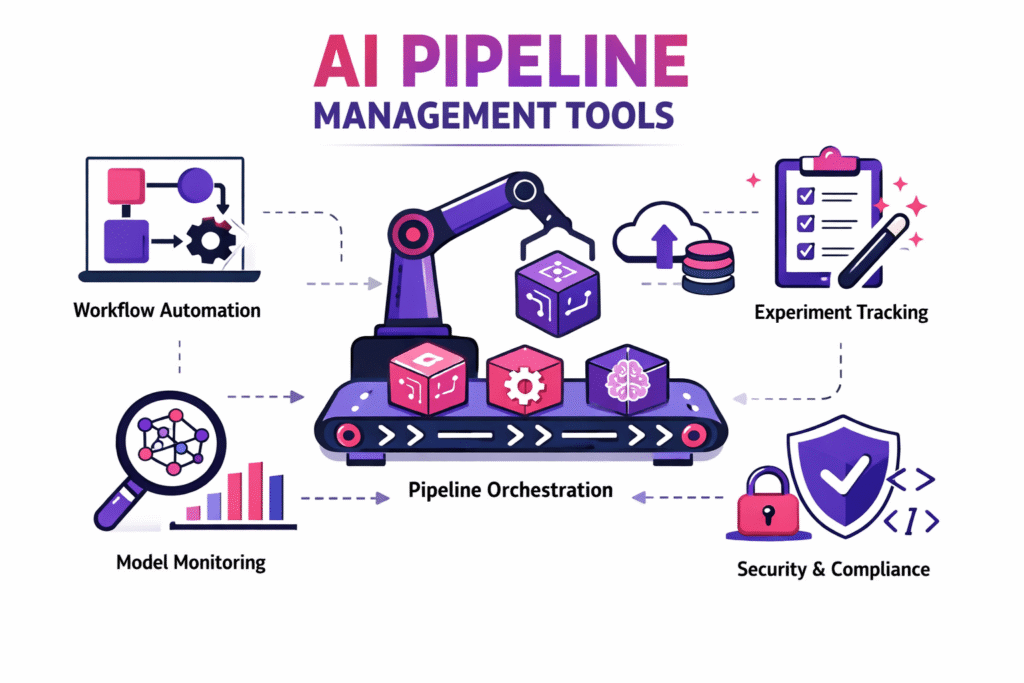
The Fatal Flaws of Traditional Pipeline Management
Most sales organizations run on hope. Reps fill their pipelines with bloated opportunities. They suffer from “happy ears.” They hear a polite “maybe” from a prospect and immediately log it as a solid commitment. Consequently, sales managers look at these bloated numbers and make inaccurate revenue predictions.
This creates a chain reaction of failure. The board expects a million dollars in new revenue. The pipeline shows three million dollars in potential deals. However, by the end of the quarter, the team had only closed half a million. Why does this happen consistently across industries? The answer lies in how we manage the data.
The Backward-Looking Dashboard
Traditional tools only show you the past. You log a call after you make it. You move to the next stage after a meeting finishes. This is merely a digital filing cabinet. It does not guide your future actions. A manager looks at a dashboard and sees that a deal has sat in the “proposal sent” stage for thirty days. The dashboard highlights the problem. Unfortunately, it offers no solution. It does not tell the rep what specific email to write to revive the deal. It just sits there, flashing red, creating anxiety without providing direction.
The Data Entry Nightmare
Sales professionals want to sell. They do not want to perform administrative tasks. Yet companies force them to spend hours typing up meeting notes in software. This creates friction. Reps start taking shortcuts. They leave out crucial details. They forget to update deal stages. Therefore, the data inside the system becomes completely useless. You cannot generate an accurate forecast using bad data.
The Illusion of Progress
Moving a deal from left to right on a digital board feels good. It creates a false sense of momentum. A rep might move a prospect from “Discovery” to “Demo” simply because they had a five-minute phone call. Did they actually qualify the buyer? Did they identify a real budget? Often, the answer is no. This creates a “dirty” pipeline. The system looks full, but the deals possess zero actual value.
Diagnosing Pipeline Bottlenecks
Before you can implement sales pipeline automation, you must understand where your current process breaks down. Every sales funnel has leaks. Every system has bottlenecks. If you simply apply automation to a broken process, you will just fail much faster. Let us examine the most common areas where deals go to die.
Bottleneck 1: Poor Initial Qualification
This is the most common disease in B2B pipeline management. Sales reps often fear an empty calendar. Therefore, they pitch to anyone who will listen. They ignore glaring red flags during the initial discovery phase. They push unqualified leads into the middle of the funnel.
This destroys your efficiency. A poorly qualified lead consumes the same amount of time as a highly qualified buyer. Your team spends hours preparing custom presentations. They drag technical experts into long meetings. Ultimately, the prospect reveals they have no budget until next year. You must ruthlessly filter leads at the very top of the funnel. A clean sales pipeline starts with aggressive disqualification.
Bottleneck 2: The Stalled Deal Syndrome
You had a great first meeting. The prospect seemed enthusiastic. You sent the proposal. Then, absolute silence. Weeks turn into months. The deal sits in your CRM, gathering digital dust. Reps are afraid to mark these deals as “Closed Lost.” They want to maintain the illusion of a full pipeline.
Deals stall for specific reasons. Sometimes, you fail to identify the true economic buyer. You spend weeks negotiating with a manager who lacks purchasing authority. Other times, you fail to create a sense of urgency. The prospect likes your product but feels no immediate pain. They decide to maintain the status quo. You need a systematic way to identify stalled deals quickly and force a decision.
Bottleneck 3: The Follow-Up Failure
Most sales require multiple touchpoints. Industry statistics repeatedly show that it takes anywhere from five to twelve points of contact to close a complex B2B deal. Yet, most sales reps give up after just two emails. They get busy. They forget. They prioritize newer leads over older ones.
This lack of follow-up leaves massive amounts of money on the table. You spend thousands of dollars on marketing to acquire a lead. You have one conversation. Then, you let the lead slip away because your rep forgot to set a reminder. This is where automated sales tracking becomes absolutely critical. You cannot rely on human memory to manage hundreds of active relationships.
The Metrics That Matter: Understanding Pipeline Velocity
If you want to move from passive reporting to proactive management, you must change how you measure success. Most managers only look at total pipeline value. This metric is dangerously misleading. You need a dynamic metric. You need to understand pipeline velocity.
Pipeline velocity measures how quickly money moves through your sales cycle. It provides a real-time health check of your entire operation. To calculate pipeline velocity, you need four specific numbers.
1. Number of Active Opportunities
How many genuinely qualified deals are currently in your system? Do not count mere suspects. Only count prospects who have a recognized need, a budget, and a timeline. If you inflate this number, your entire calculation will fail.
2. Average Deal Value
How much is a typical closed deal worth? You should calculate this based on historical data. Look at the last 12 months of closed-won business. Divide the total revenue by the total number of deals. This gives you a realistic average.
3. Overall Win Rate
Out of all the qualified opportunities that enter your pipeline, what percentage actually sign a contract? Be brutally honest here. If you win one out of every five deals, your win rate is twenty percent.
4. Length of the Sales Cycle
How many days does it take, on average, to move a prospect from the first meeting to a signed contract? Complex B2B deals take six months. Transactional sales might take two weeks. Track this carefully.
Calculating the Velocity
You multiply the first three numbers together. Then, you divide that total by the length of the sales cycle.
Here is an example. You have 50 active opportunities. Your average deal size is $10,000. Your win rate is 20%. Your average sales cycle is 60 days.
First, multiply 50 by $10,000 by 0.20. This equals $100,000. Next, divide $100,000 by 60 days. Your pipeline velocity is $1,666 per day.
This means your sales machine generates $1,666 of revenue every single day. If you want to grow your business, you must increase this number. You can achieve this by adding more deals, increasing your prices, improving your win rate, or shortening your sales cycle. AI pipeline management tools help you pull all four of these levers simultaneously.
The Paradigm Shift: From Defense to Offense
Traditional sales cycle management forces you to play defense. You react to the prospect. You wait for them to reply to your email. You wait for them to review the proposal. You wait for their legal team to approve the contract.
Proactive management means playing offense. You anticipate objections before they happen. You recognize buying signals instantly. You use data to control the narrative. This is exactly where artificial intelligence comes into play. AI allows you to move from guessing to knowing. It removes the emotion from the forecast. It replaces human error with algorithmic precision.
The Role of Sales Forecasting AI
Sales forecasting AI completely changes how leaders predict revenue. Old methods rely on rep intuition. A rep says a deal is “90% likely to close.” They base this on a gut feeling. AI ignores gut feelings. Instead, it analyzes historical data.
The AI looks at thousands of past deals. It identifies patterns. It notices that when prospects involve their CFO early in the process, the deal closes 80% of the time. It notices that when a deal sits in the “contract review” stage for more than fourteen days, the win rate drops to 10%.
The AI then applies these patterns to your current pipeline. It assigns a true probability score to every single deal. If a rep claims a deal is highly likely to close, but the AI notices the prospect has stopped opening emails, the AI will flag the deal. It alerts the manager to the discrepancy. This creates a highly accurate, incredibly reliable forecast. You can finally make business decisions based on reality, rather than optimistic fiction.
Entering the Era of AI Pipeline Management Tools
The market is currently flooded with software claiming to use artificial intelligence. You must cut through the noise. A true AI pipeline management tool is not just a standard CRM with a basic chatbot attached. It is an intelligent system that actively manages your deal flow automation.
These advanced tools function as a tireless assistant for every single sales rep. They work in the background. They capture data automatically. They analyze conversations. They recommend specific next steps. Let us break down exactly how these tools transform your daily operations.
Automated Sales Tracking and Data Capture
Sales reps hate data entry. AI solves this problem completely. Modern tools connect directly to your email, your calendar, and your video conferencing software. They automatically log every single interaction. When a rep sends an email, the system records it. When a prospect replies, the system updates the contact record.
Furthermore, these tools can join your sales calls. They transcribe the entire conversation in real time. They automatically extract key information. They identify action items. They note the prospect’s budget. They document specific objections. The system then automatically updates the CRM with this clean, accurate data. Reps get their selling time back. Managers get the reliable data they desperately need.
Intelligent Deal Coaching
A good manager cannot sit in on every single sales call. There is simply not enough time in the day. AI pipeline management tools act as an always-on coach. They analyze the transcripts of every meeting. They identify where reps make mistakes.
For instance, the AI might notice that a rep talks for 80% of the meeting, failing to ask discovery questions. The system will flag this behavior. It might be noticed that a rep constantly discounts the price too early in the negotiation. The AI provides specific, targeted feedback to the rep. It helps them improve their skills on every single call. This actively increases your overall win rate.
Deal Flow Automation
Deals often stall simply because reps forget what to do next. Deal flow automation removes this uncertainty. You can build dynamic playbooks directly into your system. When a deal reaches a certain stage, the AI automatically assigns specific tasks.
If a prospect requests a technical review, the system automatically alerts the engineering team. It schedules the follow-up meeting. It drafts the preparation email for the rep. The AI ensures that no steps get skipped. It forces the deal to move forward consistently. This significantly shortens your average sales cycle.
SalesCloser.ai: The Ultimate Engine for Sales Pipeline Generation
We have discussed the theory of AI pipeline management. Now, let us look at the practical application. You need a tool that goes beyond passive tracking. You need a platform that actively works to improve your sales performance. You need SalesCloser.ai.
SalesCloser.ai represents a completely new class of software. It does not just observe your pipeline. It actively builds it. It relentlessly cleans it. It constantly moves deals forward. It achieves this through highly sophisticated AI agents.
What Makes SalesCloser.ai Different?
Most tools require a human to pull the trigger. They suggest an action, but a rep must manually execute it. SalesCloser.ai changes the game. It deploys autonomous AI agents capable of handling complex, human-like interactions. These agents do not sound like robotic autoresponders. They use natural language. They understand context. They adapt to the prospect’s tone.
These AI agents become an extension of your sales team. They work 24 hours a day, seven days a week. They never take vacations. They never forget to follow up. They execute your strategy flawlessly every single time.
Actively Building the Top of the Funnel
A clean sales pipeline requires a constant flow of high-quality leads. Most companies struggle to generate sales pipelines. They rely on expensive marketing campaigns or tedious cold calling. SalesCloser.ai automates this entirely.
You can configure the AI agents to engage prospects at the very top of the funnel. The agent can handle initial inbound inquiries immediately. When a prospect fills out a form on your website at 2:00 AM, the AI agent responds instantly. It initiates a conversation. It asks qualifying questions. It determines if the prospect matches your ideal customer profile.
If the prospect is qualified, the AI agent automatically schedules a meeting directly on your sales rep’s calendar. If the prospect is unqualified, the agent politely disqualifies them, keeping your pipeline perfectly clean. Your human reps wake up to calendars full of highly qualified opportunities. They stop wasting time on suspects and start spending all their time closing real buyers.
Relentlessly Cleaning the Pipeline
We discussed the danger of the “stalled deal syndrome.” Sales reps cling to dead deals. SalesCloser.ai acts as a ruthless, objective cleaner. You set the rules. You might decide that any deal in the “Discovery” stage with no activity for twenty days needs attention.
The system automatically identifies these stalled deals. It removes the human bias. The manager no longer needs to argue with the rep about whether a deal is real. The AI simply flags the dead weight. This gives you a brutally honest view of your actual revenue potential.
Reviving Dead Leads with Intelligent Conversations
This is where SalesCloser.ai truly shines. What do you do with those stalled deals? Traditional advice says to mark them “Closed Lost” and move on. SalesCloser.ai offers a vastly better solution. It deploys AI agents to re-engage these cold prospects actively.
The AI agent reviews the complete history of the stalled deal. It reads the past emails. It understands why the deal stopped. It then crafts a highly personalized, context-aware message to the prospect. It does not send a generic “just checking in” email.
Instead, it might say, “Hi John, we spoke three months ago about your issues with inventory management. At the time, you mentioned you were waiting for the new fiscal year to allocate the budget. Since we are now in Q1, I wanted to see if reducing inventory holding costs is still a priority for your team.”
The AI agent handles the back-and-forth communication. If the prospect responds positively, the agent seamlessly hands the warm conversation back to the human sales rep. This actively revives dead revenue. It improves pipeline health and velocity without requiring any extra effort from your sales team. Your reps focus on closing active deals while the AI agents mine your historical data for hidden gold.
Mastering B2B Pipeline Management with AI
B2B sales present unique challenges. You rarely sell to a single individual. You sell to a buying committee. A typical enterprise deal might require approval from the user, the manager, the IT director, and the Chief Financial Officer. Managing this complexity manually leads to endless confusion. AI pipeline management tools excel in this environment.
Mapping the Buying Committee
Traditional CRMs track contacts linearly. AI tools build complex relationship maps. They automatically identify all the key players in an account. If a rep is emailing three different people at a target company, the AI groups them.
The system analyzes each stakeholder’s level of engagement. It might alert the rep, “You have great engagement with the technical lead, but the economic buyer has not opened your last three emails.” This specific insight allows the rep to adjust their strategy immediately. They can ask the technical lead to introduce them to the executive sponsor. This prevents late-stage deal collapse caused by hidden decision-makers.
Navigating Complex Sales Cycles
B2B sales cycle management requires rigorous discipline. Deals span multiple quarters. Reps transition accounts. Without perfect documentation, momentum dies. AI ensures absolute continuity.
Because the AI automatically captures every interaction, a new rep can take over an account instantly. They do not need to read through hundreds of scattered notes. They can ask the AI for a summary. The AI will provide a concise brief: “This prospect has been in the pipeline for four months. The main objection is integration speed. We promised them a custom API solution. The next step is a technical review scheduled for Thursday.” This seamless handoff keeps complex deals moving forward at maximum velocity.
Actionable Steps to Implement a Clean Sales Pipeline
Reading about AI tools is not enough. You must take massive action. Transforming your sales organization requires a deliberate, structured approach. You cannot simply flip a switch and expect miracles. Follow these specific steps to roll out CRM pipeline management effectively.
Step 1: Audit Your Current Process
Before you implement new software, you must fix your underlying process. Sit down with your sales leaders. Map out every single stage of your current pipeline. Define exactly what must happen for a deal to move from one stage to the next.
Create strict exit criteria. A deal cannot move to the “Demo” stage unless the rep has confirmed the budget and identified the decision-maker. If you automate a sloppy process, you will just generate bad data faster. Create a rigid, logical foundation first.
Step 2: Clean House Ruthlessly
You must purge your current CRM before you connect any AI tools. Run a report on every deal that has sat in the same stage for more than sixty days. Force your reps to close them out. Move them to “Closed Lost.”
Your reps will complain. They will argue that the prospect is “still thinking about it.” Ignore them. A clean sales pipeline is a small sales pipeline. You must establish a baseline of absolute truth. You need accurate data to effectively train the sales forecasting AI.
Step 3: Deploy SalesCloser.ai for Top-of-Funnel Automation
Start your automation journey at the beginning of the sales cycle. Implement SalesCloser.ai to handle all incoming leads. Configure the AI agents to ask three specific qualifying questions.
Let the system run for two weeks. Monitor the conversations. Watch how the AI handles objections. You will quickly notice that the quality of meetings on your reps’ calendars improves dramatically. Your team will stop complaining about bad leads. This early success builds trust in the new technology.
Step 4: Automate the Follow-Up Sequence
Once the top of the funnel flows smoothly, attack the middle of the funnel. Set up automated sales tracking for stalled deals. Program the AI agents to automatically trigger a personalized email sequence whenever a prospect goes 7 days without responding.
Do not use generic templates. Program the AI to reference specific notes from previous meetings. Watch as the AI systematically revives deals that your reps had completely forgotten about. This step alone will noticeably increase your pipeline velocity.
Step 5: Train Your Team on AI-Assisted Forecasting
Finally, change how you run your weekly sales meetings. Stop asking reps what they “think” will close. Open your AI dashboard. Look at the objective probability scores.
If a rep predicts a deal will close but the AI gives it a 10% chance, have the rep defend their position with data. Ask them what the AI is missing. This forces reps to look critically at their own deals. It eliminates happy ears. Over time, your human forecasts will align perfectly with the AI predictions, giving your business incredible financial stability.
Overcoming the Fear of AI in Sales
Many sales professionals fear that AI will replace them. They view tools like SalesCloser.ai as a threat to their livelihood. As a leader, you must address this fear directly. You must change the narrative.
AI will not replace great salespeople. AI will replace salespeople who refuse to use AI. The technology handles the administrative burden. It manages the data. It handles the initial outreach. It does the tedious follow-up.
This frees the human rep to do what humans do best. Humans build deep relationships. Humans navigate complex corporate politics. Humans negotiate nuanced contracts. Humans provide empathy. Removing robotic tasks from your reps’ daily lives lets them be more human. You empower them to become strategic advisors rather than mere order-takers.
Conclusion: Stop Waiting, Start Accelerating
You can no longer afford to manage your sales process using spreadsheets and gut feelings. The market moves too fast. Your competitors are already adopting advanced technology. If you continue to rely on passive, backward-looking reporting, you will constantly struggle with bloated pipelines, missed quotas, and inaccurate forecasts.
It is time to take control. It is time to treat your sales process as an active, intelligent machine. By implementing AI pipeline management tools, you immediately eliminate the busywork that drains your team. You gain crystal-clear visibility into your real revenue potential. You force deals to move forward with intelligent, automated persistence.
Do not let another quarter slip away due to poor qualification and forgotten follow-ups. Embrace the shift from defense to offense. Equip your team with the tools they need to win consistently.
Frequently Asked Questions (FAQs)
What exactly is pipeline velocity, and why does it matter more than total pipeline value?
Pipeline velocity measures the speed at which revenue moves through your sales cycle. It is calculated by multiplying the number of opportunities by the average deal size and win rate, then dividing by the length of the sales cycle. It matters more than total pipeline value because total value often includes stalled or dead deals, which can create a false sense of security. Velocity tells you exactly how much real revenue your system generates daily.
How does sales forecasting AI differ from traditional CRM forecasting?
Traditional forecasting relies heavily on rep intuition and manual data entry. A rep assigns a percentage likelihood to a deal based on their gut feeling. Sales forecasting AI uses historical data and machine learning algorithms. It analyzes past behavior, communication patterns, and deal progression to assign a highly objective probability score, completely removing human bias and “happy ears” from the equation.
Can AI pipeline management tools actually talk to my prospects?
Yes. Advanced platforms like SalesCloser.ai utilize autonomous AI agents. These agents can interpret natural language, understand context, and engage in two-way conversations via email or chat. They can qualify inbound leads, schedule meetings, and even send highly personalized follow-up messages to re-engage cold leads, acting as a tireless extension of your sales team.
Will implementing deal flow automation make my sales process feel robotic to buyers?
Not if configured correctly. Poor automation relies on generic, blasted templates. Intelligent deal flow automation uses AI to personalize interactions based on specific prospect data and past conversations. The goal is to ensure timely, relevant communication. When an AI agent references a specific problem a prospect mentioned three months ago, it comes across as highly attentive and professional, not robotic.
How do I maintain a clean sales pipeline when my reps hate updating the CRM?
You remove the manual work. The core feature of automated sales tracking is its integration with your communication tools. The AI automatically logs emails, transcribes meeting notes, and updates deal stages based on actual prospect engagement. By eliminating the administrative burden, you guarantee clean data without relying on your reps to perform tedious data entry.
What is the best way to handle complex B2B pipeline management using these tools?
In complex B2B sales, use AI to map out the entire buying committee. The AI can track engagement across multiple stakeholders within the same account. It identifies who is highly engaged and who is ignoring your outreach. This allows your reps to multi-thread effectively, ensuring they have buy-in from technical users, managers, and economic buyers simultaneously, preventing late-stage deal collapse.