“Optimize your sales funnel with AI Pipeline Orchestration Software, the autonomous engine for predictive lead nurturing and 24/7 revenue growth.”
In the fast-moving world of sales, the “linear funnel” is becoming a relic of the past. For decades, we visualized sales as a simple top-to-bottom pipe. Leads go in, some drop out, and a few become customers. But as we move into 2026, the complexity of the buyer’s journey has shattered that model.
Today’s prospects don’t follow a straight line. They bounce between research, social proof, and pricing pages across a dozen different channels. Managing this manually is no longer just difficult—it is impossible. This is where AI Pipeline Orchestration Software comes into play. This technology isn’t just about “automation” in the sense of sending a scheduled email. It represents a fundamental shift toward an autonomous, self-healing revenue engine.
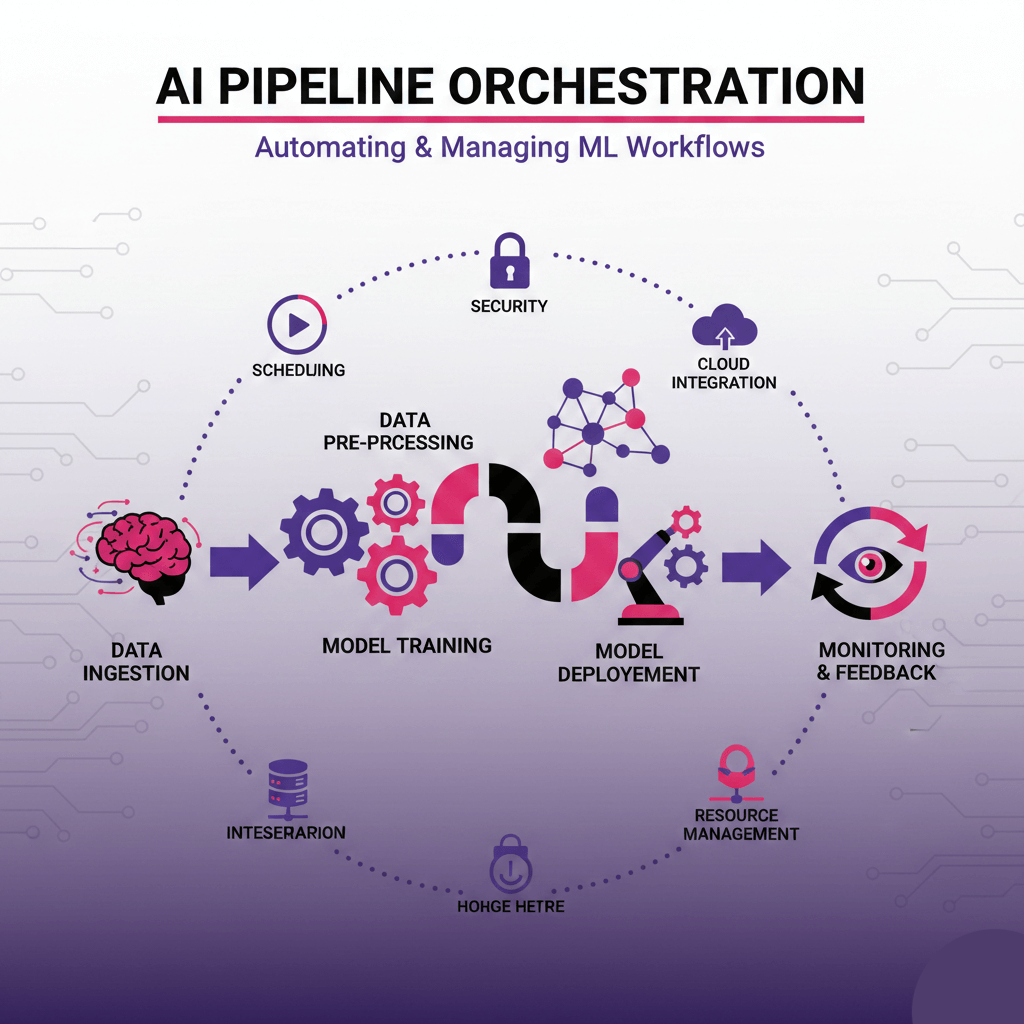
The Shift from Automation to Orchestration
To understand why this matters, we first need to distinguish between simple automation and tactual orchestration.
Sales funnel automation has been around for a while. You set a trigger (like a form fill), and an action follows (like a welcome email). It’s rigid. It follows a “if this, then that” logic. If the prospect does something unexpected, the automation breaks or, worse, keeps sending irrelevant messages that annoy the lead.
AI Pipeline Orchestration Software, however, acts like a symphony conductor. It doesn’t just follow a script; it listens to every instrument in real-time. It looks at the entire intelligent sales pipeline. It coordinates dozens of AI agents, data sources, and communication tools to ensure the prospect gets precisely what they need, at the moment they need it.
What Does a Fully Orchestrated Funnel Look Like in 2026?
Imagine it is a Tuesday morning in 2026. Your sales team is sipping coffee, but your “pipeline” has already been working for hours.
A high-value prospect from a target account visits your website. They didn’t just land on the homepage; they spent four minutes on a specific technical documentation page. In the old days, maybe a cookie would track them, and they’d get a generic retargeting ad three days later.
In the world of predictive lead nurturing, the orchestration layer reacts instantly.
1. Instant Intent Decoding
The software identifies the visitor through lead management automation. It pulls data from your CRM, LinkedIn, and intent providers like 6sense or ZoomInfo. It realizes this isn’t just any visitor—it’s the Head of Operations at a Fortune 500 company.
2. Predictive Pathfinding
Instead of putting them into a “standard” email sequence, the AI calculates the “Next Best Action.” It appears this prospect previously attended a webinar on API integrations. The system decides that a generic whitepaper is a waste of time. Instead, it triggers a custom-generated video summary of how your product integrates with their specific tech stack.
3. Real-Time Workflow Adaptation
The prospect opens the video. They click a link to view pricing. This is a “hot” signal. In a manual world, a salesperson might see this notification 2 hours later and try to call, only to hit voicemail. In 2026, the AI-driven workflows take over.
The orchestration software determines that a human-like voice touchpoint is the most effective way to capitalize on this momentum. It doesn’t wait for a human rep to become available. It signals the “action layer” of the stack.
SalesCloser.ai: The Critical Action Layer
This is where the vision of a full-funnel AI becomes a reality. Orchestration is the brain, but you still need “hands” to do the work. Within this futuristic stack, SalesCloser.ai serves as the primary execution engine for high-stakes interactions.
When the orchestration software decides a discovery call or a follow-up is necessary, it doesn’t just send a text-based alert. It triggers a SalesCloser.ai agent.
How the Interaction Works:
- Trigger: The orchestration layer identifies a “ready to talk” signal.
- The Action: A SalesCloser.ai agent initiates a voice or video call.
- The Conversation: This isn’t a robotic “press 1 for sales” menu. The SalesCloser.ai agent engages in a natural, fluid conversation. It answers technical questions, addresses common objections, and qualifies the lead using BANT (Budget, Authority, Need, Timeline) or a custom framework.
- The Feedback Loop: Once the call ends, SalesCloser.ai doesn’t just stop. It feeds a full transcript, an AI-generated summary, and a sentiment analysis back into the orchestration system.
This feedback is vital. If the prospect mentioned a specific competitor, the AI pipeline orchestration software immediately updates the next steps. It might trigger a “competitor battle card” email or schedule a demo with a senior human account executive who specializes in that specific competitive landscape.
Why “RevOps AI” is Replacing Traditional Sales Ops
For years, Revenue Operations (RevOps) teams spent 80% of their time cleaning data and fixing broken Zapier connections. They were “plumbers” for the sales stack.
By 2026, RevOps AI focuses on strategy. Because the AI pipeline orchestration software handles the data hygiene and routing, RevOps leaders can spend their time refining the “logic” of the machine.
Sales Process Optimization
Instead of guessing why leads are dropping off at the “Consideration” stage, the AI provides a heat map of the entire funnel. It might say, “Leads from the healthcare sector are 40% more likely to convert if they receive a SalesCloser.ai discovery call within 5 minutes of downloading the security whitepaper.” This level of sales process optimization allows companies to scale without exponentially increasing their headcount. You don’t need 50 SDRs dialing phones all day; you need a sophisticated orchestration layer and a reliable action layer, like SalesCloser.ai, to handle the volume.
Marketing and Sales Alignment: Ending the “Lead Quality” War
One of the oldest conflicts in business is the “Marketing vs. Sales” feud. Marketing claims they sent “great leads,” and Sales claims those leads are “garbage.”
Marketing and sales alignment is built into orchestration’s DNA. When a single AI-driven system manages the entire funnel, there is no “handoff” in the traditional sense. There is only a continuous journey.
The AI doesn’t care about departmental silos. It only cares about the prospect’s readiness. By using lead management automation to score leads based on actual behavior—not just job titles—the system ensures that SalesCloser.ai only engages when there is a high probability of value.
The Components of a 2026 AI Sales Stack
If you want to build this for your organization, you need to think in layers. You can’t just buy one tool and expect it to do everything. Here is how the modern stack is organized:
The Data Layer
This is your “Source of Truth.” It includes your CRM (like Salesforce or HubSpot) and your third-party data providers. In 2026, this layer is constantly enriched by AI to ensure phone numbers, titles, and company sizes are 100% accurate.
The Intelligence Layer
This is the “Brain.” This is the AI Pipeline Orchestration Software. It analyzes the data and decides which path a lead should take. It uses predictive lead nurturing to forecast which accounts are most likely to close this quarter.
The Action Layer
This is the “Execution.” Tools like SalesCloser.ai live here. Whether it’s an AI-generated personalized email, an automated LinkedIn interaction, or a full-scale AI sales call, this layer does the heavy lifting of communication.
The Analytics Layer
This is the “Mirror.” It reflects how the system is performing. It tracks the future of sales operations metrics: pipeline velocity, cost per automated acquisition, and AI-to-Human handoff efficiency.
Overcoming the “Human” Hurdle
You might be wondering: “Will people really want to talk to an AI?” The answer lies in the quality of the interaction. By 2026, the gap between a “chatbot” and an “AI Sales Agent” has widened into a canyon. People don’t hate automation; they hate bad automation.
When a prospect has a question at 9:00 PM on a Sunday, they don’t want to wait until Monday morning for a call back. They want answers now. A SalesCloser.ai agent provides that immediate gratification. It’s not about replacing humans; it’s about being available when humans aren’t.
In fact, the future of sales operations is a hybrid model. The AI handles the “busy work”—the qualification, the initial discovery, the persistent follow-ups. This frees up your human closers to do what they do best: build deep relationships, navigate complex office politics, and sign the contracts.
Case Study: A Glimpse into the Future
Let’s look at “TechFlow Solutions,” a mid-sized SaaS company that implemented AI Pipeline Orchestration Software in late 2025.
Before the implementation, their SDRs spent 6 hours a day prospecting and 2 hours on actual calls. Their “lead-to-demo” conversion rate was 12%.
After implementing the orchestrated stack:
- Lead Capture: The AI identified “dark social” signals from Slack communities and Reddit where their brand was mentioned.
- Orchestration: The software automatically created “ghost” profiles for these prospects and launched a predictive lead-nurturing campaign on social media.
- The Action: When a prospect finally visited the TechFlow site and used the ROI calculator, SalesCloser.ai triggered an outbound call within 60 seconds.
- The Result: Because the response was instant and highly relevant (the AI mentioned the exact numbers the prospect put in the calculator), the “lead-to-demo” rate jumped to 38%.
The company didn’t hire more people. They simply made their pipeline “smarter.”
Key Benefits of AI Pipeline Orchestration
Why should a C-level executive or a VP of Sales care about this? It comes down to three main pillars: Efficiency, Scalability, and Predictability.
1. Zero Lead Decay
Leads have a “half-life.” The longer you wait to respond, the colder they get. With intelligent sales pipelines, response time is near zero. Whether it’s an email, a text, or a SalesCloser.ai call, the system never sleeps.
2. Radical Personalization at Scale
In the past, personalization meant “Hi [First_Name].” In 2026, personalization means referencing the prospect’s latest LinkedIn post, their company’s quarterly earnings report, and their specific pain points—all in a live conversation.
3. Data-Backed Forecasting
Most sales forecasts are based on “gut feeling” from reps. AI-driven workflows provide raw data. The system knows exactly how many leads are in each micro-stage and the probability of closing for each. This makes “The Number” much more predictable.
Setting Up Your Pipeline for 2026
You don’t wake up one day and have a fully autonomous funnel. It is a process of layering.
Step 1: Audit Your Current Flow
Where are your leads getting stuck? Is it the initial response? Is it the follow-up after a demo? Identify the “leaky” parts of your funnel. These are the first places to implement lead management automation.
Step 2: Unify Your Data
AI is only as good as the data you feed it. If your marketing data is in one tool and your sales data is in another, the orchestration will fail. You need a unified RevOps layer.
Step 3: Deploy an Action Layer
Start with a specific use case for SalesCloser.ai. Perhaps it’s “Inbound Qualification.” Instead of having a human filter through every low-quality lead, let the AI do it. This gives your team an immediate win and builds confidence in the technology.
Step 4: Iterate and Orchestrate
Once you have your agents running, connect them with an orchestration platform. Set the rules, define the triggers, and let the AI-driven workflows begin to take over the routing logic.
The Ethics of AI in Sales
As we move toward a world of full-funnel AI, transparency becomes a competitive advantage. In 2026, the most successful companies are the ones that are honest about their use of technology.
Users appreciate efficiency, but they also value authenticity. When using SalesCloser.ai, many companies choose to be upfront: “Hi, I’m the AI assistant for TechFlow. I’m here to get you the answers you need quickly so we don’t waste your time.” This builds trust while still providing the benefits of automation.
Conclusion: The Future is Autonomous
By 2026, “running a sales funnel” will look less like managing a team of people and more like managing a fleet of intelligent systems. AI Pipeline Orchestration Software is the central nervous system of this new era. It allows businesses to be hyper-responsive, deeply personal, and incredibly efficient.
The “Action Layer,” powered by tools like SalesCloser.ai, ensures that the most essential part of sales—the conversation—is never neglected. We are moving toward a future where the “funnel” isn’t something you push leads through. It’s a living, breathing ecosystem that adapts to the customer.
Are you ready to stop managing pipelines and start orchestrating them?
Frequently Asked Questions (FAQs)
What is AI Pipeline Orchestration Software?
It is a category of software that uses artificial intelligence to coordinate various sales and marketing tools. It manages the flow of leads through a funnel by making real-time decisions about which action to take next based on each lead’s behavior.
How does it differ from traditional CRM automation?
Traditional CRM automation follows fixed rules (e.g., “Send Email X after 2 days”). AI orchestration uses predictive models to change a lead’s path dynamically. It can switch channels, change messaging, or trigger a voice call based on how the prospect interacts.
Does SalesCloser.ai replace my current sales team?
No. It acts as a force multiplier. It handles repetitive, high-volume tasks, including initial discovery, qualification, and follow-ups. This allows your human sales reps to focus on high-value activities, such as closing complex deals and building strategic partnerships.
Is it challenging to integrate these tools into my existing stack?
By 2026, most AI Pipeline Orchestration Software is designed to be “plug-and-play.” They sit on top of your existing CRM (like Salesforce or HubSpot) and connect via APIs to your other tools.
How does the AI know what to say during a call?
Tools like SalesCloser.ai are trained on your specific company knowledge base, scripts, and product data. They use Natural Language Processing (NLP) to understand the prospect’s intent and provide accurate, brand-aligned responses in real-time.
Will prospects know they are talking to an AI?
The technology is incredibly sophisticated and sounds very human. However, many companies choose to disclose that the prospect is speaking with an AI assistant to maintain transparency. The value provided—instant, 24/7 service—usually outweighs any concerns about the agent being non-human.
What is “RevOps AI”?
RevOps AI refers to the use of artificial intelligence within Revenue Operations to align sales, marketing, and customer success. It focuses on removing data silos and optimizing the entire revenue-generating process through automated workflows and predictive analytics.