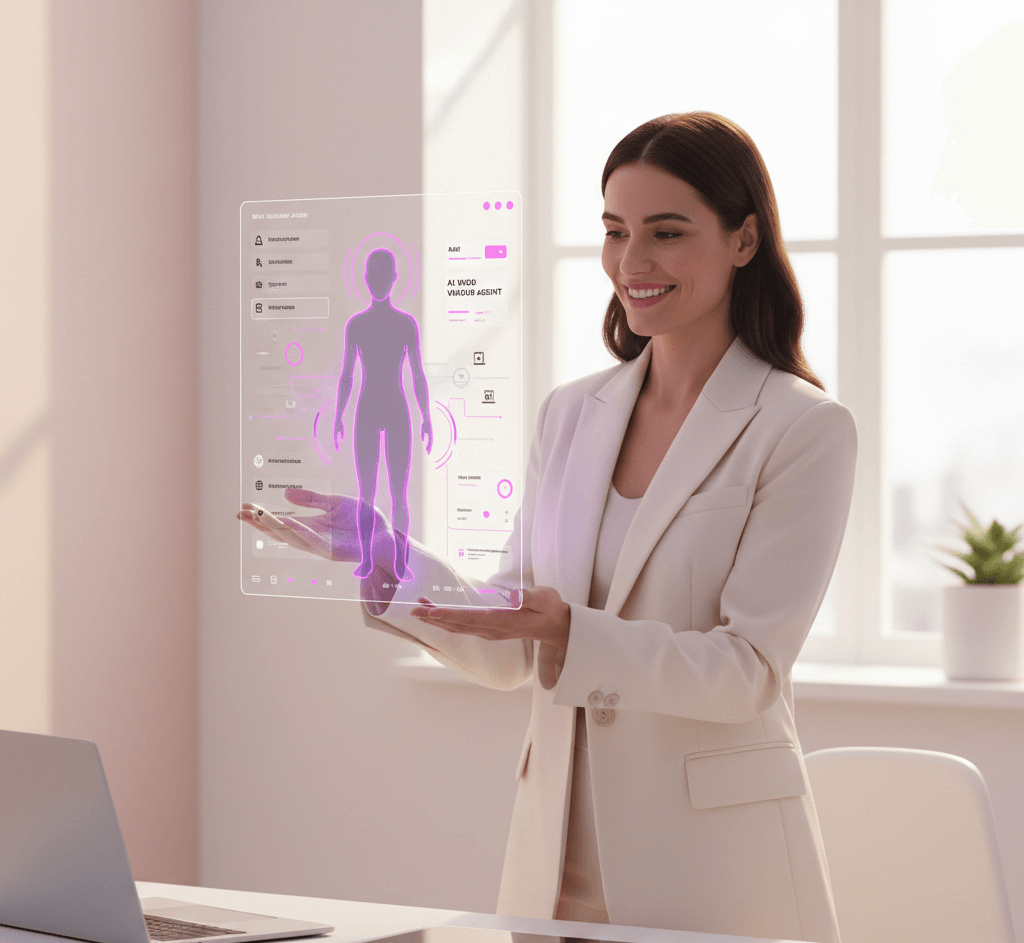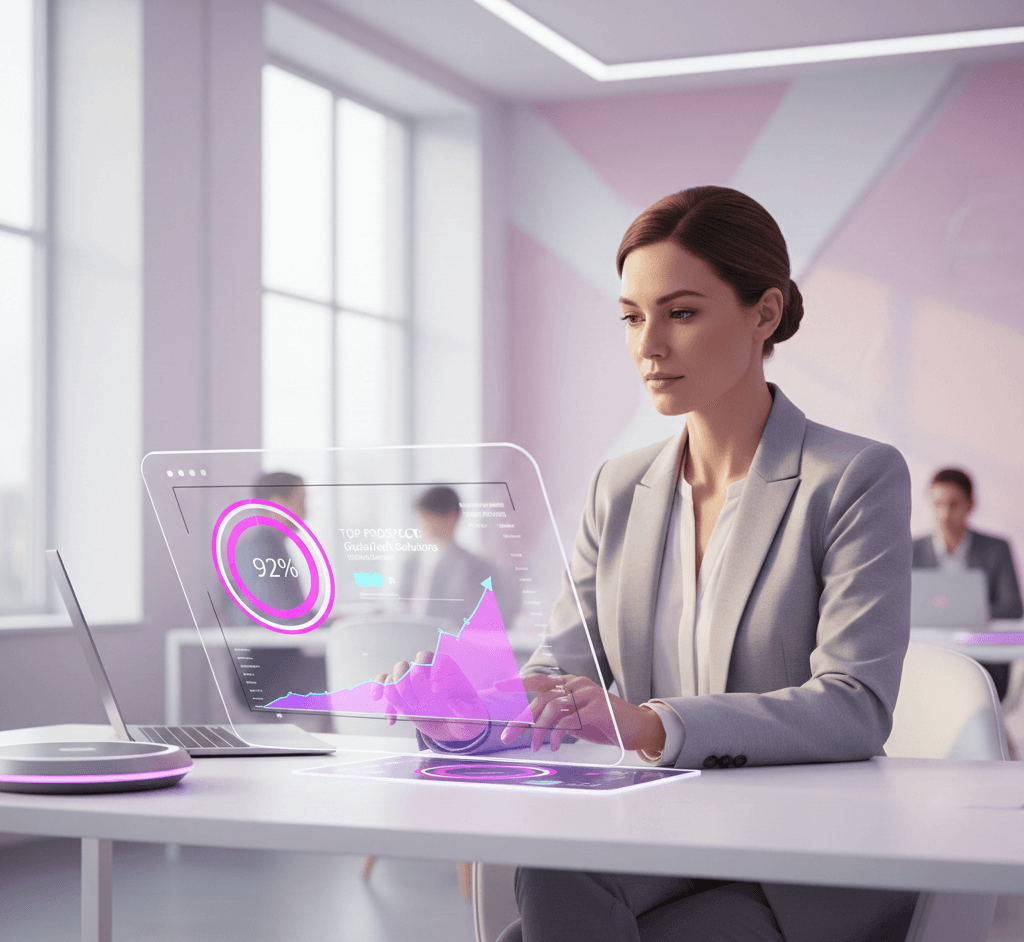

“Revolutionize your sales with AI Video Agents for Product Walkthroughs, providing personalized, 24/7 interactive demos that close deals faster.”
It is 2026. Picture this: A prospective buyer lands on your SaaS pricing page. It is 11:30 PM on a Tuesday. They are interested. They have questions. In the old days—way back in 2024—they would have filled out a form. Then, they would wait. Maybe a Business Development Representative (BDR) would email them the next morning to “schedule a quick chat” to qualify them. Then, three days later, they might finally get a demo.
That process is dead.
In 2026, speed is the only currency that matters. When that prospect lands on your site, they want to see the product now. They do not want a generic explainer video hosted on YouTube. They want a tour. They want to ask specific questions about their unique use case. And they want to do it without talking to a human sales rep just yet.
Enter AI video agents for product walkthroughs.
This technology has completely rewritten the playbook for SaaS sales. It combines the interactivity of a live call with the scalability of software. It allows companies to clone their best sales engineer, give them infinite stamina, and have them waiting on the website 24/7. This shift is not just about efficiency; it is about survival in a market where buyer patience has hit zero.
In this deep dive, we will explore how AI video agents are dominating the top of the sales funnel, why the “Book a Demo” button has evolved, and how platforms like SalesCloser.ai are leading this revolution.
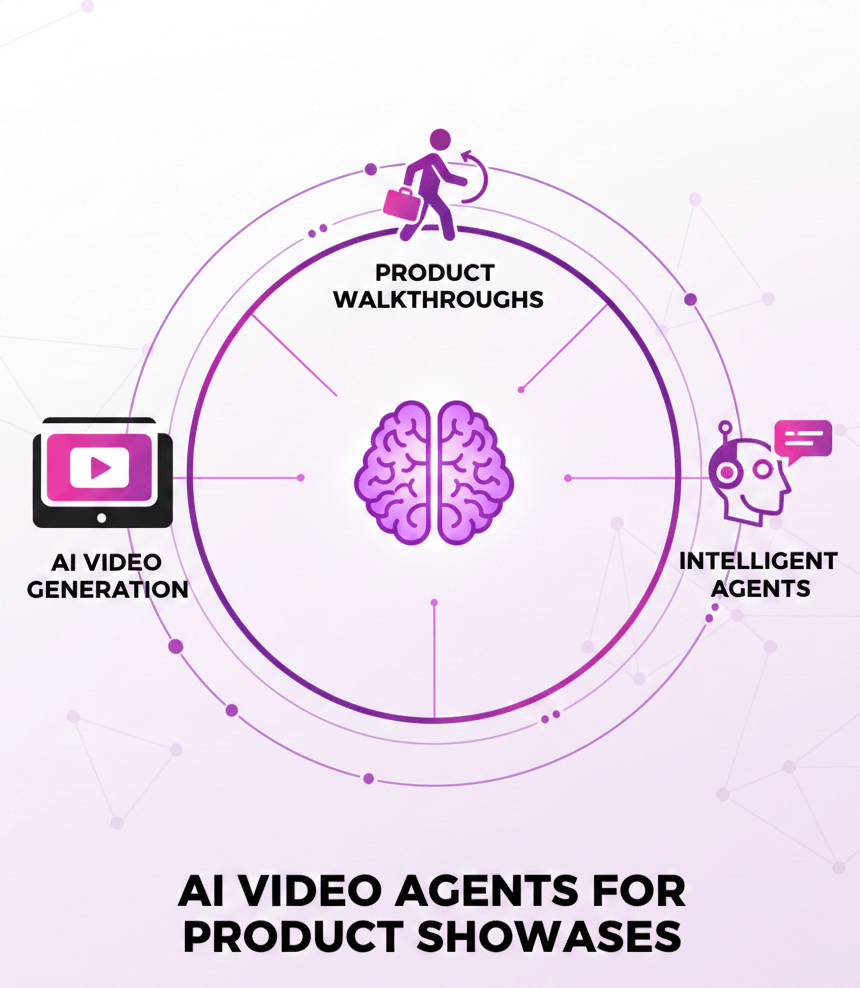
The Death of the “Static” Demo
Let’s look back at how we used to sell software. For a long time, companies relied on two things:
- The Live Demo: High conversion, but expensive and complicated to schedule.
- The Pre-Recorded Video: Easy to scale, but zero personalization.
The gap between these two was massive. You either got a generic overview that ignored your specific problems, or you had to jump through hoops to talk to a human.
By 2026, this gap became a canyon. Buyers stopped filling out forms. They realized that “Book a Demo” usually meant “Get harassed by a junior sales rep.” They wanted to self-serve. They wanted to touch the product.
The Expectation of “Now”
The consumer internet trained us to expect instant gratification. We don’t wait for a taxi; we summon an Uber. We don’t wait for a movie to ship; we stream Netflix. Yet, B2B sales stuck to a slow, appointment-based model for decades.
AI video agents for product walkthroughs changed this. They brought the “Netflix” experience to B2B sales. Now, a buyer clicks a button and is immediately transported into a video environment. An AI agent appears. It looks human. It sounds human. It asks, “Hi there, I see you’re looking at our Enterprise plan. Are you focused more on security features or team collaboration today?”
The buyer answers. The AI listens.
Suddenly, the demo changes. If the buyer says “security,” the AI skips the collaboration features and dives straight into SSO and audit logs. It is a live, reactive experience. It satisfies the buyer’s need for information right now, without burning a human AE’s time on a prospect who might not even be qualified.
What Exactly Are AI Video Agents?
We need to be clear about definitions. We are not talking about chatbots. We are not talking about those little text bubbles that pop up in the bottom right corner of a website asking, “How can I help you?”
We are talking about fully rendered, audio-visual personas.
The Tech Stack of 2026
An AI video agent combines several pieces of advanced technology:
- Visual Rendering: The agent appears to be a person. It lip-syncs perfectly. It nods. It smiles.
- Natural Language Processing (NLP): It understands context. If a user asks, “Does this integrate with HubSpot?” the agent knows exactly what that means.
- Screen Control: The agent navigates the software interface in real-time. It clicks buttons. It opens dropdown menus. It highlights specific data points on the screen.
When we talk about AI sales presentations, we mean a seamless fusion of these elements. The user feels like they are on a Zoom call with a product expert. The difference is that this expert is software. It never sleeps, it never has a bad day, and it never forgets to mention the new feature release.
Beyond the “Choose Your Own Adventure”
Early attempts at automated demos were just branching videos. You clicked “A” to see feature A, or “B” to see feature B. That was a start, but it was rigid.
Modern AI video agents are fluid. You can interrupt them. You can ask a question that wasn’t on the menu.
- User: “Wait, go back. Can I export that report as a PDF?”
- AI Agent: “Yes, you absolutely can. Let me show you exactly where that button is.”
The agent stops its current track, navigates to the export function, demonstrates it, and then asks if the user wants to continue with the previous topic. This level of interactive video software creates a conversational flow that feels natural, building trust much faster than a static FAQ page ever could.
Why Personalization Wins Deals
In sales, relevance is everything. If you sell marketing software to a hospital, you shouldn’t show them case studies about e-commerce stores. You need to speak their language.
Human sales reps are great at this—when they have time to prepare. But often, reps jump onto calls back-to-back. They give the same “harbor tour” demo to everyone. They show every feature, hoping one sticks. We call this “showing up and throwing up.”
AI-driven demos solve this through radical consistency and instant adaptation.
The “Segment of One”
With an AI agent, every single demo is unique. Before the demo starts, the agent can ingest data about the prospect. It might know their industry from their IP address. It might know their role from their LinkedIn profile.
When the demo begins, the script is generated on the fly.
- For a CFO, the agent focuses on ROI, billing dashboards, and cost savings.
- For a CTO, the agent opens the API documentation and discusses uptime.
- For a Marketing Manager, the agent shows the campaign builder and analytics.
This is the promise of personalized video marketing fully realized. It is not just about sticking a name tag on a video; it is about restructuring the entire product tour narrative to align with the viewer’s psychological drivers.
The New Sales Funnel: Automated Yet Human
You might worry that this removes the human touch. Does automation kill the relationship?
In reality, it saves the relationship.
The Burnout Problem
Think about the life of a typical Sales Development Representative (SDR) or Account Executive (AE) in 2024. They spent hours chasing leads. They sat through dozens of “intro calls” where the prospect just wanted to see the price. They gave the same introductory product tour 15 times a week.
This led to burnout. It led to bored reps giving low-energy demos.
The 2026 Model
In the 2026 model, the AI handles the heavy lifting at the top of the funnel. This is customer onboarding automation applied to sales.
- Discovery: The AI agent greets the visitor and asks key qualifying questions.
- Demonstration: The agent gives a tailored walkthrough based on the answers.
- Objection Handling: The agent answers standard questions about pricing, security, and integrations.
- Handoff: If—and only if—the prospect is ready to buy or needs complex consulting, the AI books a meeting with a human AE.
This means when a human sales rep finally gets on a call, the prospect is already educated. They have seen the product. They know the basics. The conversation can start at step 4, not step 1. The AE can focus on strategy, negotiation, and building a deep relationship.
This shift creates scalable demo automation. You can handle 5 visitors or 5,000 visitors simultaneously. Your demo capacity is no longer limited by the number of sales reps on your payroll.
SalesCloser.ai: The Engine Behind High-Performance Sales
In the competitive landscape of 2026, SalesCloser.ai stands out as more than just a video tool. It is a comprehensive performance platform designed to scale your sales team’s capabilities without increasing headcount. While other platforms simply host interactive content, SalesCloser.ai provides autonomous AI agents that actively sell, qualify, and convert leads.
The platform understands a core truth: showing a product is easy, but selling a solution requires skill. SalesCloser.ai bridges this gap by offering agents that replicate the behavior of top-tier sales professionals.
How SalesCloser.ai Drives Results
SalesCloser.ai allows companies to deploy an “AI twin” modeled after their highest-performing rep. You don’t just upload a script; you train the system with your best call recordings, objection handling playbooks, and winning case studies. The AI studies these assets. It learns why a prospect bought. It knows how to pivot when a buyer hesitates on price.
Here is how the platform turns traffic into qa ualified pipeline:
1. The Immersive Video Interface
First impressions dictate the sale. SalesCloser.ai uses a high-fidelity video call interface that feels like a genuine meeting room, not a pop-up widget. The AI agent maintains eye contact and uses natural micro-expressions. This visual engagement keeps the prospect focused on the value proposition, significantly increasing time-on-site compared to static text or standard videos.
2. Intelligent Objection Handling
Most automated tools fail when the conversation gets tough. SalesCloser.ai excels here. It uses adaptive intelligence to handle objections in real-time. If a prospect questions data privacy, the agent doesn’t just skip to the next slide. It directly addresses the concern, citing your security certifications and explaining your encryption standards. This ability to reassure the buyer keeps the deal moving forward, where other tools would lose the lead.
3. Strategic Conversion Paths
The ultimate goal is performance. SalesCloser.ai constantly analyzes the conversation to find the right moment to convert. It doesn’t push for a meeting too early, nor does it wait too long. Once it detects buying signals—like questions about implementation timelines or contract terms—it triggers the close. It seamlessly integrates with your team’s calendar to book meetings for the human AE, ensuring your closers speak only to prospects who are ready to buy.
By handling the repetitive “ground game” of discovery and demonstration, SalesCloser.ai allows your human team to focus purely on strategy and closing, dramatically improving overall sales efficiency.
The Data Advantage: What Humans Miss
There is another hidden benefit to using AI agents: Data fidelity.
When a human sales rep finishes a demo, they might scribble some notes in the CRM. “Prospect liked the reporting feature. Worried about price.” That is vague. It relies on memory.
AI video agents for product walkthroughs capture everything.
- Engagement Tracking: The AI knows precisely when the prospect leaned in. It knows which feature made their pupils dilate (using advanced sentiment analysis). It knows exactly when they got bored and tabbed away.
- Question Analysis: The system aggregates questions from thousands of demos. If 40% of prospects are asking, “Do you support dark mode?” and you don’t, your product team knows immediately.
- Objection Mapping: You can see exactly which objections are killing deals.
This data loop turns sales enablement technology into a product roadmap engine. Marketing teams can see exactly which messages resonate. Product teams see what is missing. The demo becomes a research tool.
Overcoming the “Uncanny Valley”
We must address the elephant in the room. For a long time, AI avatars looked creepy. They were stiff. Their voices were robotic.
By 2026, we will have crossed the “Uncanny Valley.” The technology behind facial animation and voice synthesis has reached a point of near-imperceptibility. The pauses are natural. The intonation rises and falls with emotion.
However, the goal is not necessarily to trick the user into thinking the agent is human. Transparency is key. Most successful implementations of SalesCloser.ai explicitly state, “I am an AI assistant here to show you around.”
Users appreciate this honesty. They know they can ask “dumb” questions without feeling judged. They know they can close the window abruptly without being rude. This low-pressure environment actually encourages more exploration. Buyers spend more time with an AI agent because they feel safe.
Use Cases Beyond the Sales Demo
While we focus on sales, this technology impacts the entire customer lifecycle.
Customer Success and Onboarding
Once the deal is signed, the AI agent doesn’t disappear. It becomes the onboarding specialist. Customer onboarding automation is critical for preventing churn.
Instead of reading a 50-page PDF manual, the new user gets a welcome call from the AI. “Welcome aboard! Let’s set up your profile together.” The AI walks them through the settings step by step, watching their screen and correcting them if they click the wrong button.
Feature Launches
When a new feature launches, you can’t have your CSMs call every single customer. But an AI agent can. It can reach thousands of users, offering a personalized tour of the new update tailored to each customer’s platform use.
Technical Support
Tier 1 support becomes a video conversation. Instead of a chat log, the user talks to an agent who guides them through troubleshooting steps visually.
Implementing AI Agents: A Strategy for 2026
For companies looking to adopt AI Video Agents for Product Walkthroughs, the path is straightforward but requires a strategic approach. You cannot just plug it in and walk away.
Step 1: Audit Your Best Sellers
You need to know what a “good” demo looks like before you can automate it. Record your top AE. Analyze what they say. What jokes do they make? How do they explain complex concepts? This becomes the training data.
Step 2: Define the Guardrails
AI needs boundaries. You must define what the agent can and cannot say. You don’t want it to promise features that don’t exist.
Step 3: The Hybrid Handoff
Design the trigger points. When does the AI hand off to a human? Is it based on company size? Revenue potential? The complexity of questions? The transition must be smooth. The human rep should enter the conversation knowing exactly what was discussed.
The Economics of Automated Demos
Let’s talk numbers. Why are CFOs loving this?
Hiring a Sales Engineer is expensive. Salaries, commissions, benefits—it adds up. An AI agent costs a fraction of that and can run 1,000 concurrent sessions.
This drastically lowers the Customer Acquisition Cost (CAC). It opens up markets that were previously too expensive to serve. You couldn’t afford to give a live demo to a small business paying $50/month. But an AI agent can give them the VIP treatment for pennies.
This is the essence of SaaS sales’ future. It is the democratization of the high-touch sales experience.
Conclusion: The Era of the Always-On Sales Floor
The 9-to-5 sales day is a relic of the past. The internet never sleeps, and neither should your sales team.
AI Video Agents for Product Walkthroughs have unlocked a new level of productivity and customer satisfaction. They have removed the friction from the buying process. They have liberated human sales professionals from the drudgery of repetition, allowing them to focus on the art of the deal.
By 2026, not having an AI video agent on your site will be like not having a “Contact Us” page in 2010. It will signal that you are hard to do business with.
Companies like SalesCloser.ai are not just selling a tool; they are selling a vision of the future where buying software is as easy as talking to a friend. The technology is here. The buyers are ready. The only question is: Are you?
As we look toward 2027 and beyond, the line between software and services will continue to blur. But one thing remains constant: Buyers buy from those who make it easy. And nothing makes it easier than a friendly, intelligent, always-available video agent ready to show you the way.
Frequently Asked Questions (FAQs)
What exactly are AI Video Agents for Product Walkthroughs?
AI Video Agents are advanced software programs that use artificial intelligence to simulate a human-led product demonstration. They appear as video avatars, interact with users in real time via natural voice, and can control the product interface to display specific features in response to users’ verbal requests.
How is this different from a standard video demo?
A standard video is linear and static. Everyone watches the same thing. An AI video agent is interactive and dynamic. It listens to you. If you ask to see the settings page, it goes there. It tailors the conversation to your specific needs, much like a real person would.
Will AI agents replace human salespeople?
No, they will not replace humans entirely. They replace the repetitive, early-stage work of qualifying and explaining basics. This frees up human Account Executives (AEs) to focus on complex negotiations, relationship building, and closing large deals. It makes humans more efficient, not obsolete.
Can the AI agent handle complex technical questions?
Yes, to a significant extent. The agent is connected to your knowledge base. It can pull up technical specs and explain integrations. However, if a question is highly unique or outside its training data, it is programmed to recognize its limit and offer to schedule a meeting with a human technical expert.
How does this technology help with lead qualification?
The AI agent acts as a filter. By observing how the prospect interacts, what questions they ask, and how much time they spend, the lead is scored. It can ask direct qualifying questions, such as “What is your timeline?” or “How large is your team?” before passing the data to your CRM.
Does it work on mobile devices?
Absolutely. By 2026, mobile optimization will be standard. AI video agents are designed to work seamlessly on smartphones and tablets, enabling prospects to take a complete product tour on the go.
Can I customize the agent’s appearance?
Yes. You can choose from a library of diverse avatars or, in some cases, create a custom avatar based on a real team member (with their permission). This allows the agent to align perfectly with your brand’s visual identity.
What happens if the internet connection is slow?
Modern video selling platforms use adaptive streaming technology. If the user’s connection drops, the video quality adjusts to maintain audio clarity and smooth playback, keeping the conversation going without interruption.