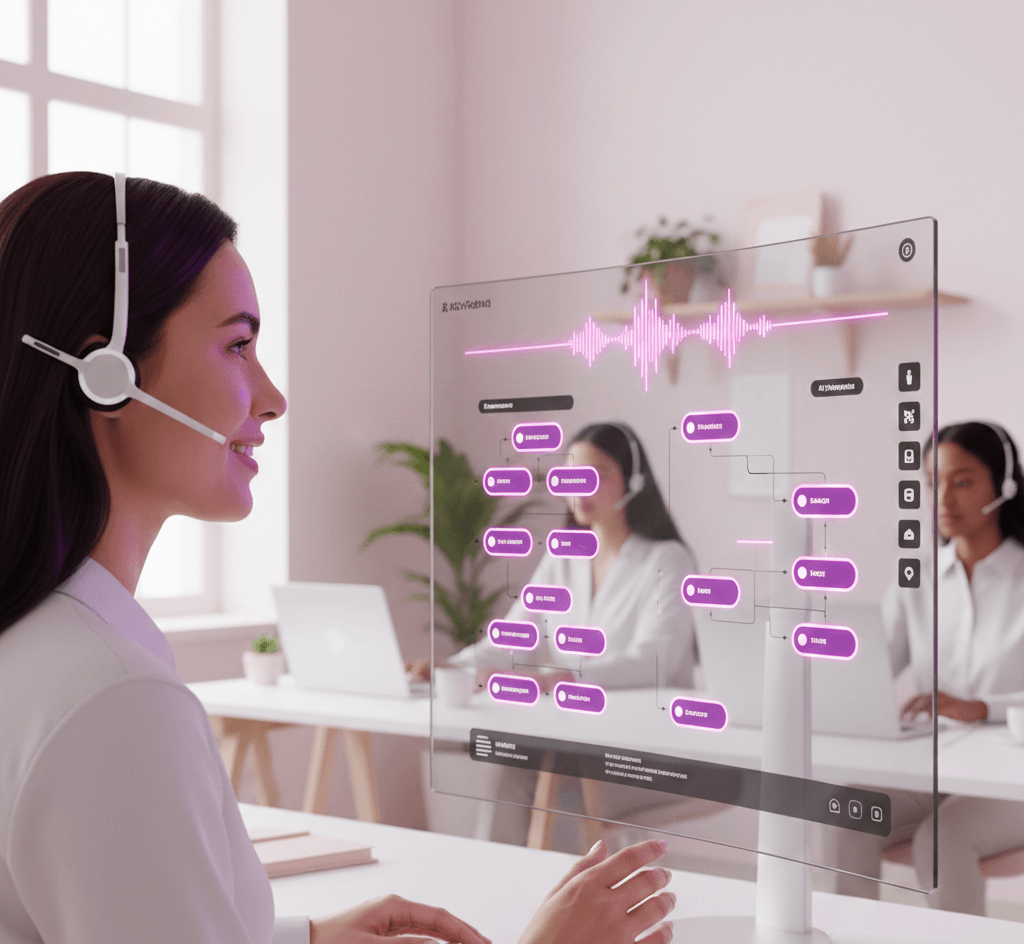

“Revolutionize your outreach with AI Voice Workflows for Customer Engagement, the 2026 standard for scalable, human-like, and proactive automation.”
The digital landscape shifts fast. Looking back at 2021, email marketing was the undisputed king of automated outreach. We all became experts at building “drip campaigns”—those sequences of emails that trigger when someone signs up for a newsletter or abandons a cart. But by 2026, the noise in the average person’s inbox has reached a breaking point.
Consumers are tired of static text. They crave something more immediate, more human, and more effective. Enter AI Voice Workflows for Customer Engagement.
In this guide, we will explore why voice is the new frontier for automation. We will break down how to build these workflows across the entire customer lifecycle. Most importantly, we will show you how to implement this today using tools like SalesCloser.ai.
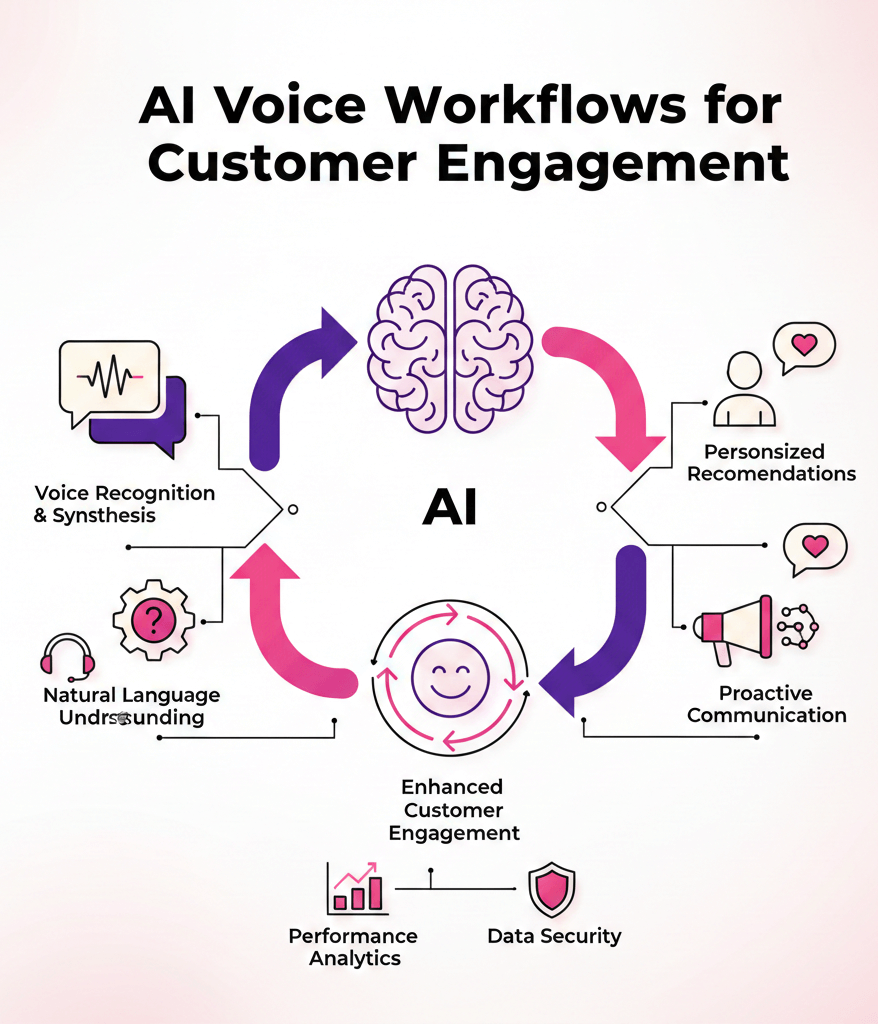
What Exactly Are AI Voice Workflows?
Think of an AI Voice Workflow as an intelligent, branching conversation that happens over the phone or via web audio. Unlike the frustrating “press 1 for sales” menus of the past, these are fluid. They use conversational AI to understand intent, tone, and context.
These workflows don’t just “make a call.” They react to data. If a customer fills out a high-value demo request, the workflow triggers an immediate, personalized outbound call. If a user hasn’t logged into their software for ten days, the workflow initiates a “check-in” call to offer help.
By 2026, these will be as standard as email automation. The difference? A 10x higher engagement rate.
Why Voice Beats Text in 2026
1. Breaking Through the Noise
Your customers receive hundreds of notifications daily. Push notifications are swiped away. Emails are archived en masse. A phone call, however, demands presence. When an AI can speak with the nuance of a human, it captures attention that text simply cannot match.
2. Emotional Intelligence at Scale
Text is flat. It lacks sarcasm, empathy, and excitement. Modern AI voice models now capture these tonal shifts. This allows for personalized outreach at scale that feels like a 1-on-1 consultation rather than a broadcast.
3. Immediate Resolution
An email thread can take three days to resolve a simple question. A voice workflow resolves it in three minutes. This speed drastically improves the automated customer journey and boosts satisfaction scores.
The Framework: Designing Your Voice Lifecycle
To succeed with AI Voice Workflows for Customer Engagement, you cannot treat them as isolated events. You must map them to the customer lifecycle. Here is how you structure these sequences from the first touchpoint to long-term loyalty.
Phase 1: Lead Capture and Instant Qualification
The “Speed to Lead” is the most critical metric in sales. Research shows that if you don’t reach a lead within five minutes, your chances of closing drop by 80%.
- The Trigger: A lead submits a form on your pricing page.
- The Workflow: The system immediately triggers an AI-powered calling campaign. The AI introduces itself, asks three qualifying questions (budget, timeline, authority), and if they pass, it offers to book a meeting on a human rep’s calendar.
- The Benefit: You stop wasting human time on “tire kickers” and ensure every hot lead gets an instant response.
Phase 2: The Seamless Onboarding Sequence
Many customers churn because they get stuck during the initial setup. Customer lifecycle automation shouldn’t stop at a “Welcome” email.
- The Trigger: A new user fails to complete their profile setup within 24 hours of signing up.
- The Workflow: An AI voice assistant calls the user. “Hi Sarah, I noticed you started setting up your dashboard, but didn’t finish the integration step. Do you have two minutes for me to walk you through it right now?”
- The Benefit: This proactive customer outreach removes friction immediately, enabling users to see the value of your product sooner.
Phase 3: Nurturing and Proactive Check-ins
Engagement often dips in the middle of a subscription. This is where intelligent follow-up sequences shine.
- The Trigger: A customer’s usage stats drop below a certain threshold.
- The Workflow: Instead of an “automated” email that goes to spam, the AI calls to offer a specialized training session or to share a new feature update that matches their previous usage patterns.
- The Benefit: You catch potential churn before it happens.
Phase 4: Renewal and Expansion
The best time to sell more is when a customer is already happy.
- The Trigger: The contract is 60 days from expiration.
- The Workflow: The AI calls to review the year’s successes. It asks if the current seat count is sufficient and informs the customer of an upcoming loyalty discount if they renew early.
- The Benefit: High-volume renewal management without increasing your headcount.
Building the Future with SalesCloser.ai
The most significant barrier to adopting conversational AI workflows was technical complexity. You needed a team of developers and data scientists.
SalesCloser.ai changed that.
As the premier platform for voice marketing automation, it provides a no-code interface that makes building a voice workflow as easy as drawing a flowchart.
Why SalesCloser.ai is the Market Leader:
- No-Code Logic: You can drag and drop “nodes” to create complex conversational paths. If the customer says “X,” the AI responds with “Y.”
- Hyper-Realistic Voices: Gone are the days of robotic synthesis. The voices on SalesCloser.ai carry natural inflection and pauses.
- Deep Integrations: It connects directly to your CRM (Salesforce, HubSpot, etc.). It reads customer data to personalize the call and writes the call summary back to the record instantly.
- Scalability: You can run 10,000 personalized calls simultaneously. A human team would need an entire stadium to do that.
Strategy: How to Write for AI Voice
Writing for the ear is different than writing for the eye. When you design your interactive voice engagement scripts, keep these human-centric rules in mind:
- Keep it Brief: No one wants to hear a paragraph over the phone. Break information into small, digestible chunks.
- Ask Questions Often: Turn the call into a dialogue. Instead of listing features, ask, “Would that solve your current bottleneck?”
- Use “Verbal Markers”: Words like “Got it,” “Sure,” and “I understand” make the AI sound attentive.
- Avoid Jargon: Use the language your customers use. If you sell to plumbers, don’t talk like a software engineer.
The Metrics That Matter
When you deploy AI Voice Workflows for Customer Engagement, you need to track more than just “calls made.” Focus on these KPIs to measure true success:
| Metric | Definition | Why it Matters |
| Intent Match Rate | How often the AI correctly understood the user’s goal. | Measures the accuracy of your conversational logic. |
| Conversion to Calendar | Percentage of calls that result in a booked meeting. | The ultimate ROI for sales-focused workflows. |
| Sentiment Score | The “mood” of the customer at the end of the call. | Ensures your brand reputation stays high. |
| First-Call Resolution | Percentage of issues solved without human intervention. | Measures efficiency and cost savings. |
Overcoming Common Objections
“Will my customers hate talking to an AI?”
In 2026, the sentiment has shifted. People hate bad automation. They love efficient help. If your AI voice workflow solves their problem in 60 seconds, they will prefer it over waiting on hold for 20 minutes to speak to a human.
“Is it expensive to set up?”
Compared to the salaries, benefits, and desk space of a full-scale BDR team, AI workflows cost a fraction of that. With SalesCloser.ai, you pay for results, not overhead.
“What about security and privacy?”
Top-tier platforms now offer SOC2 compliance and end-to-end encryption. In many ways, AI is more secure than humans because it doesn’t “leak” data or forget to follow compliance scripts.
Practical Use Cases for 2026
1. Event Reminders and Follow-ups
If you run webinars or live events, use voice workflows to call registrants one hour before the start. After the event, have the AI call to ask for feedback and offer a trial. This personalized outreach at scale ensures your attendance rates skyrocket.
2. Payment Failures and Collections
Nobody likes making collection calls. They are awkward and time-consuming. An AI can handle these with a neutral, helpful tone. “Hi Mark, I’m calling from [Company] because your card on file was declined. Would you like me to update that for you now?”
3. Crisis Management
If your service goes down, you can trigger a mass outbound workflow to inform your top-tier clients. This transparency builds massive trust and prevents your support lines from being overwhelmed.
The Step-by-Step Implementation Guide
Ready to build your first workflow? Follow this path:
- Identify a Bottleneck: Where are you losing people in your funnel? Pick one specific spot—like demo no-shows.
- Map the Logic: Draw a flowchart. What is the goal of the call? What are the common objections?
- Select Your Persona: Choose a voice on SalesCloser.ai that matches your brand. Professional? Friendly? Enthusiastic?
- A/B Test: Run two versions of the script. See which one keeps people on the line longer.
- Iterate: Use the call transcripts and AI summaries to refine your logic every week.
Conclusion: The Future is Audible
The era of relying solely on text-based automation is over. As we move through 2026, the companies that win will be those that talk to their customers, not just at them.
AI Voice Workflows for Customer Engagement offer the perfect balance of efficiency and empathy. They allow you to scale your most valuable asset—your voice—without hiring an army of people.
By using SalesCloser.ai, you aren’t just adopting a new tool; you are future-proofing your entire customer journey. You are ensuring that every lead is heard, every user is supported, and every customer feels valued.
The question isn’t whether voice automation will become the standard. The question is whether you will be the one leading the charge or the one trying to catch up.
Frequently Asked Questions (FAQs)
What are AI Voice Workflows?
They are automated sequences of voice conversations triggered by specific events or data points. They use AI to interact with customers in real time, handling tasks such as qualification, onboarding, and support.
How do they differ from old IVR systems?
Old systems (Interactive Voice Response) used rigid menus and “press 1” logic. Modern workflows use Natural Language Processing (NLP) to understand what customers say in their own words.
Can I integrate this with HubSpot or Salesforce?
Yes. Platforms like SalesCloser.ai offer native integrations. This allows the AI to pull customer names, past purchase history, and other data to make the call feel personal.
Does it sound like a robot?
Not anymore. By 2026, voice synthesis will have reached “human parity.” This means the AI can mimic human breathing, pauses, and emotional tones.
Is this only for large enterprises?
No. Because it is no-code and scalable, small businesses can use it to appear much larger and provide 24/7 service that was previously impossible for a small team.