“Provide 24/7 service with Automated Guest Inquiry Assistants. Use AI to answer questions, handle bookings, and boost hospitality revenue.”
The hospitality industry operates on a single, relentless clock: 24/7. When you manage a property, you aren’t just selling a room or a home; you are selling availability and peace of mind. But for property managers and owners, this reality often translates into a crushing workload. The inquiries never stop. A potential guest in London messages about parking at 3 AM your time. An active guest in Tokyo calls, needing the Wi-Fi password immediately. Another email inquiry about the pet policy for a booking next summer.
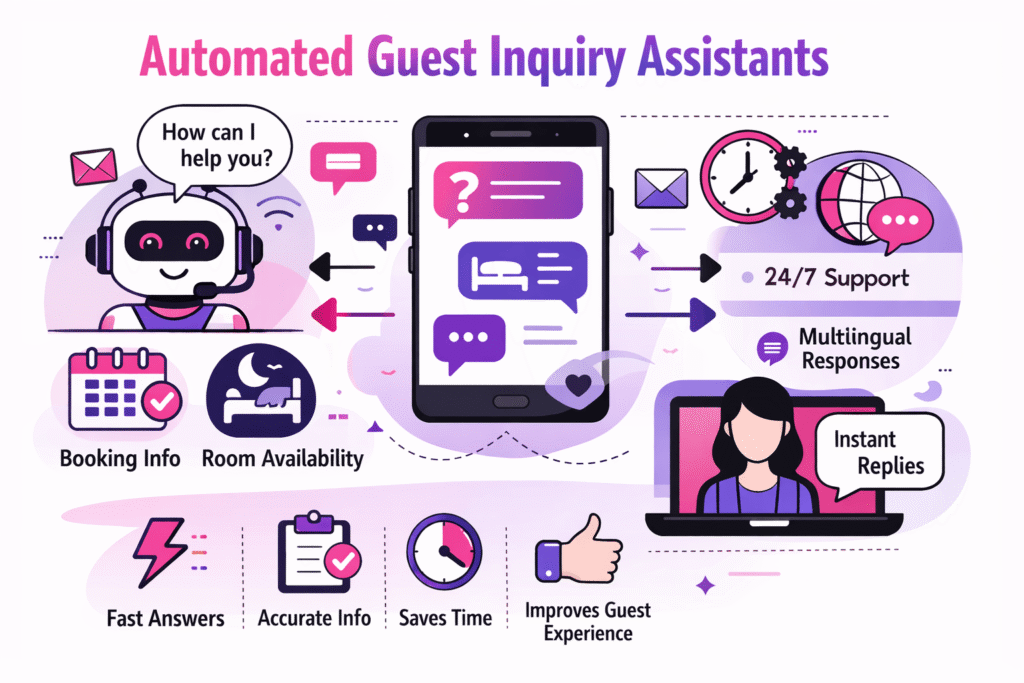
These are not complex questions. They are repetitive, simple, and entirely predictable. Yet, they consume the vast majority of your communication time. When your staff is overwhelmed by these common inquiries, response times lag. A lag of even thirty minutes can mean a lost booking. Worse, a midnight call going to voicemail might lead a guest to cancel a reservation they were about to make. This persistent, unmanaged communication demand creates a bottleneck that stifles growth and burns out teams. The answer to this systemic issue is rapidly changing the landscape of hospitality: automated guest inquiry assistants.
In this article, we will move beyond buzzwords and provide a practical guide to reclaiming your time and generating more revenue with AI. We will show you how to structure your information, build a central knowledge base, and then introduce a powerful tool that moves beyond simple text: SalesCloser.ai, an AI-powered voice agent that can act as your 24/7 virtual concierge and front desk.
The Hidden Cost of Slow Responses
Let’s be clear: a slow response is a clear signal to a guest that you are not open for business. In the competitive worlds of Airbnb and independent hotel booking, speed is the deciding factor. The data is clear: properties that respond within five minutes are vastly more likely to convert an inquiry into a booked reservation.
When a response takes hours, several negative things happen simultaneously. First, the guest—already feeling urgency—simply moves to the next listing. Second, booking platforms like Airbnb and Booking.com track your response time and use it as a primary ranking signal. Slow responses actively push your property down in search results, making you invisible to future guests. Third, your human staff, when they finally do respond, are apologetic and stressed, starting the guest relationship on a negative note.
The revenue lost to unanswered overnight inquiries is staggering. If your property receives five major inquiries overnight and you only respond the next morning, you might permanently lose two of those bookings. At a conservative $200 per night for a three-night stay, that is $ 600 in revenue lost in a single night. Scaled across a month, that is $36,000 in missed opportunity. The cost of doing nothing is immense. This is where AI for hospitality transitions from a novelty to a necessity. By implementing an instant response system, you stop the bleeding.
Step 1: Identifying the “Repeat Offenders”
The first step toward automation is not technology; it is organizational structure. You must identify exactly what your guests are asking. You might think you know, but quantifying it is key. Your staff is likely answering the same twenty questions hundreds of times a week. We call these the “Repeat Offenders.”
To start, you do not need complex vacation rental software. You need a spreadsheet or a simple document. Dedicate one week to tagging every single inbound communication (email, phone call, platform message). Instruct your team to tag each interaction with a category. Your list of categories might look like this:
- Check-In/Check-Out: Times, early arrival requests, late departure policies, key exchange details.
- Property Access: Where is the keybox? What is the door code? Where do I park?
- Amenities: Is there a hairdryer? Is the pool heated? Do you provide coffee?
- Policies: Can I bring my dog? Is smoking allowed on the balcony? What is the cancellation policy?
- Location/Directions: How do I get there from the airport? Are you near downtown?
- Troubleshooting (Active Guests): The Wi-Fi is slow. The AC is not working. I need more towels.
- Booking Inquiries: Is the property available next weekend? Can I get a discount for a week-long stay?
By the end of the week, you will have actionable data. You will see that, perhaps, 40% of all inquiries relate to “Property Access” and 25% to “Policies.” This visualization shows you exactly where your communication bottleneck resides. These are the categories you can, and must, automate.
Step 2: Building Your Master Knowledge Base
Once you have your categories, you must build the data that will power your AI. This is your master Knowledge Base (KB), the foundation of your entire virtual concierge service. If this data is poor, your AI will be unhelpful. If this data is excellent, your AI will sound like your best employee.
For every single category you identified, write a clear, concise, and definitive answer. This is not the place for ambiguity. Your response must be the final word. A guest should not have to ask a follow-up question.
Guidelines for a Successful Knowledge Base:
- Use Active Voice: Make your answers direct. Instead of “A parking pass will be provided upon check-in,” write “We provide one free parking pass when you check in.”
- Be Branded, Not Robotic: Infuse your brand voice into the answers. If you are a playful Airbnb host, let that show. If you are a luxury hotel, your tone should be formal. The AI agent will adopt this tone.
- Keep it Brief but Complete: Answer the question fully without unnecessary fluff. A guest asking about the pet policy only wants to know three things: “Are pets allowed?”, “What is the fee?”, and “Are there restrictions?”
- Write for Clarity, Not Complexity: Use short sentences. Avoid jargon. The goal is instant comprehension.
Example: Pet Policy KB Entry
Bad Entry: Pets are considered on a case-by-case basis. There is usually a fee, but it depends. Please contact us to discuss details.
Good Entry: We love pets! We welcome dogs up to 50 lbs (maximum two pets). We charge a non-refundable pet fee of $75 per stay. We do not allow pets on the furniture, and they must be crated if left alone. We do not allow cats.
This “Good Entry” is perfect for an AI agent. It answers every potential follow-up question (size limit, fee amount, number allowed, other restrictions) in advance. It is proactive and complete. This spreadsheet is now your new “operating manual.” It is the most valuable asset you can create for your business this year.
Introducing AI: Beyond the Basic Hotel Chatbot
You now have a structured repository of information. How do you deploy it? The market is flooded with simple, rule-based chatbots. You’ve seen these: “Press 1 for directions. Press 2 for amenities.” These systems are not true AI and often frustrate guests. If the guest’s query is phrased slightly differently (“How do I find your place?”), The rule-based system fails.
Modern AI for hospitality uses Natural Language Processing (NLP). This means the AI understands context, intent, and variation. It does not look for keywords; it understands meaning.
If you are using short-term rental management software (like Guesty, Hostaway, or others), they often have integrated text-based messaging bots. You upload your KB, and the bot responds to platform messages. This is a massive step forward. It handles text inquiries 24/7. However, text alone is limited.
When an active guest is locked out or when a high-value booking is on the line, people do not want to text. They want to talk to a human. This is the communication gap that leads to those 3 AM emergency calls. This is where text-based solutions fall short, and where a sophisticated virtual concierge service requires a human touch—or an AI that can perfectly simulate one.
The Conversational Leap: SalesCloser.ai as Your Voice Agent
This brings us to the next logic step in hospitality automation: voice. While text handles platform inquiries, voice is required for complex troubleshooting, reassurance, and closing sales. We have identified SalesCloser.ai as a tool that completely changes this dynamic.
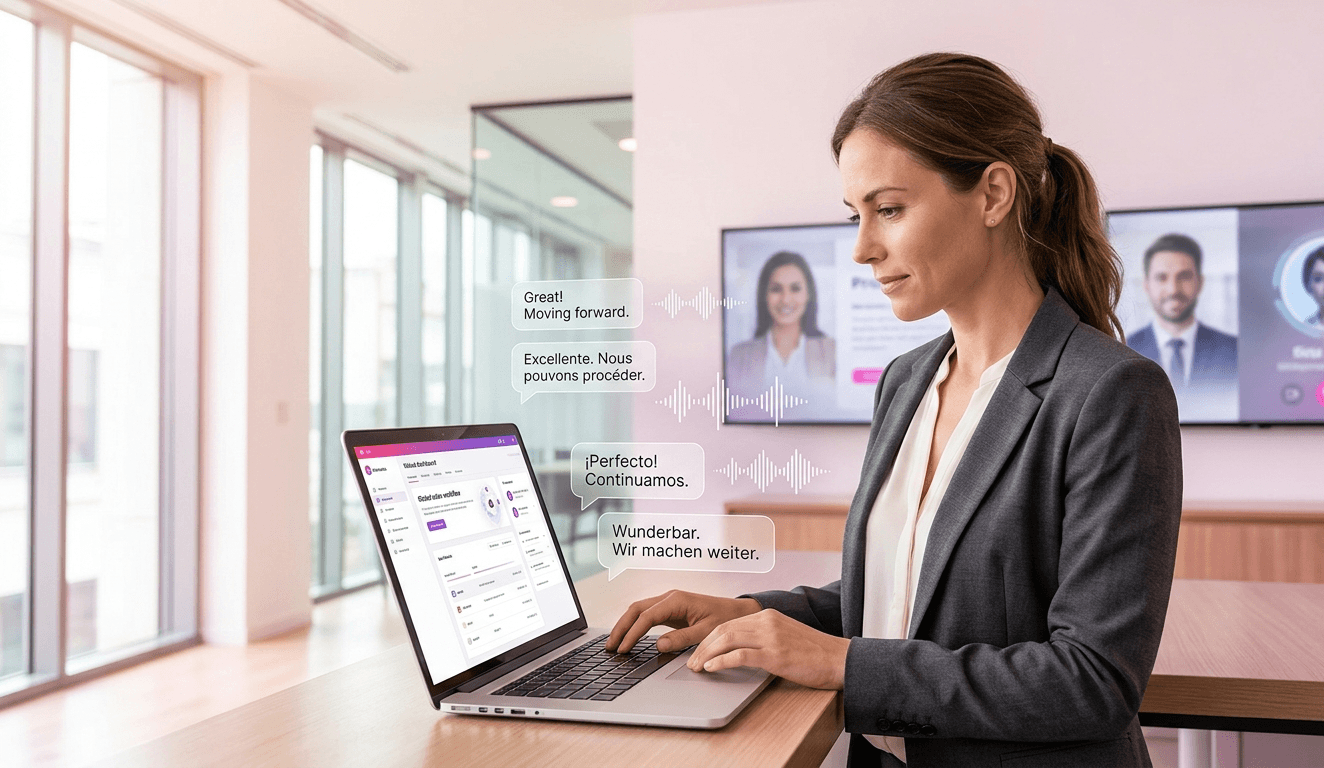
SalesCloser.ai is not just a hotel chatbot that sends text messages. It provides full AI agents capable of engaging in fluid, real-time phone conversations. These are not the robotic “text-to-speech” systems of the past. These AI agents understand emotion, tone, and complexity.
You train the SalesCloser.ai agent on the precise Knowledge Base you built in Step 2. You also give it property specifics and your sales scripts. This allows the voice agent to do far more than just “answer questions.”
What SalesCloser.ai Can Do:
- Instantly Answer Complex Questions: When a guest calls and asks, “My husband uses a wheelchair; can you describe the exact layout of the bathroom doorway?” the SalesCloser.ai agent accesses the KB and answers instantly. A text bot cannot provide that level of detail or reassurance.
- Provide 24/7 Guest Support: This is the game-changer for active guests. A guest who cannot find the lockbox at 2 AM calls your dedicated number. The SalesCloser.ai agent answers immediately, walks them through the process, and ensures they are safely inside. You and your staff are not woken up. The improved guest experience score here is priceless.
- Handle and Convert New Booking Inquiries: The agent does not just sit and wait; they sell. When a potential guest calls with a booking inquiry (“Is the property free from the 12th to the 15th?”), The AI agent can check your real-time availability (by integrating with your PMS). It can confirm pricing, explain value propositions (e.g., “Yes, it is available! And did you know that booking directly with us saves you 10% versus the major platforms?”), and even facilitate the booking process itself.
- Capture Lost Revenue Overnight: This is the most critical function. An inquiry that goes to voicemail overnight is likely a lost booking. An inquiry that is answered and converted by your AI agent at 3 AM is pure revenue you would have missed. This capability directly automates hotel bookings that were previously impossible to capture.
By adopting this tool, you stop trying to manage the overwhelming volume of inquiries. You deploy an advanced instant-response system that manages your communication, allowing you to focus on strategic growth rather than operational chaos.
Implementation: Turning Your Knowledge Base into an AI Front Desk
Moving from your spreadsheet to a functioning AI agent is surprisingly streamlined. It does not require a computer science degree.
The Typical Implementation Workflow:
- Import Your Data: You provide your Knowledge Base (the spreadsheet you created) to the platform. The AI begins the process of ingestion and understanding.
- Define Personas and Logic: You select the voice of your agent (e.g., male/female, accent, tone). You also set the operational rules. For example, “AI handles all amenities questions. If a guest mentions a ‘flood,’ ‘fire,’ or sounds angry, immediately transfer the call to the manager-on-duty.” This gives you total control.
- Connect to Your Systems: You must connect the AI to your primary systems. For a voice agent, this involves setting up a dedicated phone number (or porting your existing one). For a text-based bot, connect it to your Airbnb, Vrbo, or Booking. cominbox. Most critically, you connect it to your Property Management System (PMS).
- Integrate with your PMS: This is the most vital step for true automation. When the AI agent can read your availability and pricing calendar in real-time, it can provide definitive answers to booking inquiries and even create reservations. SalesCloser.ai integrates with major PMS platforms, turning your AI agent into a seamless extension of your front desk.
Once implemented, your day’s workflow changes. Your staff arrives not to a backlog of 50 overnight inquiries, but to a clean slate. They review the conversation logs. They will see dozens of inquiries answered, a guest helped with the lockbox, and perhaps two new bookings created and confirmed. Their job transitions from answering repetitive questions to focusing on high-value tasks, like enhancing the on-site guest experience or managing large group bookings.
The Bottom Line: ROI and Competitive Advantage
Implementing automated guest inquiry assistants, specifically the powerful combination of a well-built Knowledge Base and an advanced tool like SalesCloser.ai, provides immediate, measurable ROI.
Tangible Benefits of Automation:
- Drastically Reduced Response Time: From hours to milliseconds. This leads to higher rankings on booking platforms and vastly higher conversion rates.
- Increased Revenue from Direct Bookings: By using an AI voice agent like SalesCloser.ai, you can encourage callers to book directly, bypassing platform fees. The agent can explain the savings and benefits (such as a complimentary bottle of wine) of direct booking, thereby increasing your margin.
- Significant Savings on Operational Costs: You no longer need to staff a 24/7 call center or pay overtime for simple support. Your staff becomes vastly more productive.
- Higher Guest Satisfaction Scores (CSAT): Guests get the information they need instantly. An active guest with an issue is resolved immediately. This translates into 5-star reviews, which are the lifeblood of hospitality success.
- Staff Freedom: You and your team are freed from the tyranny of the urgent. You regain your weekends and sleep while focusing on the strategic growth of your portfolio.
In a market where everyone is competing for the same guests, the ability to communicate instantly and definitively, 24/7, is a massive competitive advantage. When all other properties are “closed,” you are open, converting leads, and ensuring existing guests are delighted.
Conclusion
The communication demands of hospitality are not going away. Guests will continue to expect instant answers on their preferred channels. Property owners can no longer afford to rely solely on human teams to meet these 24/7 expectations. The path forward is structured automation.
You do not need to overcomplicate the process. Begin by simply listening to your guests. Catalog their repetitive questions. This information is your strategic asset. Use it to build a robust knowledge base that defines the rules of your business. This database is the foundation.
Finally, deploy a powerful solution that leverages this data to act on your behalf. Tools like SalesCloser.ai provide the dynamic, intelligent voice support that converts a standard vacation rental software stack into a true, revenue-generating front desk operation. You move from simply managing a property to actively scaling a business. You reclaim your time, your staff gets their sanity back, and your guests receive the proactive, immediate service they deserve. This is the new standard of hospitality, and it is entirely within your grasp.
FAQs
How do I get started with SalesCloser.ai?
You can visit SalesCloser.ai to learn more and request a demo to see how it can benefit your business.
How much does SalesCloser.ai cost?
SalesCloser.ai offers personalized pricing plans based on your unique needs. You can connect with SalesCloser.ai to learn more about the exact pricing.
Can an AI agent like SalesCloser.ai handle cancellations or modifications to bookings?
Absolutely. A sophisticated AI agent trained on your policies can explain the cancellation terms clearly to the guest. Furthermore, if you integrate it with your PMS, it can process simple modifications, such as changing dates (if available) or adding a pet fee. For complex situations (e.g., requesting a full refund outside of policy), you should configure the AI to transfer the guest to a human manager.
Will an AI voice agent make my property sound impersonal or robotic?
This is a common concern, but the opposite is often true. Simple, text-based bots that fail to understand nuance come across as robotic. A sophisticated voice agent like SalesCloser.ai uses fluid, natural language. It can adapt to the tone you define in your Knowledge Base. Critically, it provides a warm, immediate answer at 2 AM, which feels significantly more personal and helpful than a call going to a robotic voicemail.
How do I know if the AI is giving the correct information?
You have total control. The AI only knows what you teach it. It does not invent information. If you provide a robust, clear, and proactive Knowledge Base (as described in Step 2), the AI will deliver that precise information. You can review transcripts and recordings of all conversations to ensure the AI agent is performing exactly as you intended. This allows for continuous refinement.
Is SalesCloser.ai hard to set up?
The “hardest” part of the setup is also the most valuable: creating your Knowledge Base (Step 2). This is a task every property manager should do anyway. Once you have structured that data, the technical integration process (connecting to phone lines and your PMS) is managed by SalesCloser.ai’s onboarding team. It is designed to be a streamlined implementation, not a massive IT project.