“Stop wasting time on bad leads. Use Automated Lead Screening Tools to qualify prospects with AI before they ever reach your sales team.”
Every sales professional knows the feeling. You grab your coffee, sit at your desk, and look at your list of daily calls. You dial the first number. The person on the other end has no budget. You dial the second number. That person has no authority to make a purchase. You dial the third. They just wanted a free eBook and have zero interest in your product.
By noon, you feel completely drained. You wasted hours talking to people who will never buy. This is a massive problem in modern business. Companies spend thousands of dollars driving traffic to their websites. They capture emails and phone numbers. They pass these lists to their sales teams. Then the sales teams waste valuable time sorting good leads from bad ones.
This process breaks morale. It ruins productivity. Worst of all, it costs companies revenue. High-performing sales representatives should spend their time closing deals. They should not spend their time acting as human filters.
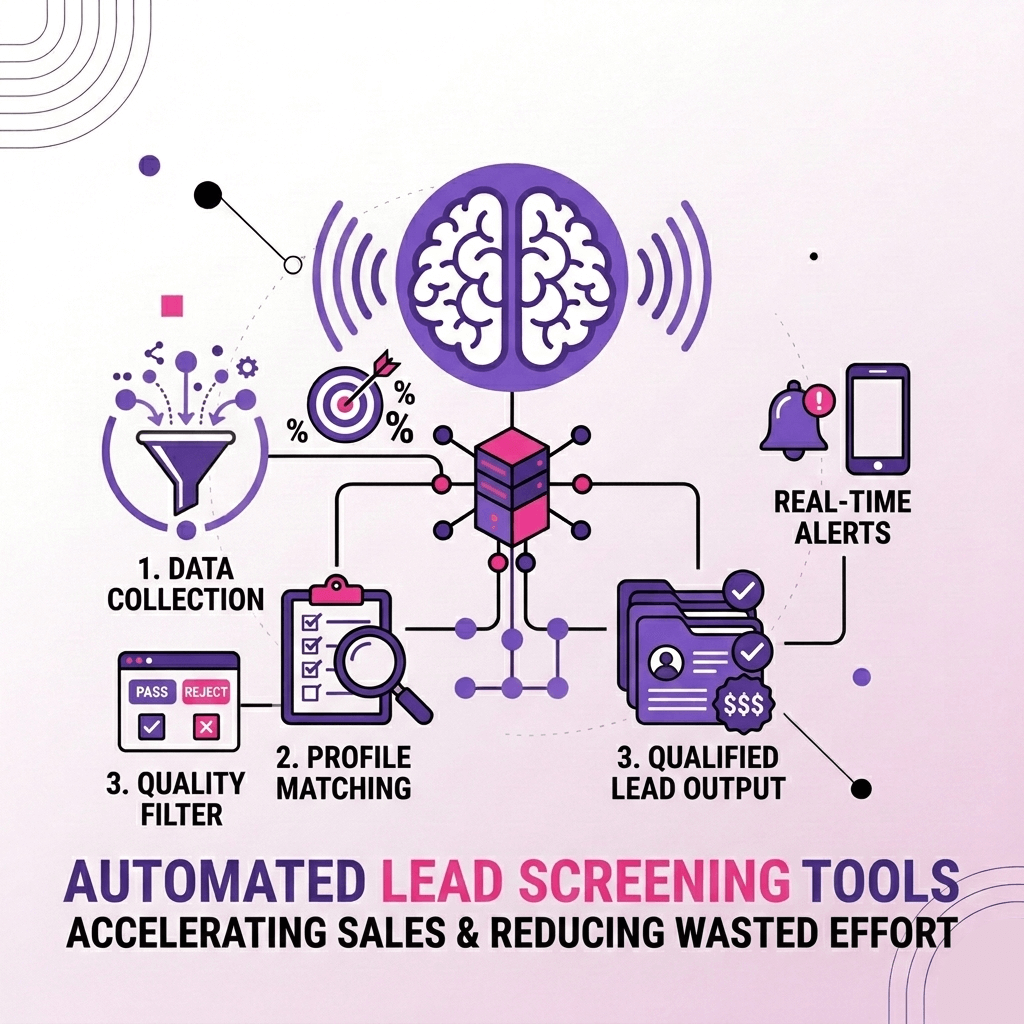
Fortunately, technology offers a powerful solution. Today, automated lead screening tools are changing how companies manage their sales pipelines. These intelligent systems interact with prospects instantly. They ask the right questions. They determine buyer intent. They ensure your human team only talks to people who actually want to buy.
In this comprehensive guide, we will explore the immense productivity drain caused by unqualified leads. We will break down effective lead screening methodologies. Furthermore, we will introduce SalesCloser.ai, a groundbreaking tool that uses artificial intelligence to conduct real-time voice conversations with prospects. By the end of this article, you will understand precisely how to pre-qualify sales leads and supercharge your sales pipeline.
The Hidden Cost of Unqualified Leads
Most businesses celebrate when their lead volume goes up. The marketing team high-fives each other. They hit their monthly quota for form submissions. However, the sales team often faces an entirely different reality. A sudden influx of low-quality leads creates a massive bottleneck.
The Productivity Drain
When a sales rep receives a list of leads, they must investigate each one. They look up the company on LinkedIn. They search for the contact’s job title. They craft a personalized email. They pick up the phone and dial.
Let us assume this research and outreach process takes fifteen minutes per lead. If a rep receives twenty unqualified leads in a day, they just wasted five hours of their shift. They spent more than half their day chasing ghosts. Consequently, they have less time to nurture genuine prospects. They have less time to prepare for closing calls. They have less time to generate actual revenue.
The Problem of Sales Burnout
Sales is already a high-pressure environment. Reps face constant rejection. Adding a pile of unqualified leads to their plate accelerates burnout. A talented closer wants to negotiate contracts. They want to solve complex business problems. They do not want to act like an answering machine.
When you force your best salespeople to handle basic sales lead filtering, they get frustrated. They lose their motivation. Eventually, they quit. High turnover in a sales department costs a fortune in recruiting and training. You must protect your team’s time.
The Opportunity Cost
Every minute spent on a bad lead is a minute taken away from a good lead. Imagine a highly qualified prospect submits a form on your website. They have a massive budget. They need a solution right now.
However, your sales team is busy. They are stuck on the phone with ten people who have no intent to buy. Because of this delay, your highly qualified prospect gets impatient. They reach out to your competitor. Your competitor calls them back immediately and wins the deal. You lost a massive contract simply because your team lacked sales pipeline efficiency.
What Are Automated Lead Screening Tools?
To solve the problems mentioned above, businesses turn to technology. Automated lead screening tools are software applications designed to evaluate incoming prospects without human intervention. These tools analyze data, engage prospects, and score them based on specific criteria.
Moving Beyond Simple Web Forms
In the past, companies relied on simple web forms. They asked prospects to fill in their name, email address, and company size. Marketing automation tools then placed these contacts into a database.
However, static forms have significant limitations. People often lie on web forms. They select random options from drop-down menus just to bypass the screen. Furthermore, forms are passive. They do not ask follow-up questions. If a prospect selects “1-10 employees,” the form accepts the selection and continues. It does not probe deeper to understand the prospect’s actual pain points.
The Shift Toward Active Engagement
Modern lead qualification software takes an active approach. Instead of waiting for a prospect to check a box, these tools actively engage the user. They initiate conversations. They ask dynamic questions based on previous answers. They qualify or disqualify leads in real time.
This approach brings immediate clarity to the sales process. It separates the curious window-shoppers from the serious buyers. Most importantly, it happens instantly.
The Psychology Behind Effective Pre-Qualification
To understand why automated systems work so well, we must understand buyer psychology. Today’s consumers and B2B buyers expect immediate gratification. When they express interest in a product, they want answers right away.
The Need for Speed
Studies consistently show that speed-to-lead is critical. If you respond to a lead within five minutes, your chances of connecting with them skyrocket. If you wait an hour, your chances drop significantly. If you wait a day, the lead is often completely dead.
Human sales teams simply cannot call every single lead within five minutes. They have meetings. They take lunch breaks. They sleep. Automated prospect qualification systems, on the other hand, operate twenty-four hours a day. They never sleep. They respond the very second a prospect shows intent.
Balancing Friction and Intent
In sales, you constantly fight a battle between friction and intent. If you make it too easy to contact your sales team, you get a flood of low-intent leads. If you make it too difficult, you scare away good prospects.
Effective B2B lead screening introduces the right amount of friction. It asks the necessary questions to verify intent. Serious buyers do not mind answering a few questions. They know that providing context helps the vendor offer a better solution. Unserious buyers, however, will abandon the process when faced with screening questions. This self-selection is precisely what you want.
The Core Principles of Lead Screening: Mastering BANT
You cannot automate a process unless you understand the underlying rules. Before you implement any AI tool, you need a structured qualification methodology. For decades, the most successful sales teams have relied on a framework called BANT.
BANT stands for Budget, Authority, Need, and Timeline. It provides a clear checklist for evaluating a prospect’s readiness to buy. Let us break down each component in detail.
Budget: Can They Afford You?
This is often the most uncomfortable question for human reps to ask. However, it is the most critical. If a prospect does not have the money, they cannot buy your product. It is that simple.
You do not need to ask for their exact bank balance. Instead, you need to understand their financial reality. Good budget screening questions include:
- Do you have a dedicated budget for this project?
- What are you currently spending on your existing solution?
- How do you typically fund initiatives like this?
If a prospect states they have zero budget, you must categorize them accordingly. You can place them in a long-term email nurture campaign. You definitely should not schedule a one-hour product demonstration with your top sales executive.
Authority: Can They Sign the Check?
Many salespeople waste weeks talking to the wrong person. They have great conversations with a mid-level manager. They do multiple presentations. Then, when it comes time to close the deal, the manager says, “I need to ask my boss.”
You must determine the prospect’s decision-making power early in the process. You need to know who signs the final contract. Practical authority questions include:
- Who else is involved in the purchasing decision for this type of software?
- If we decide to move forward today, what is your internal approval process?
- Are you the final decision-maker for this budget?
Identifying authority prevents stalled deals. It ensures you direct your energy toward the people holding the pen.
Need: Does Your Product Actually Solve Their Problem?
You should never sell ice to an Eskimo. If a prospect does not genuinely need your product, they will become a terrible customer. They will churn quickly. They will leave bad reviews. They will drain your customer support resources.
Proper sales lead filtering requires profound discovery. You must identify the prospect’s core pain points.
- What is the biggest challenge your team faces right now?
- Why are you looking to change your current process?
- What happens if you do not solve this problem?
If your product directly addresses their pain, you have a strong lead. If their needs do not align with your solution, you must disqualify them and move on.
Timeline: When Will They Buy?
A prospect might have a budget. They might have authority. They might have a burning need. However, if they do not plan to buy for another two years, they are not a hot lead today.
You must establish a clear implementation timeline. This helps you forecast your sales pipeline accurately.
- When do you need this solution fully implemented?
- Is there a specific compelling event driving this timeline?
- If we agree on terms next week, how soon can you start?
Leads with an immediate timeline require urgent attention. Leads with a long-term timeline require patient nurturing through marketing automation tools.
Moving Beyond Text: The Need for Conversational Qualification
We have established the importance of BANT. Now, we must look at how companies actually gather this information. For a long time, businesses tried to automate BANT using text-based chatbots.
The Limits of Text Chatbots
Text-based bots look great on a website homepage. They pop up and say hello. However, they usually fail at deep qualification. Most traditional bots follow rigid decision trees. Suppose the prospect asks a question outside the script, the bot breaks. It loops back to the main menu. It frustrates the user.
Furthermore, typing out long answers on a mobile phone is tedious. B2B buyers are busy. They do not want to text back and forth with a robot for ten minutes. They want a fast, natural interaction.
The Power of Voice Communication
Human beings evolved to communicate through speech. Talking is faster than typing. It conveys tone, emotion, and nuance. When a sales rep talks to a prospect on the phone, they can gauge hesitation. They can hear excitement. They can pivot the conversation instantly in response to an audio cue.
Until recently, only humans could conduct these voice conversations. Technology could not process natural speech fast enough to hold an honest dialogue. Automated phone systems were clunky. They forced users to “Press 1 for Sales, Press 2 for Support.” These systems annoyed prospects and damaged brand reputations.
However, artificial intelligence has completely changed the landscape. We have entered the era of the AI voice agent. This brings us to the most advanced automated lead screening tool available today.
SalesCloser.ai: Multi-Channel AI Agents That Boost Sales Performance
Imagine if you could clone your top-performing Sales Development Representative (SDR). This clone would never sleep. It would never take a sick day or lose focus. It would speak with perfect clarity, handle strenuous objections on the fly, and follow your BANT qualification script to the letter every single time.
This is precisely how SalesCloser.ai transforms your revenue operations. SalesCloser is not just a basic text bot or a passive web form. It is a sophisticated platform that deploys AI agents designed to engage prospects through real-time, two-way conversations. Whether through voice or digital channels, these agents act as a tireless extension of your team, ensuring no lead goes cold and every prospect receives a high-quality interaction.
How SalesCloser.ai Reinvents Pre-Qualification
When a lead enters your system—perhaps by filling out a contact form or downloading a whitepaper—SalesCloser takes action. In a traditional setup, a lead might sit in a queue for hours or even days before a human rep can dial their number. SalesCloser changes this by reaching out almost instantly.
The prospect picks up the phone or engages with the agent and hears a natural, human-sounding voice. The AI agent introduces itself and immediately begins a smooth, conversational qualification process. This instant response captures the prospect at the peak of their interest, significantly increasing the likelihood of a successful qualification.
Mastering the Art of the Two-Way Conversation
SalesCloser does not just read a script into the void. It actively listens to what the prospect says. The platform uses advanced natural language processing to understand context, nuance, and intent.
For instance, the AI agent might ask about the prospect’s budget. The prospect might give a complex answer: “Well, we don’t have a fixed number right now, but we usually spend around $10,000 a quarter on marketing software.”
A basic automated system would likely fail here because it only looks for simple “yes” or “no” answers. SalesCloser, however, understands the context. It records the $10,000 figure, categorizes the budget status correctly in your CRM, and naturally moves to the next logical question, such as the implementation timeline. This fluid dialogue makes the prospect feel heard rather than interrogated.
Handling Objections and Questions in Real-Time
Prospects rarely follow a linear path. They often push back or ask their own questions during a screening call. They might say, “Before I tell you my budget, I need to know if your software integrates with our current CRM.”
Human reps handle these pivots naturally, and SalesCloser does the same. You can train the AI agent on your specific company knowledge base, including product details, technical specs, and competitive advantages. When the prospect asks about integrations, the AI pauses the qualification script to provide an accurate, helpful answer. Once the prospect is satisfied, the agent politely guides the conversation back to the qualification flow. This creates a professional interaction that builds trust from the very first touchpoint.
The Ultimate Sales Lead Filtering Mechanism
The primary goal of SalesCloser is to separate high-intent buyers from casual inquiries. The AI agent meticulously applies your specific criteria, asking the hard questions about authority, need, and financial readiness.
As the conversation progresses, the AI scores the lead in real-time. If the prospect clearly fails to meet your requirements—for example, they have no budget and no authority to buy—the AI agent ends the call gracefully. It thanks them for their time and logs every detail of the interaction in your CRM. Your human sales team never has to deal with that lead. They save hours that would otherwise be wasted on dead ends.
However, when the AI agent identifies a “hot” lead that checks every box, it takes immediate action to move the deal forward. It can offer to transfer the live call directly to one of your human closers right then and there. If a rep isn’t available, the AI can access your team’s calendar and book a firm meeting on the spot.
This is the peak of sales development automation. Your human reps walk into the office, check their calendars, and see a day full of meetings with prospects who are already vetted and ready to talk. By the time the human steps in, the AI has already confirmed the budget, authority, need, and timeline. This allows your closers to do what they do best: close deals.
Key Benefits of Automated Prospect Qualification
Implementing a system like SalesCloser provides a massive competitive advantage. It transforms your entire revenue operation. Let us examine the specific benefits of utilizing advanced lead qualification software.
Drastically Reduce Time-to-Qualify
In traditional setups, a lead might sit in a queue for days. A human SDR calls them. The prospect does not answer. The SDR leaves a voicemail. Three days later, they finally connect. It takes a week just to determine if the lead is viable.
AI eliminates this delay. The system calls the prospect immediately while their intent is at its highest. It gathers all the necessary data in a three-minute conversation. You reduce time-to-qualify from days to mere minutes. This speed directly increases conversion rates.
Eliminate the Emotional Toll of Rejection
Cold calling and lead screening involve constant rejection. People hang up. People are rude. This rejection wears down human beings. It causes call reluctance. Sales reps start making excuses to avoid dialing.
Artificial intelligence does not have feelings. It does not care if someone hangs up on it. It does not get depressed after twenty bad calls. It cheerfully dials the twenty-first number with the same energy and professionalism as the first. This completely shields your human team from the emotional grind of top-of-funnel prospecting.
Scale Your Operations Instantly
Growing a sales team is hard. If your marketing department suddenly doubles its lead output, your human sales team cannot physically keep up. You have to hire more SDRs. You have to interview them, train them, and pay them base salaries and benefits. This takes months.
Software scales instantly. If you suddenly generate ten thousand leads in a single weekend, SalesCloser can call every single one of them. It handles infinite volume without breaking a sweat. This allows you to scale your marketing campaigns aggressively without worrying about overwhelming your sales floor.
Perfect Data Entry and CRM Hygiene
Salespeople notoriously hate data entry. They finish a call and rush to dial the following number. They forget to log their notes in the CRM. They fail to update the lead status. This leads to messy data. Sales managers cannot generate accurate reports because the information is missing.
Automated lead screening tools never forget to log data. Every single interaction is recorded. The AI automatically transcribes the conversation. It updates the specific BANT fields in your CRM. It updates the lead status. Your data remains perfectly clean, allowing leadership to make accurate forecasting decisions.
Implementation Strategies for Marketing Automation Tools
You understand the value. You see how AI can transform your pipeline. Now, you must execute. Integrating AI voice agents into your existing workflow requires a structured approach. You cannot simply flip a switch. You need a clear strategy.
Step 1: Define Your Perfect Customer Profile
Before you train an AI, you must know what a good lead looks like. Sit down with your top sales reps. Ask them what criteria make a prospect highly qualified. Write down your absolute non-negotiables. Do they need a minimum revenue size? Do they require a specific software integration? Define these parameters strictly. These parameters will form the core of your AI’s decision-making logic.
Step 2: Craft Your Conversational Flow
Do not try to translate a boring web form directly into a script. Write a conversational flow. Give your AI agent a personality that matches your brand. Write natural-sounding questions. Anticipate common objections. Provide the AI with the exact answers it needs to overcome those objections smoothly.
Step 3: Integrate with Your CRM
Your AI agent must communicate with your database. Whether you use Salesforce, HubSpot, or another platform, ensure tight integration. When the AI finishes a call, it must automatically push the recording, the transcription, and the qualification status back to the lead record. This seamless flow of data is crucial for sales pipeline efficiency.
Step 4: Test, Monitor, and Refine
Launch the system with a small batch of leads. Listen to the call recordings. Pay attention to how prospects react. Does the AI sound natural? Are prospects dropping off at a specific question? Use this data to refine the script. AI training is an iterative process. You must continuously tweak the prompt to achieve optimal performance.
The Future of B2B Lead Screening
We are standing at the very beginning of a massive shift in B2B sales. The days of large rooms filled with entry-level SDRs dialing numbers from a spreadsheet are rapidly coming to an end.
Hyper-Personalization at Scale
Future AI agents will become even more sophisticated. They will pull real-time data from across the web before initiating a call. They will read the prospect’s recent LinkedIn posts. They will analyze the company’s recent press releases.
When the AI calls the prospect, it will use this data to craft highly personalized opening statements. It will say, “I saw your company just acquired a new startup in Europe, how is that impacting your software budget?” This level of personalization, delivered by an automated voice agent, will completely blur the line between human and machine.
Seamless Multilingual Qualification
Global business presents a significant language barrier. A US-based sales team struggles to qualify leads in Germany, Japan, or Brazil. They have to hire localized SDRs in every region.
AI solves this instantly. Advanced tools already support multiple languages. In the near future, an AI agent will detect the prospect’s native language and instantly switch its speech to match. You will run a truly global pre-qualification operation from a single software platform.
Conclusion
The days of treating highly paid sales professionals like human answering machines must end. The productivity drain caused by unqualified leads is too massive to ignore. Every hour your team spends chasing dead ends is an hour they steal from closing real revenue.
Automated lead screening tools offer a permanent solution to this problem. By shifting away from passive web forms and embracing active, conversational qualification methodologies such as BANT, businesses can take complete control of their sales pipeline.
Tools like SalesCloser.ai represent the ultimate evolution of this process. By deploying an intelligent, tireless AI voice agent, you ensure that every single lead receives instant, professional engagement. You verify intent in real-time. You meticulously filter out the time-wasters. Most importantly, you guarantee that your human sales representatives invest their energy only in qualified buyers who are ready, willing, and able to do business.
Stop wasting your most valuable resource—your team’s time. Embrace the power of AI-led verification and transform how you qualify prospects forever.
Would you like me to suggest some specific BANT qualification questions tailored directly to your company’s unique product or service?
Frequently Asked Questions (FAQs)
1. Will prospects get angry if they know they are talking to an AI?
This is the most common fear. However, data show a different reality. Today’s AI voices, like those used by SalesCloser, are incredibly lifelike. They use natural pacing, filler words (like “um” or “got it”), and appropriate intonation. Often, prospects do not even realize they are speaking to an AI.
Even if they do realize it, modern buyers value speed and efficiency over human pleasantries during the initial screening phase. If the AI respects their time and gets straight to the point, prospects appreciate the fast service. Transparency is delicate; efficiency is paramount.
2. Can AI truly handle complex B2B sales environments?
AI is not meant to replace your human closing team. It is not designed to negotiate complex enterprise contracts or navigate multi-month procurement processes. Its purpose is strictly to filter top-of-funnel sales leads.
It excels at asking structured BANT questions. It quickly gathers data. Once the situation becomes highly complex and requires strategic thinking, the AI hands the qualified lead over to a human expert. It handles the repetitive qualification work, leaving the complex selling to your veterans.
3. How long does it take to train an AI lead screening tool?
The timeline depends heavily on the complexity of your product. However, modern platforms are surprisingly fast to deploy. You do not need to be a software engineer. You simply upload your company documents, FAQs, and qualification criteria. You write out a general script framework. The system’s underlying large language model understands context almost immediately. Most companies can deploy a basic, functional AI screening agent within a matter of days.
4. What happens if a prospect asks a question that the AI does not know?
You must program a fallback mechanism. If a prospect asks a highly technical question that the AI’s knowledge base does not cover, the AI is trained to handle it gracefully. It will say something like, “That is a great technical question. I want to make sure you get the most accurate answer. Let me make a note of that, and I will have one of our senior specialists address that specific point during your scheduled meeting.” It acknowledges the question without derailing the qualification process.
5. Does automated prospect qualification replace human SDRs?
It changes their role entirely. In many companies, it replaces the manual dialing aspect of the SDR role. However, it frees those individuals up to become more strategic. Instead of cold calling lists of insufficient data, SDRs can focus on highly targeted, account-based marketing strategies. They can craft personalized video outreach. They can concentrate on complex outbound prospecting while the AI handles all inbound lead qualification. It elevates the human team to do higher-value work.
6. How does automated screening integrate with existing marketing automation tools?
Top-tier automated lead screening tools are built with open APIs and native integrations with major CRMs, including Salesforce, HubSpot, Pipedrive, and GoHighLevel. The integration usually involves setting up simple automation triggers. For example: “If a lead submits a form on the website, trigger the AI agent to initiate a call within one minute.” All call recordings, transcripts, and updated data fields sync back to the CRM record automatically via Webhooks or direct API connections.
7. Is voice AI legal for cold calling and lead generation?
Compliance is crucial. You must strictly adhere to local regulations regarding automated calling, such as the TCPA in the United States or GDPR in Europe. Generally, if a prospect opts in by submitting a form with their phone number and checking a consent box, you are legally permitted to contact them. Always consult with your legal counsel to ensure your web forms capture explicit consent for automated phone communication.