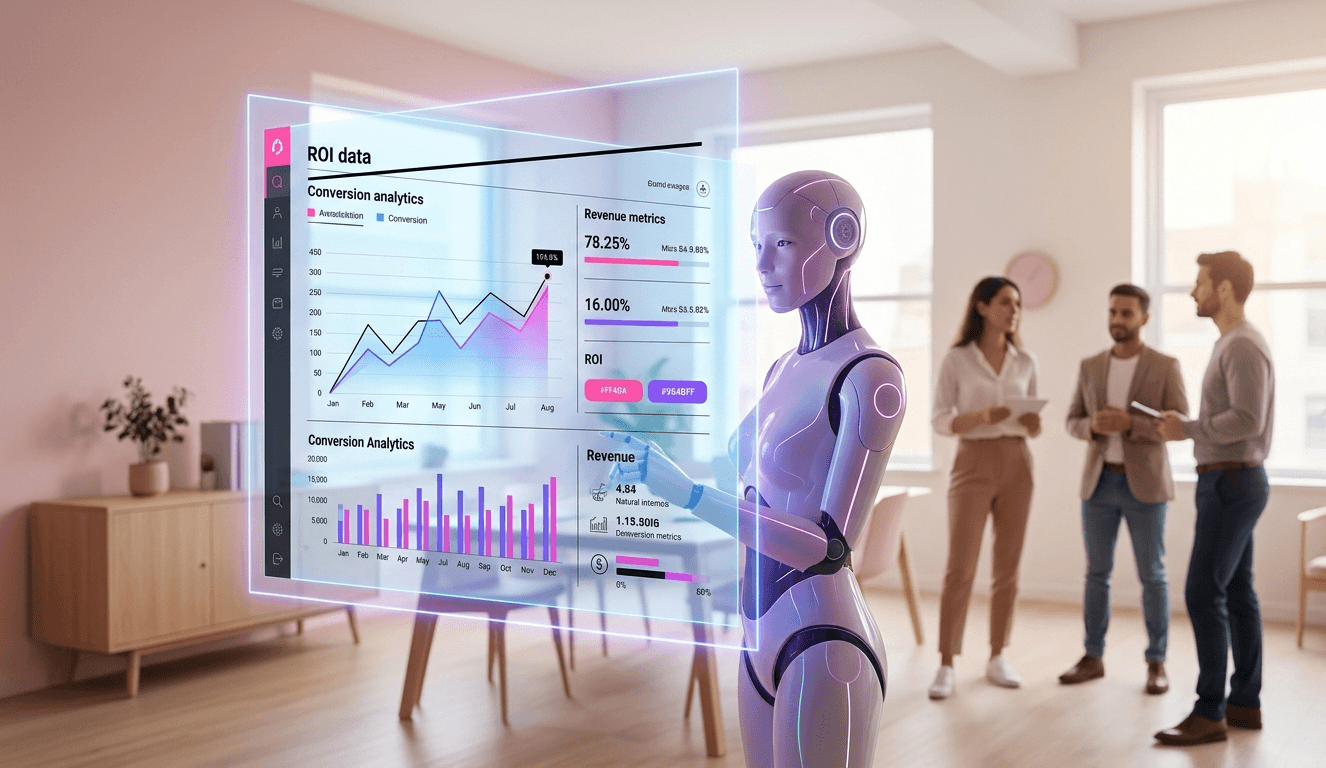
“Stop losing deals while you sleep. Use an Automated AI Sales Demo to engage prospects 24/7 with personalized, high-converting presentations.”
It is 3 AM. A highly qualified enterprise prospect from Singapore lands on your pricing page. This buyer possesses immediate budget and clear intent. They want to see your software right now. You, however, are asleep. The prospect clicks “Book a Demo,” sees your next available slot is four days away, and immediately bounces to a competitor. You just lost a five-figure deal because of scheduling friction.
Companies leak massive revenue every night by forcing modern buyers to wait. Buyers expect immediate gratification. You need an automated AI sales demo to stop this constant pipeline leak. This guide breaks down exactly how these intelligent systems engage buyers the second they show interest. We will explore how these tools instantly adapt pitches, overcome time zone barriers, and actively close deals while your human sales representatives sleep.
What Exactly is an Automated AI Sales Demo?
An automated AI sales demo is software that autonomously delivers tailored product presentations to prospects without human intervention. Unlike pre-recorded videos, this technology uses live data to customize the pitch, answer specific prospect questions in real time, and adjust the presentation flow based on the buyer’s industry or role.
Traditional product videos force every viewer to watch the same content. A Chief Financial Officer sees the same marketing-heavy pitch as a Chief Technology Officer. This rigid approach fails to address specific pain points. Artificial intelligence changes this entirely. The system reads the prospect’s intent, accesses data enrichment tools, and constructs a unique presentation on the fly.
These systems handle the crucial middle-of-funnel phase. They bridge the gap between initial interest and final negotiation. By deploying these systems, you give every single website visitor a personalized experience. You treat a startup founder differently from an enterprise procurement manager.
Furthermore, this technology scales infinitely. A human sales representative can handle five or six solid demonstrations per day. An AI agent handles ten thousand concurrent presentations without dropping a single frame or forgetting a crucial feature. This infinite scalability completely transforms how software companies approach their go-to-market strategies.
Why Speed-to-Lead Requires a 24/7 Sales Demo Agent
The modern B2B buyer journey is remarkably non-linear. According to Gartner research, buyers spend only 17% of their total buying journey actually meeting with potential suppliers. Buyers spend the vast majority of their time conducting independent research. When they finally decide they want to see the product, they want to see it immediately.
The Five-Minute Rule
The speed of your response dictates your success rate. Harvard Business Review data shows that companies that contact a lead within 5 minutes are 100 times more likely to connect than those that wait just 30 minutes. Let that sink in. Waiting half an hour destroys your connection rate. Waiting a full day effectively kills the lead entirely.
Human sales teams simply cannot maintain a five-minute response time around the clock. Reps take lunch breaks. Reps go on vacation. Reps sleep. Consequently, prospects wait. A 24/7 sales demo agent solves this specific mechanical failure in the sales process. The agent is always ready.
Defeating Time Zone Friction
Global markets create massive scheduling headaches. A software company in London struggles to effectively sell to buyers in Sydney. The time zone difference means one party must take a meeting at an unreasonable hour. This friction slows down the sales cycle and often results in lost momentum.
Implementing AI agents eliminates geographic constraints. A prospect in Tokyo requests a presentation from a New York-based company. The AI agent immediately spins up a high-quality, fully interactive presentation. The buyer gets exactly what they want, exactly when they want it. Your company shortens the sales cycle from weeks to mere minutes.
Capturing High-Intent Moments
Buyer intent fluctuates wildly. A prospect might feel incredibly motivated to solve a problem on a Tuesday evening after a frustrating management meeting. If you force them to wait until Thursday afternoon to speak with a human, that emotional urgency dissipates. You lose the emotional hook.
The AI agent capitalizes on peak intent. It strikes while the iron is hot. By giving the prospect immediate access to the software, you keep them engaged when they care the most. This immediate access directly translates to higher conversion rates and faster revenue realization.
The Mechanics of Real-Time Demo Customization
Static videos fail because they lack relevance. A generic pitch bores buyers. Modern AI systems solve this through real-time demo customization. The software actively changes the presentation based on who is watching.
Data Ingestion and Enrichment
The process begins the moment the prospect enters their email address or company name. The AI system instantly pings data enrichment tools like Clearbit or ZoomInfo. In milliseconds, the system gathers crucial firmographic data. It discovers the prospect’s industry, company size, revenue tier, and specific job title.
The system uses this data to map out a specific narrative. If the prospect works in healthcare, the AI selects the healthcare narrative track. It pulls up specific HIPAA compliance features. It uses healthcare-specific terminology. The prospect feels like the product was built specifically for their exact use case.
Dynamic Pitch Adjustment
Consider the difference between a Head of Marketing and a Head of IT. The Marketing leader cares about conversion rates, campaign tracking, and aesthetic design. The IT leader cares about security protocols, API limits, and deployment speed. Presenting the same slide deck to both individuals ensures that at least one of them will tune out.
Real-time demo customization solves this dilemma completely. The AI agent recognizes the job title. It instantly restructures the presentation agenda.
- For the Marketing Leader: The AI highlights the drag-and-drop builder, shows advanced analytics dashboards, and skips the complex API configuration screens.
- For the IT Leader: The AI bypasses the design tools, immediately opens the security settings, and details the single sign-on capabilities.
This dynamic adjustment keeps the viewer engaged. It shows them the exact value proposition they care about most.
Handling Objections Autonomously
Advanced systems do not just present; they interact. As the prospect watches the presentation, they can type or speak questions. The AI processes these queries instantly. If the prospect asks, “Does this integrate with Salesforce?”, the AI pauses the primary narrative.
It generates a specific response confirming the Salesforce integration. It might pull up a screen showing exactly how the integration works. Once it answers the question, it smoothly transitions back to the main presentation flow. This creates a deeply conversational experience that closely mimics interacting with a top-performing human sales engineer.
Deep Dive: Executing Automated Product Walkthroughs
Structuring an effective presentation requires precision. You cannot simply throw features at a prospect and hope they buy. You must guide them through a logical narrative. Automated product walkthroughs follow a strict psychological framework designed to maximize conversions.
Here is exactly how an AI system executes a flawless presentation:
- Instant Data Capture: The system collects the prospect’s email and immediately cross-references firmographic databases to determine industry and seniority.
- Contextual Greeting: The AI agent welcomes the prospect by name and explicitly mentions their company, establishing immediate relevance.
- Agenda Setting: The system outlines exactly what the presentation will cover, focusing only on the two or three features most relevant to the prospect’s specific role.
- Value-First Demonstration: The AI skips the “aha moment” and shows the final positive outcome before explaining how to configure it.
- Interactive Exploration: The prospect clicks through specific modules while the AI explains the benefits, adapting its script based on which buttons the prospect hovers over.
- Objection Handling: The AI explicitly asks whether the prospect has concerns about implementation or pricing, and provides immediate, factual answers.
- Frictionless Closing: The system provides a direct calendar link to a human closer for final negotiations, or a direct checkout link for self-serve plans.
Analyzing the Walkthrough Architecture
Let us examine step four closely. The value-first demonstration is critical. Human sales representatives frequently make the mistake of showing how to set up an account before showing what the software actually achieves. They bore the prospect with admin panels.
The AI agent avoids this trap entirely. It operates on a strict set of optimized rules. It always shows the beautiful, populated dashboard first. It shows the result. Only after the prospect sees the value does the AI explain the mechanics; this keeps engagement metrics incredibly high.
The Role of Micro-Interactions
Automated product walkthroughs rely heavily on micro-interactions. These are small moments where the prospect clicks a button, types a text string, or selects an option from a dropdown. Each interaction provides the AI with more data about the prospect’s intent.
If the prospect repeatedly clicks on the “Analytics” tab, the AI registers this strong interest. It dynamically extends the analytics portion of the presentation. It skips the “User Management” section entirely to make room. The software literally builds the presentation around the prospect’s real-time behavior.
The Technology Behind Interactive Video AI
You might wonder how a system renders unique video content instantly. Pre-rendering every possible combination of features, names, and industries would require petabytes of storage. Interactive video AI solves this through dynamic compositing.
The system does not store massive video files. Instead, it stores a library of modular assets. It keeps background frames, interface overlays, and voice synthesis models separate. When a prospect triggers a presentation, the engine stitches these elements together in the browser.
Voice Cloning and Synthesis
Modern text-to-speech technology sounds completely human. The AI agent uses advanced voice models that include natural pauses, breath sounds, and dynamic inflection. When the system says the prospect’s name, it does not sound robotic. It sounds like a human being reading a script.
This voice engine links directly to the natural language processor. As the processor generates the customized script, the voice engine reads it aloud in real time. This allows the system to mention highly specific data points—such as the prospect’s exact city or recent company news—without requiring pre-recorded audio files.
Seamless Visual Compositing
The visual element requires equal sophistication. The AI engine renders the software interface using HTML and CSS overlays rather than heavy video files. This approach allows the system to inject the prospect’s logo directly into the software dashboard during the presentation.
When the prospect sees the dashboard, they do not see generic dummy data. They see their own company name. They see their own brand colors. This level of visual personalization creates a powerful psychological connection. The prospect instantly visualizes themselves using the tool.
Comparing Approaches
Understanding the shift requires comparing the old way to the new way. Here is exactly how traditional methods stack up against modern AI systems.
| Feature | Traditional Video Pitch | Automated AI Sales Demo |
| Availability | On-demand | 24/7 Instant Access |
| Personalization | None (One size fits all) | Complete (Role, Industry, Name) |
| Interactivity | Play/Pause only | Full Q&A, Dynamic Pathing |
| Data Collection | View count, Drop-off rate | Deep intent data, Objection logs |
| Scalability | High | Infinite |
| Conversion Rate | Low (Passive viewing) | High (Active engagement) |
The traditional video pitch treats the buyer as a passive observer. The AI approach treats the buyer as an active participant. This fundamental shift in the relationship drives the massive difference in pipeline generation.
Implementing the AI SDR Workflow
Deploying this technology requires a strategic approach. You cannot simply turn it on and hope for the best. You must integrate it deeply into your existing sales pipeline. We call this the AI SDR Guide workflow.
Step One: Defining the Entry Points
First, you must determine where prospects encounter the AI agent. The most common entry point sits directly on your pricing page. When a prospect spends more than 30 seconds on the pricing tiers, a slide-out prompt offers an instant, customized presentation.
Other effective entry points include cold email outreach. Instead of sending a generic calendar link, you send a link to a personalized presentation room. The prospect clicks the link and is immediately taken to a tailored experience. This drastically increases click-to-meeting conversion rates.
Step Two: Mapping the Data Sources
The AI agent requires high-quality data to function effectively. You must connect the system to your Customer Relationship Management (CRM) platform. If the prospect already exists in your Salesforce or HubSpot database, the AI must know this.
It reads the past interaction logs. If the prospect previously spoke to a human representative about security concerns, the AI agent prioritizes security in the automated presentation. This continuity ensures the buyer feels heard and valued, even when interacting with software.
Step Three: Establishing Handoff Protocols
The ultimate goal of the AI agent is to generate revenue. In complex enterprise sales, this usually requires a human closer. The handoff between the AI and the human must occur flawlessly.
When the AI agent identifies high buying intent—for example, the prospect asks about contract terms or implementation timelines—it triggers an immediate alert to the human sales team. A human representative can then seamlessly take over the live chat, or the AI can immediately book a priority meeting on the human’s calendar.
Overcoming Internal Sales Resistance
Sales teams often view automation with suspicion. Representatives fear that AI agents will replace their jobs. Leadership must address this concern directly to ensure successful implementation.
AI agents do not replace top-tier closers. AI agents replace the repetitive, low-value work of generic software demonstrations. They handle the “tire kickers” and the early-stage informational requests. This frees up your human representatives to focus entirely on high-value activities: negotiating terms, building complex enterprise consensus, and closing deals.
When implemented correctly, human representatives love these systems. They stop waking up to calendars full of unqualified prospects. Instead, they wake up to a pipeline full of educated, motivated buyers who have already seen the software and want to discuss final pricing. The technology elevates the human role rather than eliminating it.
Analyzing the Return on Investment
Purchasing AI software requires an investment. RevOps leaders must justify this expense to the finance department. The return on investment (ROI) calculation for an automated sales demonstration platform is incredibly straightforward.
First, calculate the cost of lost leads. Look at your website traffic. Identify how many visitors click your scheduling link but fail to book a time. Multiply that number by your average deal size and your standard close rate. This number represents your pipeline leakage.
Second, calculate the savings in human capital. Determine how many hours your sales engineers spend delivering generic, repetitive presentations. Multiply those hours by their hourly compensation rate.
Implementing a system that recaptures even 10% of that leaked pipeline and saves 20 hours a week of sales engineering time pays for itself almost instantly. The financial logic is undeniable. Companies that fail to adopt this technology will see their customer acquisition costs (CAC) rise, while competitors’ costs drop.
Transforming Pipelines with SalesCloser.ai
Building an intelligent, responsive sales engine from scratch requires millions of dollars in engineering resources. Most companies simply cannot afford to build this infrastructure in-house. This is exactly where platforms like SalesCloser.ai step in.
SalesCloser.ai provides ready-to-deploy AI Agents designed specifically for complex B2B sales cycles. The platform handles the heavy lifting of natural language processing, dynamic visual compositing, and real-time CRM data syncing.
When you deploy SalesCloser.ai, you instantly give your revenue team a massive competitive advantage. You stop forcing buyers to conform to your internal scheduling limitations. You meet the buyer exactly where they are, exactly when they want to engage.
SalesCloser.ai agents ingest your existing sales collateral. They read your battle cards, your feature documentation, and your pricing matrices. They use this knowledge to conduct sophisticated discovery conversations, thoroughly qualify leads, and deliver breathtaking product demonstrations.
By utilizing SalesCloser.ai, companies see their speed-to-lead drop from days to seconds. They see their conversion rates multiply. They see their human representatives closing larger deals even though they spend zero time on basic product tours.
Conclusion
Relying on human schedules to handle global demand creates massive inefficiencies. The modern buyer refuses to wait. Implementing an automated AI sales demo eliminates scheduling friction, stops pipeline leakage, and delivers personalized pitches at scale. By leveraging real-time data to dynamically adjust narratives, you ensure every prospect receives a highly relevant, compelling experience. Stop losing deals at 3 AM. Take control of your middle-of-funnel conversion rates today. Ready to see the technology in action? Book a demo with SalesCloser.ai and watch our agents revolutionize your pipeline.
Frequently Asked Questions
Does the prospect know they are interacting with AI?
Yes. Best practices and ethical guidelines dictate transparent disclosure. You should clearly name the agent (e.g., “Atlas, our AI Sales Assistant”) and state its nature. Prospects actually appreciate the transparency and the immediate access it provides.
How does the system handle questions it cannot answer?
When the AI encounters a highly specific technical question outside its knowledge base, it uses a graceful fallback protocol. It acknowledges the complexity of the question, logs it in the CRM, and informs the prospect that a senior engineer will follow up via email. It then smoothly returns to the main presentation.
Can we use our own voice and branding?
Absolutely. Advanced platforms allow you to clone your best sales representative’s voice. You also fully customize the visual interface, ensuring the presentation completely aligns with your corporate brand guidelines.
Is this technology secure for enterprise data?
Yes. Top-tier platforms utilize SOC2-compliant infrastructure. The AI models do not train on your proprietary customer data, and all interactions occur over encrypted connections. You maintain complete control over what information the agent accesses.