“Scale your revenue with the best AI sales agents in 2026. Compare the top 10 tools for voice demos, SDR automation, and CRM integration.”
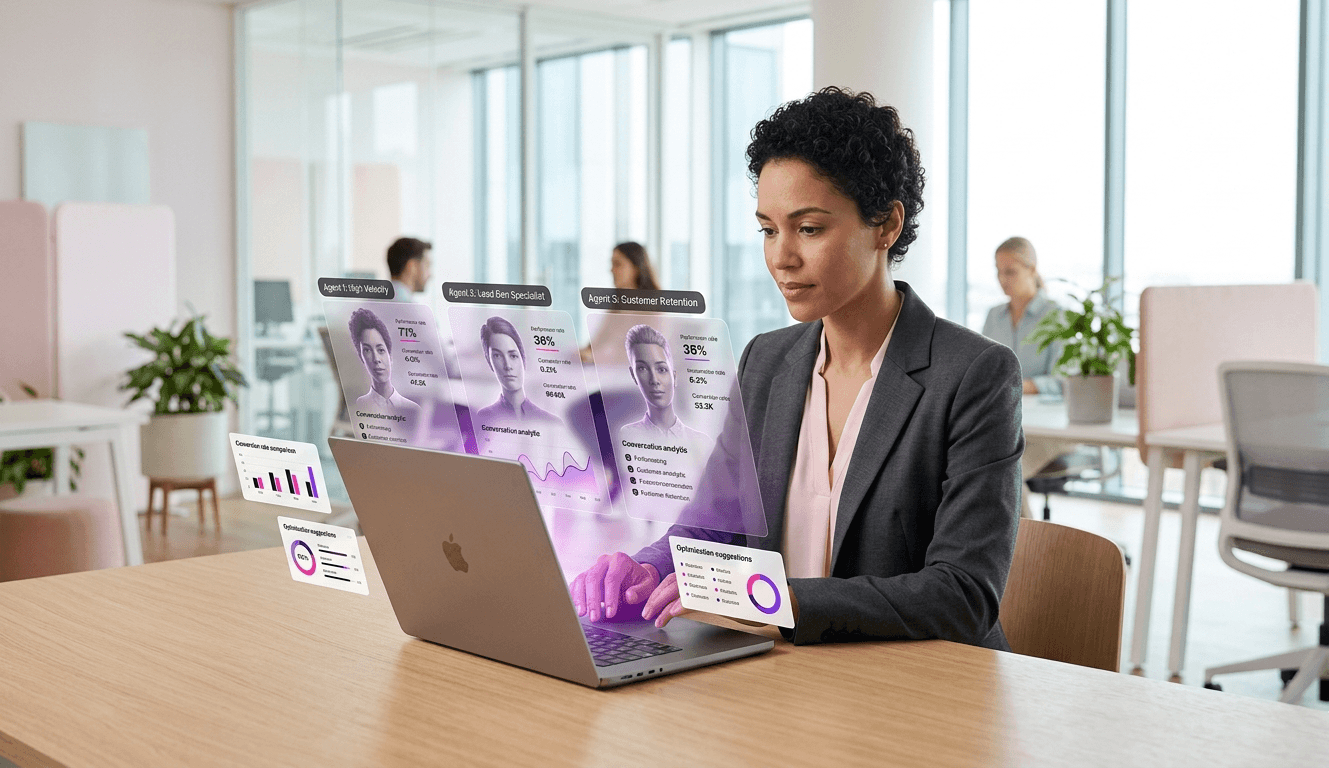
Sales teams in 2026 no longer hire dozens of entry-level reps to hit the phones and clear the inbox. Instead, high-growth companies deploy autonomous compute to handle the heavy lifting. The best AI sales agents in 2026 have moved past simple text automation; they now conduct live discovery calls, manage complex follow-ups, and update your CRM without a single human click.
If your pipeline relies on manual prospecting, you are losing speed. This guide breaks down the top players in the market, ranking them on conversational realism, multichannel reach, and their ability to actually close deals. We will show you which tools are just fancy chatbots and which ones are true revenue generators.
What is an AI Sales Agent?
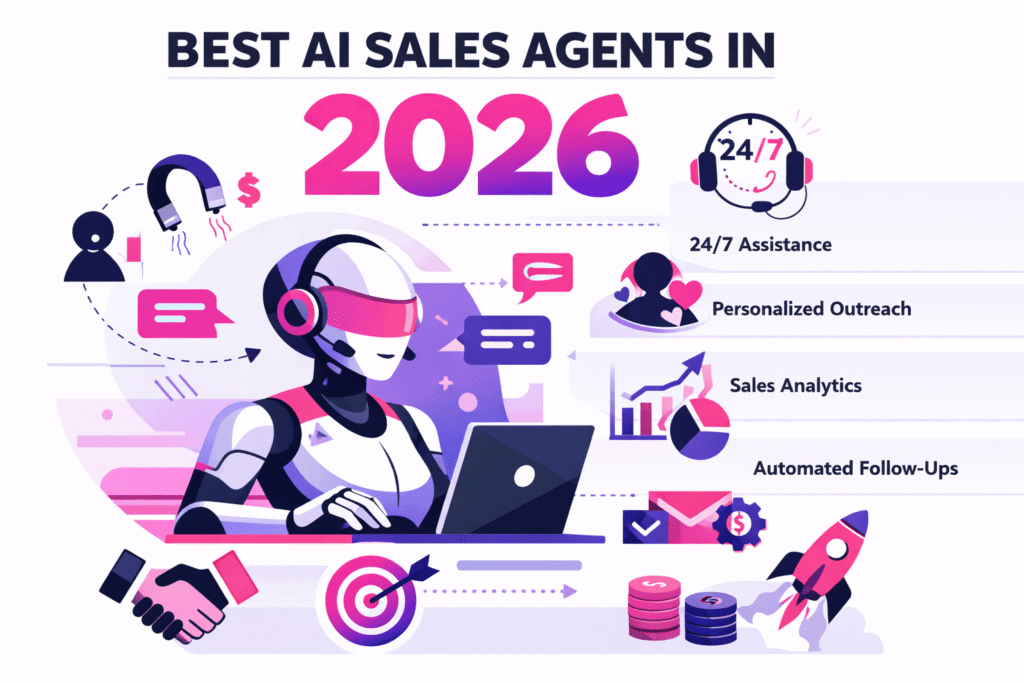
An AI sales agent is software that autonomously handles sales conversations—including discovery calls, product demos, and follow-ups—without human involvement. Unlike traditional chatbots, AI sales agents can hold multi-turn conversations, screen-share demos, and integrate with your CRM in real time to move prospects through the funnel.
Top 10 AI Sales Agents Compared
Before we dive into the details, here is a quick look at how the top performers stack up in 2026.
| Rank | AI Sales Agent | Primary Strength | Ideal For | Rating (G2/Capterra) |
| 1 | SalesCloser.ai | Full-Cycle Voice & Video | SMB to Enterprise | 4.9/5 |
| 2 | 11x (Alice) | Outreach Volume | High-velocity SDR tasks | 4.7/5 |
| 3 | Regie.ai | Content Personalization | Inbound Response | 4.6/5 |
| 4 | Air.ai | High-Volume Voice | Short B2C/Simple B2B | 4.4/5 |
| 5 | Artisan (Ava) | B2B Prospecting | Early-stage startups | 4.5/5 |
| 6 | Apollo.ai | Database Integration | Lead sourcing + Outreach | 4.7/5 |
| 7 | Lavender | Email Coaching | Hybrid human-AI teams | 4.8/5 |
| 8 | Gong | Revenue Intelligence | Post-call analysis | 4.7/5 |
| 9 | Outreach | Legacy Integration | Large Enterprise | 4.3/5 |
| 10 | Cognism | Data Accuracy | European Market Compliance | 4.6/5 |
1. SalesCloser.ai: The Best All-In-One AI Sales Agent
SalesCloser.ai takes the top spot because it is the only platform that acts as a full-cycle sales representative. While other tools focus strictly on sending emails, SalesCloser handles the entire journey—from the first “hello” to the final signature.
Why It Leads the Market
SalesCloser specializes in “Voice-First” autonomy. It doesn’t just send a calendar link; it jumps on a Zoom or Google Meet call, shares its screen, walks a prospect through a slide deck, and answers technical objections in real time. Its “Conversational Realism” is unmatched in 2026, thanks to low-latency processing that ensures no awkward AI pauses.
Key Features
- Full-Cycle Autonomy: Handles discovery, demos, and closing calls.
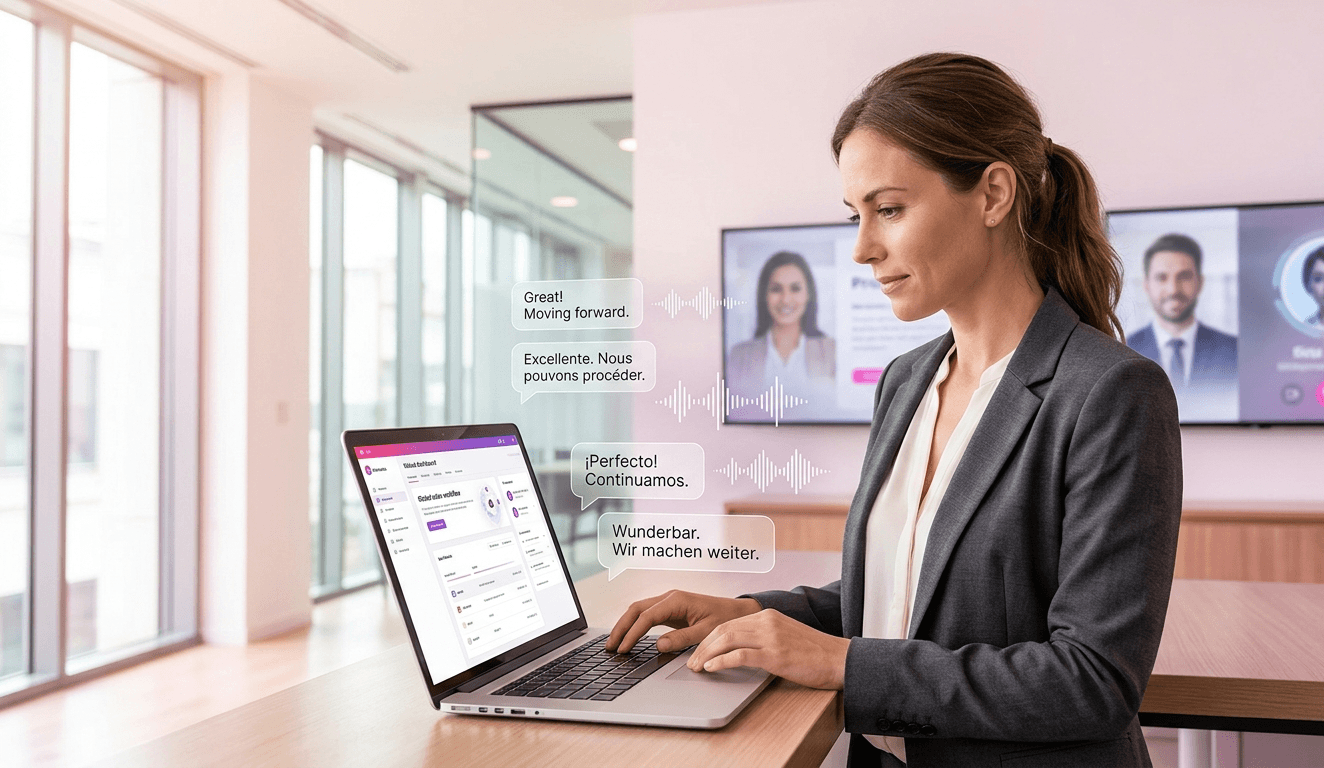
- Multilingual Support: Sells in over 50 languages with native-level fluency.
- Deep CRM Sync: Automatically updates Salesforce, HubSpot, or Pipedrive with detailed call summaries and sentiment analysis.
- 24/7 Availability: Your AI agent operates across all time zones simultaneously.
Pricing
Customized based on lead volume and required seats. Entry-level tiers are available for growing startups.
Pros and Cons
- Pros: Highest discovery-to-demo conversion rates; incredibly realistic voice.
- Cons: Requires a solid initial knowledge base setup to maximize demo effectiveness.
Best For: Teams that want to scale their sales capacity without increasing their headcount.
2. 11x (Alice)
11x has made waves with “Alice,” an AI SDR designed to automate outreach in the funnel. Alice is excellent at finding leads and initiating the first touchpoint across email and LinkedIn.
Key Features
- Autonomous Prospecting: Scours the web for intent signals to find the right buyers.
- Multichannel Execution: Sequences messages across different platforms to increase response rates.
- Calendar Management: Books meetings directly onto human reps’ calendars.
Pricing
Starts around $1,000/month for basic autonomous features.
Pros and Cons
- Pros: High volume; great at “warming up” a cold territory.
- Cons: Limited to the top of the funnel; cannot perform a live product demo.
Best For: High-velocity outbound teams that need a constant stream of meetings.
3. Regie.ai
Regie.ai focuses on the “Inbound Agent” use case. When a lead downloads a whitepaper or fills out a “Contact Us” form, Regie responds instantly with personalized content based on that lead’s specific profile.
Key Features
- Content Generation: Uses generative AI to write hyper-personalized emails.
- Lead Research: Pulls data from LinkedIn and company websites to find “hooks.”
- Campaign Optimization: Tests different messaging styles to see what sticks.
Pros and Cons
- Pros: Excellent for personalization; integrates well with existing SDR workflows.
- Cons: It is more of an “assistant” than a fully independent agent.
Best For: Marketing teams that want to improve their lead-to-opportunity conversion rate.
4. Air.ai
Air.ai changed the game for high-volume voice calls. It is designed for businesses that need to make hundreds or thousands of calls per day—often in the B2C space or simple B2B services like insurance or real estate.
Key Features
- Infinite Scaling: Can handle 10,000 calls at once.
- Instant Interaction: Sub-second response times in conversations.
- Script Following: Adheres strictly to a defined sales script.
Pros and Cons
- Pros: Speed is incredible; very cost-effective for massive lists.
- Cons: Can sound robotic in complex B2B scenarios; cannot handle non-linear technical demos.
Best For: High-volume call centers and B2C sales.
5. Artisan (Ava)
Artisan provides “Ava,” an AI agent that works as a digital SDR. Ava lives inside your Slack and reports to you as a human employee would.
Key Features
- Workforce Integration: Designed to feel like a team member, not just a tool.
- Lead Research: Deep-dives into company financial reports to find pain points.
- Email Management: Manages its own inbox and replies to prospects.
Pros and Cons
- Pros: Easy to manage via Slack; great UX.
- Cons: Relatively new platform; integrations are still expanding.
Best For: Founders who need an SDR but don’t have the time to manage a human one.
6. Apollo.ai
Apollo.ai has evolved from a database into a full-fledged sales execution platform. Its AI agents leverage its massive internal database to ensure outreach is always backed by accurate contact information.
Key Features
- Native Data: No need to export leads; the AI works directly within the database.
- AI Writing: Generates emails based on the contact’s recent job changes or company news.
- Plays: Automated workflows that trigger based on lead behavior.
Pros and Cons
- Pros: All-in-one data and outreach; very affordable for small teams.
- Cons: Email deliverability can drop if users rely too much on its bulk features.
Best For: Self-serve teams who want a low-cost, integrated solution.
7. Lavender
While some tools try to replace humans, Lavender focuses on making humans better. It is an “AI Sales Coach” that acts as a real-time agent over your shoulder.
Key Features
- Email Grading: Tells you exactly why your email will be ignored.
- Personalization Assistant: Finds relevant social media data to include in your draft.
- Mobile Support: Optimizes your emails for mobile readers.
Pros and Cons
- Pros: Drastically improves response rates; great for training new hires.
- Cons: It doesn’t “do” the work for you; it only assists.
Best For: Enterprise teams with high-value deals where the “human touch” is mandatory.
8. Gong
Gong was the leader in “Conversation Intelligence” and has now moved into autonomous actions. It analyzes every call and then suggests (or executes) the next best step.
Key Features
- Revenue Intelligence: Analyzes the sentiment of your entire pipeline.
- Automatic Follow-ups: Drafts summary emails based on what was discussed in a meeting.
- Deal Predictions: Flags deals that are likely to stall.
Pros and Cons
- Pros: Best-in-class analytics; essential for RevOps.
- Cons: Very expensive; can be overkill for smaller companies.
Best For: Large organizations that need deep visibility into their sales process.
9. Outreach
Outreach remains a powerhouse for large enterprise organizations. Its AI features focus on helping managers identify where their reps are failing and automating follow-up.
Key Features
- Sequence Automation: Keeps prospects engaged over long sales cycles.
- Meeting Summaries: Automatically creates tasks in the CRM after a call.
- Pipeline Management: Provides a “health score” for every account.
Pros and Cons
- Pros: Rock-solid reliability; built for massive teams.
- Cons: The interface can feel dated compared to 2026’s “AI-native” startups.
Best For: Fortune 500 companies with complex, multi-stakeholder deals.
10. Cognism
Cognism is the “Best AI Sales Agent” for teams targeting the UK and European markets. Their AI focuses on data compliance (GDPR) and finding mobile numbers that actually work.
Key Features
- Compliant Data: Ensures your AI agents aren’t calling people on “Do Not Call” lists.
- Verified Mobiles: High accuracy for direct dials.
- Intent Data: Tells your AI agents who is currently researching your solution.
Pros and Cons
- Pros: Best data for EMEA; very high accuracy.
- Cons: More of a data provider than a conversational agent.
Best For: Sales teams expanding into Europe.
How to Choose the Best AI Sales Agent for Your Team
Choosing the right tool depends on where your bottleneck is. Are you failing to find leads or to close the ones you have?
1. Conversational Realism
In 2026, buyers can smell a bot from a mile away. If your AI agent sounds like a GPS navigation system, your conversion rates will tank. Look for tools like SalesCloser.ai that use advanced neural voices and deliver low-latency responses. This ensures the conversation feels natural, allowing the prospect to focus on the value rather than the technology.
2. CRM Integration
An AI agent that doesn’t talk to your CRM is just a toy. The best AI sales agents automatically log every interaction, update lead stages, and even create follow-up tasks for human reps.
3. Multichannel Ability
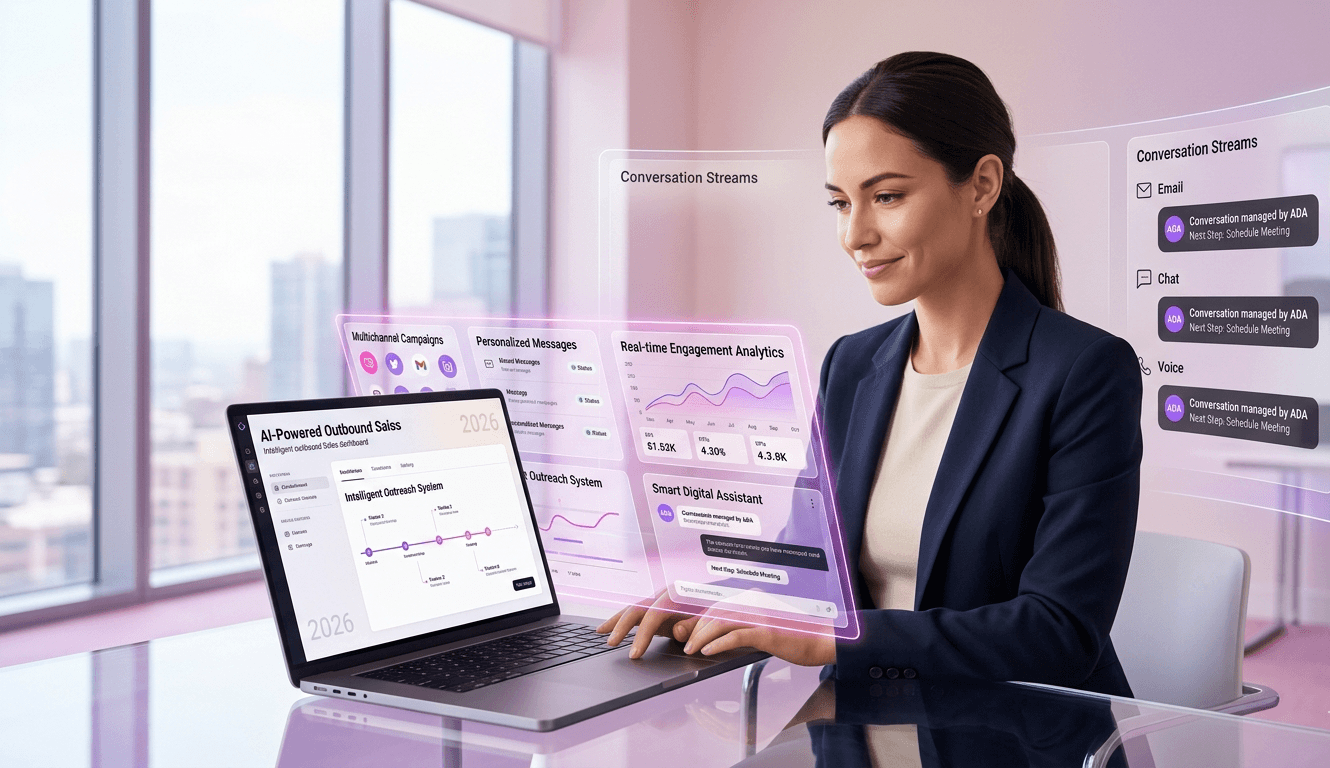
Your buyers aren’t just in their email inbox. They are on LinkedIn, Zoom, and the phone. A top-tier agent must be able to navigate these different environments. If a prospect replies on LinkedIn, the agent should be able to continue that conversation there rather than forcing them into an email thread.
4. Full-Cycle vs. SDR-Only
Do you want a tool that just books meetings, or one that handles the meeting itself?
- SDR Agents: Good for filling the top of the funnel (e.g., 11x, Artisan).
- Full-Cycle Agents: Good for handling the entire process (e.g., SalesCloser.ai).
For most small- to medium-sized businesses, a full-cycle agent delivers the highest ROI by eliminating the need for a human to sit through every introductory demo.
The Rise of Voice-First AI in 2026
We have officially entered the era of the “Voice-First” sales agent. In 2024 and 2025, text-based AI was the standard. But in 2026, the market has shifted.
Voice-first agents are more effective because they build trust faster. A 10-minute discovery call can uncover more pain points than a 20-email thread. Tools like SalesCloser.ai take this a step further by including video. When a prospect sees a professional interface and a clear product demo, the “AI barrier” disappears.
“The companies winning in 2026 aren’t just using AI to write better emails; they are using AI to have better conversations.” — Marcus Thorne.
Common Myths About AI Sales Agents
As you evaluate the best AI sales agents in 2026, ignore these common misconceptions:
- Myth 1: AI will replace all sales reps. Reality: AI replaces the drudgery. It handles the “grunt work” so human reps can focus on high-level strategy and complex negotiations.
- Myth 2: Prospects hate talking to AI. Reality: Prospects hate talking to bad AI. They actually prefer the instant response and 24/7 availability of a high-quality AI agent over waiting three days for a human to “find time” in their calendar.
- Myth 3: AI agents are hard to set up. Reality: Modern platforms can be trained on your website and sales decks in under an hour.
Summary of the Rankings
To wrap up, here is the final breakdown of the best AI sales agents in 2026:
- SalesCloser.ai: Best for full-cycle, voice-driven sales.
- 11x (Alice): Best for massive outbound volume.
- Regie.ai: Best for inbound lead response.
- Air.ai: Best for high-volume B2C calling.
- Artisan: Best for a “digital employee” experience.
Conclusion
The sales landscape has changed. Deploying an AI sales agent is no longer a competitive advantage—it is a requirement for survival. By automating your discovery, demos, and follow-ups, you allow your business to grow without the massive overhead of a traditional sales floor.
If you want an agent that doesn’t just send emails but actually talks to your customers and closes deals, SalesCloser.ai is the clear choice.
Ready to see your new top-performing rep in action? Book a demo with SalesCloser.ai today and start scaling your revenue autonomously.
FAQ
What is the best AI SDR in 2026?
While many tools like 11x and Artisan are great for outreach, SalesCloser.ai is widely considered the best because it handles both outreach and live discovery calls.
Can AI agents really do product demos?
Yes. In 2026, advanced agents like SalesCloser.ai can share their screen, present slides, and answer technical questions during a live video meeting.
Do I still need human sales reps?
Yes. Humans are essential for managing complex relationships, large-scale contract negotiations, and creative strategy. The AI handles the repetitive tasks.