
Sales is noisy. You have endless choices for tools that promise to double your revenue, automate your admin, and coach your reps while you sleep. But “AI” has become a catch-all term that means everything and nothing at once. Some “AI” tools just transcribe calls. Others rewrite your emails. A few—the exciting ones—can actually do the selling for you.
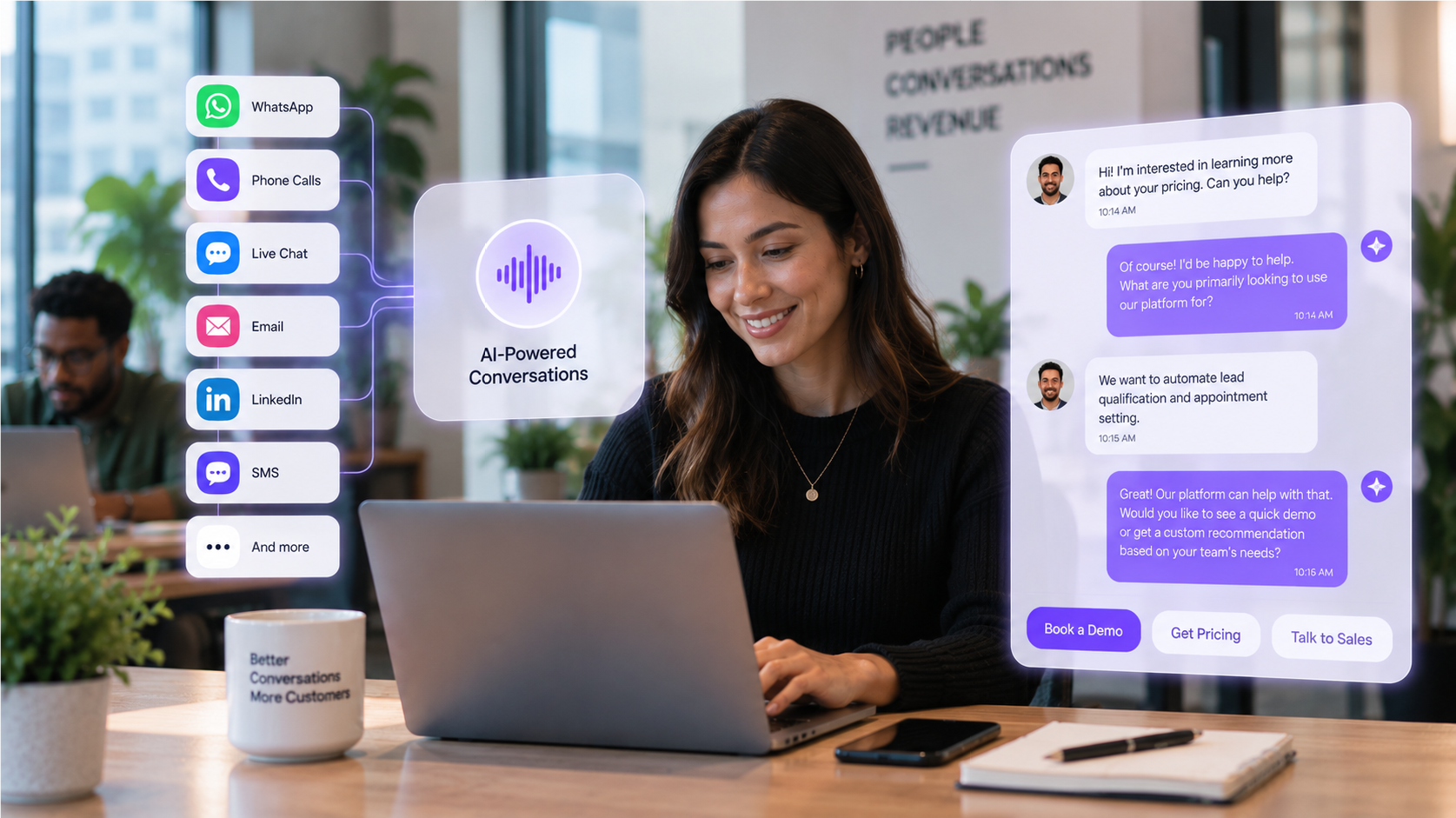
If you are reading this, you are likely past the “what is AI” phase. You are in the decision phase. You have a budget, you have a problem (scaling, coaching, or efficiency), and you need to know which vendor to trust.
This guide uses a “Decision Flow” structure. For every tool listed, we explain exactly who it is for, when you should buy it, and crucially, when you should choose SalesCloser.ai instead.
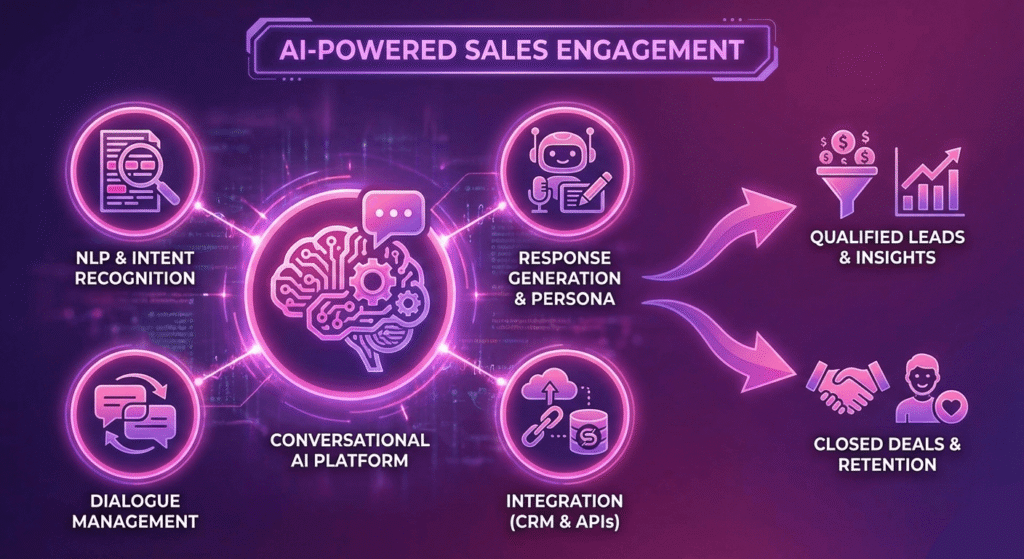
We have categorized these into the three distinct buckets that matter to buyers right now: Revenue Intelligence (Co-pilots), Sales Engagement, and Autonomous AI Agents.
Category 1: Autonomous AI Sales Agents
This is the newest and most disruptive category. These are not tools that help your reps work faster; these are tools that act as reps. They handle discovery, demos, and closing without human intervention.
1. SalesCloser.ai
The autonomous, 24/7 sales representative.
SalesCloser.ai is an AI platform that builds fully autonomous sales agents. Unlike chatbots that just route links, SalesCloser.ai agents can hold voice conversations, join Zoom meetings, conduct discovery, and perform live product demos using screen sharing. It is designed to function like a mid-level human SDR or Account Executive that never sleeps, never takes a sick day, and speaks multiple languages fluently.
Key Features:
- Autonomous Voice & Video: The AI joins calls and speaks naturally.
- Live Demos: It can navigate your product interface to show prospects exactly what they ask to see.
- Multilingual Support: Handles conversations in 10+ languages instantly.
- CRM Sync: Updates HubSpot, Salesforce, or Pipedrive automatically after every interaction.
- Adaptive Learning: You train it on your knowledge base, and it adheres strictly to your brand guidelines while handling objections.
Who this is for: Founders, Heads of Sales, and Growth leaders who need to scale their demo and discovery capacity without hiring more headcount. It is ideal for companies with high inbound volume or global markets where 24/7 coverage is expensive to staff with humans.
When to choose SalesCloser.ai:
- You are bleeding leads: Your calendar is complete, or (worse) leads are waiting days for a demo.
- You need global coverage: You have prospects in Europe or Asia, but your sales team is in the US (or vice versa).
- You want consistency: every single demo needs to be pitch-perfect, without “bad days” or mood swings.
- You want to reduce CAC: lower acquisition costs by automating top-of-funnel and mid-funnel motions.
Verdict: If you want to automate the act of selling, not just the admin work, SalesCloser.ai is the purpose-built solution.
2. Lindy
The generalist AI employee for operations and sales.
Lindy positions itself as an “AI employee” capable of handling a wide range of tasks, from medical scribing to recruiting to sales. For sales specifically, Lindy can handle outbound emailing, scheduling, and basic qualification tasks.
Key Features:
- Task Versatility: Can handle admin, calendar management, and email responses.
- Trigger-based actions: Work well with automation tools to trigger tasks in response to events.
- Voice capabilities: Can handle phone calls for qualification.
Who this is for: Operations-heavy teams or founders who need a “Jack of all trades” AI assistant that can help with sales but also manage their calendar and handle inbox triage.
When to choose Lindy:
- You need an AI that does more than just sales (e.g., recruiting coordination or executive assistance).
- Your sales process is very text- and email-heavy and requires complex calendar coordination.
- You are a small team looking for a general operational lift.
When to choose SalesCloser.ai: Choose SalesCloser.ai if your primary bottleneck is selling capability (demos and voice conversations) rather than admin tasks. SalesCloser.ai specializes in the sales motion—specifically the visual aspect of presenting a product on a screen—whereas Lindy is a broader generalist. If you need a tool to actually show your product to a customer, SalesCloser.ai is the right choice.
Verdict: A strong choice for general operational support, but less specialized for deep-funnel sales execution like demos.
Category 2: Revenue Intelligence (The “Co-Pilots”)
These platforms record, transcribe, and analyze calls. They do not sell for you; they help your human team sell better.
3. Gong
The enterprise standard for revenue visibility.
Gong is the gorilla in the room. It records your team’s calls and uses AI to analyze what is happening. It tells you whether your reps are talking too much, whether they missed a pricing objection, or whether a deal is at risk based on the prospect’s sentiment.
Key Features:
- Deal Intelligence: specific warnings when a deal in your pipeline is stalling.
- Market Intelligence: tells you how often competitors are mentioned and in what context.
- Coaching Scorecards: help managers grade calls and give feedback.
- Forecasting: predicts revenue based on actual conversation data, not just CRM entry.
Who this is for: Mid-market to Enterprise sales teams (50+ reps) where the VP of Sales needs high-level visibility into pipeline health and managers need to coach at scale.
When to choose Gong:
- You have a large team of human sellers, and you don’t know what they are saying on calls.
- Your forecasting is inaccurate, and you need data to support it.
- You have the budget for a premium, heavy-duty analytics platform.
When to choose SalesCloser.ai: Choose SalesCloser.ai when you want to replace the need for a human on the call, rather than just analyzing the human on the call. Gong gives you a report on why your rep failed to close the deal; SalesCloser.ai is the rep who closes the deal.
Verdict: The best choice for analyzing human teams, but it does not do the work for them.
4. Chorus by ZoomInfo
The data-rich alternative for coaching.
Chorus is Gong’s primary competitor, now owned by ZoomInfo. Its main strength lies in its integration with ZoomInfo’s massive B2B database. It excels at identifying the “who” in the meeting and connecting conversation insights directly to contact data.
Key Features:
- ZoomInfo Integration: seamless connection to prospect data.
- Moment Analysis: identifies key moments like “Next Steps” or “Objections” efficiently.
- Coaching Initiatives: allows managers to set up specific tracking for new sales methodologies (e.g., MEDDIC).
Who this is for: Sales teams who are already heavily invested in the ZoomInfo ecosystem.
When to choose Chorus:
- You already pay for ZoomInfo Elite/Enterprise.
- You prioritize coaching individual rep behavior over high-level revenue forecasting.
- You want a slightly faster setup time than Gong.
When to choose SalesCloser.ai: Similar to Gong, Chorus is a passive tool. It records and reviews. Choose SalesCloser.ai if you are looking to increase your call-taking capacity. Chorus helps you train a new hire; SalesCloser.ai is the new hire, instantly trained and ready to take calls on day one.
Verdict: Excellent for ZoomInfo power users who need coaching insights, but it remains a passive analytics tool.
5. Clari Copilot (formerly Wingman)
The real-time battle card assistant.
Clari Copilot (part of the Clari Revenue Platform) focuses heavily on helping reps during calls. While Gong and Chorus are famous for post-call analytics, Clari Copilot tries to save the deal while it is still happening by popping up “battle cards” or scripts when a competitor is mentioned.
Key Features:
- Real-time cues: If a prospect says “competitor X,” a card pops up on the rep’s screen with talking points.
- Pipeline Governance: Deep integration with Clari’s forecasting tools for strict pipeline management.
- Call Recording & Transcription: Standard recording features included.
Who this is for: Teams with complex products or junior reps who need “training wheels” during live conversations.
When to choose Clari Copilot:
- Your product is technical, and reps often get stumped by difficult questions.
- You use Clari for forecasting and want to consolidate your stack.
- You need to enforce strict adherence to the script during live calls.
When to choose SalesCloser.ai: Clari helps a human say the right thing. SalesCloser.ai removes human error entirely. If your goal is to handle a high volume of standard discovery calls or demos where the script is repetitive, SalesCloser.ai is more efficient. You choose Clari when the deal is complex enough to require a human pilot, but that pilot needs a navigation system.
Verdict: The best option for real-time human assistance and battle cards.
6. Avoma
The meeting lifecycle assistant.
Avoma is less about “Revenue Intelligence” and more about “Meeting Intelligence.” It focuses on the entire lifecycle: scheduling, agenda preparation, recording, and summarizing. It is often used by both Customer Success and Sales teams.
Key Features:
- Collaborative Note Taking: multiple people can take notes in the same interface during the call.
- Intelligent Scheduling: built-in calendar booking features.
- Topic Detection: automatically categorizes parts of the meeting (e.g., “Pricing,” “Feature Request”).
Who this is for: Client-facing teams (Sales and CS) who want to automate the note-taking and CRM entry grunt work.
When to choose Avoma:
- You want a more affordable, lightweight option than Gong.
- Your focus is on saving reps’ time on admin/notes rather than deep deal analytics.
- You need a tool that works equally well for internal meetings and external sales calls.
When to choose SalesCloser.ai: Avoma creates a transcript of the meeting. SalesCloser.ai conducts the meeting. If your reps are drowning in back-to-back Zoom calls, Avoma makes the notes easier, but SalesCloser.ai actually takes the calls off their plate.
Verdict: A fantastic productivity tool for making humans more efficient at admin, but not a sales automation platform.
Category 3: Sales Engagement & Outreach
These tools help you get the meeting in the first place. They are shifting from “spam cannons” to intelligent engagement platforms.
7. Outreach
The enterprise workflow engine.
Outreach is the giant of sales engagement. It allows you to build complex sequences of emails, calls, and LinkedIn tasks. Recently, they have added AI features to help write emails and analyze sentiment.
Key Features:
- Sequencing: Robust workflows for multichannel outreach.
- Kaia: Their built-in conversation intelligence tool (similar to Gong).
- Deal Health: Scores deals based on engagement velocity.
Who this is for: Large outbound prospecting teams (SDRs) who need rigid workflows to process thousands of leads.
When to choose Outreach:
- You have a team of 20+ SDRs and need to control their daily workflow.
- You focus heavily on outbound cold calling and cold emailing.
- You need deep integration with Salesforce.
When to choose SalesCloser.ai: Outreach is for getting the meeting. SalesCloser.ai is for running the meeting. However, SalesCloser.ai also has inbound capabilities. If you are hiring SDRs just to qualify inbound leads and book meetings, SalesCloser.ai can replace that entire function. If you are doing cold outbound at scale, you likely need Outreach to generate the interest, and then SalesCloser.ai to handle the demo.
Verdict: The standard for managing large outbound human teams.
8. Salesloft
The user-friendly engagement platform.
Salesloft is Outreach’s main rival. It is generally considered more user-friendly and focuses heavily on the “Rhythm” of the salesperson’s day. It prioritizes tasks for reps so they know exactly who to call and when.
Key Features:
- Cadence: The core sequencing engine.
- Conversations: Built-in dialer and call recording.
- Drift Integration: Deep ties with Drift for chat-to-call workflows.
Who this is for: Fast-moving B2B sales teams who want a modern, intuitive interface for their SDRs.
When to choose Salesloft:
- You value user experience (UX) and ease of adoption for your reps.
- You want a platform that covers the whole cycle from “Hello” to “Close” (using their deals feature).
When to choose SalesCloser.ai: Salesloft manages the human’s “to-do” list. SalesCloser.ai clears the list. If your SDRs spend 50% of their time on “qualification calls” that ask the same 5 questions, Salesloft helps them dial faster, but SalesCloser.ai does the call for them.
Verdict: Great for organizing human activity, but limited to the speed of human execution.
9. Apollo.io
The data-first engagement platform.
Apollo.io started as a contact database (like ZoomInfo) but aggressively built out sales engagement features. Now, they are releasing AI agents to help write emails and automate prospecting.
Key Features:
- Massive Database: 250M+ contacts built-in.
- Sequencing: Email and call automation.
- AI Writing Assistant: Helps draft personalized emails based on prospect data.
Who this is for: SMBs and Mid-market companies who want data and software in one bill.
When to choose Apollo:
- You don’t have the budget for separate data (ZoomInfo) and engagement (Outreach) tools.
- You primarily need to find emails and phone numbers.
When to choose SalesCloser.ai: Apollo is excellent for finding the person and sending the email. SalesCloser.ai is for when that person replies, “Sure, show me a demo.” Apollo gets you to the door; SalesCloser.ai walks through it and closes the deal.
Verdict: The best value-for-money tool for prospecting data and initial outreach.
Category 4: Inbound & Chat AI
10. Intercom (Fin)
The customer service bot is turning into a sales bot.
Intercom has long been the king of on-site chat. Their new AI bot, “Fin,” is exceptionally good at answering support queries, but they are increasingly using it for sales by routing leads and answering pricing questions.
Key Features:
- Fin AI: Reads your help center and answers questions instantly.
- Proactive messaging: Pops up chat bubbles based on visitor behavior.
- Visual Bot Builder: Easy drag-and-drop workflows.
Who this is for: SaaS companies with high website traffic and a Product-Led Growth (PLG) motion.
When to choose Intercom:
- Your primary goal is to deflect support tickets.
- You want to capture casual browsers on your website via text chat.
- You have a self-serve checkout flow.
When to choose SalesCloser.ai: Intercom is text-based. It’s excellent for quick Q&A. But you cannot close a $20k deal over text chat. You need a voice conversation and a demo. SalesCloser.ai takes the baton from Intercom. You might use Intercom to engage the visitor, but when they ask, “Can I see how this works?”, SalesCloser.ai is the agent that jumps on the Zoom call to show them.
Verdict: The best for text-based website engagement and for deflection of support requests.
11. Drift
The conversational marketing platform.
Drift coined the term “Conversational Marketing.” They focus heavily on B2B sales—identifying which company is on your site and rolling out the red carpet for them.
Key Features:
- Deanonymization: Tells you which company is visiting your site, even if they don’t log in.
- Meeting Booker: Drops calendar links directly in chat.
- Video: Allows reps to send quick video messages in chat.
Who this is for: B2B marketing teams who want to increase conversion from their website traffic.
When to choose Drift:
- You are selling high-ticket enterprise deals.
- You want to route VIP accounts directly to a human rep’s phone immediately.
When to choose SalesCloser.ai: Drift is the “receptionist” that greets the visitor. SalesCloser.ai is the “salesperson” available 24/7. Drift is significant for booking a meeting for next Tuesday. SalesCloser.ai is great at saying, “I can show you a demo right now.”
Verdict: Top-tier for B2B website lead routing and visitor identification.
12. HubSpot Sales Hub (AI Features)
The all-in-one ecosystem.
HubSpot is the platform of record for many scaling companies. Their new “Breeze” AI features are embedding content generation, forecasting, and simple agents directly into the CRM.
Key Features:
- Unified Data: Everything lives in the CRM.
- Content Assistant: Writes emails and blogs.
- Conversation Intelligence: Basic call recording and analysis included in Enterprise plans.
Who this is for: Teams that want to avoid “tool sprawl” and keep everything in one login.
When to choose HubSpot:
- You already use HubSpot CRM.
- You want “good enough” versions of Gong and Outreach without paying for separate tools.
- You need a single source of truth for data.
When to choose SalesCloser.ai: HubSpot is the database. SalesCloser.ai is the worker. SalesCloser.ai integrates perfectly with HubSpot. You use SalesCloser.ai to do the work (calls, demos) and HubSpot to store the results (deal updates, notes, recordings). They are complementary, not competitive.
Verdict: The essential foundation, but not a specialist, autonomous selling tool.
Buying Guide: How to Evaluate These Tools
When you are staring at pricing pages and feature lists, it is easy to get lost. Use this framework to make your decision.
1. Define Your Bottleneck
Where is your sales process breaking?
- Top of Funnel (Not enough meetings): Look at Apollo, Outreach, or Salesloft.
- Middle of Funnel (Leads dropping off/Low capacity): This is the sweet spot for SalesCloser.ai. If you have leads but cannot work them fast enough, or your demos are inconsistent, you need an autonomous agent.
- Bottom of Funnel (Low close rates): Look at Gong, Chorus, or Clari. You need to analyze why you are losing and coach your humans to be better.
2. Human vs. Autonomy
Ask yourself a tricky question: Do I need to make my humans 10% faster, or do I need to stop relying on human headcount for this task?
- If you want to coach humans: Buy Gong.
- If you want to scale without hiring humans: Buy SalesCloser.ai.
3. Implementation Time
- Low Friction: Avoma, Apollo, Intercom. You can set these up in an afternoon.
- Medium Friction: SalesCloser.ai, Salesloft. Requires some configuration (knowledge base training or sequence building) but offers high ROI.
- High Friction: Gong, Clari, Outreach. These are enterprise deployments that require data hygiene, team training, and weeks of setup.
Conclusion
The sales technology landscape has shifted. For the last ten years, we bought tools to help humans work faster. We bought dialers to help them call more, sequencers to help them type more, and analytics to help them think better.
2026 is the year we start buying tools that do the work.
- If you need to fix your outbound prospecting, look at Apollo or Outreach.
- If you need to improve your team’s closing skills, consider Gong or Chorus.
- If you need to scale your demos and discovery without hiring more bodies, choose SalesCloser.ai.
The winners in this new era won’t be the teams with the most salespeople. They will be the teams with the most efficient engines. Choose the tool that builds the engine you need.