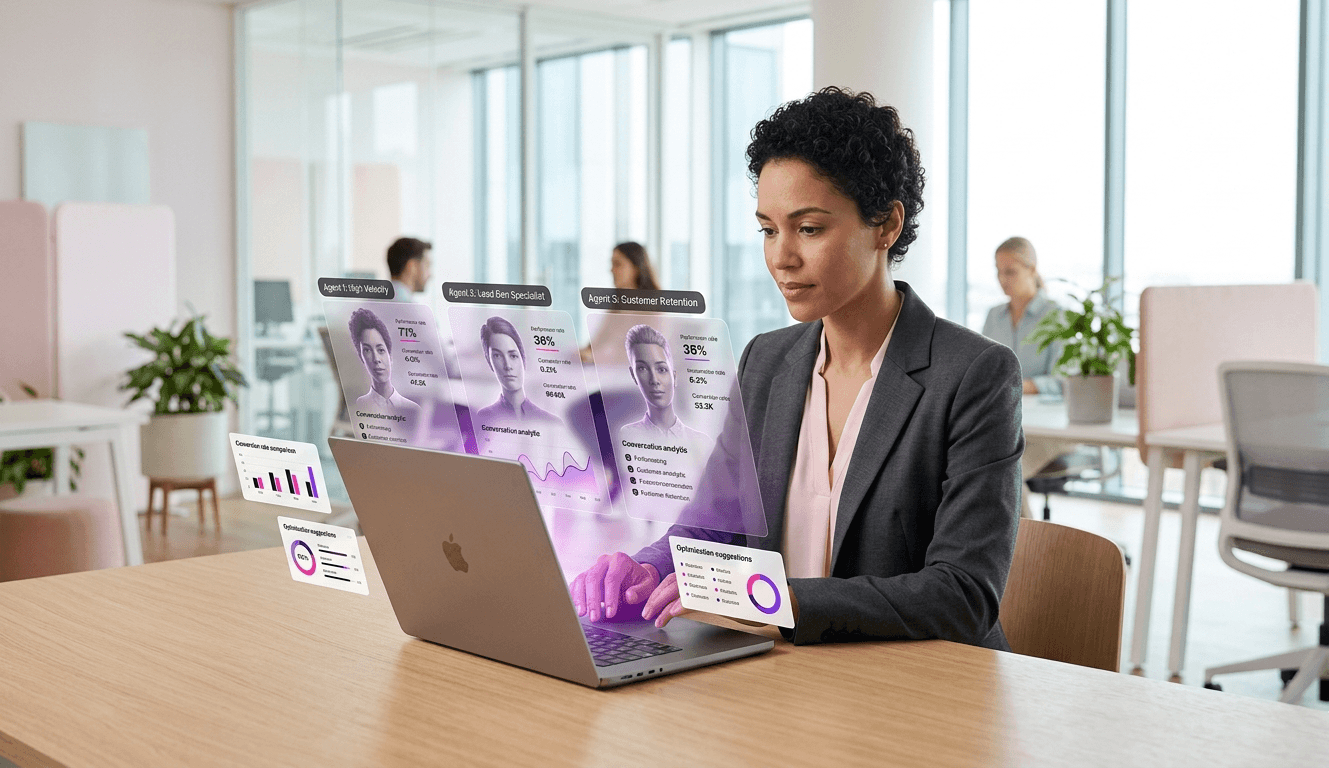
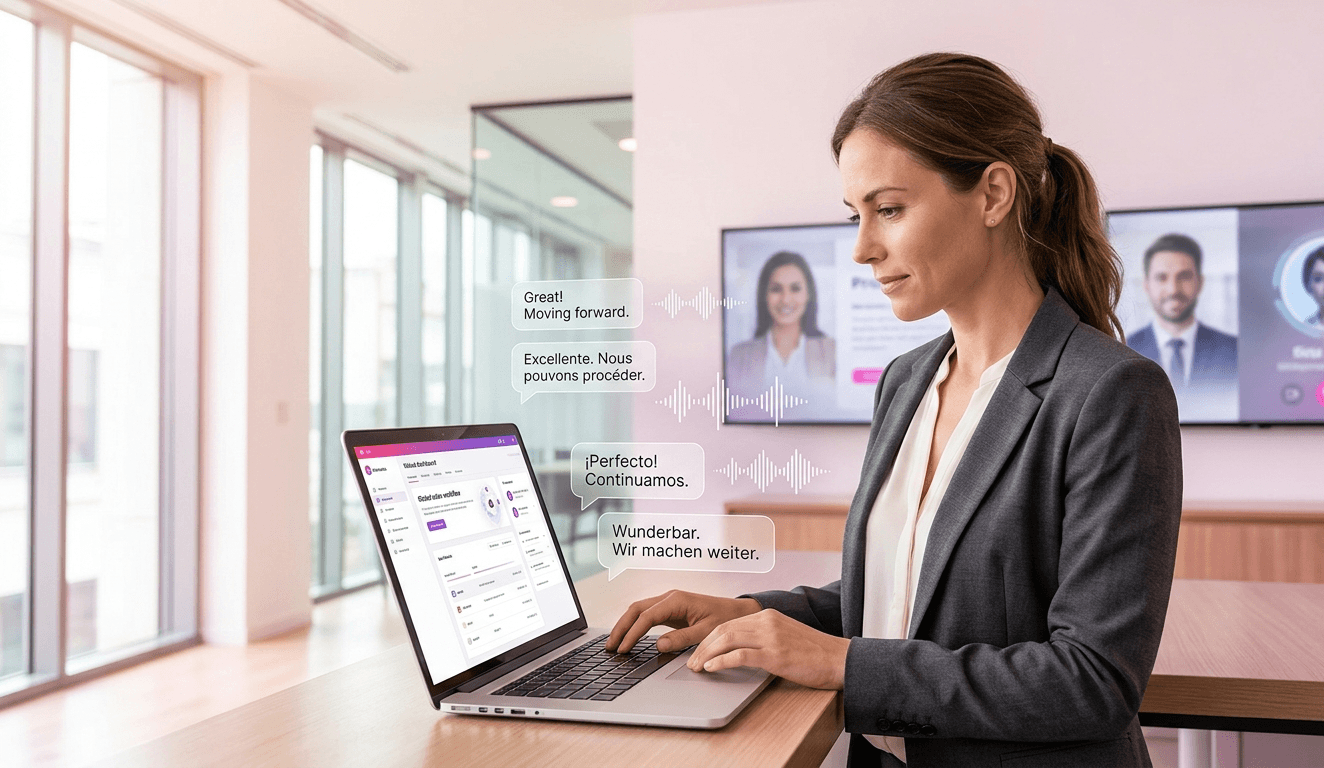
“Revolutionize your sales with Conversational Revenue Automation Systems. Use AI agents to scale outreach, handle objections, and close deals 24/7.”
The year is 2026. You walk into a sales floor, but it’s quiet.
Ten years ago, this room would have been a chaotic boiler room. Phones are ringing off the hook. SDRs shouting over each other to get past gatekeepers. Managers pacing the rows, demanding more activity, more dials, more noise. The air would be thick with the stress of missed quotas and the frenetic energy of churn-and-burn.
Today, however, the silence is heavy with productivity.
The humans in the room aren’t hammering phones to qualify cold leads. They aren’t chasing down no-shows. They aren’t spending three hours a day logging notes into Salesforce or HubSpot. They are sitting in soundproof pods, deeply engaged in high-stakes strategy sessions with qualified buyers who are ready to sign.
Who is doing the busy work? Who is handling the thousands of initial conversations required to find those few golden nuggets?
The system is doing it.
We have entered the era of Conversational Revenue Automation Systems. This is not science fiction. This is the operational reality for high-growth companies in 2026. We are witnessing a massive shift. We are moving away from tools that help humans work faster, toward systems that do the work for them.
In this deep dive, we will explore why the old stack of dialers and chatbots failed us. We will define this new category of automation. And we will look at how platforms like SalesCloser.ai have emerged as the central nervous system for modern revenue teams.
The Broken Promise of the “Modern” Sales Stack
To understand where we are going, we have to look at where we failed.
For the last decade, sales technology promised us salvation. We bought CRMs to organize data. We bought sales engagement platforms to send more emails. We bought power dialers to make more calls. We bought conversational intelligence tools to analyze why we were losing deals.
Yet, despite billions of dollars invested in this tech stack, quota attainment has dropped.
Why?
Because we focused on efficiency rather than effectiveness, we gave salespeople tools to spam more customers rather than connect with them. We automated the delivery of the message, but we never automated the conversation itself.
Think about the typical day of a Sales Development Representative (SDR) in 2024. They come in and open a dashboard. It tells them to make 50 calls. They make the calls. 45 people don’t pick up. Three people hang up immediately. Two people talk for a minute, but they aren’t interested.
Then, they send 100 emails. Maybe one person replies.
This is a broken model. It burns out talented people. It annoys potential buyers. It wastes an incredible amount of money. Companies are paying humans—expensive, creative, empathetic humans—to act like robots. They are paying them to navigate phone trees and leave voicemails.
This is where the shift begins.
The market realized that we don’t need faster horses. We don’t need a dialer that calls three lines at once. We need a system that can actually speak. We need technology that understands language, context, objection handling, and timing.
We need Conversational Revenue Automation.
Defining Conversational Revenue Automation (CRA)
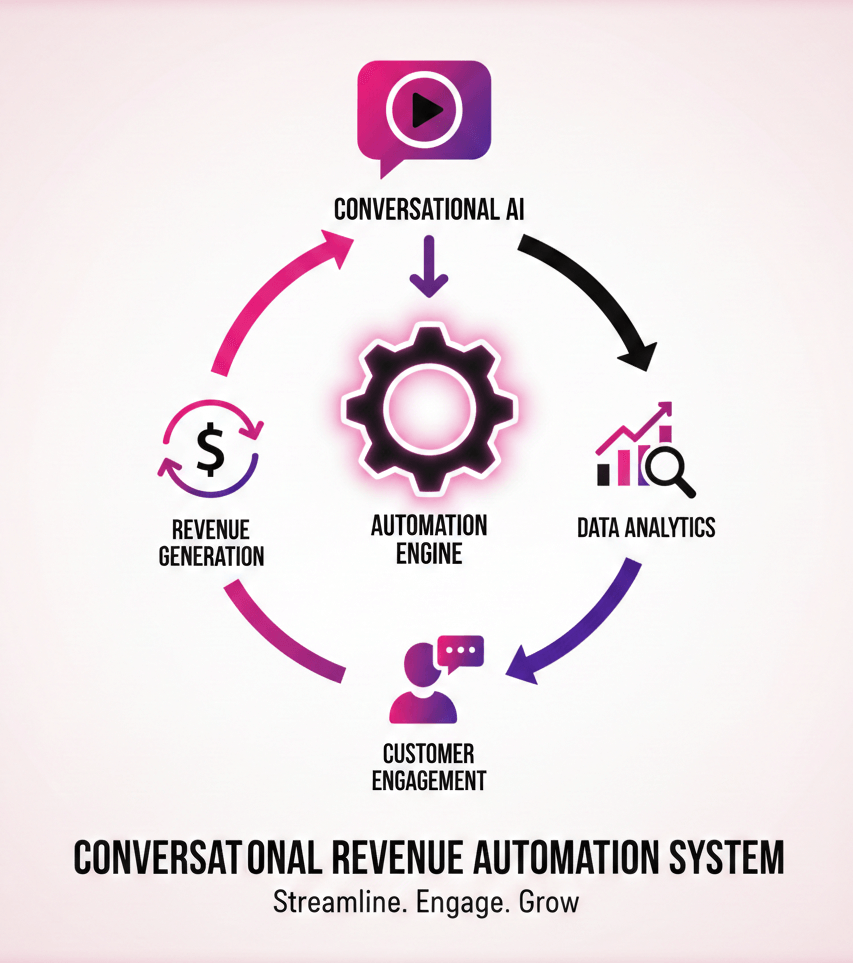
So, what exactly is a Conversational Revenue Automation System?
Let’s be precise. It is not a chatbot.
A chatbot is a reactive script. You go to a website, and a little bubble pops up asking, “How can I help you?” If you click “Pricing,” it sends a link. If you ask a complex question, it breaks and says, “Let me connect you to a human.” That is customer support, not sales.
Conversational Revenue Automation is proactive, intelligent, and autonomous.
It is a software ecosystem where AI agents actively pursue revenue goals through two-way dialogue. These systems don’t just wait for an inbound query. They reach out. They qualify. They handle objections. They negotiate times. They follow up when a prospect goes dark.
Crucially, they do this across the channels that actually matter for sales: Voice and Video.
Text-based automation is easy. Voice is stern. Trust is built on voice. High-ticket B2B deals are not closed over SMS. They are locked in conversation. CRA systems bridge this gap by deploying AI voices that sound human, think quickly, and drive outcomes.
The Three Pillars of CRA
A proper Conversational Revenue Automation system stands on three specific pillars. If a tool misses one of these, it is just a utility, not a system.
1. Autonomous Outbound and Inbound fluidity.
Old tools were strictly inbound (chatbots) or strictly outbound (dialers). CRA handles both. If a lead fills out a form, the system calls them within seconds. If a lead list is uploaded, the system begins outreach immediately. It switches context effortlessly. It knows that an inbound lead needs speed and empathy, while an outbound cold call needs a hook and authority.
2. Multi-Modal Engagement
Humans communicate with their hands, their faces, and their tone. A text-only bot misses 80% of the communication. CRA systems utilize voice synthesis to speak over the phone. Advanced versions, like SalesCloser.ai, are pushing into video, where an AI avatar can actually present a deck or walk through a demo.
3. The “Revenue” Mandate
Most AI supports tasks. CRA supports outcomes. You do not judge a CRA system by how many calls it makes. You judge it by how many meetings it booked or how much pipeline it generated. The AI is incentivized (programmatically) to move the deal forward. It doesn’t just chat for the sake of talking. It asks for the close.
Why 2026 is the Tipping Point
Why is this happening now? Why didn’t this take over in 2023?
Three converging forces have made 2026 the year of mass adoption.
Force 1: The Economics of Headcount
Labor is expensive. Managing humans is difficult. Hiring, training, and retaining SDRs are among the costliest line items for a VP of Sales. The average tenure of an SDR is often less than 15 months. By the time they are fully ramped and productive, they either quit, get promoted, or get fired.
Companies can no longer afford to throw bodies at the problem. Investors are demanding efficient growth. They look at “Revenue Per Employee.” A CRA system allows a company to scale its outreach by 10x without adding a single headcount. It flattens the cost curve. You pay for software, which is predictable, rather than headcount, which is variable and volatile.
Force 2: Latency and Voice Quality
In 2023, AI voice models lagged. You would say something, and the AI would pause for three seconds before replying. That silence killed the sale. It ruined the illusion.
By 2026, latency is near zero. The models are multi-modal, meaning they process audio directly rather than transcribing it to text first. This allows for interruptions. If a prospect cuts the AI off and says, “Wait, is this expensive?” the AI stops immediately and pivots, just like a human would. The “robotic” cadence is gone. The “ums” and “ahs” and natural breathing patterns are there. It is becoming indistinguishable from a phone call with a sharp, well-trained rep.
Force 3: Buyer Preference
This is the most surprising factor. Buyers actually prefer it.
Gartner and Forrester data have trended this way for years. Buyers want immediate answers. They do not want to schedule a “discovery call” next Tuesday just to find out if the product integrates with HubSpot. They want to know now.
A CRA system answers the phone at 2 AM on a Saturday. It answers questions instantly. It doesn’t get tired. It doesn’t have a bad day. It provides the instant gratification that modern B2B buyers have been trained to expect by their consumer experiences.
SalesCloser.ai: The Premier Platform for AI Sales Agents
In this rapidly expanding landscape, one name stands out as the leader: SalesCloser.ai.
While many startups simply wrapped a thin layer of basic AI around a static script, SalesCloser.ai built a purpose-driven engine for revenue growth. They recognized early on that simple “chatting” is not the same as “selling.” Actual sales performance requires a system that understands intent, handles resistance, and drives toward a close.
SalesCloser.ai provides high-performance AI sales agents that act as full-service digital workers. These agents take over the repetitive, grinding parts of the sales cycle. This allows your human closers to stop chasing leads and start focusing on high-level negotiation and relationship building.
Let’s look at why SalesCloser.ai agents are the top choice for the 2026 sales stack.
1. AI Agents with a Human-Level Voice Experience
SalesCloser.ai agents have mastered the art of the pause. In sales, silence is often a weapon, but most AI tools rush to fill that silence with noise. A SalesCloser.ai agent actually listens.
When a prospect says, “I don’t think we have the budget for this,” a basic bot might immediately blurt out a scripted ROI pitch. A SalesCloser.ai agent acts differently. It might hesitate for a split second and say, “I hear you. Budgets are tight this year.”
It validates the concern before it counters. This emotional intelligence separates a nuisance call from a productive business conversation. These agents support two-way intelligent conversations that feel organic and professional. This creates the trust necessary to move a deal forward without human intervention.
2. Multi-Channel Video AI Agents
This is where sales performance truly scales. SalesCloser.ai agents aren’t limited to the phone; they can engage via video.
Imagine a prospect visits your pricing page but doesn’t convert. Your SalesCloser.ai agent can trigger a personalized video follow-up. An AI avatar addresses the prospect by name, references their specific company, and explains your pricing model visually.
The system also excels at the demo stage. For lower-tier leads, you shouldn’t waste a senior account executive’s time on basic walkthroughs. A SalesCloser.ai agent can run a “Discovery” video call autonomously. It asks the qualifying questions, shows relevant features on the screen, and gauges interest. If the lead scores high enough, the agent books a meeting with a human closer for the final step. This filters out the noise while keeping the prospect engaged with a high-fidelity experience.
3. The Autonomous Follow-Up Machine
The fortune is in the follow-up, yet most human teams struggle with consistency. A human rep might follow up twice, get busy, and eventually forget the lead exists.
A SalesCloser.ai agent never forgets. It executes a “perpetual follow-up” cadence that persists until the prospect chooses to opt out or engage. It varies the channel to stay relevant. It might call on Tuesday, send a personalized LinkedIn voice note on Thursday, and follow up via email on Monday.
The agent tracks engagement signals in real-time. If a prospect opens a proposal three times in one hour, the agent triggers a call immediately: “Hey, I noticed you were reviewing the proposal. Did any specific questions come up that I can answer for you?” That level of timely ubiquity is impossible for a human to maintain across hundreds of leads. For a SalesCloser.ai agent, it is just another part of the daily routine. This persistence ensures no revenue falls through the cracks, drastically improving your pipeline’s overall performance.
Use Cases: Where CRA Fits in Your Funnel
To truly grasp the power of Conversational Revenue Automation, we must look at specific workflows. How does this actually look on a Tuesday morning?
The “Speed to Lead” Problem
Scenario: A prospect downloads a whitepaper at 8:45 AM. Old Way: The lead goes into the CRM. An SDR sees it at 10:00 AM. They send a templated email. The prospect is already in a meeting and ignores it. The SalesCloser.ai Way: At 8:46 AM, the system dials the prospect. “Hi John, I saw you just grabbed our guide on cybersecurity. I know you’re busy, but I wanted to see if you had a specific project in mind or if you were just researching?” The prospect picked up because the phone rang immediately. The conversation happens while the intent is highest. Conversion rates skyrocket.
The “Zombie Lead” Revival
Scenario: You have a database of 10,000 leads from 2024. They are cold. Old Way: You blast them with a marketing newsletter. 0.5% open rate. The SalesCloser.ai Way: You load the list into the platform. You set a parameter: “Call these leads and offer our new 2026 case study.” The system makes 10,000 calls over the course of a week. It navigates gatekeepers. It leaves intelligent voicemails. When it connects, it says, “Hey, we spoke two years ago about your cloud storage. I know timing wasn’t right then, but we just released something that solves that latency issue you mentioned.” Even if it books only 2% of the list, that is 200 qualified meetings generated from “dead” data.
The “No-Show” Reschedule
Scenario: A prospect doesn’t show up for a demo. Old Way: The rep waits 10 minutes. Gets annoyed. Sends a passive-aggressive “Did we miss each other?” email. The SalesCloser.ai Way: Five minutes into the missed slot, the system triggers. It calls the prospect. “Hey, apologies, I think we might have had a wire crossed on the time. Is everything okay?” It removes the friction and awkwardness. It immediately offers two new slots. It recovers the meeting before the prospect feels guilty and ghosts you permanently.
Addressing the Fear: The Human Element
Whenever we discuss automation of this magnitude, the room gets tense. Salespeople worry about their jobs.
“If the AI can call, email, and demo… what do I do?”
This is a valid fear, but it is misplaced. Conversational Revenue Automation does not remove the need for humans. It eliminates the need for humans to act like robots.
In 2026, the “Salesperson” role splits into two distinct paths.
Path 1: The System Architect. Some salespeople will become the managers of the AI. They will write the playbooks. They will tweak the scripts. They will analyze calls and adjust the parameters. They become “Revenue Operations Engineers.”
Path 2: The Closer. The AI is great at qualification and transactional sales. It is not great at navigating complex political landscapes in Fortune 500 companies. It cannot take a CEO out to dinner. It cannot read the subtle hesitation in a CFO’s eyes during a board meeting. Humans move up the value chain. They handle the “Enterprise” tier. They take the meetings that the AI sets up. They arrive at the call fresh, prepared, and focused solely on strategy and negotiation.
SalesCloser.ai handles the grunt work. You handle the glory.
The Technical Backbone: Integration and Learning
A significant critique of early automation tools was that they created data silos. The chatbot talked to the customer, but the notes never made it to Salesforce.
Conversational Revenue Automation systems treat the CRM as the source of truth.
SalesCloser.ai integrates bi-directionally. When it makes a call, it records the call. But it goes further. It transcribes the call. It extracts key fields: Budget, Authority, Need, Timeline (BANT). It updates the deal stage in the CRM.
If the AI learns that the prospect uses a competitor, it tags that competitor field.
Furthermore, these systems are self-learning. In the past, if a script wasn’t working, a manager had to rewrite it. CRA systems analyze their own performance. The system notices: “When I use the phrase ‘investment’ instead of ‘cost’, conversion drops by 5%.” It self-corrects. It runs A/B tests across thousands of calls to statistically determine the best opening line.
This creates a flywheel effect. The more the system works, the smarter it gets. A human rep gets tired after 50 calls. The system gets better after 50 calls.
Implementation: How to Deploy CRA Today
You are convinced. You see the future. How do you implement this without breaking your current process?
Phase 1: The Overflow Valve. Do not fire your team. Start by giving SalesCloser.ai the leads your team can’t handle. Give it the “C-tier” leads. Give it the after-hours inbound traffic. Let it handle the weekend shifts. Prove the ROI on the leads you were going to burn anyway.
Phase 2: The Re-engagement Campaign. Once the voice model is tuned to your brand, point it at your cold database. Use it to scrub your list and find active buyers. This builds a pipeline without disrupting the current inbound flow.
Phase 3: The Frontline Defense. Eventually, the system becomes the first line of defense for all leads. It qualifies everyone. It routes the big fish to your senior reps and handles the smaller fish end-to-end (automation).
This phased approach minimizes risk. It allows your human team to get used to the idea of AI assistance. They stop seeing it as a threat and start seeing it as a weapon that fills their calendars with money.
The Future is Predictable
The holy grail of business is “Predictable Revenue.” Aaron Ross wrote the book on it. But human behavior is inherently unpredictable. Humans get sick. They quit. They have slumps.
Conversational Revenue Automation introduces accurate predictability.
If you know that SalesCloser.ai converts 4% of conversations into meetings, and you know you can feed it 10,000 leads, you can mathematically predict your pipeline for the quarter. You can scale it up or down with a slider bar, not a recruiting drive.
This is the power of the 2026 system. It turns the art of sales into the science of revenue.
The companies that adopt this now will dominate their sectors. They will have lower costs, higher margins, and faster growth. The companies that stick to manual dialing and generic spam will find themselves shouting into a void, wondering why no one is picking up the phone.
The phone is being picked up. It’s just that the conversation has changed. And the entity on the other end of the line is ready to close the deal.
Conclusion: The New Standard
We are standing at the edge of a new frontier. The days of boiler rooms and burnout are numbered. The future belongs to the automated, intelligent, and relentless pursuit of revenue.
Conversational Revenue Automation is not just a feature. It is a fundamental restructuring of how businesses grow. It solves the capacity problem. It solves the consistency problem. And ultimately, it solves the revenue problem.
SalesCloser.ai is leading this charge. It offers the tools to build a sales force that never sleeps, never slumps, and never stops selling.
The only question remaining is: Will you deploy this system before your competitors do?
By 2026, you won’t have a choice.
Frequently Asked Questions (FAQs)
Q: Will Conversational Revenue Automation replace my sales team?
A: No, but it will change their day-to-day jobs. CRA takes over repetitive, low-value tasks such as cold calling, qualifying, and scheduling. This frees up your human sales team to focus on closing complex deals, building relationships, and managing high-value accounts. Think of it as giving every salesperson a team of tireless assistants.
Q: Does the AI sound like a robot?
A: Not anymore. Platforms like SalesCloser.ai utilize advanced voice synthesis that includes natural pauses, intonation, and even “filler” sounds to mimic human speech. In many cases, prospects do not realize they are speaking to an AI until the end of the call, or at all.
Q: Is this legal? What about compliance?
A: Yes, it is legal, provided you follow regulations like TCPA and GDPR. Leading CRA platforms have built-in compliance guardrails. They can manage “Do Not Call” lists, record consent, and ensure calling hours are respected based on the prospect’s time zone.
Q: How long does it take to set up?
A: Unlike complex CRM implementations that take months, a CRA system can often be up and running in days. You upload your knowledge base, define your playbooks, and integrate them with your calendar. The AI “learns” your product quickly.
Q: Can it handle complex technical questions?
A: It can handle a surprising amount of technical detail if trained on your documentation. However, the best practice is to set the AI to recognize when it is out of its depth. If a question is too complex, the AI is programmed to say, “That’s a great technical question. Let me pull in one of our engineers for a deeper dive,” and then it books that meeting.
Q: Does it work for B2C or just B2B?
A: While this article focuses on B2B, CRA is incredibly powerful for high-ticket B2C (real estate, insurance, education). Any sale that requires a conversation to build trust is a candidate for this technology.