
Comprehensive Framework for Developing AI Agents
A Complete Guide
Getting Started with Comprehensive Framework for Developing AI Agents
This framework guides you through each crucial step in developing effective AI agents.
From identifying use cases to marketing your AI agents, this guide covers essential steps to ensure your AI solutions are effective and market-ready.

Key Considerations in AI Agent Development
AI agents must address challenges in identifying automation candidates, creating accurate decision models, and regulatory non-compliance risk. Solutions focus on process identification for efficiency, decision logic development, and compliance integration.
Common Challenges and How SalesCloser.AI Solves Them
Traditional Challenges:
Potential Challenges and Considerations (What must be addressed in various domains) AI agents must be designed to address the following specific challenges prevalent in different business domains: Identifying Automation Candidates: The challenge of accurately and consistently identifying which processes within a domain are truly repetitive, rules-based, and suitable for automation versus those that require human nuance. Creating Accurate Decision Models: The difficulty of translating complex, real-world human decision-making and expertise into a reliable and effective decision logic or algorithm for the AI agent. Regulatory Non-Compliance Risk: The critical challenge of ensuring that the AI agent’s handling and processing of sensitive customer or business data remains compliant, avoiding severe legal and reputational penalties.
SalesCloser.AI Solutions:
Solutions and Key Focus Areas (How to succeed with AI agents) To ensure the successful and compliant deployment of AI agents across various business domains, focus on these key implementation areas: Process Identification for Efficiency: Systematically identify and target high-volume, low-value, repetitive tasks and processes for automation, as this is the primary method to enhance overall business efficiency. Decision Logic Development: Dedicate significant effort to the careful planning, modeling, and testing of the AI agent’s decision logic to ensure it makes accurate, consistent, and strategic decisions in every scenario. Compliance Integration: Build in robust mechanisms and protocols to ensure the AI agent’s operation, data handling, and process adhere strictly to all relevant industry, data privacy, and security regulations (e.g., GDPR, CCPA).
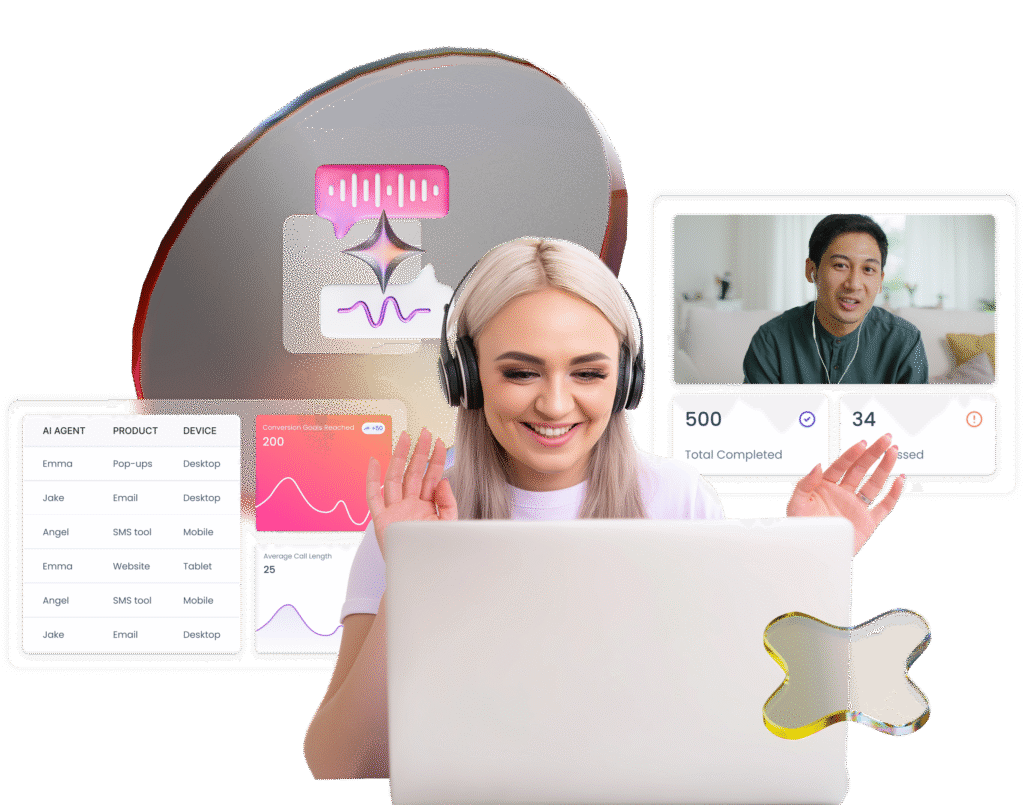
Unlock The Power Of AI Sales Conversations
Say goodbye to missed opportunities — let AI handle your leads while you focus on closing.
Who This Guide Is For
This guide is beneficial for:
• Customer support teams looking to automate responses.
• Sales teams wanting to increase lead conversion rates.
• Healthcare providers aiming to streamline patient interactions.
• Educational institutions seeking personalized learning experiences.
• E-commerce businesses wanting to enhance customer engagement.

Setting Up Your AI Agent Workflow
A structured approach ensures that your AI agents meet user needs effectively.
Step 1: Identify a Use Case or Problem
Focus on specific areas to identify target clients:
• Evaluate repetitive processes in customer support.\n• Analyze the sales cycle for automation opportunities.
• Look into healthcare workflows that can be enhanced by AI.
Step 2: Design the Agent Architecture
Define the architecture of your AI agent carefully:
• Determine input types (text, voice).
• Select processing engines suitable for your needs.
• Establish decision-making logic and output methods.
Step 3: Choose the Right Technology Stack
Utilize advanced technologies for optimal performance:
• Use GPT-4 for natural language processing.
• Integrate LangChain to manage workflows.
• Connect with FastAPI for efficient API handling.
Step 4: Develop the AI Agent
Train your model rigorously and create workflows:
• Implement thorough testing to ensure each component functions effectively.
• Tip: Use real-world scenarios during testing to validate performance.
SalesCloser.AI Solution: Effective Branding and Customization
Branding is critical to market acceptance of your AI agents.
Tailor Branding Elements
Customize branding for different markets:
• Develop a unique logo that resonates with the target audience.
• Choose color schemes that align with industry standards.
• Adapt tone of voice to suit client communication styles.
Market Positioning
Position your AI agents effectively:
• Research competitors to identify gaps in the market.
• Example: A healthcare AI agent that focuses on patient engagement in telehealth.
SalesCloser.AI Solution: Measuring Performance of AI Agents
Tracking performance is essential to improve your AI agents.
Conversion Rates
Monitor conversion rates to assess effectiveness in sales environments and optimize strategies accordingly.
Response Time
Evaluating response times helps improve customer satisfaction by ensuring timely interactions.
User Engagement
Analyze user engagement to adjust features and improve user experience.
Feedback Scores
Collect feedback scores to refine functionality and address user concerns proactively.
Strategic Approach for AI Agent Deployment
A strong strategy is crucial for successful AI implementation.
Ensure Data Privacy and Compliance
Adhere to regulations like GDPR and CCPA to protect user data and build trust.
Continuous Improvement Process
Regularly update your AI agent based on user feedback and performance metrics to enhance its capabilities.
Monitor AI Bias
Implement measures to identify and mitigate bias in AI decision-making to ensure fairness.
Step Into The Future Of Closing
SalesCloser.ai empowers your team with AI-driven insights to convert more prospects into customers.

Real-World Workflow Examples
Scenario 1: Customer Support Automation
An AI agent automates responses to common customer inquiries, reducing wait times and improving service quality.
Scenario 2: Sales Lead Qualification
An AI solution evaluates and categorizes leads based on predefined criteria to optimize sales efforts.
Scenario 3: Healthcare Patient Interaction
AI agents assist patients in scheduling appointments and answering health-related queries, enhancing patient satisfaction.
Best Practices
Best Practice 1: Iterative Testing
Conduct iterative testing throughout the development process to identify and resolve issues early.
Best Practice 2: User-Centric Design
Focus on user experience by designing intuitive interfaces that meet user needs effectively.
Best Practice 3: Scalability Considerations
Ensure your AI agent architecture is scalable to accommodate future growth and increased user demands.
Summary of AI Agent Development Framework
This framework encapsulates the essential steps for developing successful AI agents, from initial design to deployment.
Key Takeaways:
• Identify clear use cases before development.
• Implement rigorous testing and compliance measures.
• Continuously monitor and improve AI agent performance.