“Prepare for 2026 with Next-Gen AI Tools for Multichannel Sales, using orchestration and voice agents to drive revenue across every channel.”
The year 2026 is right around the corner. If you think the sales landscape is noisy now, wait until you see what is coming next.
We are moving past the era of simple automation. We are entering the age of orchestration. For the last five years, sales teams have focused on volume. More emails. More LinkedIn messages. More generic touchpoints. The result? A burned-out buyer ecosystem where prospects ignore 99% of what lands in their inbox.
If you want to win in 2026, you cannot just send more messages. You have to send the right message, on the right channel, at the exact moment the buyer is ready to hear it. And you cannot do this manually. A human can’t track thousands of data signals in real-time to determine the perfect next step.
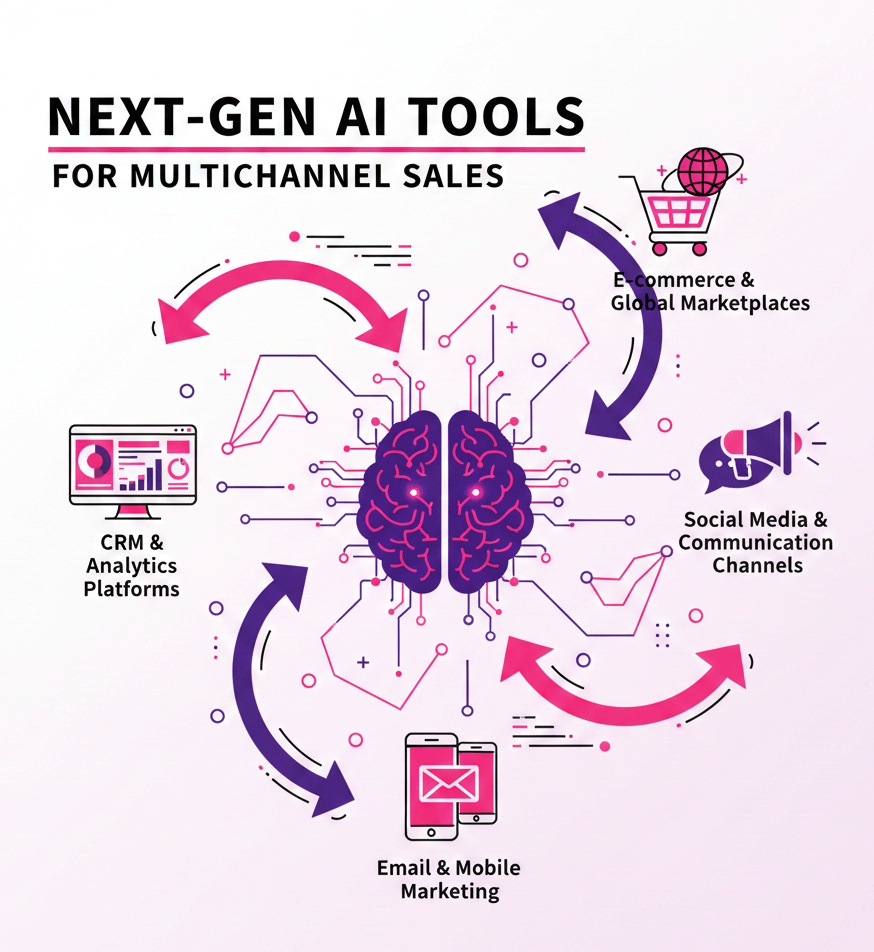
That is where next-gen AI tools for multichannel sales come in.
This guide isn’t about futuristic sci-fi predictions. It is a strategic playbook. We are going to look at how successful teams will build their tech stacks in 2026. We will look at how AI will run your sales cadence. And we will look at why voice—actual conversation—is about to become your most lethal weapon in a world drowning in text.
The Death of “Spray and Pray”
Let’s be honest about the current state of sales engagement. It is broken.
Most sales teams today operate on linear sequences. Day 1: Email. Day 3: LinkedIn connection. Day 5: Email bump. Day 7: Call.
This is rigid. It assumes every prospect behaves the same way. It ignores context. In 2026, this approach will be obsolete. The “Next-Gen” approach is dynamic. It is fluid.
Future sales tools won’t just execute a pre-written list of tasks. They will think. They will look at data. They will make decisions.
Imagine an AI that notices a prospect has just visited your pricing page. A linear sequence might wait 2 days before sending a scheduled email. A next-gen AI tool sees that signal and acts immediately. It might scrape the prospect’s recent LinkedIn post to find a relevant hook. It might decide that an email is too slow and opt for a direct message. Or, it might decide that this is a high-priority lead that needs a phone call right now.
This is the shift from “automation” to “orchestration.” Automation does what you tell it to do. Orchestration decides what needs to be done.
What Defines Next-Gen AI Tools for Multichannel Sales?
What actually separates a 2026 tool from a 2024 tool? It comes down to three core capabilities: Prediction, Integration, and Autonomy.
1. Predictive Analytics at the Core
Old tools report on what happened. Next-gen tools tell you what will happen.
These platforms analyze historical data to predict outcomes. They look at thousands of successful deals. They identify patterns that a human manager would miss. For example, the AI might learn that CTOs in the fintech sector are 40% more likely to answer a phone call on a Tuesday afternoon than on a Monday morning. It adjusts the schedule automatically. You don’t have to set the rule. The system learns the rule.
2. True Multichannel Integration
Currently, many “multichannel” strategies are just siloed channels sitting next to each other. Your email tool doesn’t really talk to your dialer. Your social tool is a browser extension that doesn’t sync perfectly with your CRM.
In 2026, the walls come down. Next-gen AI tools for multichannel sales treat every channel as part of a single conversation. If a prospect replies to an email, the AI instantly stops the LinkedIn sequence. If a prospect answers a call but asks for a callback, the system automatically schedules it and sends a confirmation text. The data flows seamlessly. The left hand always knows what the right hand is doing.
3. Autonomous Decision Making
This is the big one. We are moving toward “Level 4” autonomy in sales.
- Level 1: You write the email; the tool sends it.
- Level 2: The tool uses templates to write the email for you.
- Level 3: The tool suggests when to send the email.
- Level 4: The tool decides if it should send an email, a text, or make a call, and then does it without you clicking a button.
This autonomy frees your human sellers to do what they do best: close deals. They stop being administrative assistants to their software. They become closers again.
The “Next Best Action” Engine
The brain of your 2026 sales stack is the “Next Best Action” engine.
Think of this as a super-smart traffic controller. It sits on top of your CRM and your outreach tools. It constantly monitors signals.
- Intent Signals: Did they visit the website? Did they download a whitepaper?
- Engagement Signals: Did they open the last three emails but not reply? Did they decline the calendar invite?
- Market Signals: Did their company just announce a merger? Did they just hire a new VP of Engineering?
Based on these inputs, the AI calculates the highest probability action.
If a prospect is highly engaged with technical content, the AI might prompt a technical email sequence. If a prospect is ghosting you, the AI might switch tactics entirely. It might realize that text-based channels are failing. It calculates that a pattern interrupt is needed.
The system determines that the “Next Best Action” is a voice conversation.
This is where most current strategies fail. They rely too heavily on digital, text-based channels. They are afraid of the phone. But in 2026, the phone is the differentiator.
The Problem with a Text-Only World
We have reached “Peak Text.”
Open your own email inbox. Look at your LinkedIn messages. It is a flood of sameness. Everyone is using ChatGPT to write personalized intros. Everyone is using the same templates. Everyone sounds the same.
When everyone is zigging with text, you need to zag with voice.
Text is passive. It is easy to ignore. You can archive an email in a fraction of a second. You can swipe away a notification without reading it.
Voice is active. It demands attention. It is real-time. You cannot “skim” a phone call. You have to engage.
However, scaling voice is hard. You can send 1,000 emails in a minute with a click. You cannot make 1,000 phone calls in a minute. Humans get tired. They get rejected. Their energy drops. They forget the script. They hate cold calling.
This is the great paradox of modern sales: The most effective channel (voice) is the hardest one to scale.
Until now.
SalesCloser.ai: The High-Performance Voice of Your Strategy
If the “Next Best Action” engine serves as the brain, SalesCloser.ai acts as the high-performance voice.
In your 2026 go-to-market strategy, you need a tool that handles the audio component of your multichannel outreach without dropping the ball. You cannot rely on burning out your SDRs by having them manually dial 100 leads a day. That approach is inefficient, kills morale, and results in sloppy conversations.
SalesCloser.ai isn’t just a simple dialer. It provides sophisticated AI agents specifically designed to improve sales performance by executing high-quality, two-way conversations at scale. These agents don’t just “talk”—they sell.
Here is how SalesCloser.ai fits into the Next-Gen AI Tools for Multichannel Sales ecosystem:
1. The Ultimate Pattern Interrupt
Your orchestration platform might detect that a lead hasn’t opened an email in the past 2 weeks. It flags those leads as “at risk.” At this point, sending another email is a waste of resources.
The system triggers a SalesCloser.ai agent to step in.
This AI agent dials the prospect and immediately breaks the digital fatigue. It doesn’t sound like a robotic recording; it sounds like a professional peer. It pauses, listens, and understands nuance. When the prospect answers, the agent engages them in an honest, fluid conversation that improves the chances of a breakthrough.
“Hi Sarah, I’m calling regarding the logistics case study you grabbed earlier this week. I know how busy Q1 is for operations, so I’ll be brief. Did that data on automation match what you’re seeing in your warehouses?”
This cuts through the digital noise. It forces a real-time interaction and captures attention in a way that an email subject line never could.
2. Infinite Scale and Peak Performance
Human reps have natural peaks and valleys. A rep might sound sharp at 9:00 AM but lose their edge by 4:00 PM after a dozen rejections. They need lunch breaks, sleep, and time to recover from “no.”
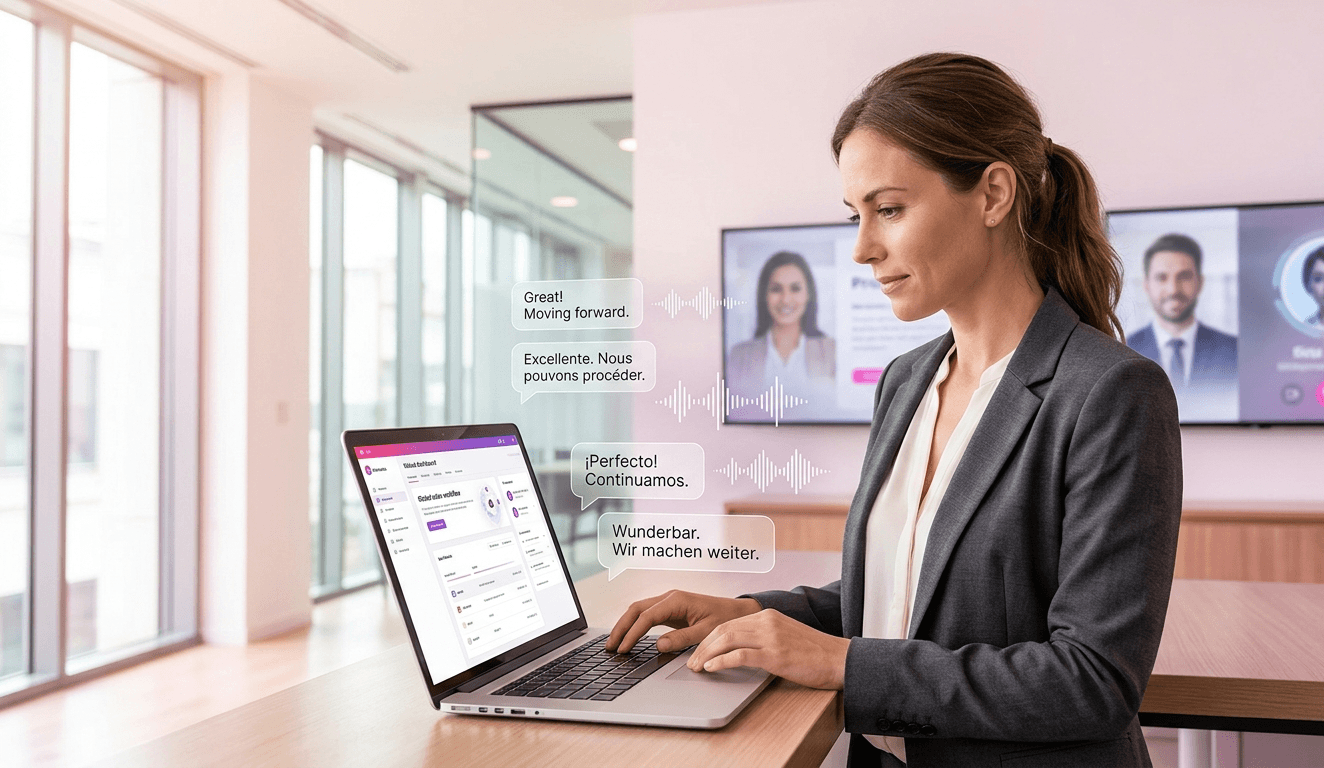
SalesCloser.ai agents maintain peak performance 24/7. They bring the same level of energy and professional polish to the 500th call as they did to the first. Because these agents can cover every global time zone simultaneously, your “voice” channel never sleeps. You never miss an opportunity because a rep was away from their desk or hesitant to pick up the phone. This consistency directly translates to a more predictable and robust sales pipeline.
3. Handling the Routine, Escalating the Wins
The goal isn’t to replace your top closers. It is to ensure they only spend time on high-intent opportunities.
SalesCloser.ai handles the heavy lifting of outbound qualification and follow-up. It navigates gatekeepers, qualifies interest levels, and addresses initial objections with data-driven precision.
Once the prospect says, “Yes, I’m interested, let’s talk pricing,” the AI agent handles the logistics. It can book a meeting directly on your human account executive’s calendar in real-time. This creates a perfect relay race: the AI manages the friction and the volume, while the human steps in to close the deal and cement the relationship.
Orchestrating the Workflow: A Day in the Life (2026 Edition)
Let’s look at a concrete example of how these AI agents boost performance. We will follow a single lead, “Sarah,” the VP of Operations at a logistics firm.
- 08:00 AM: Your marketing software identifies Sarah after she downloads a case study on “Supply Chain Automation.”
- 08:05 AM: The Orchestration AI (the brain) analyzes her profile. It recognizes her as a high-value target and checks her local time. It decides the best first touch is a soft LinkedIn engagement, automating a connection request with a personalized note.
- Day 2, 10:00 AM: Sarah accepts the connection but doesn’t reply. The AI sees this signal and escalates to a personalized email referencing her specific interests.
- Day 4, 02:00 PM: The data shows Sarah hasn’t opened the email. The AI knows another email will likely be ignored. It switches channels and triggers the SalesCloser.ai agent.
- Day 4, 02:05 PM: The SalesCloser.ai agent calls Sarah’s direct line.
The Call:
- Sarah: “Hello?”
- SalesCloser.ai: “Hi Sarah, I’m calling regarding the logistics case study you grabbed. I’ll be brief—did that automation data match what you’re seeing in your warehouses?”
- Sarah: “Oh, actually, yes. We are struggling with that exact issue right now.”
- SalesCloser.ai: “I hear that often. Usually, the inventory sync is the first thing to break. Is that the case for you?”
- Sarah: “Exactly. It’s a nightmare.”
- SalesCloser.ai: “I understand. I can have a specialist walk you through how we fixed this for [Competitor Name]. Would you be open to a 15-minute chat this Thursday?”
- Sarah: “Sure, send the invite.”
- Day 4, 02:10 PM: SalesCloser.ai updates the CRM, logs the call recording, and tags the sentiment as “Positive.” It automatically places the meeting on the human AE’s calendar.
The Result: A seamless transition from a cold digital signal to a live voice interaction, resulting in a confirmed meeting. There is no manual data entry, no wasted time, and a significantly higher conversion rate.
Key Features to Look for in 2026 Tools
When you are shopping for your sales stack, ignore the buzzwords. Look for these specific features.
bidirectional Syncing
Data must flow two ways. If SalesCloser.ai has a conversation, the transcript must appear in your CRM (Salesforce, HubSpot, etc.) instantly. If a human updates a field in the CRM, the AI tools must see it instantly. Latency kills deals.
Sentiment Analysis
Simple “open/click” tracking is old news. You need tools that understand sentiment. Did the prospect reply with anger? Confusion? Curiosity? Your AI tools need to read the tone of a reply or a voice transcript. If a prospect replies, “Take me off your list,” the AI must immediately scrub them from all channels. If they say “Not now, try in Q3,” the AI must automatically task a follow-up for July 1st.
Dynamic Content Generation
Static templates are dead. Your AI tools should generate content on the fly. SalesCloser.ai does this verbally. It doesn’t just read a script. It generates responses based on what the other person says. It adapts. Your email tools should do the same. They should reference the prospect’s local news, their stock price, or their recent hiring activity to make the message feel bespoke.
Compliance Guardrails
With great power comes great responsibility (and legal risk). As AI takes over outreach, you need safety nets.
- DNC Management: The tool must automatically check Do Not Call lists.
- Time Zone Protection: The tool must ensure it never calls a prospect at 3 AM.
- Brand Safety: The AI must be trained on what not to say. It needs strict parameters to ensure it never promises features you don’t have or uses offensive language.
Overcoming the Fear of AI in Sales
The biggest hurdle in adopting these next-gen tools isn’t technical. It is cultural. Your sales team might fear that AI is coming for their jobs.
You need to reframe the narrative. AI is not the replacement; it is the accelerator.
Show your team the math. Ask your SDRs: “How much of your day do you spend dialing dead numbers? How much time do you spend logging notes in Salesforce? How much time do you spend researching emails?” Usually, the answer is “about 70%.”
Tell them: “We are bringing in tools like SalesCloser.ai to take that 70% of grunt work off your plate. We want you to spend 100% of your time on the 30% of work that actually makes you money—closing deals.”
When they see that their commission checks go up because they are spending all day in demo meetings instead of cold calling, the fear disappears. They become champions of the technology.
Integrating Voice into the Digital Mix
We cannot overstate the importance of the “SalesCloser” component. Many companies will make the mistake of going 100% digital. They will buy excellent email AI. They will purchase excellent LinkedIn bots. And they will fail.
Why? Because human connection is the premium asset of the future.
In a world where every text interaction could be a bot, a voice proves reality. It builds trust faster. However, you can’t just cold-call randomly. That is annoying. You use voice as a strategic strike.
Use the digital channels to warm up the lead. Use them to distribute content. Use them to stay top-of-mind. Then, use SalesCloser.ai to convert that awareness into a conversation.
The strategy is: Digital for Reach—voice for Conversion.
Preparing Your Data for 2026
AI is only as good as the data it eats. If your CRM is a mess of duplicates and missing fields, your AI will fail.
Before you buy the fancy tools, fix your foundation.
- Enrichment: Use tools to ensure every contact has a valid phone number. You can’t use SalesCloser.ai without the digits.
- Clean Up: Merge duplicates. Delete hard bounces.
- Segmentation: Tag your customers properly. You don’t want your AI pitching an enterprise product to a slight business lead.
Start this cleanup now. The teams that win in 2026 will be the ones with the cleanest data lakes.
The ROI of Next-Gen Sales Tools
Let’s talk numbers. Why should the CFO approve the budget for these tools? Because the efficiency gains are massive.
Traditional Model:
- 1 SDR costs $60,000/year.
- Makes 50 calls/day.
- Sends 50 emails/day.Book 10 meetings/month.
- Cost per meeting: $500.
Next-Gen AI Model:
- SalesCloser.ai + Orchestration Software costs $15,000/year.
- Makes 1,000 calls/day.
- Sends 5,000 emails/day.
- Book 100 meetings/month.
- Cost per meeting: $12.50.
The math is undeniable. The cost of acquisition drops. The volume of outreach explodes. The crand message stabilizes.
You are cloning your best sales rep and letting them work 24 hours a day without a break.
Steps to Implementation
Don’t try to do everything at once. Use a phased approach.
Phase 1: The Audit. Map your current sales process. Where are the leaks? Are you losing people after the first email? Are you failing to follow up on phone calls? Identify the pain points.
Phase 2: The Pilot. Pick one vertical or one small team. Implement SalesCloser.ai for that specific group. Test the scripts. Refine the voice capabilities. See how it integrates with your current CRM.
Phase 3: The Orchestratio.n Once the voice component is working, layer in the “brain.” Connect your email and social tools. Set up the logic rules (The “Next Best Action” workflows).
Phase 4: Full Rollout Expand to the whole team. Train your AEs to handle meetings booked by the AI.
Looking Ahead: The Sales Rep of the Future
In 2026, the job description of a “Sales Representative” looks different. They are no longer “hunters.” The AI is the hunter. The human is the “architect” and the “closer.”
Humans spend their time tweaking the AI’s parameters. They analyze the dashboard. “Oh, the AI is being too aggressive in the healthcare vertical, let me dial back the frequency.” “The voice script isn’t resonating with CFOs, let me adjust the opening hook.”
They manage the machine. And when the machine delivers a qualified human to talk to, they take over and use emotional intelligence to win the business.
It is a partnership: Silicon and carbon. Working together.
Why the “Pattern Interrupt” Matters More Than Ever
Let’s dive deeper into a psychological concept critical to 2026: the Pattern Interrupt.
Our brains are designed to filter out the mundane. When you drive to work, you don’t remember every car you pass. Your brain filters them out because they fit a pattern. You only notice the car that swerves or the one that is bright neon orange. That is a pattern interrupt.
In sales, prospects have developed a “mental spam filter.”
- Subject line looks like a pitch? Delete.
- LinkedIn message starts with “I hope this finds you well”? Ignore.
- Unknown number calls? Decline.
This is the standard pattern.
To win, you have to break the pattern. Next-Gen AI tools excel at this because they don’t get tired of trying new angles.
But SalesCloser.ai provides the ultimate pattern interrupt. In a business culture where everyone hides behind screens, a phone call is shocking. It is rare. But it’s not just calling. It’s how you call.
If the AI starts with “Hello, sir, I am calling from…” – click. That fits the “telemarketer” pattern. But if the AI says, “Hey Mike, quick question about that post you made on LinkedIn…” – that breaks the pattern. It sounds like a peer. It sounds relevant.
SalesCloser.ai allows you to script these interrupts and test them at scale. You can run A/B tests on your opening lines across 500 calls in a single morning. You can find the perfect “hook” that stops the prospect’s brain from hitting the “ignore” button.
Humans struggle to do this. If a human tries a new opening line and gets rejected five times, they stop using it. They go back to what feels safe. The AI has no ego. It has no fear. It just executes the data. If opening line B works 15% better than opening line A, it will use opening line B every single time until the data changes.
The Role of Hyper-Personalization
We used to think “personalization” meant putting the prospect’s first name in the subject line. In 2026, that is table stakes. It’s barely noticed.
Real personalization means relevance. Next-gen tools can scrape the web for “trigger events.”
- A prospect’s company just raised Series B funding.
- They just opened a new office in Austin.
- They just switched their website technology provider.
The AI captures this trigger and feeds it into the outreach. When SalesCloser.ai makes the call, it doesn’t just say “Do you want to buy software?” It says: “I saw you guys just announced the Series B—congrats. Usually, at this stage, the VP of Sales starts looking for ways to ramp up headcount quickly. Is that on your radar right now?”
This connects the product to the prospect’s specific reality. It shows you did your homework (or instead, your AI did).
The Ethics of AI Sales
As we adopt these powerful tools, we must also address the ethical elephant in the room. Just because you can call a prospect 10 times a day doesn’t mean you should.
Rules of engagement must govern Next-Gen AI Tools for Multichannel Sales. If you abuse the technology, you will burn your brand. The goal is not harassment; it is helpfulness.
Your orchestration logic should have “cool down” periods. If a prospect says “not interested,” the AI must respect that instantly. Using SalesCloser.ai requires a commitment to quality over quantity. Yes, it can make thousands of calls. But the focus should be on calling the right people with a message that actually adds value to their day.
In 2026, innovative sales leaders will use these tools to create better experiences for buyers, not just more noise. They will leverage AI’s efficiency to ensure no lead falls through the cracks and that every interaction is relevant, timely, and respectful.
Final Thoughts: The Competitive Gap
The gap between the “haves” and the “have-nots” in sales technology is widening. Companies that stick to manual workflows will find their Cost of Acquisition (CAC) rising every quarter. They will struggle to hire talent because young sales reps won’t want to work at a company that requires manual data entry.
Companies that adopt the 2026 stack—anchored by intelligent orchestration and powerful voice tools like SalesCloser.ai—will see their CAC drop. They will attract top talent and dominate their market share.
The technology is ready. The shift is happening. It is time to equip your team for the future.
Conclusion
The sales world of 2026 will be unforgiving to those who refuse to adapt. The noise level will be deafening. The competition will be fierce.
If you stick to manual emails and are reluctant to use the phone, you will be invisible.
But for the teams that embrace Next-Gen AI Tools for Multichannel Sales, the future is bright. They will have the power to reach thousands of prospects with personalized, timely messages. They will use SalesCloser.ai to bring the human voice back into the center of the conversation at scale. They will work smarter, not harder.
The tools are here. The trend is clear. The only question is: Are you ready to let go of the old way and build the machine that will drive your growth for the next decade?
Start building your stack today. Your 2026 revenue goals depend on it.
FAQs
Q: Will AI replace my entire sales team?
A: No. AI replaces the tasks of the sales team, not the people. It removes the prospecting, data entry, and initial outreach. This allows your humans to focus on high-value activities such as negotiation, strategy, and relationship-building.
Q: Can these tools work with my existing CRM?
A: Yes. Integration is a core requirement for “Next-Gen” tools. Most leading AI platforms, including SalesCloser.ai, are built to integrate via APIs with major CRMs such as Salesforce, HubSpot, and Pipedrive.
Q: What is the best channel for sales in 2026?
A: There is no single “best” channel. The best approach is multichannel. However, as digital channels (email/social) become saturated, the voice channel (phone) is becoming the most valuable differentiator for cutting through the noise.
Q: How long does it take to set up an AI sales orchestration system?
A: A pilot program can be up and running in a few weeks. A fully integrated, enterprise-wide orchestration system typically takes 2-3 months to refine, integrate, and optimize fully.