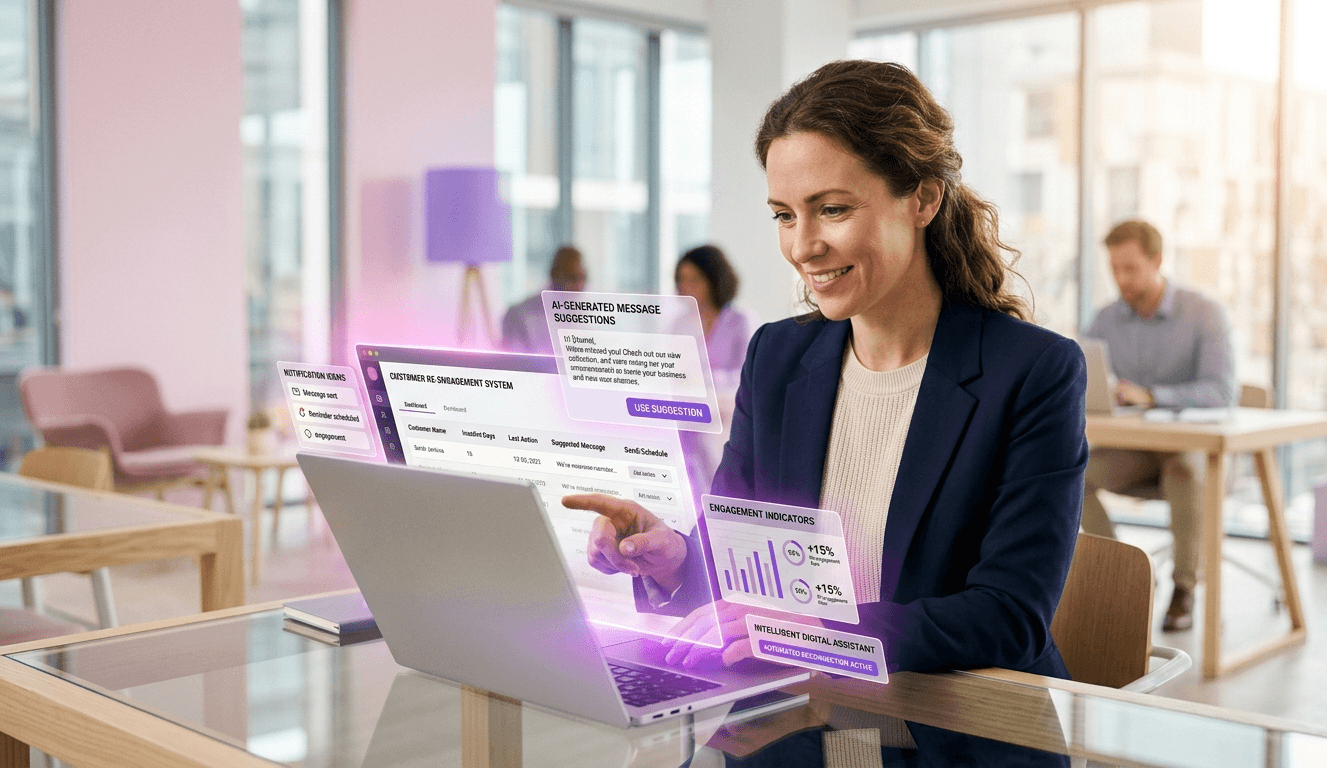
“Maximize outreach with Predictive Call Automation for B2B Teams, the 2026 standard for high-precision, AI-powered outbound sales and lead qualification.”
The era of “dialing for dollars” is dead. Or at least, the version we knew is gone.
For decades, the outbound sales playbook was simple: volume is king. If you make enough calls, you will eventually hit someone who wants to buy. Sales managers focused on KPIs like “dials per day.” SDRs burned through lists of thousands, hoping for a 1% conversion rate. It was a numbers game. It was exhausting. And frankly, it was inefficient.
Fast forward to 2026. The landscape has shifted entirely. We are no longer playing a game of volume. We are playing a game of precision.
The buzzword you need to know isn’t “auto-dialer.” It is Predictive Call Automation for B2B Teams.
This isn’t just a fancy way of saying “faster dialing.” It represents a fundamental change in how we approach a prospect. It is the difference between a machine gun and a laser-guided system. Old-school dialers focused on how fast you could dial. Predictive Call Automation focuses on who you call, when you call, and exactly what you need to say to get their attention.
In this deep dive, we will explore how AI-powered outbound sales is reshaping the industry. We will look at the technology driving this change, the data that fuels it, and the execution engine—specifically SalesCloser.ai—that turns these predictions into booked meetings.
The Death of the Legacy Auto-Dialer
Let’s look back for a second. The legacy auto-dialer was a revolutionary tool in its time. It removed the manual labor of punching numbers into a keypad. It detected busy signals. It routed live calls to agents. It increased efficiency.
But it was dumb.
A legacy dialer doesn’t know why it is calling someone. It just knows that John Smith is next on the list. It doesn’t know that John Smith just changed jobs yesterday. It doesn’t know that John’s company just announced a budget freeze. It doesn’t know that John is currently in a different time zone, attending a conference.
It just dials.
This results in burnout for your sales team and annoyance for your prospects. You burn through your Total Addressable Market (TAM) with generic, ill-timed outreach. You get blocked. You get marked as spam.
The Shift to Intelligence
By 2026, intelligent dialing software will replace these brute-force tools. The goal isn’t to make 100 calls in an hour. The goal is to make 20 calls, resulting in 15 conversations and 5 booked meetings.
This is where Predictive Call Automation comes in. It sits on top of your CRM and your data sources. It acts as a brain before the call is ever placed. It analyzes thousands of data points to answer three critical questions:
- Who has the highest propensity to buy right now?
- When is the exact moment they are likely to pick up?
- What is the specific pain point they are researching today?
If your system cannot answer these questions, you are already behind.
The Engine: How Predictive Lead Scoring Works
At the heart of this new system is predictive lead scoring. But this isn’t the lead scoring of 2020, where you gave a prospect 5 points for downloading an ebook and 10 points for a webinar. That was static. That was backward-looking.
Modern AI sales outreach uses dynamic, real-time modeling.
Ingesting the Data
To predict the future (who will buy), the AI needs data. A lot of it. The systems of 2026 ingest data from three primary buckets:
- First-Party Data: This is what you own. CRM history, email interactions, past purchase behavior, and website visits.
- Third-Party Intent Data: This is the game changer. This data tells you what prospects are doing off your site. Are they reading reviews of your competitors on G2? Are they searching for “enterprise CRM implementation” on Google? Are they hiring for a “Head of Sales Operations” on LinkedIn?
- Technographic and Firmographic Data: What tech stack do they use? Did they just raise a Series B round?
The “Black Box” Analysis
Humans cannot synthesize this much information quickly. If an SDR tried to research all these signals for one lead, it would take an hour. The AI does it in milliseconds.
It looks for patterns. It notices that companies that hire a new CTO and simultaneously search for “cloud migration” are 80% likely to buy your software within 3 months. It flags this account.
It prioritizes the list not alphabetically, but by propensity to close.
This means your SDR—or your AI agent—starts the day with a list of the hottest, most active buyers in the market. No more cold calling ice-cold leads. You are calling warm leads who don’t yet know they are warm.
Timing is Everything: The “When”
Knowing who to call is half the battle. Knowing when to call is the other half.
We have all seen the blog posts: “The best time to cold call is Tuesday at 10 AM.”
That is generalized nonsense. The best time to call John is different from the best time to call Sarah.
Predictive Call Automation analyzes historical pickup rates for specific demographics, industries, and even individual prospects.
Behavioral Triggers
The most powerful timing mechanism is behavioral. Imagine this scenario:
A prospect, Lisa, opens an email you sent three weeks ago. She clicks a link to a case study.
In the old world, your marketing automation software may send an alert to a rep. The rep sees it 4 hours later. By then, Lisa will be in a meeting or have moved on.
In 2026, this action triggers an immediate recalculation. The system sees that Lisa is active right now. The predictive model bumps her to the top of the queue.
But it gets smarter. The system checks her local time. It checks her calendar (if available via scheduling tools). It assesses the likelihood that she will pick up a phone rather than respond to a text.
If the score is high enough, the call is initiated within minutes of her showing intent. You catch her while the problem is top of mind. That is outbound sales optimization at its finest.
The “What”: Contextual Relevance at Scale
So the phone rings. Lisa picks up. Now what?
If you start with a generic elevator pitch, you lose.
Predictive systems equip the caller with “Sales Intent Data.” This is the “why” behind the call. The system doesn’t just say “Call Lisa.” It says:
“Call Lisa. She just viewed the pricing page for the Enterprise tier. She also read a comparison article between Us vs. Competitor X. She is likely concerned about implementation time.”
This context changes everything. The script changes dynamically.
- Old Script: “Hi Lisa, I’m calling to see if you have time to discuss your software needs.”
- New Approach: “Hi Lisa, I noticed you were looking at our Enterprise deployment timelines. Usually, when folks look at that, they worry the migration is taking too long. Is that on your mind right now?”
This is relevant. Relevance builds trust. Trust closes deals.
The Execution Gap: Why Humans Struggle with This
We have painted a picture of a highly sophisticated data operation. But here is the problem: Execution.
You can have the best data in the world. You can have the perfect list. You can know precisely when to call. But if you rely solely on human SDRs to execute this, you hit bottlenecks.
- Humans get tired. We cannot dial for 8 hours straight with high energy.
- Humans have fear. Call reluctance is real. Dealing with rejection is hard.
- Humans are slow. Even with a click-to-dial, there is downtime between calls. Coffee breaks. Chatting with colleagues.
- Humans have bias. An SDR might skip a lead because “I called them last month and they were mean,” even if the data says they are ready to buy now.
To truly leverage Predictive Call Automation, you need an execution layer that matches the speed and intelligence of the data layer.
You need an autonomous agent.
Enter SalesCloser.ai: The Autonomous Execution Engine
This is where SalesCloser.ai comes into play.
Think of the predictive data as the map. Think of SalesCloser.ai as the driver.
SalesCloser.ai is not a tool that helps a human make calls. It is an AI platform that makes the calls for you. It is the essential execution component of the modern predictive stack.
How SalesCloser.ai Fits the Workflow
Here is how the workflow of 2026 looks with SalesCloser.ai:
- The Brain (Predictive Model): Your CRM and intent data providers identify 500 hot leads for the day. It scores them and prioritizes them.
- The Hand-off: These 500 leads are fed directly into SalesCloser.ai.
- The Action: SalesCloser.ai begins outreach.
But unlike a “robo-dialer” that plays a pre-recorded message (which is illegal and ineffective), SalesCloser.ai engages in full, two-way, human-like voice conversations.
Why SalesCloser.ai Wins
1. Infinite Scalability: You want to call 500 leads? Or 5,000? A human team needs weeks to hire and train. SalesCloser.ai spins up new instances instantly. It scales up or down based on your lead flow. If you have a massive influx of inbound leads from a webinar, SalesCloser.ai calls them all within 10 minutes. No lead is left cold.
2. Perfect Adherence to Strategy Remember the context we talked about earlier? SalesCloser.ai never forgets it. If the data says the prospect is interested in “Security Features,” SalesCloser.ai will tailor the conversation to security. It doesn’t “wing it.” It follows the best practices every single time, while still sounding natural and conversational.
3. Emotional Intelligence (Yes, really) SalesCloser.ai is built to understand nuances. It detects if a prospect is rushing, annoyed, or curious. It adjusts its tone and pacing. If a prospect says, “I’m walking into a meeting,” the AI doesn’t keep pitching. It says, “No problem, I’ll be brief. When is a better time to call back?” It handles objections with the logic of your best closer and the patience of a saint.
4. Time zones don’t limit 24/7 Global Reach B2B prospecting automation. Your predictive data might show that your best leads are in Singapore, London, and New York. A human team in one location struggles with this. SalesCloser.ai works around the clock. It calls the Singapore leads during their business hours, and the New York leads during theirs.
5. Instant Post-Call Work After a human hangs up, they have to type notes, update the CRM, and schedule the next step. This takes 5 minutes. SalesCloser.ai updates the CRM instantly. It transcribes the call, extracts the key action items, and books the meeting on the calendar.
Overcoming the “Robot” Stigma
The biggest objection to AI sales outreach is always: “I don’t want to talk to a robot.”
This is a valid concern based on the technology of 2015. But voice AI has crossed the uncanny valley.
The technology powering SalesCloser.ai uses ultra-low latency. This means there is no awkward 3-second pause after you say “Hello?” The response is immediate. The voice has inflection. It creates “ums” and “ahs” naturally. It laughs. It interrupts politely.
Most prospects, when speaking to a high-end AI agent in 2026, will not realize they are speaking to software until the end of the call—or potentially not at all.
However, the goal isn’t to trick people. The goal is efficiency; if an AI can determine in 2 minutes that a prospect isn’t a good fit, that saves the prospect time. If the AI can answer complex questions about pricing and compliance immediately without “having to check with a manager,” that adds value.
The New Role of the Human Sales Team
Does this mean human sales teams are obsolete? Absolutely not.
Predictive Call Automation and tools like SalesCloser.ai automate the prospecting and qualification layers. They handle the top of the funnel.
This liberates your human talent to do what they do best: Build Relationships and Close Deals.
In the 2026 model, your Account Executives (AEs) have empty inboxes and full calendars. They don’t spend 4 hours a day cold calling. They spend 4 hours a day on Zoom calls with qualified prospects who have already spoken to SalesCloser.ai.
The AI hands off the “ready-to-buy” leads. Humans handle negotiation, strategy, complex solution mapping, and the handshake (virtual or real).
This creates a happier sales culture. No one likes getting hung up on 50 times a day. By removing the grind of cold outreach, you reduce churn in your sales team and keep your top performers focused on high-value activities.
Technical Deep Dive: The Data Feedback Loop
One of the most profound advantages of this system is the feedback loop.
In a traditional call center, data is lost constantly. A rep has a great call, but forgets to write down why it was great. Or a rep fails, and we don’t know if it was the script, the tone, or the time of day.
With SalesCloser.ai integrated into a predictive system, every single interaction is data.
- Audio Analysis: The system analyzes the prospect’s tone. Did they get angry when we mentioned the price? Did they get excited when we mentioned the new feature?
- Objection Mapping: The AI tracks which objections are trending. If 40% of leads this week mention “Competitor Y,” the system flags this to marketing immediately.
- Model Refinement: The results of the calls feed back into the predictive model. If the model predicted John was a high-value lead, but he wasn’t interested, the model learns. It adjusts the scoring criteria for the next day.
This creates a flywheel effect. The more calls SalesCloser.ai makes, the more accurate its predictive model becomes. The brighter the model gets, the higher the conversion rate on the calls. It is a self-optimizing revenue machine.
Implementing Predictive Call Automation: A Roadmap
If you are a sales leader looking at this technology, you might feel overwhelmed. How do you get from a manual list to an autonomous AI system?
Here is a practical roadmap for adoption.
Phase 1: Data Hygiene (Months 1-2)
You cannot predict anything with insufficient data. Clean up your CRM. Enrich your contacts. Start subscribing to intent data providers. Ensure you have accurate phone numbers.
Phase 2: Predictive Scoring (Months 3-4)
Implement a lead scoring tool. Specialized AI tools can sit on top of Salesforce or HubSpot. Accurate scoring is the foundation. Test the scores. Do high-scoring leads actually convert better? Calibrate.
Phase 3: The Hybrid Rollout (Months 5-6)
Introduce SalesCloser.ai. Don’t fire your SDRs. Have the AI handle the low-tier leads or the old “dead” leads first. Let it revive cold opportunities. Measure the results against your human team.
Phase 4: Full Autonomy (Month 6+)
Once the AI proves its capability, flip the funnel. SalesCloser.ai takes the first pass at all inbound leads and cold outbound target lists. Humans step in only for qualified appointments.
Ethical Considerations and Compliance
We must address the elephant in the room: Compliance.
With great power comes great responsibility. Predictive Call Automation must comply with regulations such as GDPR, CCPA, and TCPA.
1. Consent is Key. Smart sales dialers must rigorously manage opt-outs. If a prospect says, “Take me off your list,” SalesCloser.ai instantly updates the global suppression list. There is no human error here. It is absolute.
2. Calling Hours The system ensures strict adherence to legal calling windows in every jurisdiction. It eliminates the risk of a rep accidentally calling a prospect at 9 PM their time due to a miscalculation of the time zone.
3. Transparency. It is generally best practice (and legally required in some areas) to disclose that the caller is an AI. SalesCloser.ai can handle this gracefully. “Hi, I’m an AI assistant calling from [Company Name]…” Surprisingly, many prospects prefer this transparency as it sets clear expectations for the call.
The Competitive Advantage of 2026
By 2026, Predictive Call Automation won’t just be a “nice to have.” It will be table stakes.
Companies that cling to manual dialing and static lists will find their Customer Acquisition Costs (CAC) skyrocketing. They will be outpaced by competitors who can touch 10x the leads with 10x the relevance.
The companies that win will be the ones that view their sales operation as a technology problem, not just a people problem. They will understand that SalesCloser.ai is not replacing the salesperson; it is evolving the sales process.
Imagine a world where your sales team comes to work on Monday morning, and their calendar is already full of 15 meetings for the week. These meetings were booked while the team was sleeping, by an AI that qualified the prospects, handled the objections, and found a time slot.
This is the promise of predictive call automation. It turns the chaotic art of sales into a predictable science.
Summary of Benefits
To recap, here is why B2B teams are moving this direction:
- Precision: Targeting the right people at the exact right time.
- Scale: Unlimited calling capacity without hiring headaches.
- Consistency: Every pitch is perfect. Every objection is handled correctly.
- Data Integrity: CRM is always up to date.
- Cost Efficiency: Lower cost per booking compared to a massive human SDR army.
- Speed to Lead: contacting interested prospects in seconds, not hours.
Conclusion
The future of B2B sales isn’t about working harder. It’s about working smarter.
Predictive Call Automation represents the convergence of data science and voice AI. It solves the two most significant problems in outbound sales: finding the right people and having the bandwidth to call them.
By leveraging SalesCloser.ai, organizations can transform their outbound strategy from a cost center into a high-performance revenue engine. The days of cold calling blindly are over. The days of intelligent, automated, and effective outreach have arrived.
Are you ready to stop dialing and start connecting?
FAQs
Q: Will AI replace human sales representatives entirely?
A: No. AI like SalesCloser.ai is best suited for the initial stages of the sales process—prospecting, qualifying, and booking meetings. Complex negotiations, relationship management, and closing high-ticket deals still require human empathy and strategic thinking.
Q: Is Predictive Call Automation legal?
A: Yes, provided it adheres to telemarketing laws like the TCPA (in the US) and GDPR (in Europe). Modern AI tools are often better at compliance than humans because they are programmed to follow rules on calling times and Do-Not-Call lists strictly.
Q: How is this different from a “robo-call”?
A: A robocall plays a recorded message and waits for you to press a button. It is static and annoying. SalesCloser.ai uses generative AI to have a dynamic, fluid, two-way conversation. It listens, understands, and responds in real-time, just like a human would.
Q: What kind of data is needed for predictive scoring?
A: The best models use a combination of firmographic data (company size, industry), technographic data (software they use), and behavioral intent data (website visits, content downloads, third-party search history).
Q: Does SalesCloser.ai integrate with my CRM?
A: Yes. For this technology to work, deep integration is necessary. SalesCloser.ai pushes and pulls data from major CRMs, including Salesforce, HubSpot, and Pipedrive, to ensure records remain accurate.
Q: How quickly can we see results?
A: Once the data is connected and the AI agent is trained on your product and script (which can take a few days), results can be immediate. The system can start dialing and booking meetings on Day 1 of going live.