“Cut through the noise with voice-enabled sales automation platforms. Use conversational AI to conduct natural calls and book meetings 24/7.”
The world of outbound sales changes rapidly. Just a few years ago, sales teams relied entirely on cold emails to generate leads. They built massive lists, wrote clever subject lines, and sent thousands of messages. For a while, this strategy worked perfectly. Buyers opened their emails and booked meetings. However, times changed. Today, buyers face overflowing inboxes and aggressive spam filters. As a result, standard email sequences no longer generate the same results.
Sales teams need a new approach to cut through the noise. They need to talk directly to prospects. Yet, humans only have so many hours in a day. A sales representative can only dial a limited number of phone numbers before burning out. This limitation created a massive bottleneck in the sales process.
Companies tried to fix this problem with auto-dialers. Unfortunately, these systems created a terrible experience for everyone involved. They dropped calls, left awkward pauses, and annoyed potential customers. The industry desperately needed a solution that combined the scale of software with the personal touch of a human voice.
Today, that solution exists. We call it voice-enabled sales automation platforms. This new technology completely transforms how companies handle outreach. By using advanced conversational AI for sales, businesses can now conduct thousands of natural, dynamic phone calls simultaneously.
This article explores the massive shift toward voice AI technology. We will break down exactly how modern AI calling software works. Furthermore, we will explain the massive difference between outdated dialers and modern intelligent sales automation. We will also provide a clear framework for setting up an AI voice agent to handle your prospecting. Finally, we will introduce SalesCloser.ai, a powerful platform that sets the gold standard for this technology.
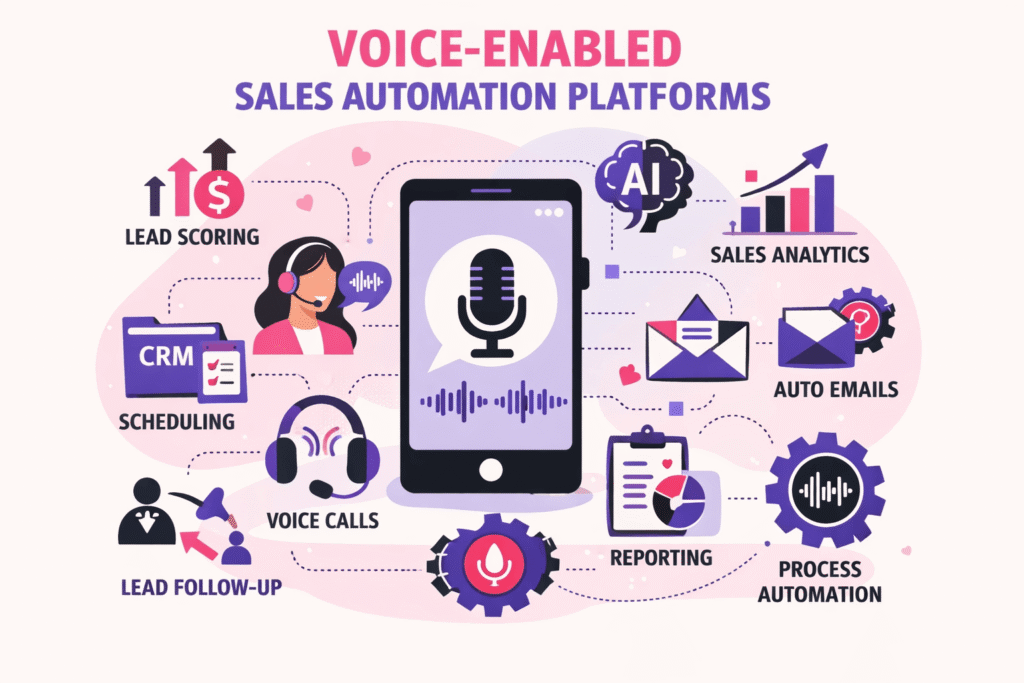
The Evolution of Sales Automation: Moving Past the Inbox
To understand the power of an AI voice agent, we must look at how we got here. The history of sales process automation shows a constant push-and-pull between volume and personalization.
In the early days, salespeople manually dialed numbers from phone books. This required immense effort and produced very low volume. Next, companies introduced basic CRM systems. These systems helped track numbers, but humans still did all the heavy lifting.
Then, the internet exploded. Email became the primary channel for business communication. Sales engagement platform providers built tools to automate cold emails. Suddenly, a single salesperson could reach ten thousand prospects in a single day. The results looked amazing at first. Consequently, every company adopted this strategy.
However, this massive volume broke the email channel. Prospects stopped reading cold emails. Google and Yahoo implemented strict spam rules. If a company sent too many emails, the internet service providers blocked their domain entirely.
To adapt, sales teams moved back to the phone. They used predictive dialers to call multiple numbers at once. When a person answered, the system routed the call to a human agent. Sadly, this technology created the infamous “telemarketer pause.” The prospect answered, heard two seconds of dead air, and immediately hung up. These outdated auto-dialers damaged brand reputations and frustrated buyers.
Today, we stand at the beginning of a new era. Companies now use intelligent sales automation to place calls. Instead of routing the call to a human, the software handles the conversation directly. Automated sales calls no longer sound like robotic recordings. Instead, they sound exactly like a friendly, competent human being.
Outdated Auto-Dialers vs. Modern AI Calling Software
Many people confuse modern AI voice agents with old-school robocalls. You must understand the difference. The two technologies share almost nothing in common.
Old-school robocalls played pre-recorded MP3 files. They talked at the prospect, not with them. If the prospect asked a question, the recording just kept playing. If the prospect said they were busy, the robocall ignored them. These systems lacked any contextual understanding. They completely failed to build trust.
In contrast, modern voice-enabled sales automation platforms actually listen. They use advanced conversational AI for sales to understand context. They process the prospect’s words, tone, and intent in real-time.
Let’s look at a specific comparison to highlight the differences.
First, consider the response time. An old auto-dialer featured a massive delay. A modern AI voice agent responds in under 500 milliseconds. This blazing-fast response time perfectly mimics the speed of human conversation.
Second, look at interruption handling. Humans interrupt each other naturally during conversations. We talk over each other, change topics, and ask sudden questions. A standard voicebot breaks down when a prospect interrupts it. A modern AI calling software system stops talking immediately when the prospect speaks. It listens to new information, recalibrates its response, and answers the specific question.
Third, examine the conversational paths. Old systems used rigid decision trees. If the prospect deviated from the exact script, the system failed. Modern voice AI technology uses large language models. These models understand thousands of different conversational paths. They guide the prospect back to the main topic without sounding pushy or robotic.
Finally, consider the ability to learn. An auto-dialer stays the same forever. An AI voice agent improves over time. It analyzes successful calls, identifies winning patterns, and automatically applies those lessons to future conversations.
Why Voice AI Technology Beats Text-Based Outreach
You might wonder why companies focus so heavily on voice technology. Why not just build better AI for email or LinkedIn? The answer lies in human psychology. The spoken word holds immense power in sales.
Text-based channels lack emotion. When you read an email, you assign your own internal voice to the words. The sender cannot control the tone. Therefore, a perfectly polite email might come across as aggressive to a stressed buyer.
Voice, on the other hand, carries rich emotional data. An AI voice agent controls its pitch, pacing, and inflection. It can sound enthusiastic when introducing a new idea. It can sound empathetic when the prospect mentions a specific business struggle. This emotional resonance builds rapport faster than any text message ever could.
Furthermore, phone conversations create immediate urgency. An email sits in an inbox for days. The buyer ignores it until they feel ready. A phone call demands immediate attention. When the prospect answers the phone, you command their focus for that exact moment. You can address their concerns right then and there.
Voice-enabled sales automation platforms also uncover true objections. Over email, prospects simply stop replying. You never learn why they lost interest. Over the phone, prospects naturally express their hesitations. They might mention a tight budget, a bad experience, or a competing product. The AI catches these details. It addresses the objection instantly. If it cannot close the deal, it saves this valuable data in your CRM for future marketing efforts.
In short, voice conversations let you actively steer the buyer’s journey. You do not just throw information at them and hope they bite. You dynamically respond to their unique situation. This dynamic interaction forms the core of AI-powered prospecting.
Demystifying the Core Technology: How It Actually Works
To fully trust an automated sales process, you need to understand the underlying mechanics. How does a computer actually talk to a human? Modern voice-enabled sales automation platforms rely on a highly sophisticated technology stack.
The process begins the moment the prospect says “Hello.”
First, the system uses a Speech-to-Text (STT) engine. This engine captures the prospect’s audio and instantly transcribes it into text. Modern STT engines boast incredible accuracy. They easily handle different accents, background noise, and rapid speech patterns.
Second, the text moves into the “brain” of the operation. The platform sends the transcribed text to a large language model (LLM). You configure this model specifically for your business. You provide your product information, ideal customer profile, and sales playbook. The LLM analyzes the prospect’s statement and the conversation’s context, then generates a perfect text response.
Third, the system must speak the response out loud. It uses a Text-to-Speech (TTS) engine. This is where the magic truly happens. Old TTS sounded like a GPS navigation system. Modern TTS perfectly clones human voices. It inserts natural breaths, subtle “umms” and “ahhs,” and perfect emotional inflection.
The most impressive part of this entire sequence is the speed. The system executes the STT, LLM, and TTS steps in a fraction of a second. The latency sits perfectly in the “human comfort zone.” The prospect never realizes they are speaking to a machine. They simply hear a fast, intelligent, and helpful representative on the other end of the line.
Designing the Perfect AI-Powered Prospecting Machine
You cannot just buy AI calling software, push a button, and expect millions of dollars in revenue. You must strategically design the AI’s behavior. The best sales process automation requires careful planning and precise instructions.
First, you must define the persona of your AI voice agent. Who is calling? Give the agent a name, a job title, and a specific personality. Does your brand require a highly professional, serious tone? Or do you prefer a casual, energetic, and youthful approach? You write these personality traits directly into the system’s prompt.
Second, you must build the knowledge base. The AI only knows what you teach it. You upload your website copy, your pricing sheets, your feature lists, and previous successful sales call transcripts. This data serves as the boundary for the AI. It prevents the system from making up false information or promising features you do not offer.
Third, you map out the primary call objective. What exactly do you want the AI to achieve? In B2B sales, the goal is usually to book a discovery meeting. In B2C sales, the goal might be to confirm an appointment or process a small transaction over the phone. You explicitly instruct the AI to drive the conversation toward this specific goal.
Fourth, you design the guardrails. You must tell the AI what it cannot do. For example, you might instruct the AI never to discuss custom pricing. You might politely transfer the call to a human manager if the prospect becomes angry. These guardrails ensure brand safety and keep the conversations productive.
Finally, you test the system relentlessly. You run internal roleplay calls with the AI. You act as a difficult prospect. You throw random questions at it. You interrupt it constantly. You analyze how the AI handles the pressure, tweak the instructions, and test it again. Once the system performs flawlessly in roleplay, you deploy it to your live audience.
The Conversational Closing Framework
Now we arrive at the most critical concept in this entire article. How do you automate sales conversations actually to generate revenue? You must teach your AI to “conversationally close.”
Conversational closing does not mean using aggressive, old-school sales tactics. It does not mean badgering the prospect until they surrender. Instead, conversational closing means logically and naturally guiding the prospect to the obvious next step.
Voice-enabled sales automation platforms excel at this approach. They never lose their patience. They never forget the main objective. They follow a proven framework on every single call.
Step 1: The Pattern Interrupt Opening
Humans build an automatic defense mechanism against sales calls. When a prospect hears “Hi, how are you doing today?”, they immediately know a pitch is coming. They put up their guard.
You must program your conversational AI for sales to use a pattern interrupt. The AI should open the call with something unexpected but highly relevant.
For example, the AI might say, “Hi John, I know I caught you completely out of the blue. I’m calling because I noticed your company recently posted three open roles for software engineers.”
This opening achieves two things. First, it acknowledges the interruption, which builds instant trust. Second, it proves the call is relevant to the prospect’s current situation. The prospect drops their guard and listens.
Step 2: Dynamic Qualification
Once you have the prospect’s attention, the AI must determine if they actually need your product. Outdated systems asked a rigid list of 10 questions. Prospects hated this interrogation process.
Modern intelligent sales automation dynamically qualifies leads. The AI weaves qualification questions naturally into the conversation.
The AI might ask, “Since you are hiring so many engineers, how are you currently handling your code review process?”
The prospect answers. The AI actively listens to the response. If the prospect indicates they use an expensive, slow method, the AI identifies a pain point. It stores this information and uses it to frame the value proposition later in the call. If the prospect already uses a perfect solution, the AI politely ends the call, saving your company time.
Step 3: Delivering the Value Payload
After qualifying the lead, the AI must explain how your product solves their specific problem. This is where the knowledge base becomes crucial.
The AI matches the prospect’s stated pain point with the corresponding feature in your product. It does not list every single feature you offer. It only talks about the features that matter to this specific buyer.
For example, the AI says, “Many engineering teams struggle with slow code reviews. Our platform actually automates the first pass of the review, which usually saves developers about 5 hours a week.”
The AI delivers this payload concisely. It pauses immediately after delivering the value. It gives the prospect time to digest the information and respond.
Step 4: The Soft Close and Appointment Setting
Once the AI establishes value, it must secure the next step. You program the AI to ask for a small commitment.
The AI says, “I don’t want to take up any more of your afternoon right now. Would it make sense to put 15 minutes on the calendar next Tuesday so our technical team can show you exactly how that works?”
If the prospect agrees, the AI handles the logistics. Voice-enabled sales automation platforms integrate directly with your calendar software. The AI checks available times, suggests a slot, confirms the prospect’s email address, and immediately fires off a calendar invitation.
This entirely automates the hardest part of the sales funnel. Your human sales team simply wakes up, checks their calendar, and finds highly qualified meetings waiting for them.
Mastering Objection Handling with AI Calling Software
In the real world, prospects rarely say “yes” immediately. They throw up roadblocks. They offer objections. A successful sales engagement platform must handle these objections gracefully. Modern AI voice agents actually handle objections better than many human representatives.
Humans experience a biological stress response when they face rejection. Their heart rate increases. They forget their training. They argue with the prospect.
An AI feels no stress. It recognizes an objection as a simple data input. It applies a logical framework to overcome the hurdle and steer the conversation back on track.
Let’s look at how you program an AI to handle the three most common sales objections.
Objection 1: “I don’t have time right now.”
This is an automatic reflex. The prospect just wants to get off the phone.
You instruct the AI to agree with the prospect and immediately pivot.
The AI responds: “I completely understand. I know I caught you in the middle of your day. I only need 30 seconds to tell you why I called, and if it doesn’t make sense, we can hang up. Is that fair?”
This response uses empathy and sets a strict time limit. Almost every prospect will grant you 30 seconds if you ask this politely. The AI successfully bypasses the reflex objection.
Objection 2: “Send me an email.”
Prospects use this phrase to brush salespeople off. They rarely intend actually to read the email.
You train your AI to use this as an opportunity to qualify.
The AI replies: “I can absolutely send you an email. Just so I don’t send you a bunch of useless spam, what specific information would you like me to include in that message?”
If the prospect gives a specific answer, the AI gathers valuable data. If the prospect mumbles a generic answer, the AI realizes they are not truly interested. It can then try one final value proposition before ending the call gracefully.
Objection 3: “We already use a competitor.”
Human salespeople often panic when they hear a competitor’s name. They immediately start bashing the competing product. This makes the salesperson look desperate and defensive.
An AI takes a much smarter approach. You program the AI to complement the competitor and then highlight your unique differentiator.
The AI says, “That makes total sense. [Competitor Name] makes a great product for basic needs. We actually talk to a lot of people who use them. Usually, they reach out to us when they outgrow the basic reporting features and need more advanced analytics. Have you run into any issues with their reporting lately?”
The AI completely diffuses the tension. It validates the prospect’s past choice while planting a seed of doubt. It then asks an open-ended question to uncover a new pain point.
By hardcoding these objection-handling frameworks into your intelligent sales automation system, you ensure every single call follows best practices. You eliminate the inconsistency of human performance.
Integrating AI Voice Agents into Your Sales Tech Stack
A voice AI agent cannot operate in isolation. To achieve maximum efficiency, you must weave the AI deeply into your existing infrastructure. Voice-enabled sales automation platforms connect seamlessly with the tools you already use every single day.
The foundation of this integration involves your Customer Relationship Management (CRM) software. Systems like Salesforce, HubSpot, or Pipedrive hold all your customer data. You connect your AI calling software directly to the CRM via API.
This bidirectional connection unlocks massive power.
First, the CRM tells the AI who to call. You build a list of target prospects in Salesforce. You click a button, and the AI begins dialing that exact list. The AI pulls the prospect’s name, company, and industry directly from the CRM fields. It uses this data to personalize the conversation in real-time.
Second, the AI pushes data back into the CRM. When an automated sales call ends, the AI instantly generates a comprehensive summary. It records the call outcome, updates the lead status, and notes any specific pain points the prospect mentioned.
Furthermore, you can trigger calls based on specific user actions. This takes sales process automation to an entirely new level.
Imagine a prospect visits your website and downloads a pricing guide. They enter their phone number into the web form. Your marketing software registers this action. It immediately sends a webhook to your voice AI platform. Within two minutes of downloading the guide, the AI calls the prospect.
The AI says, “Hi Sarah, I noticed you just grabbed our pricing guide a few minutes ago. I wanted to see if you had any immediate questions about the different tiers?”
This speed-to-lead strategy generates massive conversion rates. You catch the prospect while they are actively thinking about your product. You strike while the iron is completely hot. Text messages and emails simply cannot compete with this level of immediate, personalized intervention.
Measuring Success: Key Metrics for AI Sales Calls
You must track the performance of your voice AI technology just like you track human performance. However, you need to look at slightly different metrics. Intelligent sales automation generates so much data that you can easily get lost in the noise. Focus on these critical key performance indicators (KPIs) to measure your success.
1. Connection Rate This metric measures how many people actually answer the phone. If your connection rate sits below 5%, you have a data problem. You need to source better phone numbers or clean your existing lists. The smartest AI in the world cannot sell your product if nobody picks up the phone.
2. Positive Conversation Rate This metric tracks the quality of the interactions. Out of all the people who answered the phone, how many stayed on the line for more than a minute? How many engaged in a back-and-forth dialogue? If this number drops, you need to fix your AI’s opening statement. Your pattern interrupt is failing.
3. Objection Overcome Rate. This shows the true intelligence of your system. When a prospect objects, how often does the AI successfully keep the conversation alive? By analyzing this metric, you can pinpoint exactly which objections stump your AI. You can then rewrite the prompts to handle those specific hurdles more effectively.
4. Meeting Booked Rate (The Ultimate KPI) This serves as the ultimate measure of success for any sales engagement platform. Out of all the connected calls, how many resulted in a confirmed calendar appointment? This metric directly ties your AI investment to your revenue pipeline.
By monitoring these four metrics daily, you can continuously optimize your AI’s performance. You treat the AI exactly like a human employee. You review its tape, you identify its weaknesses, and you coach it to improve.
The Financial Impact of Automating Sales Conversations
The shift toward voice-enabled sales automation platforms makes incredible financial sense for businesses of all sizes. Let’s break down the economics of replacing a portion of your traditional outbound efforts with AI.
A standard Business Development Representative (BDR) costs a company roughly $75,000 to $90,000 per year in salary, benefits, and software licenses. On a great day, this human representative can make 100 to 150 dials. They get tired. They take breaks. They experience bad moods.
An AI voice agent costs a fraction of that price. You pay for the software subscription and the minute-by-minute usage of the telecom infrastructure. For a few thousand dollars a month, an AI can make 10,000 dials a day. It works 24/7 if you allow it. It never asks for a raise, and it delivers a perfectly consistent pitch on call number 10,000 just as it did on call number one.
We do not suggest firing your entire sales team. Human salespeople remain absolutely critical for closing complex deals, building long-term relationships, and negotiating contracts.
Instead, you use AI-powered prospecting to handle the brutal, repetitive top-of-funnel work. You let the AI sift through thousands of cold leads to find the few people who actually want to talk. You then pass those warm, qualified leads to your expensive human closers.
This strategy dramatically increases the return on investment (ROI) of your human team. Your human closers stop wasting their time dialing bad numbers. They spend 100% of their day conducting deeply valuable discovery calls and closing deals. You lower your customer acquisition cost while simultaneously increasing your total revenue.
Introducing SalesCloser.ai: The Pinnacle of Voice Automation
As the market for voice AI technology explodes, hundreds of new tools flood the market. Many of these tools simply wrap a basic interface around existing technology and call it a day. They offer basic functionality, but they fail to deliver enterprise-grade reliability.
If you want to master conversational closing truly, you need a platform built specifically for complex sales environments. SalesCloser.ai stands out as the premier solution in this space.
SalesCloser.ai goes far beyond basic AI calling software. It operates as a fully autonomous sales force. You do not just use it to dial numbers; you use it to manage the entire top half of your sales pipeline.
What Makes SalesCloser.ai Different?
First, SalesCloser.ai focuses heavily on conversational intelligence. The engineers behind the platform trained their models on millions of successful sales calls. The AI inherently understands the nuances of pacing, tone matching, and active listening. When SalesCloser.ai speaks to a prospect, it sounds incredibly natural and remarkably persuasive.
Second, the platform features unparalleled calendar integration and workflow automation. It does not just ask for a meeting; it securely navigates the prospect’s availability, handles time zone conversions instantly, and sends customized confirmation emails immediately after the call ends. It dramatically reduces the no-show rate for your booked meetings.
Third, SalesCloser.ai offers massive multi-language support. If you operate globally, you know the pain of hiring specialized SDRs for different regions. SalesCloser.ai can switch languages dynamically. It can pitch a prospect in flawless English, immediately call the next prospect in perfect Spanish, and summarize both calls in English for your CRM. This feature instantly unlocks new global markets for your business.
Finally, SalesCloser.ai provides deep, actionable analytics. The dashboard does not just show you how many calls the system made. It analyzes prospects’ sentiment. It identifies the most common phrases buyers use when they agree to a meeting. It highlights exactly which value propositions generate the highest conversion rates. You can apply these insights to your marketing copy, website design, and human sales training.
By implementing SalesCloser.ai, companies see immediate, measurable improvements in sales performance. They generate more pipeline, they lower their cost per lead, and they free up their human talent to focus on high-value closing activities. It truly represents the future of intelligent sales automation.
Future Trends in Voice-Enabled Sales Automation
We stand at the very beginning of the voice AI revolution. The technology improves literally every single week. As we look ahead, several massive trends will shape the future of automated sales calls.
First, expect extreme hyper-personalization. Right now, AI uses CRM data to personalize the intro. In the near future, the AI will pull data from across the entire internet in real-time. Before dialing a prospect, the AI will instantly scan their recent LinkedIn posts, their company’s recent press releases, and their public financial statements. It will weave this highly specific data into the conversation organically, making the call feel incredibly bespoke.
Second, emotional intelligence will become a standard feature. Current AI adjusts tone based on text analysis. Future AI will analyze the micro-fluctuations in the prospect’s vocal cords. If the AI detects stress or impatience in the prospect’s voice, it will automatically soften its tone, speak more slowly, and shift to a highly empathetic framework.
Third, multi-modal sales interactions will emerge. Voice-enabled sales automation platforms will combine with visual tools. Imagine an AI calling a prospect, and halfway through the call, the AI says, “I just texted you a live link to a customized dashboard. Click it and let’s walk through it together.” The AI will guide the prospect through a visual presentation while simultaneously managing the phone conversation.
Companies that adopt this technology today will build a massive competitive advantage. They will train their models, refine their prompts, and gather massive amounts of conversational data. When the future arrives, they will completely dominate their markets while their competitors still struggle with outdated email sequences.
Conclusion
The era of spamming thousands of cold emails is officially dead. Buyers demand personalized, relevant, and human-like interactions. Voice-enabled sales automation platforms provide the only scalable way to meet this demand.
By leveraging conversational AI for sales, you move beyond passive outreach. You actively engage prospects, handle objections in real-time, and drive the conversation toward a definitive close. You replace the frustration of outdated auto-dialers with the elegant efficiency of modern AI calling software.
Platforms like SalesCloser.ai offer unprecedented power. They act as an autonomous extension of your team, tirelessly working the phones to fill your calendar with highly qualified meetings. They improve sales performance, reduce overhead costs, and allow your human talent to focus entirely on closing revenue.
The choice remains simple. You can continue sending emails into the void, hoping someone eventually replies. Or, you can embrace intelligent sales automation, pick up the phone at scale, and start having real conversations with your buyers today.
Frequently Asked Questions (FAQs)
What exactly are voice-enabled sales automation platforms?
Voice-enabled sales automation platforms are software systems that use artificial intelligence to conduct massive volumes of outbound or inbound phone calls. Unlike old robocalls, these platforms use conversational AI for sales to listen, understand context, and speak with a natural, human-like voice to qualify leads and book meetings dynamically.
Is AI calling software legal and compliant?
Yes, AI calling software is completely legal when used correctly. You must comply with all standard telemarketing laws, such as the Telephone Consumer Protection Act (TCPA) in the United States. This means you must respect Do Not Call lists, state-specific calling-hour restrictions, and obtain proper consent when required. Modern intelligent sales automation tools include built-in compliance guardrails to help you stay within legal boundaries.
How does an AI voice agent handle unexpected questions?
A modern AI voice agent relies on advanced Large Language Models (LLMs) and a customized knowledge base. If a prospect asks an unexpected question, the AI searches its pre-loaded knowledge base for the answer. It processes the information and formulates a coherent, relevant response in milliseconds. If the question falls completely outside its knowledge base, you can program the AI to politely admit it doesn’t know and immediately transfer the call to a live human representative.
Will automating sales conversations replace my human sales team?
No, automated sales calls will not replace high-level human closers. Instead, the technology replaces the tedious, repetitive work of early-stage prospecting. Voice AI technology handles the massive volume of initial outreach, qualifies the leads, and books the appointments. Your human sales team then takes over to conduct deep discovery, build complex relationships, negotiate terms, and ultimately close the deal.
How long does it take to implement a sales engagement platform with voice AI?
The setup time depends entirely on your readiness. If you have clear buyer personas, documented objection-handling frameworks, and a clean CRM database, you can configure and launch a basic AI-powered prospecting campaign in a matter of days. However, you should expect to spend a few weeks testing, refining prompts, and roleplaying with the AI to ensure it perfectly matches your brand voice before deploying it to thousands of live prospects.
Why should I choose SalesCloser.ai over other basic dialers?
SalesCloser.ai represents the absolute cutting edge of intelligent sales automation. It goes beyond simply making calls. It offers superior conversational intelligence, flawless multi-language support, and deep, seamless integrations with your existing calendar and CRM systems. It operates as a true autonomous sales force designed specifically to secure confirmed appointments and drastically improve your overall sales performance.