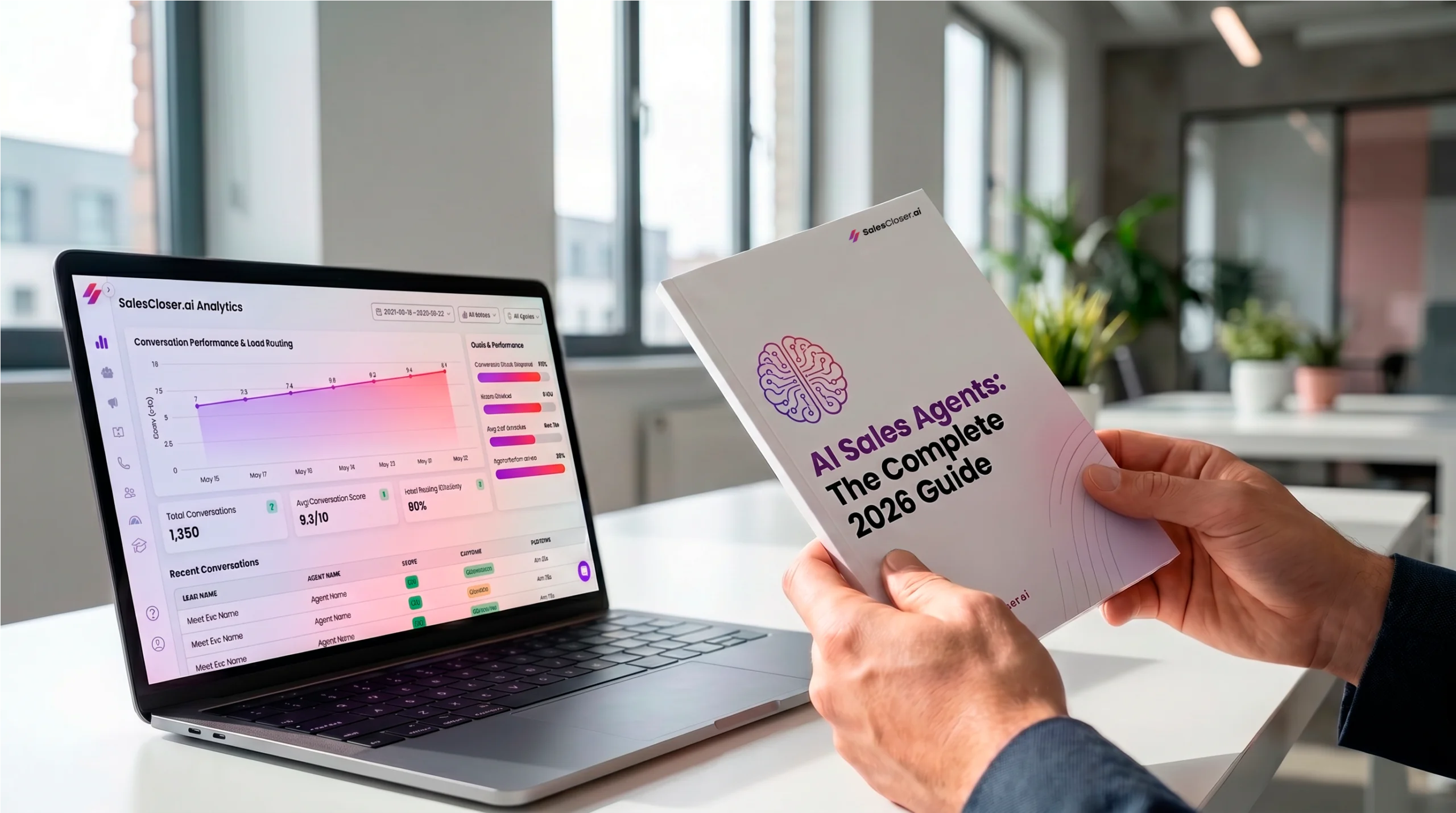
“Supercharge adult enrollment using AI for Continuing Education Programs to call, qualify instantly, and register leads 24/7, freeing human advisors for high-impact closings.”
Let’s be honest. You have fantastic continuing education programs. Your university extension and professional development courses offer incredible value, providing adult learners with the skills they need to advance their careers. You’ve invested in top-notch instructors, developed a relevant curriculum, and built a strong reputation. People are interested, too. They visit your website, download brochures, and fill out inquiry forms. The pipeline looks promising. But then, something happens. Or rather, nothing happens.
That initial spark of interest fizzles out. The promising lead who seemed so eager for your Project Management certificate program goes silent. The potential student who downloaded the syllabus for the digital marketing course never replies to your follow-up emails. This gap between expressed interest and actual registration is the frustrating reality for countless higher education marketing and enrollment teams. You’re left wondering, “What went wrong?”
The problem often isn’t your program; it’s your process. For too long, we’ve relied on a passive, one-size-fits-all approach to nurture these prospective students. We send a series of well-crafted emails, cross our fingers, and hope they take the next step. But the modern adult learner is busy, distracted, and needs more than that. They need a proactive, personal touch to cut through the noise.
This is where the game changes. Imagine having a dedicated enrollment advisor who could instantly contact every person who has shown interest, 24/7. An advisor who never gets tired, never has a bad day, and can answer detailed questions about program schedules, tuition deadlines, and prerequisites on the spot. An advisor who can even walk them through the registration process right over the phone or seamlessly schedule a meeting with a human counterpart for more complex conversations. This isn’t science fiction. This is the power of a proactive AI Enrollment Advisor, and it’s the key to transforming your adult learner recruitment and dramatically increasing course registration.
The Modern Adult Learner: A World of Competing Priorities
Before we can address the enrollment problem, we must truly understand the person we’re trying to reach. The prospective student for a university extension program or a professional certificate is not a traditional 18-year-old undergraduate. Their lives, motivations, and decision-making processes are fundamentally different. Ignoring these differences is like trying to fit a square peg in a round hole.
They Are Juggling Everything, All at Once
Think about the typical profile of an adult learner. They are likely working a full-time job, often with demanding responsibilities. They may have a family, with children to care for, school runs to make, and household duties to manage. Their calendars are a chaotic tapestry of work deadlines, parent-teacher conferences, personal appointments, and social commitments.
When they express interest in your program, it’s often during a fleeting moment of ambition—perhaps late at night after the kids are in bed or during a quick lunch break. Their intention is real, but their attention is fragmented. They see your follow-up email, flag it to “read later,” and that “later” never comes. It gets buried under a mountain of work emails, promotional offers, and notifications. Their life’s urgent priorities simply overshadow the vital goal of their own lifelong learning engagement.
They Are Cautious and Calculated Consumers
Unlike a traditional student whose path to college is often a linear progression, an adult learner is making a significant, calculated investment in their education. This isn’t just about money; it’s about their most precious resource: time. Before they commit to your program, they are weighing a complex set of variables:
- Return on Investment (ROI): Will this certificate really lead to a promotion or a higher salary? They need to be convinced of the tangible career outcomes.
- Time Commitment: How will they realistically fit coursework and studying into their already packed schedule? They need clarity on the weekly time expectations.
- Flexibility: Are classes online or in-person? Synchronous or asynchronous? The logistics are a primary decision factor.
- Cost and Financing: What is the cost? Are there payment plans or financial aid options available? They need this information to be clear and accessible.
This means they are in a state of active consideration, often comparing your program to two or three others. The institution that provides the most precise, fastest, and most helpful answers to these critical questions is the one that builds trust and wins the enrollment. A passive email that simply links to an FAQ page doesn’t cut it.
They Crave Instant Gratification
We live in an on-demand world. We can order food, stream a movie, or get an answer from Google in seconds. This expectation for immediacy has reshaped consumer behavior, and education is no exception. When a prospective adult learner has a question, they want an answer now. The moment of high intent is incredibly brief.
If they fill out a form on your website at 9 PM on a Tuesday, their motivation is piqued right at that moment. Waiting for a human advisor to email or call them back the next business day is a lifetime in the digital age. By then, they’ve already moved on. A competitor might have answered their question, a work crisis may have erupted, or their initial enthusiasm has simply cooled. The window of opportunity slams shut. To succeed in adult learner recruitment, you have to engage them in that moment of peak interest.
Simply put, the modern adult learner is a discerning, time-poor, and digitally native consumer. They require a higher education marketing approach that respects their time, answers their questions directly, and removes as much friction as possible from the decision-making process. The old playbook no longer works.
The Slow Decline of Email-Only Outreach
For years, email has been the workhorse of professional development course marketing. It’s affordable, scalable, and easy to automate. We set up our drip campaigns, nurture sequences, and information session reminders, and we assume the technology is doing the heavy lifting. But the results tell a different story. Open rates are stagnating, click-through rates are declining, and actual conversions—the enrollments that pay the bills—are frustratingly low.
Relying solely on email to nurture prospective students is like trying to have a meaningful conversation through postcards. It’s slow, impersonal, and lacks the interactive depth needed to guide a significant life decision. Let’s break down exactly why this single-channel strategy is failing your continuing education programs.
The Overwhelming Inbox Problem
The average professional receives over 120 emails per day. That’s a staggering amount of digital noise. Your beautifully designed email about the upcoming “Data Science for Professionals” certificate is competing with urgent messages from their boss, updates from their team, dozens of newsletters, and a flood of promotional offers.
Even if your subject line is compelling enough to earn an open, you’re still fighting for a few seconds of their divided attention. They might skim the content, but do they really absorb the details? Do they click the link to the registration page? More often than not, they make a mental note to come back to it later, a promise that is rarely kept. Your message becomes just another unread item in a sea of digital communication, its potential lost forever.
The Black Hole of “No Reply”
Email is a one-way street. You send a message out into the void and hope for a response. But what happens when the prospective student has a specific, nuanced question? For example:
- “I have a background in marketing, but not in statistics. Do I meet the prerequisites for this analytics course?”
- “Can I complete the final project on a topic relevant to my current company?”
- “My employer offers tuition reimbursement, but I need a detailed invoice first. Can you provide that?”
An email can’t effectively handle this kind of back-and-forth. The recipient must take the initiative to click “reply” and type out their question. This is a significant point of friction. It’s far easier for them to simply close the email and abandon their inquiry than to engage in a slow, asynchronous conversation. You have no way of knowing what their specific roadblock is, so you can’t address it. They remain a name on a list, their potential unrealized because a simple question went unanswered.
The Critical Timing Mismatch
Automated email sequences operate on a pre-determined schedule, not the prospect’s schedule. You might send a follow-up email three days after their initial inquiry, but that could be the busiest day of their quarter. You might send a registration deadline reminder a week in advance, but they might not see it until the day after the deadline has passed.
The timing is arbitrary. It’s not aligned with the prospect’s moment of need or availability. A robust conversation happens when both parties are present and engaged. Email, by its very nature, almost guarantees that this won’t happen. It fails to capitalize on that initial moment of high intent, the most valuable moment in the entire enrollment journey. This lack of immediacy is a critical flaw in any certificate program enrollment strategy.
The Impersonal Touch
You can use merge tags to insert a prospect’s first name, and you can segment your lists based on the program they showed interest in. But at the end of the day, an email still feels like a mass communication. It lacks the warmth, empathy, and personal connection that an honest conversation offers.
Deciding to go back to school is a significant emotional and financial step. People want reassurance. They want to feel heard and understood. They want to feel like the institution sees them as an individual, not just another lead in a CRM. An email cannot build this kind of rapport. It’s a tool for broadcasting information, not for building relationships. And in the competitive landscape of continuing education, relationships are what drive enrollment. Relying on email alone is a surefire way to leave a considerable amount of potential revenue on the table.
The Game Changer: Meet the Proactive AI Enrollment Advisor
What if you could break free from the limitations of the inbox? Instead of waiting for a prospect to open an email, you could reach out and talk to them the moment they express interest. This represents a fundamental shift from a passive, reactive marketing strategy to a proactive, conversational approach. This is the role of the AI Enrollment Advisor.
Imagine this scenario: A prospective student, let’s call her Sarah, is on your website at 10 PM. She’s a marketing manager looking to pivot into a data analytics role. She finds your “Advanced Data Analytics Certificate” and fills out the “Request More Info” form.
The Old Way: Sarah gets an automated “thank you” email. The next morning, an admissions advisor adds her to a nurture sequence. She receives another email in two days. Maybe she opens it, perhaps she doesn’t. A week goes by, and the lead grows cold.
The New Way: Within 60 seconds of Sarah submitting the form, her phone rings. She answers, and a friendly, natural-sounding voice says, “Hi Sarah, my name is Alex. I’m an AI Enrollment Advisor from University X. I’m calling because I saw you just requested information about our Advanced Data Analytics Certificate. I know you’re busy, but I wanted to see if you had a quick moment to chat and answer any initial questions you might have.”
Sarah is surprised, but impressed. She was just thinking about the program. The conversation continues:
- Sarah: “Wow, that was fast. Actually, I do have a question. The website mentions a prerequisite in Python. I have some experience, but I’m not an expert in this field. Am I still a good fit?”
- AI Advisor: “That’s a great question. The program is designed for professionals with some foundational knowledge; however, prior coding experience is not required. The first module includes a comprehensive Python refresher to get everyone up to speed. Based on your marketing manager background, you’d likely find the course on data visualization for business strategy particularly valuable.”
- Sarah: “Okay, that’s good to hear. When is the registration deadline for the fall cohort?”
- AI Advisor: “The deadline for the fall cohort is October 30th, and we have about six spots left. Classes start the second week of November. Would you like me to text you a direct link to the registration page so you have it handy?”
- Sarah: “Yes, please. That would be great.”
In less than three minutes, the AI Enrollment Advisor has accomplished more than an entire email campaign ever could. It has:
- Engaged Instantly: It capitalized on the moment of peak interest.
- Provided Personalization: It referenced the specific program she was interested in.
- Answered a Critical Question: It addressed her concern about the prerequisite, removing a key barrier.
- Created Urgency: It mentioned the registration deadline and limited spots.
- Simplified the Next Step: It provided a direct, frictionless path to registration.
This is the power of a tool like SalesCloser.ai. It’s not a generic robocall; it’s a specialized form of education sales automation designed to act as a tireless, efficient, and surprisingly human-like extension of your enrollment team. It transforms your lead follow-up from a passive waiting game into a proactive and practical conversation, dramatically improving your course registration efforts.
How AI Voice Outreach Works in Practice: A Step-by-Step Breakdown
The concept of an AI contacting your prospective students may sound futuristic, but the practical application is straightforward and seamlessly integrates into your existing marketing workflow. It’s about adding a powerful, new communication channel that works in harmony with your current efforts. Let’s pull back the curtain and look at the precise mechanics of how an AI Enrollment Advisor turns a simple inquiry into a registered student.
Step 1: The Trigger – An Expression of Interest
Everything starts with a lead. This is the raw material for the AI advisor. A trigger event can be any action a prospective student takes that signals their interest in one of your continuing education programs. This commonly includes:
- Filling out a “Request for Information” form on a program page.
- Downloading a detailed program guide or brochure.
- Signing up for a webinar or an online information session.
- Starting an application but not completing it (application abandonment).
- Clicking a “call me back” button on your website.
These leads are then fed directly from your CRM (such as HubSpot, Slate, or Salesforce) or lead capture form into the AI outreach platform, like SalesCloser.ai. This integration is key, ensuring the process is fully automated and no lead ever falls through the cracks.
Step 2: The Instantaneous AI Call
This is where the magic happens. As soon as the lead data is entered into the system, the AI Enrollment Advisor is activated. The system automatically dials the phone number provided by the prospect. The goal is speed. The industry-standard “golden window” for lead response is under five minutes. An AI caller can consistently hit this target in under 60 seconds, something that is virtually impossible for a human team to do at scale.
The AI is programmed with a clear objective and a conversational script. It introduces itself, the university it represents, and the reason for the call, constantly referencing the specific action the prospect just took. This context is crucial. It’s not a cold call; it’s a warm, relevant, and timely follow-up.
Step 3: The Dynamic, Two-Way Conversation
This is not a pre-recorded message. Modern conversational AI utilizes advanced Natural Language Processing (NLP) to comprehend what a person is saying and respond intelligently in real-time. The AI can handle the vast majority of common questions that prospective students ask.
The AI’s knowledge base is “trained” on all the information about your programs. Think of it like an incredibly fast and accurate student of your course catalog. It knows:
- Program Details: Start and end dates, course duration, curriculum structure, and learning outcomes.
- Logistics: Whether classes are online, in-person, or hybrid; synchronous or asynchronous; and the weekly time commitment.
- Admissions Requirements: Prerequisites, required application materials, and language proficiency requirements.
- Costs and Deadlines: Tuition fees, payment plan options, and crucial deadlines for application, registration, and tuition.
- Instructor Information: Brief bios of key faculty members.
The conversation flows naturally. The AI can answer a question about tuition, then pivot to a question about the schedule, and then discuss prerequisites, all within the same call. It can even understand and respond to interruptions or when the person asks multiple questions at once.
Step 4: Overcoming Objections and Providing Clarity
The AI is programmed to do more than just recite facts. It can be trained to handle common objections or points of hesitation.
- If a prospect says, “It sounds too expensive,” the AI can respond by saying, “I understand that cost is an important factor. Many of our students utilize their company’s tuition reimbursement programs, and we also offer a monthly payment plan to make it more manageable. Would you like me to send you details on that?”
- If a prospect says, “I’m not sure I have enough time,” the AI can say, “That’s a widespread concern for working professionals. The program is designed to be flexible, with most students spending about 8-10 hours per week on coursework. The lectures are recorded so that you can watch them on your own schedule.”
By addressing these concerns directly and immediately, the AI keeps the conversation moving forward and prevents minor hesitations from becoming major roadblocks to enrollment.
Step 5: The Clear and Simple Call-to-Action
Every conversation is designed to lead to a specific, productive outcome. Based on the conversation, the AI will intelligently guide the prospect to the next logical step. This is where you can automate information session sign-ups and other key conversion events. The primary calls-to-action usually include:
- Direct Registration: For a high-intent prospect who is ready to enroll, the AI can say, “That’s great to hear you’re ready to move forward. The easiest way to secure your spot is on our website. I am texting you a direct link to the registration page right now. It should only take about five minutes to complete.”
- Scheduling a Human Conversation: If the prospect has particular, complex questions (e.g., about transferring credits from another institution or visa requirements for international students), the AI can perform a seamless handoff. It can say, “That’s an excellent and particular question that would be best answered by one of our senior program advisors. I currently have access to their calendars. It appears that Jane is available tomorrow at 10:00 AM or 2:00 PM. Which time works better for you?” The AI then books the meeting directly on the human advisor’s calendar.
- Nurturing and Information: If the prospect is still in the early stages of consideration, the AI can provide the next piece of valuable content. “It sounds like you’re still exploring your options. We have a recorded information session with the lead instructor that provides in-depth details about the curriculum. Can I send you a link to that video?”
By having multiple potential outcomes, the AI ensures that every call adds value and moves the prospect further down the enrollment funnel, regardless of their current stage in the decision-making process. This systematic, intelligent approach is the core of effective education sales automation.
The Tangible Benefits: More Than Just Numbers
Implementing an AI Enrollment Advisor isn’t just about adopting new technology; it’s about fundamentally improving the way you connect with and serve prospective students. The benefits ripple across your entire enrollment operation, leading to better outcomes, a more efficient team, and a stronger bottom line.
1. A Dramatic Increase in Conversion Rates
This is the headline benefit and the primary reason institutions turn to this technology. By engaging leads within seconds of their inquiry, you connect with them when their interest and willingness to talk are at their absolute peak. This speed-to-lead advantage is a massive driver of conversions. You are answering their questions and removing their doubts before a competitor even has a chance to send an email.
Furthermore, the interactive nature of a phone call is more persuasive than the passive nature of text. It creates a personal connection and allows you to address specific hesitations in real-time. Instead of a lead leakage problem where inquiries fail to convert, you make a robust pipeline where a much higher percentage of interested individuals complete their increased course registration. This directly translates to more students in your programs and more tuition revenue for your institution.
2. Freeing Up Your Human Advisors for High-Impact Work
Your human enrollment advisors are your most valuable asset. Their time is best spent on complex, nuanced conversations with high-intent applicants who are deep in the consideration process. However, most advisors spend a considerable portion of their day on repetitive, low-level tasks:
- Making initial outreach calls to new leads.
- Leaving voicemails and sending follow-up emails.
- Answering the same basic questions over and over (“When does it start?”, “How much does it cost?”).
- Scheduling introductory meetings.
An AI Enrollment Advisor automates all of this front-end work. It acts as a powerful qualification filter. The AI can handle hundreds of initial outreach calls a day, answer the common questions, and identify the most promising prospects. It then passes these warm, qualified leads to the human team. This allows your advisors to focus their expertise where it truly matters: closing enrollments, building deep relationships with key applicants, and handling complex student situations. Your team becomes more efficient, more effective, and experiences higher job satisfaction.
3. A Superior and Consistent Student Experience
In a competitive market, the prospective student’s experience with your institution begins long before they ever attend a class. A proactive AI outreach system ensures that every single person who expresses interest receives immediate, professional, and helpful attention.
There are no more “black hole” leads that go unanswered. There are no more delays due to an advisor being on vacation or out sick. Every inquiry is treated with the same level of urgency and importance, 24/7/365. This consistency builds trust and sends a powerful message that your institution is responsive, modern, and student-centric. This positive first impression can be a significant differentiator that influences a student’s final decision.
4. Invaluable Data and Insights
Every conversation the AI Enrollment Advisor has is a source of rich, unstructured data. By analyzing thousands of these interactions, you can uncover powerful insights that can inform your entire higher education marketing and program development strategy. You can learn:
- The most common questions: If hundreds of people are asking about payment plans, that information needs to be more prominent on your website.
- The most significant objections are those related to time commitment. If many prospects are concerned about this aspect, you can address it directly in your marketing copy and ad campaigns.
- Competitive intelligence: Prospects may mention other universities they are considering, providing a clearer picture of your direct competitors.
- Program feedback: You might discover that a prerequisite is a standard stumbling block, suggesting it might need to be re-evaluated.
This data provides a direct line into the mind of your target audience. It replaces guesswork with objective evidence, allowing you to refine your messaging, enhance your program pages, and ultimately create offerings that better meet the market’s needs. This data-driven approach is essential for long-term growth and success in lifelong learning engagement.
Overcoming Common Hurdles and Misconceptions
The idea of an AI calling prospective students sometimes raises questions or concerns. It’s a new approach, and it’s natural to be skeptical. However, most of these concerns are based on outdated ideas about “robocalls” and don’t reflect the sophistication of modern conversational AI. Let’s address some of the most common misconceptions head-on.
“Isn’t this just a sophisticated robocall? People hate those!”
This is the most frequent objection, stemming from a misunderstanding of the technology’s purpose and execution. A robocall is an unsolicited, one-way blast of a pre-recorded message to a massive, untargeted list. It’s intrusive and provides zero value.
An AI Enrollment Advisor call is the exact opposite:
- It’s Solicited: The AI only calls people who have explicitly requested information from you. They are expecting to hear from you.
- It’s Timely and Relevant: It calls immediately after their action, referencing the specific program they asked about.
- It’s Interactive: It’s a two-way conversation. The prospect can ask questions, interrupt, and guide the discussion.
- It’s Value-Driven: The primary purpose of the call is to assist the prospect by addressing their questions and simplifying their decision-making process.
When appropriately executed, prospects don’t perceive it as an annoying robocall. They see it as speedy and efficient customer service.
“Will it sound robotic and unnatural?”
Ten years ago, the answer would have been yes. But the technology behind voice synthesis and natural language processing has made incredible leaps. Modern conversational AI platforms, such as SalesCloser.ai, utilize remarkably human-like voices, with natural intonation, pacing, and inflection. They can understand context, parse complex sentences, and respond in a way that is fluid and conversational. While it’s not a human, the experience is smooth enough that the focus remains on the content of the conversation, not the nature of the voice itself.
“What happens if a student asks a really complex or emotional question?”
This is a critical point. The AI is not meant to replace your human advisors; it’s meant to augment them. The system is designed with a clear “escape hatch.” The AI is trained to recognize the limits of its knowledge and to identify questions that require human empathy, complex problem-solving, or deep institutional knowledge.
When it encounters such a question—for instance, a query about a unique life situation impacting their ability to study, or a detailed question about transferring international academic credits—it doesn’t try to guess. Instead, it executes a seamless handoff. It will say something like, “That’s a crucial question, and I want to make sure you get the most accurate answer. That’s something one of our senior program advisors is best equipped to handle. Can I schedule a brief call for you with them?” This ensures the prospect gets the correct information and your human experts are looped in at precisely the right moment.
“Is this difficult to set up and manage?”
You don’t need a team of data scientists or AI experts to implement this solution. Platforms specializing in AI for continuing education programs are designed for ease of use. The setup process typically involves:
- Providing Program Information: You supply the AI with the key details of your courses through documents, spreadsheets, or by pointing it to your website.
- Defining the Goals: You work with the provider to explain the call scripts and desired outcomes (e.g., send a registration link, book a meeting).
- Integrating with Your CRM: You connect the platform to your lead sources to automate the calling process.
A good provider will handle the heavy lifting of training the AI and refining the scripts. Your team’s role is primarily to manage the appointments the AI sets and to handle the warm leads it passes over, making it an easy addition to your existing workflow.
FAQs: Your Questions Answered
Q1: How quickly does the AI Enrollment Advisor call a new lead?
A: The system is designed for speed. Typically, the AI can initiate a call within 60 to 90 seconds of a prospect submitting an inquiry form. This near-instantaneous response is crucial for engaging leads during their moment of peak interest and significantly increases connection rates.
Q2: Can the AI handle multiple languages to cater to international students?
A: Yes, sophisticated conversational AI platforms can be configured to communicate in multiple languages. This is a crucial feature for universities that market their university extension programs to a global audience, ensuring international prospects have a clear and helpful first point of contact.
Q3: What kind of information do we need to provide to “train” the AI?
A: Training the AI is a straightforward process. You’ll provide all the publicly available information about your programs. This includes details from your course catalog, program web pages, and existing FAQ documents. Key information includes program dates, tuition costs, admission requirements, course schedules, and curriculum outlines. The more comprehensive the information you provide, the more questions the AI can answer accurately.
Q4: How does the AI know when to hand off a conversation to a human advisor?
A: The AI is programmed with specific triggers for handoff. These triggers include detecting complex or highly emotional questions, receiving requests that fall outside its knowledge base (such as specific financial aid case evaluations), or when a prospect explicitly requests to speak with a human. The goal is a seamless transition that ensures the prospect always gets the best possible support.
Q5: Can the AI do more than just make phone calls?
A: Absolutely. A comprehensive education sales automation platform can be a multi-channel tool. After a call, the AI can immediately follow up with a personalized text message containing a registration link or an email summarizing the conversation. It can also be used to send reminders for information sessions or application deadlines, creating a persistent and helpful presence across multiple touchpoints.
Q6: What does the implementation process look like, and how long does it take?
A: Implementation is typically a collaborative process with the AI provider. It involves an initial discovery phase to understand your specific programs and goals, followed by the “training” phase, where you provide the program data. Next, scripts are co-developed and refined. Finally, the system is integrated with your CRM. Depending on the complexity and number of programs, you can often be up and running in a matter of weeks, not months.