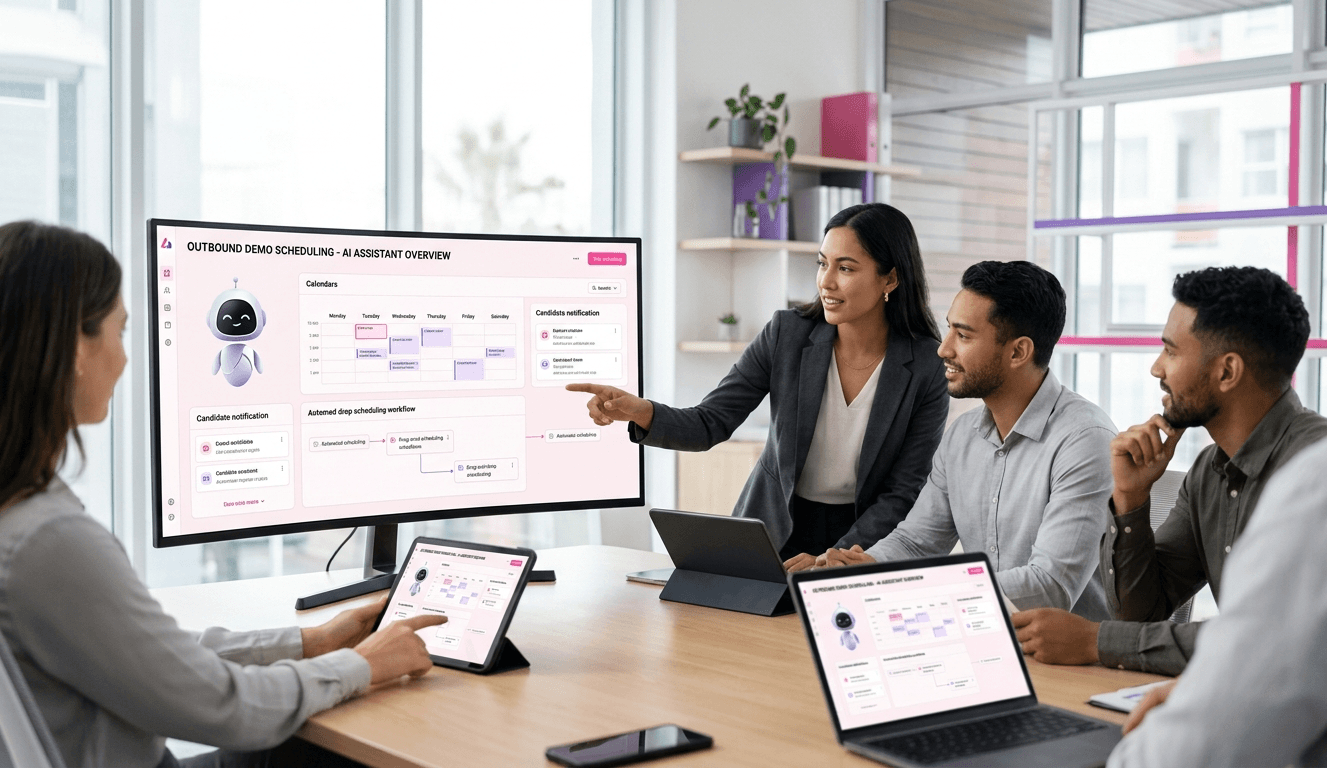
“AI-Powered virtual assistants are the future of sales: automate tasks, improve leads, boost productivity.”
The sales arena is fiercely competitive and constantly shifting. To survive and thrive, businesses must adopt cutting-edge solutions that enhance efficiency, precision, and scalability. This isn’t a pipe dream; it’s the tangible reality that AI-powered virtual sales assistants are rapidly bringing to fruition, completely reshaping sales operations.
Imagine your sales team laser-focused on closing deals, rather than being bogged down by endless administrative tasks. Picture a world where every lead is nurtured effectively, communication flows effortlessly, and customer interactions feel uniquely personal.
The Shift: From Cold Calls to Intelligent Conversations
For too long, sales teams have faced a fundamental dilemma: how to dedicate sufficient time to high-impact activities, such as forging strong relationships and finalizing sales, while simultaneously tackling the unavoidable administrative tasks. Studies by platforms like HubSpot reveal that the average salesperson spends only about 34% of their time on actual selling, with the rest consumed by manual data entry, follow-ups, and prospecting.
This is where AI virtual assistants step in as invaluable allies. These sophisticated software solutions harness the power of artificial intelligence to automate routine tasks, freeing up sales professionals to focus on their core strengths: connecting with potential clients and driving revenue growth.
SalesCloser AI provides intelligent AI agents specifically designed to automate up to 90% of these time-consuming administrative tasks, enabling human sales professionals to focus entirely on closing deals and enhancing overall sales performance.
The Technical Foundation: How AI Agents Work
Modern virtual assistants achieve their high level of performance by leveraging three key technologies:
- Large Language Models (LLMs) offer conversational intelligence, enabling them to understand complex queries and generate human-like responses.
- Natural Language Processing (NLP): Allows the AI to interpret sentiment, intent, and context from customer interactions.
- Machine Learning (ML): Continuously learns from successful sales patterns and pipeline data to refine lead scoring and predictive actions.
Unlocking the Potential of AI in Sales: Data-Backed Impact
The strategic adoption of AI-powered virtual assistants yields significant and measurable benefits. Businesses leveraging AI agents are seeing substantial performance leaps:
| Performance Metric | Expected AI-Driven Improvement | External Data Source |
| Sales Cycle Time | Up to 30% reduction | ZoomInfo/Industry Reports |
| Lead Conversion Rates | Average 25% increase | Industry Reports |
| Customer Interactions | 85% will be managed without a human by 2025 | Gartner |
Here are the specific ways AI virtual assistants are revolutionizing sales operations:
1. Automating the Routine, Empowering Human Connection
AI agents excel at performing repetitive actions swiftly, accurately, and tirelessly. By automating mundane tasks—like logging calls, meticulously updating CRM records, and generating standard reports—they empower your sales representatives to reclaim their most valuable asset: time. This allows human teams to focus on strategic endeavors that demand empathy, complex problem-solving, and genuine rapport.
2. Supercharging Lead Management: From Identification to Nurturing
AI agents are transforming effective lead management by introducing precision and speed:
- Intelligent Lead Scoring and Prioritization: AI analyzes dozens of data points instantly to score leads, ensuring sales reps only engage with high-intent prospects.
- Automated Lead Qualification: Agents handle initial communication, qualifying leads based on predefined criteria, and passing only warm, verified leads to a human.
- Personalized Lead Nurturing: AI tailors follow-up messaging and content recommendations across channels based on real-time behavior, driving engagement at scale.
3. Streamlining Communication for Unprecedented Efficiency
In the world of sales, effective communication is paramount. AI agents dramatically enhance communication efficiency through features like:
- Intelligent Meeting Scheduling: Agents autonomously find common availability and book meetings, eliminating manual back-and-forth.
- Automated Follow-Up and Reminders: Ensure no prospect falls through the cracks by sending timely, personalized follow-ups.
- Omnichannel Communication Management: Provide unified engagement across email, chat, SMS, and even voice.
Key Trends Shaping Sales by 2025/2026: The AI SDR
The most significant shift AI brings is the rise of the Virtual Sales Assistant—often referred to as the AI SDR (Artificial Intelligence Sales Development Representative).
AI is not replacing the human SDR, but rather augmenting and redefining the role. The AI SDR handles initial outreach and qualification at a massive scale, while the human SDR transitions to an “Account Strategist” focused on building complex relationships, negotiation, and closing.
In 2025, look for these specific trends:
- Adaptive Conversation Flows: Advanced AI agents will dynamically adjust conversation tone, language, and content in real-time based on prospect signals, mimicking human adaptability.
- Predictive Sales Forecasting: AI analyzes conversation sentiment, pipeline velocity, and historical data to provide highly accurate, data-driven revenue forecasts.
- Autonomous Support: AI is expanding beyond front-end qualification to handle more complex, mid-funnel support tasks, ensuring continuity between initial contact and closing.
Implementing AI: A Roadmap for Sales Leaders
Successfully integrating AI virtual assistants requires a strategic approach to technology adoption and change management.
1. The Right Integration
Choose tools designed for seamless integration with your existing CRM systems (e.g., Salesforce, HubSpot). The AI platform must be able to read and write data in real-time to provide a unified view of the customer journey and ensure data remains fresh and actionable.
2. Strategic Training Data
The effectiveness of an AI assistant is determined by its training. Sales leaders must:
- Use High-Quality Data: Train the AI on diverse, successful, and relevant interaction transcripts and sales playbooks.
- Monitor and Refine: Continuously evaluate the AI’s performance and refine its training based on real-world outcomes and human feedback, especially in complex interactions.
3. Change Management and Adoption
Clearly communicate the benefits of AI: it is an augmentation tool, not a replacement. Provide ongoing support and training to help team members understand how the AI handles the administrative load, allowing them to focus on the strategic, high-value work they prefer. Businesses that start small—by integrating AI for a single process, such as meeting booking—and gradually expand often experience the most successful long-term adoption.
Embrace the Intelligent Future of Sales
The evidence is irrefutable: AI virtual assistants are no longer a futuristic concept. They are a necessity for any business aspiring to compete and excel in today’s dynamic sales landscape. By intelligently automating routine tasks, supercharging critical lead management processes, and streamlining communication workflows, AI empowers your sales teams to concentrate on high-value activities, ultimately driving significant revenue growth and fostering stronger, more loyal customer relationships.
Businesses that proactively embrace this intelligent future will gain a substantial and sustainable competitive advantage, while those that hesitate risk being left behind in an increasingly intelligent marketplace.

SalesCloser AI: Your Intelligent Partner for Unparalleled Sales Success
SalesCloser AI is an AI-powered platform meticulously engineered to equip your sales team with intelligent virtual agents that seamlessly integrate into your existing workflows, driving tangible results and demonstrably improving sales performance.
To experience the transformative power of this technology first-hand, explore how our robust suite of AI agents can revolutionize your sales operations.
SalesCloser AI’s Key Features Designed to Improve Sales Performance:
- Intelligent Lead Qualification: AI agents filter leads with high accuracy.
- Personalized Engagement: Agents tailor communication for maximum impact.
- Automated Task Management: Freeing up human representatives for core selling activities.
- Intelligent Meeting Scheduling: Agents eliminate the administrative bottleneck of booking.
- Real-Time Sales Insights: AI provides actionable, data-driven intelligence.
- Seamless CRM Integration: Ensuring your data is always unified and current.
Don’t allow your talented sales team to be bogged down by time-consuming manual tasks. Embrace the transformative power of AI and discover how our intelligent AI agents can revolutionize your sales operations, propelling your business toward unprecedented growth and success.
FAQs About AI Virtual Assistants in Sales Operations
Q: What exactly is an AI virtual sales assistant?
A: An AI virtual sales assistant is a software solution that uses artificial intelligence to automate various sales-related tasks. These tasks include lead qualification, appointment scheduling, follow-up communication, data entry, and real-time sales coaching. The goal is to free up human sales representatives to focus on more strategic and relationship-building activities.
Q: How can AI virtual assistants improve my sales team’s productivity?
A: AI virtual assistants improve productivity by automating repetitive and time-consuming tasks. This enables sales representatives to devote more time to direct selling activities, such as engaging with prospects, building relationships, and closing deals. By handling administrative burdens, AI empowers your team to focus on revenue-generating activities.
Q: Is implementing an AI virtual assistant complex?
A: Implementation complexity can vary depending on the specific AI solution and your existing infrastructure. However, many modern platforms are designed for seamless integration with popular CRM systems and offer user-friendly interfaces. Providers often provide support to ensure a smooth and efficient onboarding process.
Q: Will AI virtual assistants replace human sales representatives?
A: No, the goal of AI virtual assistants is not to replace human sales representatives but to augment their capabilities. AI handles routine tasks and provides valuable insights, allowing human representatives to focus on activities that require empathy, complex problem-solving, and relationship-building – aspects where human interaction remains crucial. It’s about creating a powerful synergy between AI and human intelligence.
Q: What kind of businesses can benefit from AI virtual assistants?
A: Businesses of all sizes and industries can benefit from AI virtual assistants. Any organization with a sales team that spends time on repetitive administrative tasks, lead management, or customer communication can see significant improvements in efficiency and effectiveness by leveraging AI.
Q: How do AI virtual assistants handle the security of sensitive sales data?
A: Reputable AI virtual assistant providers prioritize data security. They employ robust security measures, including encryption and access controls, to protect sensitive sales data. Their platforms typically adhere to industry best practices to ensure the confidentiality and integrity of your information.
Q: Can AI virtual assistants integrate with my existing CRM system?
A: Yes, most modern AI virtual assistant platforms are designed to integrate seamlessly with popular CRM systems such as Salesforce, HubSpot, and others. This ensures a smooth data flow between the AI platform and your existing sales tools, providing a unified view of your customer interactions and sales pipeline.
Q: What kind of support is typically offered by AI virtual assistant providers?
A: Providers usually offer comprehensive support, including onboarding assistance, training resources, and ongoing technical support. Their support teams are typically available to answer questions and help users maximize the value of their AI-powered platform.
Q: What kind of results can I expect from AI virtual assistants?
A: The expected results will depend on your specific business needs and how you utilize the AI virtual assistant. However, many businesses experience improvements in lead conversion rates, sales team efficiency, customer engagement, and overall sales performance. Analytics and reporting tools are often provided to help track progress and measure the AI solution’s ROI.
Q: How do I choose the AI virtual assistant for my sales team?
A: When choosing an AI virtual assistant, consider your specific business needs, the size of your sales team, your budget, and the features different platforms offer. Look for solutions that integrate well with your existing tools, are user-friendly, and have a proven track record of delivering results. Requesting demos and exploring trial periods can often be beneficial in finding the best fit for your organization.