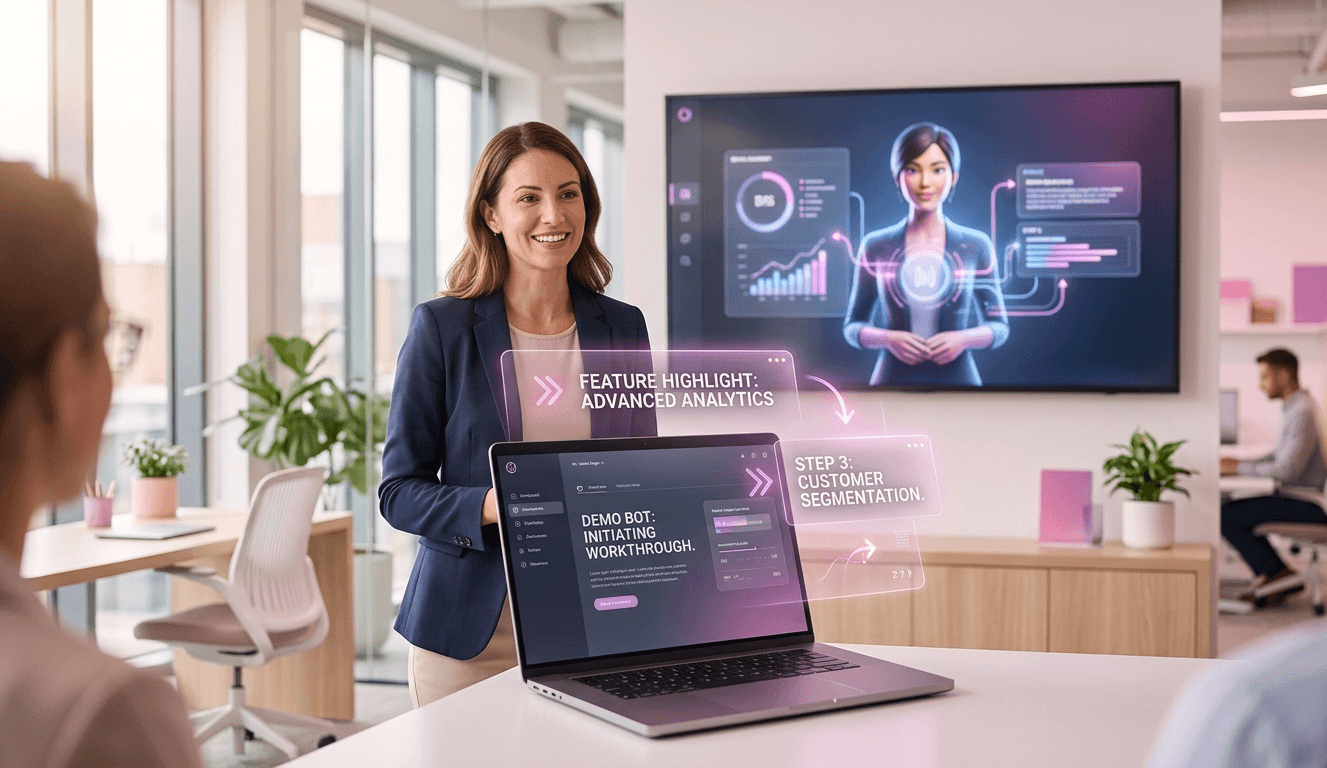
“Scale your business with AI-powered alternatives to live agents. Discover how SalesCloser.ai handles support and sales 24/7 at lower costs.”
Customer service and sales teams hit a breaking point when call volume outpaces headcount. Relying entirely on human representatives leads to a predictable cycle: hold times skyrocket, lead response times drop, and agent burnout triggers massive turnover. Finding a reliable AI-powered alternative to live agents permanently solves this bottleneck.
You no longer have to choose between massive payroll expansion and poor customer experience. Modern businesses deploy voice AI to intercept routine inquiries, qualify inbound leads, and handle Tier-1 support entirely on autopilot.
This guide breaks down exactly how to transition away from pure human reliance. We will explore the framework for a blended support model, identify which tasks are best suited to AI, and show you how platforms like SalesCloser.ai help you scale both your sales and support operations without adding overhead.
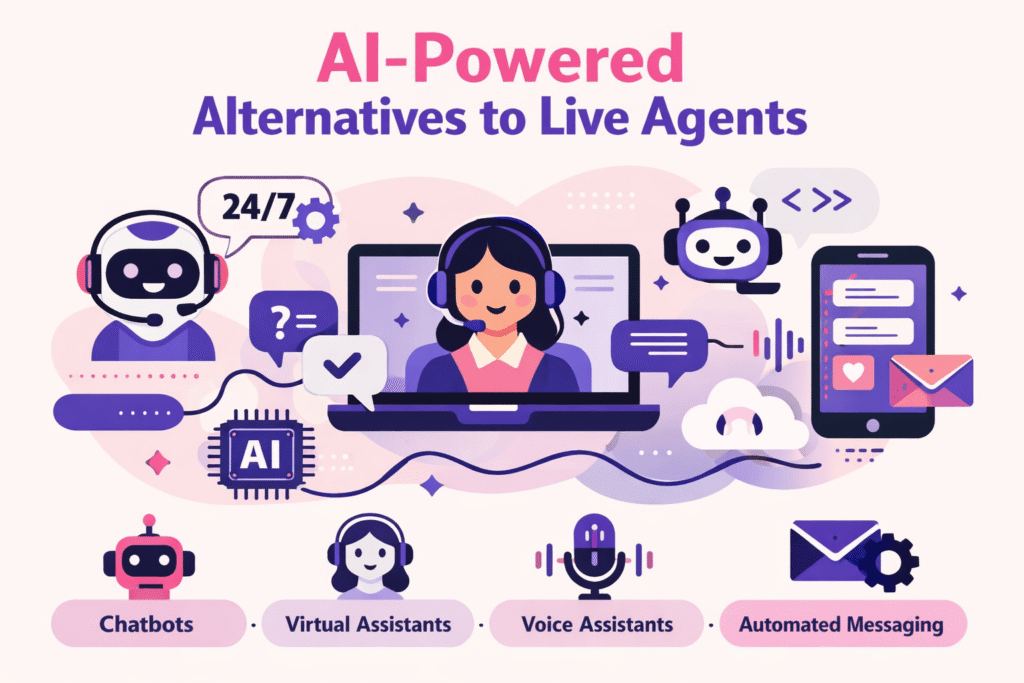
The Breaking Point of Traditional Call Centers
Human-only contact centers carry severe structural flaws. You pay for idle time during slow hours, and you panic during unexpected volume spikes. This rigidity destroys profit margins. Furthermore, humans get tired, frustrated, and distracted, which leads to wildly inconsistent service quality.
Data confirms this struggle. According to standard reports from organizations like Gartner, typical call center turnover ranges from 30% to 45% annually. Every time an agent leaves, you lose the thousands of dollars you invested in their onboarding. You then spend weeks recruiting and training a replacement, during which your remaining staff absorbs the extra call volume. This triggers more burnout.
Dependence on live reps also limits your revenue potential. Harvard Business Review research famously shows that waiting longer than five minutes to respond to a new lead drops your odds of qualifying that lead by 400%. Human teams simply cannot guarantee a five-minute response time 24/7. Sick days, shift changes, and bathroom breaks guarantee missed opportunities.
Businesses require a more resilient system. They need a layer of automation that operates flawlessly regardless of call volume, time of day, or staffing shortages.
What is an AI-Powered Alternative to Live Agents?
An AI-powered alternative to live agents is a software system that uses conversational AI and natural language processing to handle incoming and outgoing calls autonomously. Unlike traditional IVR phone menus, these systems support dynamic, two-way conversations, answer complex questions, and execute tasks such as booking appointments or updating CRM records without human intervention.
This technology moves beyond simple chatbots. Modern voice AI solutions understand intent, tone, and context. They do not force callers into frustrating “press 1 for support” menus. Instead, they ask open-ended questions, listen to the caller’s response, and reply with human-like accuracy.
These intelligent systems excel at specific functional areas:
- Inbound triage: Answering every call instantly and routing complex issues.
- Tier-1 resolution: Handling password resets, order status checks, and basic FAQs.
- Outbound dialing: Calling fresh leads immediately upon form submission.
- Data entry: Logging conversation summaries and outcomes directly into your CRM.
By handling these operations, the AI acts as a massive shield for your human workers. It filters out the noise so your experts only deal with high-value interactions.
The Blended Model: Merging Human Empathy with AI Scale
You do not need to fire your entire staff to benefit from AI. The most successful organizations implement a blended model. This strategy intentionally divides labor based on complexity and emotional requirements.
You assign high-volume, repetitive tasks to your intelligent virtual assistant. You assign complex, high-stakes, emotionally sensitive tasks to your human agents. This division of labor maximizes efficiency while protecting the customer experience.
Consider a typical software company’s support queue. Fifty percent of their daily calls involve password resets, billing cycle inquiries, and basic feature explanations. If humans handle these calls, they waste hours reading from scripts. If an automated call center handles them, the issue resolves in seconds.
However, if a major enterprise client calls to negotiate a contract renewal or express frustration about a critical bug, an AI cannot offer the necessary empathy and strategic thinking. You need a human expert on the line.
The blended model puts AI at the forefront. The voice bot answers every single call on the first ring. It resolves the 50% of easy questions immediately. When it encounters the angry enterprise client, it instantly transfers the call—along with a full transcript of the problem—to a live agent.
This workflow dramatically improves the day of the human agent. They log in and only take calls that require their unique problem-solving skills. Job satisfaction rises, turnover drops, and customer satisfaction metrics improve because nobody waits on hold.
Scaling Customer Support with Voice AI Solutions
Customer expectations have never been higher. Consumers expect immediate answers regardless of the time or day. Meeting these expectations with a human team requires massive budget allocations for night shifts, weekend staff, and overflow routing.
AI for customer service eliminates these constraints. A voicebot scales instantly. If your call volume spikes by 300% during a product launch, you do not need to hire temp workers. The AI simply spins up more concurrent lines.
To effectively implement AI in customer support, you must identify your highest-frequency contact drivers. Pull your call logs from the past six months and categorize the reasons people call you.
You will likely find a Pareto distribution: 80% of your calls stem from 20% of your total issue types. These high-frequency issues form the foundation of your AI’s training data.
For ecommerce brands, these issues include:
- “Where is my order?”
- “What is your return policy?”
- “I need to change my shipping address.”
For B2B SaaS companies, the list looks different:
- “I need to add a new user to my account.”
- “Where do I find my API key?”
- “My integration failed.”
You train the AI to access your backend systems via API. When a customer asks about order status, the AI asks for the order number, pings your shipping database, and reads the tracking update aloud. It executes the task from start to finish. This completely removes the ticket from your human queue.
Driving Pipeline: Sales Automation AI in Action
Support is only half of the equation. Sales teams face equally severe bottlenecks when scaling. Business development representatives (BDRs) spend a massive portion of their week dialing numbers that go to voicemail, chasing unqualified leads, and organizing calendar invites.
Sales automation AI transforms outbound sales. Instead of paying humans to make 100 dials a day to find three qualified prospects, you let the AI dial 1,000 numbers an hour.
A conversational AI platform acts as your frontline sales development team. When a prospect downloads a whitepaper on your website, the AI calls them within thirty seconds.
The AI follows your specific qualification framework (like BANT or MEDDIC). It asks the prospect about their budget, timeline, and current pain points. If the prospect is not ready to buy, the AI logs the data and ends the call politely. If the prospect is qualified, the AI immediately checks your Account Executive’s calendar and books a discovery demo.
This workflow guarantees that your highly paid Account Executives spend zero time prospecting. They simply open their calendar and see a day full of highly qualified meetings.
Furthermore, AI agents never suffer from call reluctance. They never sound tired on the phone. They execute the same enthusiastic, perfectly timed pitch on the first call of the day as they do on the five-hundredth call. This consistency drives predictable pipeline generation.
Comparing the Costs: Live Agents vs. Conversational Voicebots
Business leaders demand hard numbers when evaluating operational shifts. The financial difference between human staff and conversational voicebots is striking.
Let’s look at a standard cost comparison.
| Cost Factor | Live Human Agent | Voice AI Agent |
| Annual Salary | $45,000 – $65,000 | $0 (Subscription-based) |
| Benefits & Taxes | 20-30% of salary | $0 |
| Onboarding Time | 3 – 6 weeks | 1 – 3 days |
| Availability | 40 hours/week | 24/7/365 |
| Concurrent Calls | 1 per agent | Unlimited |
| Cost Per Call | $4.00 – $8.00 | $0.10 – $0.50 |
The table above illustrates why companies move toward automation. A human agent costs roughly $60,000 fully loaded. If you need 24/7 coverage, you must hire at least four agents to cover all shifts, bringing your baseline cost to $240,000 annually.
You can deploy an enterprise-grade AI solution for a fraction of that cost. The AI handles the volume of ten human agents simultaneously without requiring health insurance, desk space, or PTO.
More importantly, the AI lowers your Customer Acquisition Cost (CAC). Because the AI calls leads instantly and follows up relentlessly without added labor costs, your conversion rates increase. You generate more revenue from the same marketing spend.
Step-by-Step Guide to Reducing Agent Dependency
Transitioning to an automated framework requires discipline. You cannot simply turn on a software tool and expect your call center to fix itself. You must systematically migrate processes. Follow these steps to safely reduce agent dependency.
1. Audit Your Current Call Flows
Do not guess why people call you. Use conversation intelligence tools to transcribe and analyze your existing human calls. Identify the top five reasons customers contact your business. Document the exact steps a human agent takes to resolve these specific issues.
2. Build Your Knowledge Base
AI needs facts to operate correctly. Create a comprehensive knowledge base containing the answers to those top five issues. Write clear, concise answers. If your human agents use a script, adapt that script for the AI.
3. Map the Escalation Protocols
Determine exactly when the AI should hand a call over to a human. Create strict rules. For example, if a customer uses profanity, route to a human. If a customer says, Cancell my account,” route to a retention specialist. Defining these rules protects your brand reputation.
4. Start with a Pilot Program
Do not route 100% of your traffic to the AI on day one. Select a specific segment for a pilot test. You might route all calls that occur after 8:00 PM to the AI. Monitor these interactions closely. Read the transcripts. Listen to the audio recordings.
5. Optimize and Expand
You will notice areas where the AI struggles during the pilot. A specific technical term confuses it. Adjust your knowledge base to clarify these terms. Once the AI hits a 90% successful resolution rate on the pilot traffic, begin expanding its hours and routing more complex issue types to it.
Overcoming Common Objections to AI for Customer Service
When you propose replacing live agents with software, you will face internal pushback. Stakeholders worry about alienating customers. You must address these objections with facts and clear operational plans.
Objection 1: “Customers hate talking to robots.”
Historically, this was true. Customers hated rigid IVR systems that forced them to press numbers on a keypad. They hated text chatbots that looped the same “I don’t understand” error message. Modern voice AI is entirely different. It uses conversational AI to simulate real human speech. It pauses, uses filler words naturally, and understands interruptions. Most customers prefer speaking to a highly capable AI that solves their problem in two minutes over waiting on hold for twenty minutes to speak to a human.
Objection 2: “Our product is too complex for AI.”
Your entire product might be complex, but the initial triage is not. Even highly technical engineering firms receive basic administrative questions. Let the AI handle scheduling, account verification, and basic data collection. Once the AI gathers all the necessary system logs and error codes from the customer, it hands that data package to your human engineer. The AI saves the engineer twenty minutes of administrative data gathering per call.
Objection 3: “We will lose our personal touch.”
You actually improve your personal touch by deploying AI. When human agents are rushed, stressed, and trying to meet “Average Handle Time” metrics, they act transactionally and coldly. By removing the repetitive volume, you give your human agents the gift of time. When a customer with a truly sensitive issue reaches a human, that agent can spend forty-five minutes actively listening and solving the problem without worrying about a backup in the queue.
Best Practices for Designing Conversational Voicebots
Building a successful voicebot requires specific design choices. You must optimize the conversation for spoken language, which differs significantly from written text.
First, keep the AI’s responses brief. In written articles, long paragraphs work well. In spoken conversation, long monologues frustrate callers. Program your AI to deliver information in short, two-to-three sentence bursts. Follow up complex answers by asking, “Does that make sense?” or “Would you like me to repeat that?” to ensure comprehension.
Second, design for interruptions. Humans rarely wait for someone to finish a perfectly structured sentence before interjecting. A robust virtual customer agent must support “barge-in” capabilities. If the AI starts explaining a pricing tier and the customer interrupts to say, “I already know the pricing, I just want to buy,” the AI must stop speaking instantly and pivot to the purchasing workflow.
Third, standardize your data capture. When the AI speaks to a prospect, it must extract specific variables and map them to your CRM fields. Program the AI to listen for budget numbers, timelines, and competitor names. Ensure the API connection formats this data correctly before pushing it to Salesforce or HubSpot. Clean data prevents your human reps from having to do manual cleanup later.
Why SalesCloser.ai is the Ultimate Conversational AI Platform
Finding the right tool dictates your success. Many software providers offer basic support chatbots, and others offer simple outbound dialers. Very few unify both functions effectively.
SalesCloser.ai stands apart as the premier AI-powered alternative to live agents because it natively handles both revenue generation and customer retention workflows within a single platform. It eliminates the need to buy separate tools for your sales and support departments.
For your sales team, SalesCloser AI acts as an autonomous Business Development Representative. It ingests your leads, dials them instantly, and executes complex discovery calls. It handles objections effortlessly. If a prospect says, “Send me an email,” SalesCloser AI responds dynamically: “I can definitely send you some information, but just so I send the right materials, are you currently struggling more with lead volume or lead quality?” It actively qualifies the prospect and books the demo directly onto your Account Executive’s calendar.
For your support team, SalesCloser AI functions as an infinitely scalable Tier-1 helpdesk. You connect it to your internal knowledge base, and it begins resolving customer issues immediately. It authenticates users, processes basic account changes, and routes high-priority escalations to your human experts with full conversational context.
Unlike generic AI wrappers, SalesCloser AI is built specifically for voice interactions. It features ultra-low latency, meaning conversations feel entirely natural. There are no awkward pauses while the system “thinks.” It speaks multiple languages natively and integrates seamlessly with your existing tech stack.
By deploying SalesCloser AI, businesses rapidly scale their operations. They handle thousands of simultaneous conversations, capture every single inbound lead while interest is highest, and reduce their reliance on expensive, inconsistent human labor for routine tasks.
Security and Compliance in Automated Call Centers
When you hand over customer interactions to an AI, security becomes paramount. You must ensure that your AI-powered alternative to live agents adheres to industry standards and protects sensitive data.
Voice AI platforms interact with personally identifiable information (PII). Customers will read their phone numbers, email addresses, and sometimes payment details aloud. Your system must handle this data securely.
Top-tier solutions automatically redact sensitive information from call transcripts. If a customer provides a credit card number, the AI uses it to process the transaction via a secure payment gateway, but scrubs the numbers from the saved text log. This prevents unauthorized access to financial data.
Furthermore, ensure your chosen vendor complies with industry standards such as SOC 2 and GDPR. The AI must explicitly state that the call is being recorded (if required by your local jurisdiction) and provide users with the option to opt out of data collection. Maintaining strict compliance builds trust with your customers and protects your business from liability.
Measuring the ROI of Your AI Integration
You must track specific metrics to prove the value of your AI investment. Do not simply look at total call volume. You need granular data to understand how the AI impacts your bottom line.
Track your Resolution Rate. This metric shows the percentage of calls the AI handles from start to finish without any human intervention. A strong voicebot should resolve 40% to 60% of all incoming support queries within the first three months.
Track your Cost Per Lead Qualified. Calculate how much money you spend on human BDR salaries to generate one qualified meeting. Then, compare that to the software cost of having the AI generate a meeting. You will typically see a massive reduction in this metric.
Finally, measure Average Wait Time. This is the most direct indicator of customer satisfaction. As the AI absorbs the high-volume repetitive calls, your average wait time for human support should drop to near zero. Customers reach human experts instantly when they have complex problems.
By rigorously tracking these numbers, you build a compelling business case for further automation. You transform your contact center from a massive cost center into an efficient, streamlined operation.
Conclusion
Scaling a business on the backs of human agents is no longer financially viable. The costs of hiring, training, and retaining live reps for repetitive tasks destroy profit margins and limit growth.
Implementing an AI-powered alternative to live agents allows you to break free from these limitations. By adopting a blended model, you offload routine support tickets and repetitive sales prospecting to intelligent systems, freeing your human talent to close complex deals and manage vital customer relationships. Platforms like SalesCloser.ai provide the exact framework needed to handle support queries and drive revenue simultaneously.
Ready to see how autonomous agents can transform your call center? Book a demo with SalesCloser.ai today and start building your intelligent virtual workforce.