
AI for customer retention covers two jobs: spotting customers who may leave, and talking to them before they do. SalesCloser does the second. An AI voice agent calls the customers you choose for check-in, renewal and win-back conversations, answers questions from your knowledge base, books callbacks, and transfers at-risk customers to an account manager.
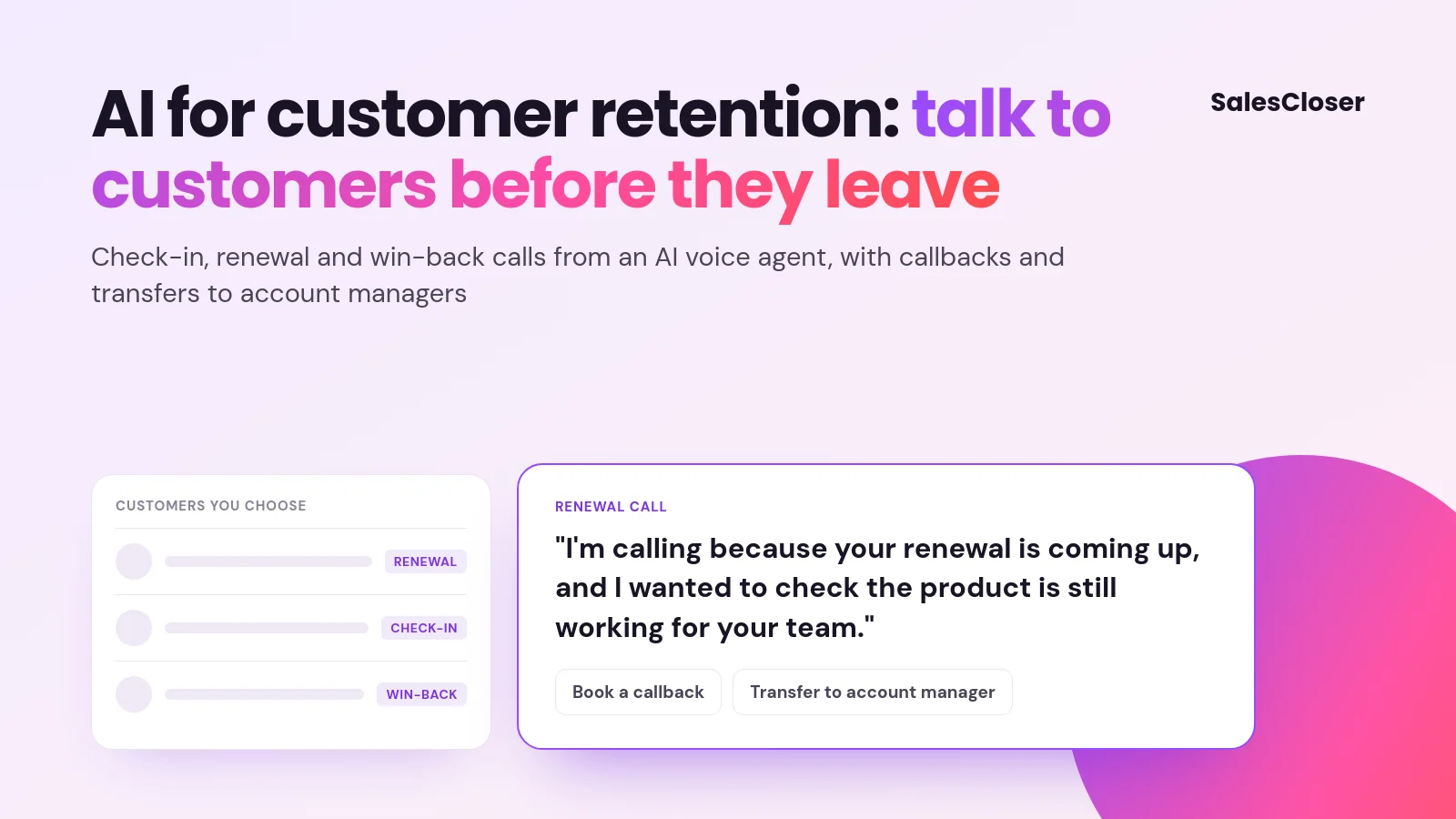
Most customers who cancel do not leave all at once. Usage drops, a ticket stays open too long, the renewal date gets closer, and nobody from your side has spoken to them in months. By the time the cancellation email arrives, the decision is made.
AI helps at two points: noticing the drift, and starting the conversation about it. Churn models and customer success tools do the first. An AI voice agent such as SalesCloser does the second: it calls the customers you choose, listens, answers from your knowledge base and gets at-risk customers to a person. Most teams already have the signals. What they lack is time to make the calls.
Warning signs and what the agent can do about each
| Signal (from your own data) | Call to run | What the agent aims for |
|---|---|---|
| Usage dropping: fewer logins or active seats | Check-in call | Find out what changed, answer how-to questions, flag problems to your team |
| Support friction: repeat tickets on one issue | Follow-up after the fix | Confirm the fix worked and hand anything unresolved to support |
| Renewal next quarter | Renewal call | Confirm plans and book a renewal conversation with the account manager |
| Downgrade or cancellation request | Save call | Hear the reason and transfer to someone who can solve it |
| Former customer who left on good terms | Win-back call | Ask what changed and book a meeting if there is interest |
Each row works as its own outbound calling campaign with its own list and instructions, so the reason for the call is true for everyone on it. SalesCloser does not score accounts or predict churn; you build the list from your CRM, billing or customer success tool.

A save call, start to finish
Example: a bookkeeping software company. An account downgraded from ten seats to four last week. The agent calls the office manager:
Agent: I saw your team moved to a smaller plan, and I wanted to check whether something is not working for you.
Customer: Honestly, the bank sync keeps breaking and my staff gave up on it.
Agent: I’m sorry, that is frustrating. Here’s what usually fixes it… Would you like me to connect you with your account manager now so she can look at your setup?
Customer: Yes, please.
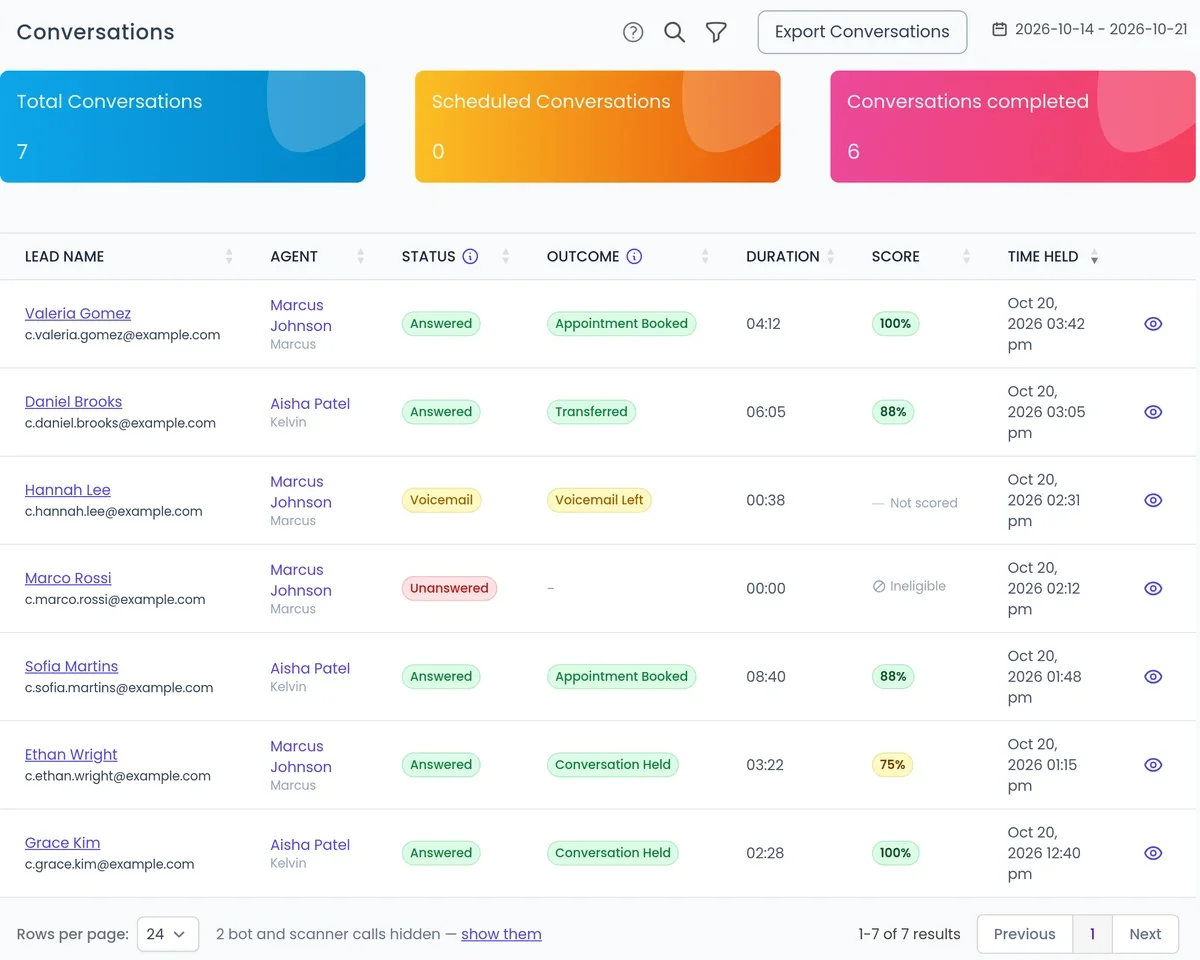
Once the customer agrees, the agent transfers the call to her direct number from the customer list, with a fallback number if she does not answer. She gets an email with the customer’s details, a call summary and next steps, and the call, summary and outcome are written back to the customer record in HubSpot, Pipedrive, GoHighLevel, Zoho, Zendesk or Intercom.

A renewal check-in that goes the other way
Example: a marketing agency with monthly retainers. Clients whose contract renews next quarter get a check-in call. One client says things are fine but they are busy until February. The agent books a callback for the week they choose and calls back then. Another mentions they are adding a second location, and the agent books a meeting with the account manager, which is a renewal conversation that may become an upgrade. For that side of the conversation, see AI upselling and cross-selling.
What makes a retention call work
- A true reason. “I saw your team moved to a smaller plan” works. “Just checking in” with no reason sounds like a sales call. Because each campaign targets one segment, one honest opening fits everyone on the list.
- Listen before you fix. Tell the agent to ask an open question and let the customer explain. The reason they give is the most valuable thing the call produces, and it lands in the call summary for your team.
- Promise nothing it cannot deliver. Credits, refunds and contract changes belong with a person. The agent acknowledges the problem and gets the customer to someone who can act.
- Plan for not now. Busy customers are not lost customers. A callback at a time they choose keeps the conversation alive without pushing.
Retention campaign checklist
- Pick one segment and one reason, such as renewals next quarter or accounts whose usage dropped last month.
- Export the list with the details the call needs and each account manager’s direct number.
- Give the agent the facts: help articles, common fixes, renewal steps and plan details.
- Write the instructions: the opening, two or three open questions, what to do when a customer is unhappy, and when to book or transfer.
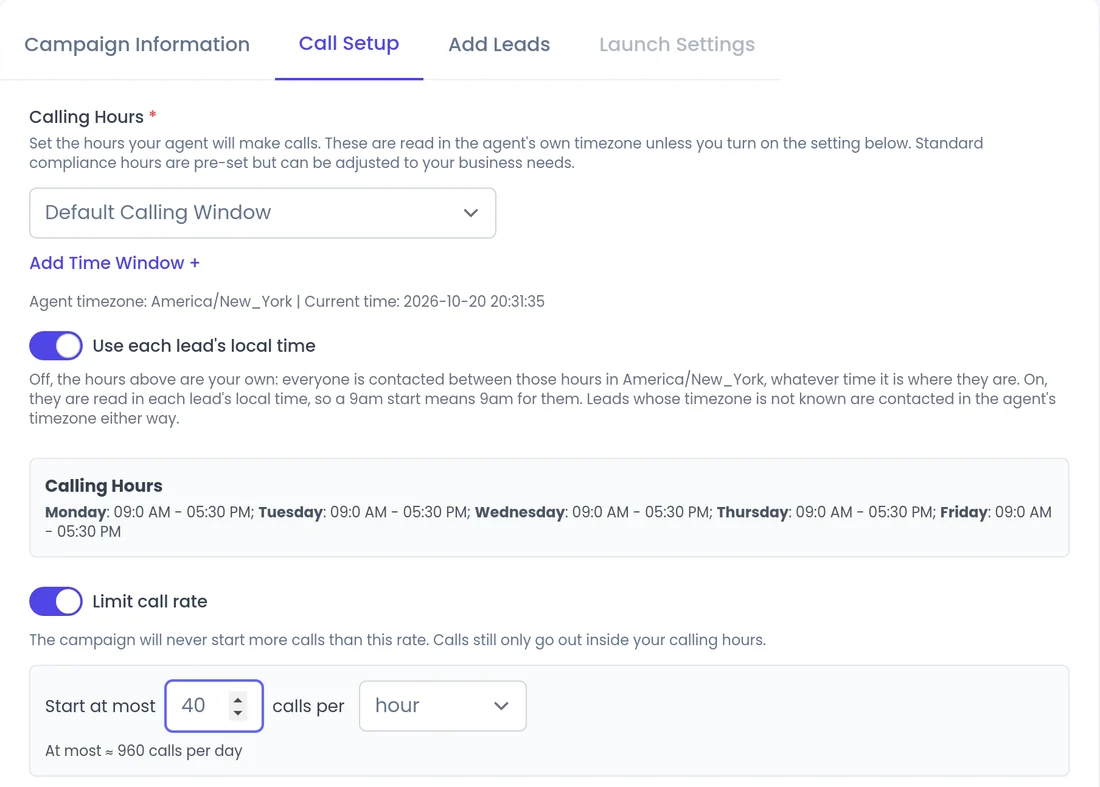
- Set calling hours and retries in calling controls. With Call Retry on, the campaign tries unanswered customers up to five more times.
- Start with a small group, read the transcripts, then widen the list.
What to check before you launch
- Unhappy customers need a person who can act, so make sure the transfer number is staffed while the campaign runs; if a customer’s number field is empty, the transfer is skipped.
- Existing customers have not necessarily agreed to every kind of call, so consent and calling rules where you operate stay your responsibility.
Conversations are recorded and transcribed so your team can review them, and reading ten a week usually tells you more about why customers leave than any dashboard. To hear a retention call built on your own customers, book a demo and bring the segment that worries you most.
Frequently asked questions
Can AI predict customer churn?
Analytics and customer success platforms can flag accounts that look like customers who left, using usage, billing and support data. SalesCloser does not predict churn. It makes the conversations with the customers you choose.
How can AI help prevent customer churn?
By making sure the calls happen. An AI agent can run check-in, renewal, save and win-back calls through your list, answer questions from your knowledge base, book callbacks and transfer at-risk customers to the person who can help.
Does AI retention require a data science team?
No. Start with signals you already have, such as renewal dates, downgrades or falling logins, and build one campaign per segment. The agent needs a clean list, your instructions and your help content.
Will customers mind a call from an AI agent?
Relevant calls tend to land well. Give a true reason for calling, listen before pitching anything, and offer a person whenever the customer wants one. You decide how the agent introduces itself.
Can the agent transfer an unhappy customer to their account manager?
Yes. If your list holds each account manager’s direct number, the agent transfers the call to that person once the customer agrees, with fallback numbers. Labelled transfer entries let it choose between teams such as account management and support.