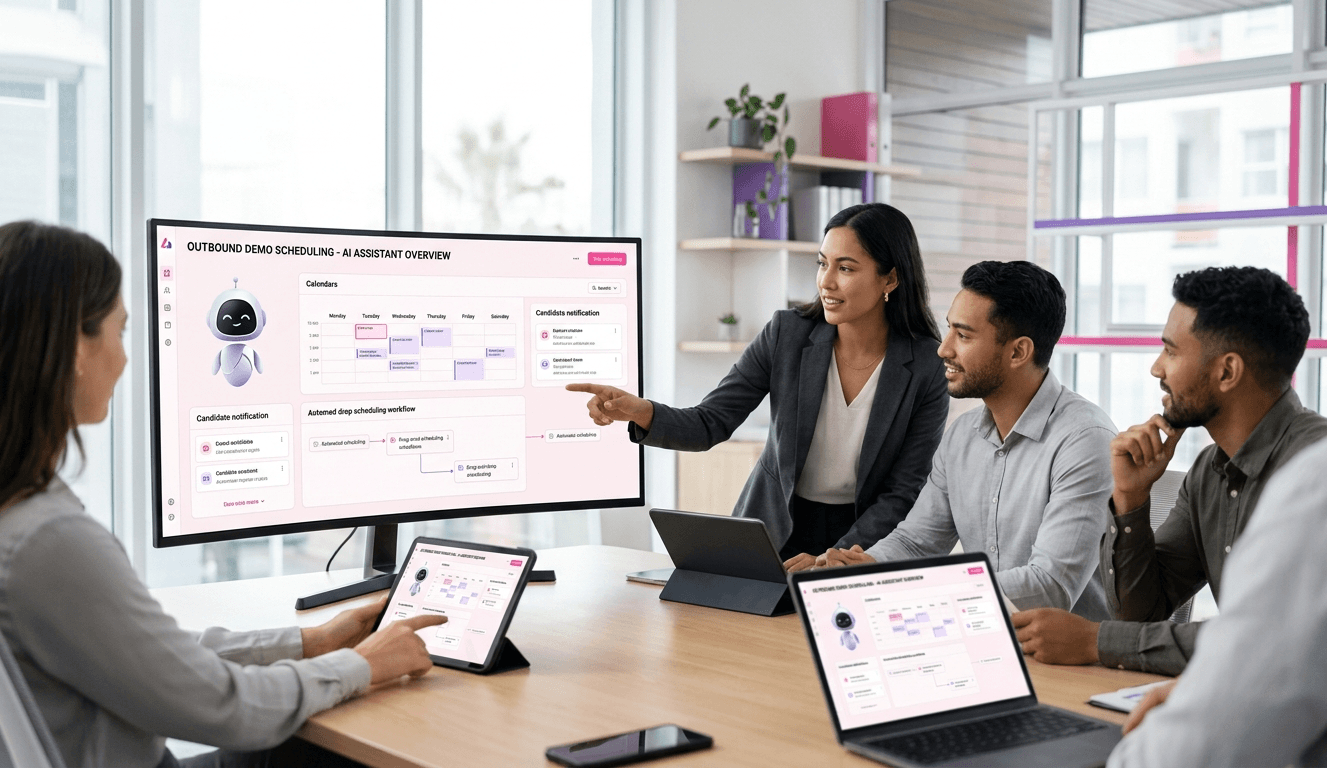
“Boost your conversion rates with sales analytics using AI voice calls. Turn every conversation into actionable data to refine scripts.”
Sales representatives spend just 28% of their week actually selling. The remaining 72% vanishes into administrative tasks, manual data entry, and internal meetings. This dynamic creates a massive blind spot for sales leaders. You cannot fix a sales process that you cannot accurately measure.
Relying on rep-entered CRM notes leads to incomplete data and missed opportunities. Managers end up coaching based on subjective memories rather than objective facts. This guide changes that dynamic completely.
We will explore how sales analytics using AI voice calls replaces manual guesswork with hard data. You will learn how to extract actionable insights directly from customer conversations. By the end of this post, you will understand how to use automated analysis to refine your scripts, handle objections better, and dramatically improve your team’s conversion rates.
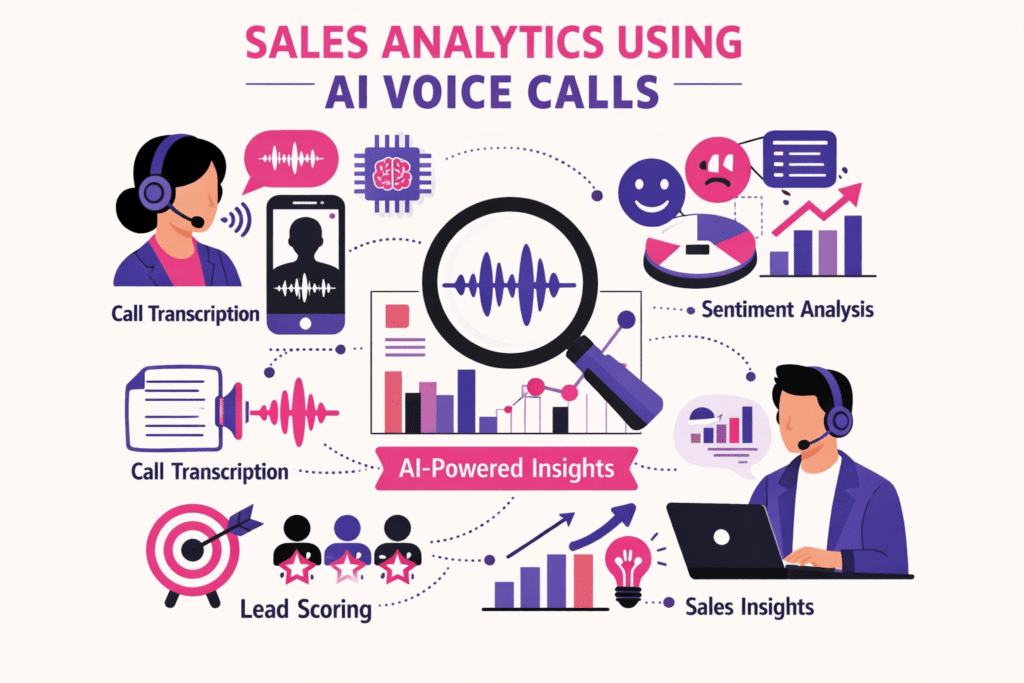
What is Sales Analytics Using AI Voice Calls?
Sales analytics using AI voice calls is the process of using artificial intelligence to transcribe, analyze, and extract insights from spoken sales conversations. It helps teams identify successful tactics, track competitor mentions, and improve conversion rates without manual data entry.
In the past, managers had to sit in on live calls or listen to hours of recordings to gather insights. This approach simply does not scale. Consequently, leaders only reviewed a tiny fraction of total calls. They missed critical trends and failed to identify the root causes of lost deals.
Today, AI changes the equation. It processes every single second of audio data. The software automatically tags keywords, tracks speaker talk time, and scores the interaction. Furthermore, it turns unstructured audio files into searchable, actionable datasets.
The High Cost of Manual Sales Conversation Data
Sales leaders need accurate information to make good decisions. However, manual data entry rarely provides it. Reps hate logging calls. They often rush through CRM updates at the end of the week. Therefore, the resulting data lacks detail and context.
The Problem with Subjective CRM Notes
Human memory is inherently flawed. A rep might remember a call going well, even if the prospect raised several serious concerns. When reps write their own notes, they naturally filter the information. They highlight the positives and minimize the negatives.
This subjective filtering destroys data integrity. Managers review the pipeline and see a highly qualified deal. Suddenly, the prospect ghosts the rep. The manager has no idea why, because the CRM notes did not capture the prospect’s hesitation regarding the implementation timeline.
Missed Coaching Opportunities
Effective coaching requires specific, timely feedback. Manual processes make this nearly impossible. If a manager only listens to one call per rep per month, they miss the broader pattern. They might penalize a rep for a single bad call while ignoring consistent mistakes made across dozens of other conversations.
Furthermore, manual review consumes hours of valuable management time. A VP of Sales should focus on strategy, not taking notes on a 45-minute discovery call.
Core Features of a Conversational Intelligence Platform
A true conversational intelligence platform does much more than simply record calls. It acts as an always-on analyst for your entire sales floor. These platforms ingest audio, process the language, and deliver dashboards full of actionable metrics.
Automated Call Transcription
The foundation of voice call analytics is accurate transcription. AI models now transcribe speech to text with near-perfect accuracy. They recognize industry jargon, complex product names, and distinct accents.
More importantly, AI separates the transcript by speaker. You instantly see exactly what the prospect said versus what your rep said. This allows you to search thousands of calls for specific phrases in seconds. If you want to know how often prospects mention pricing, you simply search the transcript database.
Call Performance Analytics
Beyond transcription, AI analyzes the structure of the conversation. Call performance analytics measure the mechanics of the pitch. The software tracks metrics such as the talk-to-listen ratio, the longest monologue, and patience (the pause before a rep responds).
Top-performing sales professionals listen more than they speak. They ask open-ended questions and let the prospect elaborate. AI highlights these patterns instantly. If a rep has a 70% talk ratio, the manager knows immediately that the rep is pitching too hard and listening too little.
Extracting AI Sales Insights for Higher Conversions
Data alone does not close deals. You must translate that data into AI sales insights. By analyzing aggregate call data, you uncover the specific behaviors that lead to closed-won deals. You can then replicate these behaviors across your entire team.
Objection Handling Analysis
Every sales team faces objections. However, very few teams systematically track them. AI excels at objection handling analysis. The software categorizes every objection raised across all calls.
You quickly see if prospects push back mostly on price, features, or implementation time. Furthermore, the AI tracks how reps respond to these objections. You can filter the data to see exactly how your top performer handles the “we have no budget” objection. You then take their exact phrasing and share it with the rest of the team.
Identifying Top-Performing Scripts
Sales scripts often rely on gut feeling. Leaders write a script, hand it to the team, and hope it works. Voice analytics removes this guesswork. You can AB test different intros, value propositions, and closing techniques.
The AI tracks which phrases correlate with booked next steps. You might discover that asking a specific qualification question early in the call increases the win rate by 20%. This insight allows you to continuously improve sales scripts based on empirical evidence, not assumptions.
Tracking Competitor Mentions
Your prospects talk to your competitors. You need to know exactly what they say. AI automatically flags every competitor mention during a call.
You can track which competitors appear most often in late-stage deals. More importantly, you hear exactly how prospects compare your product to theirs. This provides invaluable intelligence for your product and marketing teams. They can adjust positioning and build targeted battle cards based on real customer feedback.
Transforming Teams with Automated Sales Coaching
Coaching is the highest-leverage activity a sales manager can perform. Yet, it frequently falls by the wayside. Automated sales coaching solves the scale problem. It provides continuous, objective feedback to every rep.
Moving from Subjective to Objective Feedback
When a manager says, “You sounded defensive,” the rep might disagree. When a manager says, “Your talk ratio was 75%, and you interrupted the prospect four times,” the rep cannot argue. Data removes emotion from the coaching conversation.
AI platforms generate automated scorecards for every call. They grade the rep on specific criteria, such as setting an agenda, asking discovery questions, and securing next steps. Reps receive immediate feedback after hanging up the phone. They do not have to wait for their weekly one-on-one to know how they performed.
Scaling Coaching Efforts
A manager can only be in one place at a time. AI is everywhere. It reviews 100% of calls and highlights the most important moments. Managers no longer waste time hunting for coachable moments. The software delivers a curated list of calls that require attention.
For example, the AI might flag a call where a rep failed to secure a next step despite strong buying signals. The manager clicks directly to that moment in the transcript, leaves a comment, and guides the rep on how to handle it better next time.
Building a Data-Driven Sales Strategy
Voice call data impacts the entire organization, not just individual reps. When you aggregate thousands of conversations, you build a truly data-driven sales strategy. You shift from reactive management to proactive leadership.
AI Sales Reporting
Traditional reporting focuses on lagging indicators. Metrics like revenue closed and deals lost tell you what happened, but not why. AI sales reporting provides leading indicators.
You can track the adoption rate of a new messaging rollout. If marketing launches a new campaign, you can instantly see if reps use the new talking points. You measure the market’s reaction in real-time. If prospects consistently reject a new value proposition, you pivot immediately. You do not wait until the end of the quarter to realize the messaging failed.
Refining the Go-to-Market Approach
Voice data informs your ideal customer profile (ICP). You might notice that calls with a specific industry segment yield higher engagement and fewer pricing objections. You can then direct your outbound efforts toward that specific segment.
For more information on structuring your outbound approach, read our comprehensive guide on deploying AI SDRs. Integrating call analytics with automated outreach creates a highly efficient revenue engine.
SalesCloser AI: Your Voice Call Analytics Engine
You need the right tool to capture these insights. SalesCloser AI provides a comprehensive suite of features designed specifically to improve sales performance. We build AI agents that autonomously handle conversations and deeply analyze them.
SalesCloser is not just a recording tool. It is a proactive intelligence engine. It works seamlessly in the background, capturing every interaction and delivering actionable data directly to your dashboard.
Core Analytics Capabilities
Consider the difference between standard reporting and SalesCloser AI’s capabilities. The table below illustrates the advantage of automated analysis.
| Feature | Manual Process | SalesCloser AI Advantage |
| Data Capture | Reps type summaries into the CRM post-call. | Automatically transcribes 100% of the conversation verbatim. |
| Objection Tracking | Managers’ guess based on notes from lost deals. | AI categorizes every objection and tracks rep response rates. |
| Call Scoring | Managers randomly listen to 1-2 calls per month. | AI scores every call against a customized rubric in real time. |
| Competitor Intel | Reps occasionally remember to log competitor names. | AI flags every mention and maps it to win/loss rates. |
Real-Time Dashboards and Reporting
SalesCloser AI features an intuitive dashboard that visualizes your voice call analytics. You instantly see team-wide trends and individual performance metrics.
The dashboard highlights your top performers and breaks down their specific habits. You see their average talk time, their most successful discovery questions, and their handling of common objections. You then use these insights to train your struggling reps.
Furthermore, SalesCloser AI integrates directly with your existing CRM. It pushes the transcript, the call summary, and the extracted insights directly to the contact record. Reps never have to type out a call note again. They get more time to sell, and you get perfect data visibility.
Conclusion
Manual data entry and subjective coaching cost your business money. Relying on rep memory creates blind spots that ruin conversion rates. Sales analytics using AI voice calls solves this problem entirely.
By implementing a conversational intelligence platform, you capture every detail of every call. You extract actionable insights on objections, competitors, and script performance. Most importantly, you empower your managers to provide objective, data-driven coaching. Stop guessing why you lose deals and start measuring how to win them.
Ready to transform your sales floor with perfect data visibility? Book a demo with SalesCloser AI today and start turning your conversations into conversions.