“Learn how to get online closerusing AI with practical tips and discover the benefits of SalesCloser AI.
In the early days of digital sales, success was about speed—who could reply to the email fastest. Today, speed is a commodity. The new competitive advantage is intelligence at scale.
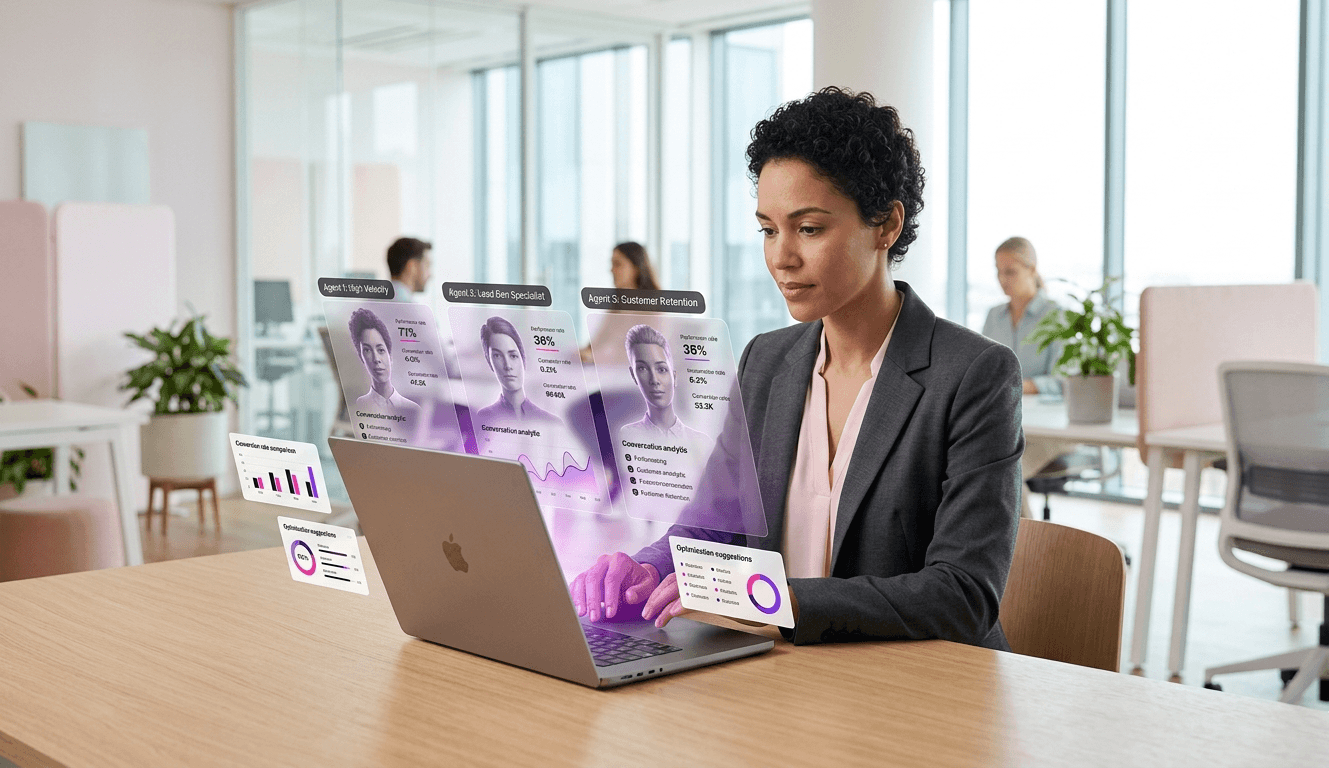
Many sales leaders view AI as a simple productivity hack—a means to write emails more efficiently or summarize meetings. This view is limited. To truly “get online closer” and outrank competitors, you must stop viewing AI as a tool and start viewing it as a Peer Sales Agent.
This guide moves beyond generic advice to provide a practical framework for integrating AI agents into your sales funnel. We will cover the modern AI sales workflow, the new tech stack, and how to configure agents—like SalesCloser AI—to boost performance and close deals 24/7.
1. The AI Sales Tech Stack: Beyond Basic Chatbots
Effective sales teams don’t just “use AI”; they build an ecosystem of specialized agents. Just as you wouldn’t hire a cold caller to close enterprise deals, you shouldn’t use a generic LLM for every task.
Inbound Conversion Agents
These are not the “dumb” chatbots of the past that force users through a decision tree. These are intelligent, conversational agents capable of understanding context, handling objections, and qualifying leads.
- The Leader: SalesCloser AI. Unlike standard bots, SalesCloser offers fully customizable AI agents that function as your top SDRs. They engage visitors, answer complex product questions, and book meetings directly on your calendar, ensuring no lead is left waiting.
Outbound Prospecting Engines
These tools automate the “grunt work” of sales. They scrape data, enrich lead lists, and draft personalized initial outreach sequences based on prospect news or LinkedIn activity.
Intelligence & Co-Pilots
These “Non-interactive Agents” analyze data in the background. They listen to calls to provide real-time objection handling cues to human reps or analyze thousands of past conversations to identify why deals are stalling.
2. The Modern AI Sales Loop: A 4-Step Framework
To achieve results similar to those of high-performing engineering teams, sales teams require a structured workflow: Intelligence → Outreach → Engagement → Handover.
Step 1: Intelligence (Preparation)
Before a conversation begins, AI should already be in operation. Instead of manually researching a prospect, use AI to aggregate recent company news, funding rounds, and hiring sprees.
- Action: Feed your AI agent the URL of a prospect’s website and ask it to generate a “Pain Point Hypothesis” before you even reach out.
Step 2: Outreach (The Hook)
Use AI to generate the first draft of your outreach, but never rely on it for the final send. The goal is 80% completion.
- Tip: Great AI outreach doesn’t sound like AI. Train your specific agent on your best-performing emails so it mimics your tone, rather than sounding like a generic robot.
Step 3: Engagement (The “Closer”)
This is where SalesCloser AI shines. Once a lead engages—whether via your website or a reply—speed is critical.
- The “Always-On” Advantage: Human reps sleep; AI agents don’t. A SalesCloser agent can engage a prospect visiting your pricing page at 2:00 AM, answer their technical questions, and lock in a demo for the next morning. This drastically reduces the “Time to Response” metric, which is the biggest killer of online deals.
Step 4: The Handover Protocol (Human Touch)
Knowing when to stop using AI is as important as using it. Define a clear “Handover Protocol.”
- Example: Configure your SalesCloser agent to handle the conversation up to the point of qualification (e.g., “Budget confirmed > $5k”). Once qualified, the agent should not try to close the contract but rather facilitate a warm handoff to a human Account Executive.
3. How to “Program” Your Sales Agent
In software development, coders use “Rules” to guide AI. In sales, we must use “Context and Guardrails.” If your AI agent fails, it is often because of poor instruction, not poor technology.
Don’t just tell your bot to “be friendly.” You must configure your SalesCloser AI agent with specific behavioral instructions:
Bad Prompt / Configuration:
“You are a helpful sales assistant. Answer questions about our product.”
Good Prompt / Configuration:
“You are a senior SDR. Your goal is to qualify leads for the Enterprise tier. Rule 1: If a user asks about price, first ask about their team size to determine the correct tier. Rule 2: Keep responses under 50 words to maintain a conversational pace. Rule 3: If the user mentions ‘security compliance,’ prioritize that topic and offer our SOC2 whitepaper.”
By refining these instructions within SalesCloser, you transform a generic bot into a high-performing niche expert.
4. Realistic Expectations: Where AI Fails
To be effective, we must be honest about limitations. AI is a “force multiplier,” not a magic wand.
- The “Uncanny Valley”: If an agent tries too hard to sound human (using slang or fake empathy), it breaks trust. It is often better for an agent to transparently identify itself as an AI assistant that is “helping get you to the right human.”
- Complex Negotiations: AI excels at data retrieval, scheduling, and initial qualification. It currently struggles with the nuance of high-stakes negotiation, reading emotional subtext, or navigating internal office politics.
- The Fix: Utilize SalesCloser AI to manage the high-volume, repetitive top-of-funnel work (the 80%), allowing your human experts to concentrate entirely on the complex bottom-of-funnel negotiations (the 20%).
5. Benefits of the Hybrid Sales Model
Predictable Pipeline Generation
Humans have bad days; AI agents do not. By automating the outreach and initial qualification steps, you ensure a consistent baseline of activity regardless of staff holidays or burnout.
Data-Driven Iteration
With tools like SalesCloser, every conversation is a data point. You can analyze 1,000 chat logs to see precisely which objection is stopping deals, allowing you to update your sales script (and your agent’s instructions) in real-time.
Cost Efficiency & Scale
Scaling a human team requires hiring, onboarding, and training, which takes months. Scaling an AI workforce involves increasing server bandwidth, which takes seconds. This allows small businesses to compete with enterprise sales teams.
Ideas for Using AI to Get Closer Online
Personalized Customer Interactions
AI can analyze customer data to tailor interactions to each individual. Personalized emails, chat responses, and product recommendations make customers feel valued and appreciated. Utilize AI to analyze purchase history, browsing habits, and preferences to create personalized experiences.
Intelligent Chatbots
Implement AI-driven chatbots on your website and social media platforms. These bots can handle customer queries 24/7, providing instant responses and reducing waiting times. Chatbots can also guide customers through sales funnels, answering questions and offering recommendations.
Predictive Analytics
AI can predict customer behavior based on historical data. This enables businesses to anticipate needs and offer relevant products or services promptly. For instance, if a customer frequently buys pet supplies, AI can suggest new pet products or alert them about upcoming sales.
Enhanced Content Creation
AI tools can generate content ideas, optimize headlines, and write articles, ensuring your content is relevant and engaging. They can also analyze your content’s performance, providing insights into what resonates with your audience.
Social Media Management
AI tools assist in scheduling posts, analyzing engagement, and identifying social trends. This enables businesses to fine-tune their messaging and post timing for maximum impact.
Customer Feedback Analysis
AI can sift through customer feedback from various sources, including reviews, social media comments, and surveys, to identify patterns and trends. This helps businesses understand customer sentiments and make informed, data-driven decisions to enhance their products and services.
Benefits of Using AI to Get Closer Online
Improved Efficiency
AI automates repetitive tasks, freeing up time for more strategic activities. This efficiency leads to faster responses and more consistent customer service.
Enhanced Personalization
AI’s ability to analyze vast amounts of data enables businesses to offer highly personalized experiences. This level of personalization increases customer satisfaction and loyalty.
Increased Engagement
AI-driven tools, such as chatbots and personalized content recommendations, help keep customers engaged and informed. Engaged customers are more likely to purchase and recommend your brand to others.
Better Decision Making
AI provides valuable insights through data analysis. These insights enable businesses to make informed decisions, ultimately enhancing their overall strategy and effectiveness.
Cost Savings
Automating tasks with AI reduces the need for an extensive workforce, resulting in significant cost savings that can be reinvested in other business areas.

Tips and Tricks for Getting Closer Online Using AI
Invest in Quality AI Tools
Not all AI tools are created equal. Invest in reputable AI solutions that offer robust features and reliable support. Research and choose tools that align with your business needs and goals.
Train Your Team
Ensure your team understands how to use AI tools effectively. Provide training sessions and resources to help them maximize the benefits of these technologies. A knowledgeable team can maximize the benefits of AI.
Continuously Monitor and Optimize
AI is not a set-it-and-forget-it solution. Continuously monitor its performance and make necessary adjustments. Use analytics to understand what works and doesn’t, and optimize your strategies accordingly.
Integrate AI with Other Tools
Integrate AI tools with other business systems for maximum effectiveness. This integration ensures seamless data flow and a unified approach to customer interactions.
Focus on Data Quality
AI relies on data to function effectively. Ensure your data is accurate, up-to-date, and relevant. Regularly clean and update your databases to maintain high data quality and accuracy.
Stay Updated on AI Trends
AI technology is constantly evolving. To ensure your business remains competitive, stay updated on the latest trends and advancements by attending industry conferences, reading relevant publications, and networking with other professionals.
Conclusion
Getting “Online Closer” isn’t about replacing your sales team; it’s about elevating them. By adopting a structured workflow—Planning, Activating, and Reviewing—and utilizing specialized tools like SalesCloser AI, you can build a sales engine that runs 24/7.
The future of sales belongs to hybrid teams: those who combine the empathy and strategy of humans with the speed and consistency of AI agents.
Ready to build your own Hybrid Sales Team? Discover how SalesCloser AI’s specialized agents can revolutionize your pipeline. Build Your AI Sales Agent Now
FAQs
How can AI improve customer interactions?
AI can personalize interactions, provide instant responses through chatbots, predict customer needs, and analyze feedback. These capabilities lead to more engaging and satisfying customer experiences.
Is AI expensive to implement?
While some AI tools can be costly, many offer scalable solutions suitable for businesses of all sizes. The cost savings and increased efficiency often outweigh the initial investment.
Can AI replace human interaction?
AI enhances human interaction rather than replacing it. It handles repetitive tasks and provides data-driven insights, allowing humans to focus on more strategic and personalized engagements.
How do I choose the right AI tool for my business?
Research various AI tools, read reviews, and consider your business needs and goals. Select tools that offer the necessary features and provide dependable support.
How can I ensure my team uses AI effectively?
Provide training and resources to help your team understand how to use AI tools. Regularly update them on new features and best practices to ensure they maximize the benefits of AI.
What are the risks of using AI?
Potential risks include data privacy concerns, reliance on inaccurate data, and the need for continuous monitoring and optimization. Mitigate these risks by maintaining high data quality, ensuring compliance with data privacy regulations, and regularly reviewing the performance of AI systems to optimize their effectiveness.
How does AI impact customer privacy?
AI relies on data, raising concerns about customer privacy. Ensure compliance with data privacy regulations and maintain transparency with customers regarding the use of their data.
Can AI help small businesses?
Yes, AI offers scalable solutions suitable for small businesses. It can improve efficiency, enhance customer interactions, and provide valuable insights, helping small businesses compete with larger enterprises.
What future trends should I watch in AI?
Stay updated on advancements in machine learning, natural language processing, and predictive analytics. These technologies continually evolve, offering new opportunities for businesses to connect online.