
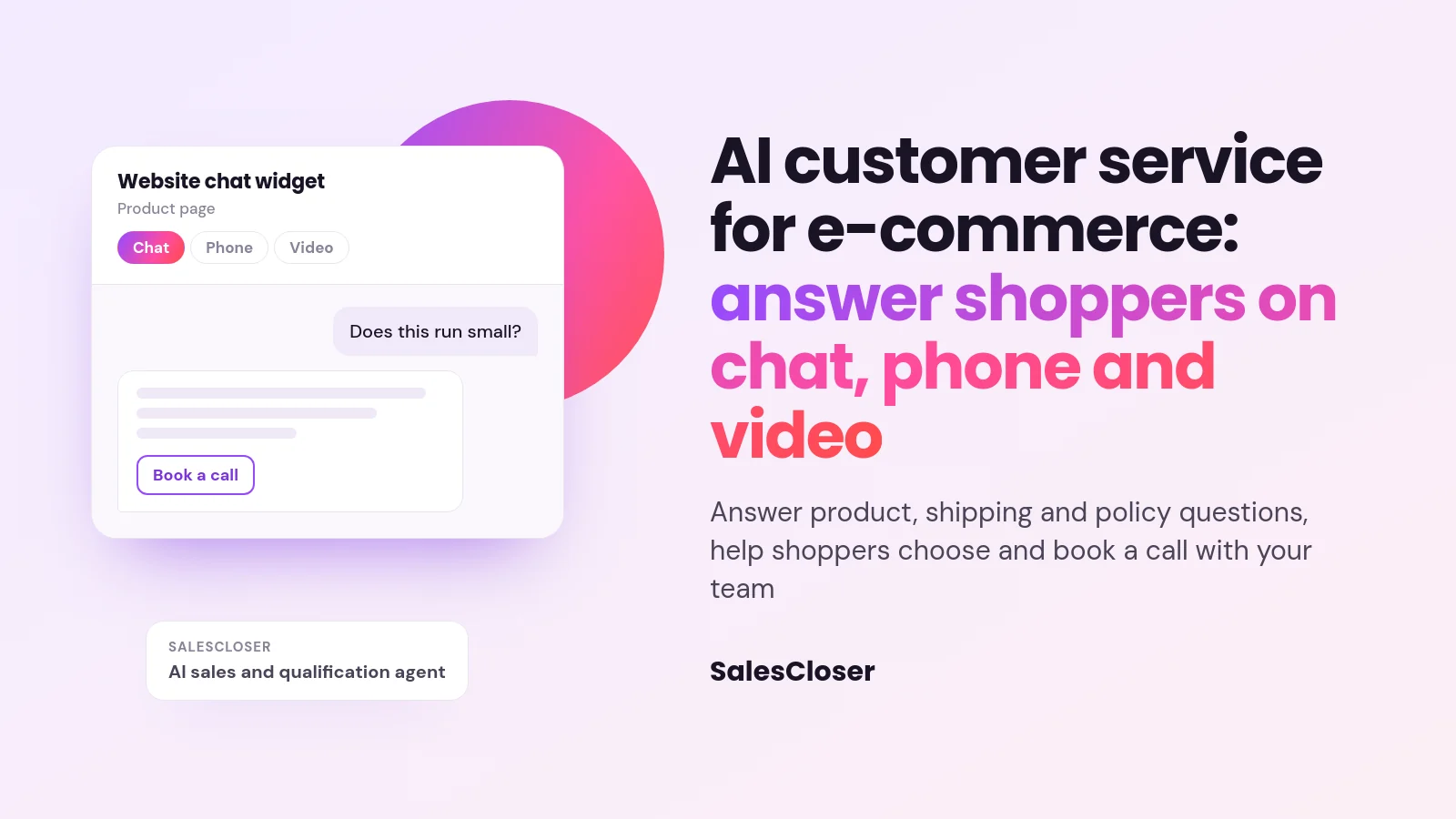
AI customer service for e-commerce uses AI agents to answer shoppers on website chat, phone and video. They answer product, shipping and policy questions from your own content, help shoppers choose, qualify bigger orders and book or transfer them to your team. Order problems after the sale go to your support team or helpdesk.
Your store gets the same questions every day, and many arrive when nobody is online. Some are buying questions. Others are about an order that already shipped.
An AI agent should answer the first kind well and route the second kind to the right person. SalesCloser answers pre-purchase questions on chat, phone and video from your own content, helps shoppers choose, qualifies bigger orders and books or transfers them to your team. After the sale, it explains your policies and hands order problems to your support team.
Here is how that plays out for an online store, following one shopper from the first question to a problem after delivery. The store sells office furniture online. The shopper is an office manager furnishing a team of twelve.
| Stage | Channel | What the AI agent does | Who takes over |
|---|---|---|---|
| Product question | Website chat | Answers fit and spec questions from your product pages | Nobody needed |
| Comparing models | Web video call | Presents your product video and answers questions live | A rep from the Waiting Room, if one is covering |
| Bulk order | Phone | Asks your qualifying questions, then books or transfers | Your sales team |
| After delivery | Chat or phone | Explains your policy and shares your support contact | Your support team and helpdesk |

Stage 1: a question on the product page
It is late evening. The office manager is on the page for a standing desk and opens the chat: “What is the lowest height on this desk, and does the larger top come in white?”
With Page Awareness switched on, the agent knows which desk page they are on, so it answers about that model from your product pages and size guide. It replies with a link button to the white version and an image card of the frame. The answer is only as good as the page behind it, so this stage starts with complete product pages.
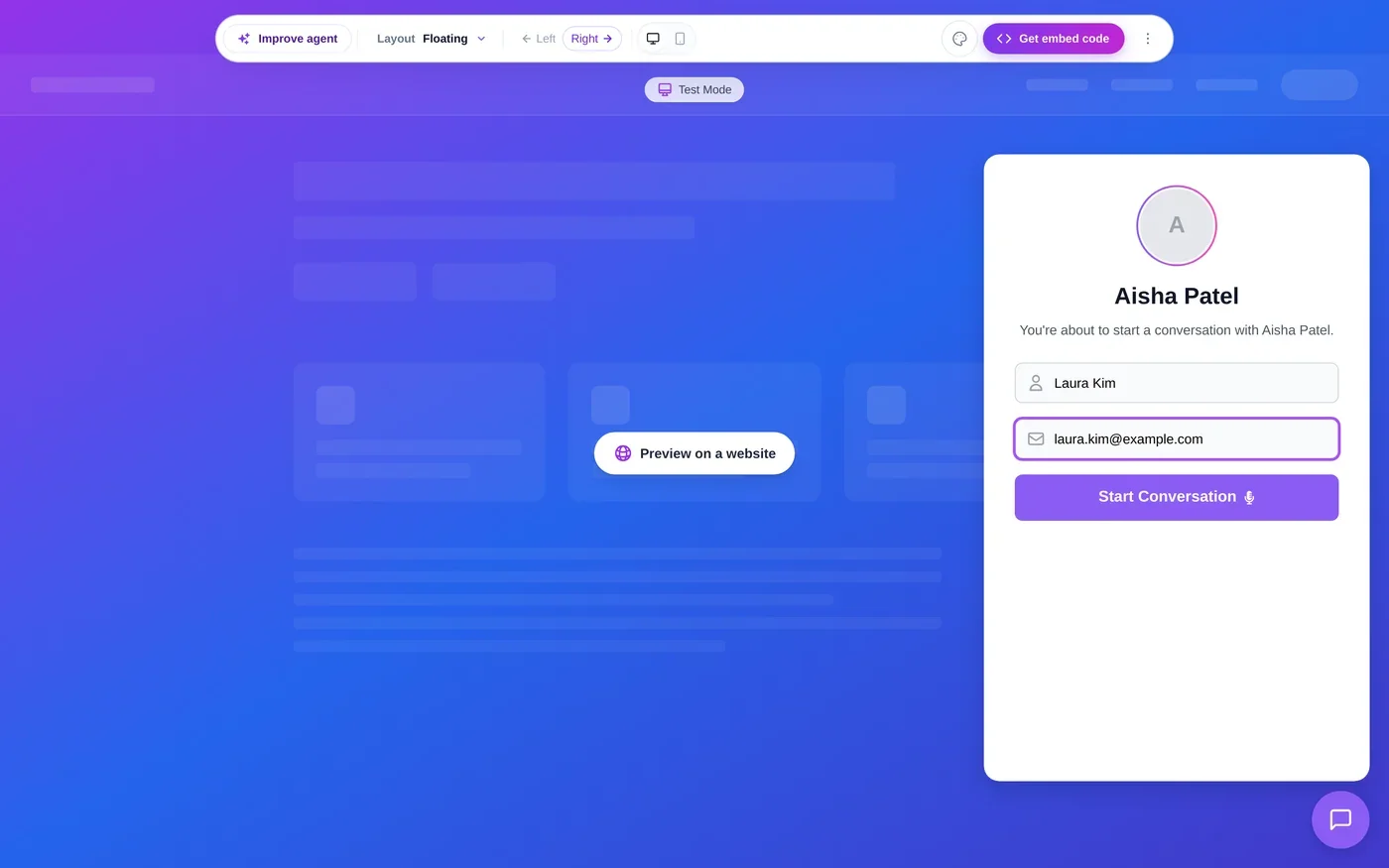
The website chat widget lets visitors type or talk, and it can sit as a floating button, a bottom bar, an inline embed, a sidebar or full screen. You decide how the agent introduces itself.
Stage 2: comparing two models on a video call
The shopper is torn between two frames and wants to see the motor and the cable tray before ordering for the whole office. They switch from typing to a voice and video call in the same widget.
A demo agent presents your product video on screen and answers questions live: how the cable tray attaches, which frame suits heavier monitors, how long assembly takes. Product videos you add are transcribed, so the agent also learns from what is said in them.
Then the shopper asks about delivery for twelve desks. Browsing has turned into a real order. If a rep is covering the Waiting Room, the agent can bring in a human: the rep listens in with a live summary and takes over with one click. If nobody is there, the agent carries on and books a time with your team instead.
Stage 3: the bulk order call
The next morning the office manager calls your sales line about a quote. The phone agent asks the qualifying questions you set: how many desks, which finish, the delivery area and the date they need them by.
The order is a good fit and the caller wants to speak to someone now, so the agent uses call transfer to put them through to your sales team. If the first number rings out, it tries the next one on your list. If the caller would rather pick a time, the agent books it on your Calendly or Cal.com calendar during the call.
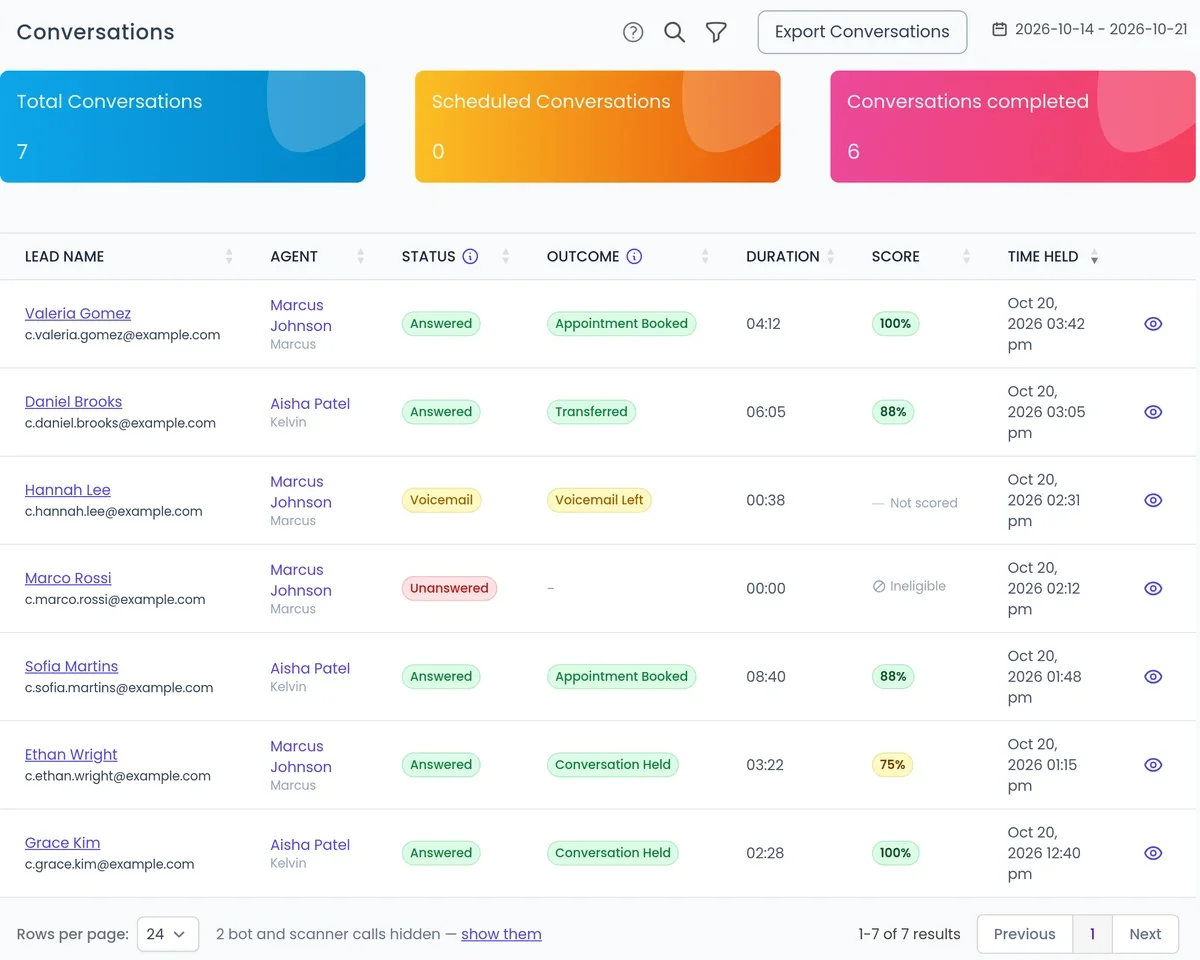
After the call, the summary and outcome go to your CRM or helpdesk. SalesCloser writes back directly to HubSpot, Pipedrive, GoHighLevel, Zoho, Zendesk and Intercom. Conversations are recorded and transcribed so your team can review them.
Stage 4: a problem after delivery
Two weeks later, one desk arrives with a scratched top. The office manager opens the chat again: “One of the desks is damaged. What do I do?”
This is where the agent hands off. It explains your damage and returns policy from your policy page, lists what your team needs to process a claim and shares your support contact. On the phone, a separate transfer entry such as Customer Care sends the caller to your support team rather than sales. Your team then handles the replacement in your store platform and helpdesk.

The same journey in a different store
An online bike shop selling e-bikes sees the same four stages with different weight. Most pre-purchase chats are about frame size and range, which the agent answers from the sizing chart and spec pages.
Test rides and financing are where buyers want a person, so the agent asks where the buyer lives and when they could visit, then books a call with the shop’s e-bike specialist. Callers asking about a repair go straight to the workshop through a labelled transfer entry, so sales and service calls stay separate.
What to check before you choose
Compare tools on the parts of the journey that matter for your store:
- Channels. Does it cover chat, phone and video? Considered purchases usually need more than a chat bubble.
- Knowledge. Can you load your website, documents, FAQs and product videos? Can you update them quickly when a policy changes?
- Handoff. Live takeover by a rep works on web voice and video calls, while phone calls hand off by transfer and text chat shares your booking link.
- Orders. SalesCloser is a sales and qualification agent, so order lookups, refunds, returns and tickets stay in your store platform and helpdesk.
- Your obligations. Data, privacy and calling rules differ by market and stay your responsibility.
Want to map this journey to your own store? Book a demo and watch an AI agent answer a product question, present a product video, qualify a bulk order and hand an after-sale issue to your team.
Frequently asked questions
Can an AI agent handle customer service for an online store?
It can handle the questions that decide a purchase: product fit, sizing, shipping and your policies, on chat, phone and video. Order changes, refunds and tickets stay with your support team and your store platform, and the agent hands those over.
Can the AI agent look up an order?
Not out of the box. SalesCloser is built for sales and qualification, so order lookups, refunds and returns stay in your store platform and helpdesk. The agent explains your shipping and returns policies from your own content and passes order questions to your support team.
What does the agent learn from?
Your website pages, documents, FAQs and product videos. Videos you add are transcribed, so the agent learns from what is said in them. Keep product and policy pages complete, because the answers are only as good as the content behind them.
Can a person join the conversation?
Yes. On web voice and video calls a rep covering the Waiting Room can listen in and take over. On phone calls the agent transfers to the number you set, and in text chat it can share your booking link.
Which languages does it support?
SalesCloser agents hold conversations in 50+ languages, so shoppers can ask in their own language on chat, phone or video.